
2026 Midterms: Find Your State's Voter Guide
Pick your state to see exactly who and what is on your November 3, 2026 ballot: the governor's race, your U.S. Senate and House races, and every statewide ballot measure, including what it would cost you in taxes. More states are being added every few days.
- Alabama
- Alaska
- Arizona
- Arkansas
- California
- Colorado
- Connecticut
- Delaware
- Florida
- Georgia
- Hawaii
- Idaho
- Illinois
- Indiana
- Iowa
- Kansas
- Kentucky
- Louisiana
- Maine
- Maryland
- Massachusetts
- Michigan
- Minnesota
- Mississippi
- Missouri
- Montana
- Nebraska
- Nevada
- New Hampshire
- New Jersey
- New Mexico
- New York
- North Carolina
- North Dakota
- Ohio
- Oklahoma
- Oregon
- Pennsylvania
- Rhode Island
- South Carolina
- South Dakota
- Tennessee
- Texas
- Utah
- Vermont
- Virginia
- Washington
- West Virginia
- Wisconsin
- Wyoming
An Election With No President on the Ballot
A midterm is the general election held in the even-numbered years between presidential elections. The presidency is not at stake, and neither is most of the Senate, but the entire House of Representatives is, along with most governorships and the bulk of state and local government. That mix is what gives the midterm its distinct character.
A midterm election is a regularly scheduled general election held near the midpoint of a president's four-year term, in the even-numbered years when the presidency itself is not on the ballot: 2018, 2022, 2026, 2030, and so on. The name simply marks the timing. The country is halfway between one presidential election and the next, and every federal election that is not a presidential election is a midterm.
The rhythm comes straight from the Constitution. Article I, Section 2 gives members of the U.S. House two-year terms, so the entire House is elected every even-numbered year without exception. Article I, Section 3 gives senators six-year terms, staggered so that roughly a third of the Senate is elected every even year. Half of all regularly scheduled federal elections therefore fall in years with no presidential race.
Because the president is chosen for four years while the House is chosen for two, an incoming president's allies in the House must face voters again after only twenty-four months, long before the president does. That deliberate mismatch, built in by the framers to keep the House closely tied to public opinion, is what makes the midterm a distinct political event rather than just another election.
Midterms are sometimes loosely called “off-year” elections, though political scientists usually reserve that term for the odd-numbered years when a handful of states, such as New Jersey and Virginia, hold their races for governor. The midterm proper is the even-year, nationwide election that always includes every U.S. House seat.
The presidency and vice presidency are never on a midterm ballot. A president elected in a presidential year serves the full four years regardless of the next midterm's result, and the vice president runs on the same clock. Voters cannot remove a president at a midterm. They can only change the Congress the president has to work with.
Most of the Senate is also not up. Senators serve six-year terms divided into three “classes” of 33, 33, and 34 members, and only one class faces voters in any given election year. Two-thirds of sitting senators sit out any single midterm entirely.
Federal judges, including Supreme Court justices, are never elected at any level. They are nominated by the president and confirmed by the Senate under Article II and hold office, in the words of the Constitution, “during good Behaviour.” Cabinet secretaries, agency heads, and the roughly two million civilian federal employees and the armed forces are appointed or hired, not elected.
What a midterm can change at the federal level is therefore narrow but consequential: all 435 voting seats in the House, about a third of the Senate, and the six non-voting House delegates from Washington, D.C., and the territories. Everything else in the federal government stays exactly where it was the day before.
The U.S. House of Representatives is the only part of the federal government elected in its entirety at a single election. All 435 voting seats are contested every even-numbered year, in presidential and midterm years alike, because the Constitution sets House terms at two years with no staggering.
This was a deliberate choice at the 1787 Constitutional Convention. The framers wanted one chamber tied tightly to the popular mood and re-runnable quickly, in contrast to the Senate, which they insulated with six-year terms and, originally, election by state legislatures rather than voters. James Madison wrote in Federalist No. 52 that the House should have “an immediate dependence on, and an intimate sympathy with, the people.”
Because the entire House turns over on the same schedule, control of the chamber can flip in a single night. The House majority has changed party control after the 1994, 2006, 2010, 2018, and 2022 elections, every one of them a midterm. A swing of a few dozen seats out of 435 is enough to change which party holds the Speakership, controls every committee, and sets the floor agenda.
The 435 figure has been fixed by law since the Permanent Apportionment Act of 1929. Seats are redistributed among the states after each decennial census, but the national total does not grow. Every midterm is, in effect, a nationwide contest for a fixed pool of 435 offices, fought on district lines drawn after the most recent census.
The Senate is a “continuing body.” It never fully dissolves because only one of its three classes is elected at a time. In a midterm, roughly 33 or 34 of the 100 seats are on the ballot, depending on which class is up and whether any special elections have been triggered by resignations or deaths.
Which seats are up in a given year is a historical accident, not a reflection of anything current. When a state is admitted, its two Senate seats are assigned to two different classes so they are never contested in the same regular election. As a result, the map of seats up in any one midterm can favor one party simply because of which states happen to sit in that class.
The staggering makes the Senate slower to swing than the House. A party can have a strong national year and still gain only a seat or two in the Senate because most of the seats in play were in states it was never likely to win or lose. In 2018 the president's party lost roughly 40 House seats yet gained two Senate seats, because that year's Senate class was concentrated in states favorable to the president.
Special elections add unpredictability. If a senator dies or resigns, most states hold a special election to fill the seat at the next general election, so a midterm ballot can include a Senate race that was not originally scheduled. Vacancies are usually filled temporarily by gubernatorial appointment until that vote.
Fewer Americans vote in midterms than in presidential years. According to the United States Elections Project, turnout of eligible voters was about 50 percent in the 2018 midterm and just under half in 2022, compared with roughly 60 percent or more in recent presidential elections. The 2018 figure was the highest for a midterm since 1914.
Turnout for much of the late twentieth century was lower still, hovering near 38 to 42 percent of eligible voters in midterms from the 1970s through 2010. It fell to about 36 percent in 2014, the lowest since 1942, before rising in the last two cycles. Even so, midterm participation still trails presidential turnout by roughly 10 to 15 percentage points.
The midterm electorate also differs in composition. U.S. Census Bureau surveys and Pew Research Center analyses have found that midterm voters are older on average, and that the drop-off between presidential and midterm years is largest among younger voters. Political scientists call this “surge and decline”: a presidential race pulls in occasional voters who then sit out the following midterm.
Because the people who show up at midterms are, on average, more consistent partisans and more engaged with day-to-day politics, midterm results can diverge sharply from what the same electorate produced two years earlier. This is one reason a party can win the White House and then lose ground badly in Congress just twenty-four months later.
One Ballot, Many Elections
A single midterm ballot layers federal, state, county, and local races together, plus ballot measures in many states. The federal offices draw the national coverage, but most of the decisions on the ballot are made closer to home.
Every seat in the House of Representatives is contested. Each represents a single district of roughly 761,000 people under the 2020 census apportionment, and the winner serves a two-year term beginning the following January. A party needs at least 218 seats for a majority and control of the chamber.
Alongside the 435 voting members, voters in Washington, D.C., Puerto Rico, Guam, the U.S. Virgin Islands, American Samoa, and the Northern Mariana Islands elect six non-voting House members (Puerto Rico's is titled the Resident Commissioner and serves a four-year term). They may serve on committees, vote in committee, and speak on the floor, but cannot vote on final passage of legislation.
House elections run on district lines drawn after the 2020 census. In most states the legislature draws the map; a growing number use independent or bipartisan commissions. Court challenges under the Voting Rights Act and state constitutions have forced several states to redraw maps between censuses, so the district a voter lives in for a midterm may differ from the one they voted in two years earlier. The mechanics of line-drawing are covered in the redistricting explainer.
Because the House turns over completely and majorities are often narrow, a relatively small number of competitive districts, frequently fewer than 40 of the 435, effectively decide which party controls the chamber. The rest are rated safe for one party based on past results and district composition.
Roughly 33 or 34 Senate seats are up, being one of the three classes plus any special elections. Winners serve six-year terms. Control of the 100-seat chamber takes 51 seats, or 50 plus the vice president, who breaks tie votes.
The specific seats in play vary enormously in competitiveness from one midterm to the next because of which states are in the class. Some midterm Senate maps feature a dozen or more genuinely contested races; others have only a handful, with the rest safe for the incumbent party.
Senate races are statewide, so they are not affected by redistricting. That makes them a cleaner test of a state's overall partisan lean than House races, and it is one reason Senate and House results in the same state and year sometimes point in different directions.
A midterm can also feature a Senate special election running alongside the regularly scheduled race in the same state, so a state's voters occasionally choose two senators at once: one for a full six-year term and one for the remainder of an unexpired term.
Thirty-six states elect a governor in a midterm year. Most governors serve four-year terms, and the majority of states hold that election in the midterm rather than the presidential year, a scheduling choice many made in the twentieth century specifically to separate state races from the presidential contest.
Governorships are among the highest-stakes offices on a midterm ballot. Governors sign or veto state budgets and legislation, command the state National Guard, appoint judges and agency heads in many states, and in most states play a role in the redistricting process that shapes the next decade of U.S. House elections.
Several states break the common pattern. New Hampshire and Vermont elect governors to two-year terms, so their voters choose a governor every even year. A group of states elects governors in presidential years, and five, New Jersey, Virginia, Louisiana, Mississippi, and Kentucky, elect them in odd-numbered years, which is why those off-year races draw outsized national attention as early signals.
U.S. territories elect governors too. Guam, Puerto Rico, the U.S. Virgin Islands, the Northern Mariana Islands, and American Samoa choose their own chief executives, several of them on the midterm cycle.
State legislatures are the largest single category of offices on a midterm ballot. According to the National Conference of State Legislatures, about 6,000 of the roughly 7,400 state legislative seats nationwide are contested in a midterm year, across the 46 states that hold legislative elections in even-numbered years.
These bodies write state law on taxes, education, criminal justice, elections, health, and transportation, and they draw both state legislative and, in most states, congressional district maps. Control of a single chamber by a few seats can determine whether a state adopts or blocks major policy for years.
Term length varies. Most state house members serve two years and most state senators serve four, so a midterm typically puts every lower-chamber seat and about half of upper-chamber seats before voters. Fifteen states also limit how many terms legislators may serve, forcing regular turnover.
Because state legislative races are low-profile and inexpensive relative to federal contests, they are especially sensitive to the national political environment and to turnout. A strong national year for one party often produces a cascade of state legislative gains that draw little national coverage but reshape policy in dozens of capitals and shift control of legislative chambers.
Many states independently elect officials who, in the federal government, are appointed. Depending on the state and the year, a midterm ballot can include races for attorney general, secretary of state, treasurer, auditor or comptroller, superintendent of public instruction, agriculture commissioner, and seats on public-utility or education boards.
The attorney general is the state's top lawyer and, increasingly, a national policy actor, joining multistate lawsuits over federal regulations, health care, the environment, and more. In most states the attorney general is elected separately from the governor and can belong to the opposing party.
The secretary of state is, in most states, the chief election official, responsible for administering voter registration, certifying results, and overseeing county election offices. These once-obscure offices have drawn far more attention and campaign spending in recent cycles.
Many states also hold judicial elections at midterms, ranging from nonpartisan retention votes on appellate judges to fully contested partisan races for seats on the state supreme court, which is the final word on questions of state law and state constitutional rights.
Beyond candidates, voters in about half the states decide ballot measures: citizen-initiated statutes and constitutional amendments, legislative referrals, and veto referendums. Hundreds appear nationwide in a typical midterm, on subjects ranging from taxes and the minimum wage to abortion, marijuana, redistricting, and election procedures.
Ballot measures let voters set policy directly, bypassing the legislature and governor. Because a well-funded signature drive can place a measure before voters, they are a major channel for interest groups and can drive turnout among people who care intensely about a single issue.
The same ballot carries local government: mayors, city councils, county commissions, school boards, sheriffs, district attorneys, coroners, clerks, and special-district boards for water, fire, and transit. These offices make the decisions residents feel most directly, on policing, zoning, and school curriculum and budgets.
Local bond questions and tax levies also appear, asking voters to approve borrowing or tax increases for schools, roads, libraries, and hospitals. In many communities these are the only questions on the ballot that require a supermajority to pass.
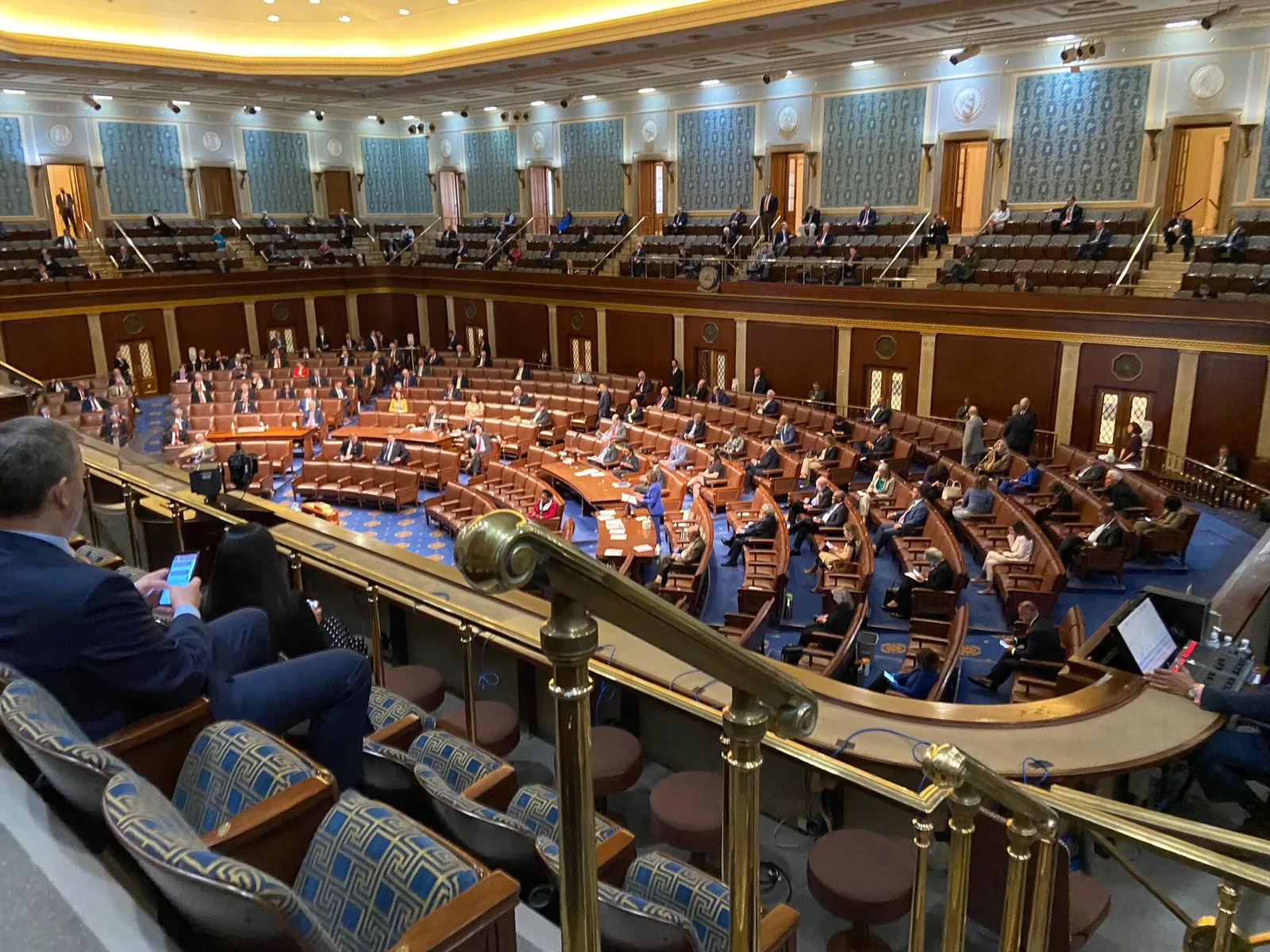
Every one of the 435 voting seats in this chamber is filled at each midterm. A shift of a few dozen seats can move control of the Speakership and every committee to the other party.
The Party in Power Usually Loses Ground
Midterm results have a strong and well-documented tilt against the president's party, especially in the House. The reasons involve who turns out, how voters treat the election as a verdict on the administration, and a distinct pattern in a president's second midterm.
In nearly every midterm since the Civil War, the party holding the White House has lost seats in the U.S. House. Compilations by the American Presidency Project at the University of California, Santa Barbara, and the Brookings Institution identify only three exceptions in more than 150 years: 1934, 1998, and 2002.
The size of the loss varies widely. Tallies of midterm results put the average House loss for the president's party at roughly two dozen to 30 seats, depending on the period measured, with some midterms costing 40 or more seats (1938, 1942, 1946, 1958, 1966, 1974, 1994, 2010) and others only a handful.
The Senate pattern is weaker. Because only a third of the Senate is up and the specific map matters so much, the president's party has sometimes gained Senate seats in a midterm, including 1934, 1962, 1970 on net, 2002, and 2018 (in 1998 the Senate balance was unchanged), even while losing House seats.
Each of the three exceptions had unusual circumstances. In 1934 the New Deal response to the Depression was still gathering public support; 1998 followed a backlash against the impeachment of President Clinton; and 2002 came a year after the September 11 attacks, with President Bush's approval rating still elevated. Political scientists treat these cases as proof of how strong the normal pattern is.
The leading explanation for midterm losses is turnout composition. In a presidential year, the intense national campaign pulls less-engaged voters to the polls, many of whom back the winning presidential candidate and that party's down-ballot nominees. Two years later, in the quieter midterm, many of those voters stay home.
Political scientist Angus Campbell formalized this as “surge and decline” in the 1960s: the presidential election produces a surge of peripheral voters, and the midterm sees a decline back toward a smaller, more partisan core electorate. The voters who drop off are disproportionately those who were drawn in by the presidential winner.
Census Bureau and Pew Research Center data consistently show the midterm electorate is older on average than the presidential electorate, and that the presidential-to-midterm drop-off is steepest among younger voters. Campaigns spend heavily on turnout operations precisely because who votes, not just how they vote, can decide a midterm.
The party out of power also tends to be more motivated. Voters unhappy with the country's direction under the sitting president have a clear reason to turn out, while some of the president's own supporters, satisfied or complacent, do not. This “enthusiasm gap” compounds the surge-and-decline effect.
With no presidential candidate on the ballot, a midterm becomes the first nationwide chance to render a verdict on the administration. Decades of research find a strong relationship between a president's job-approval rating and how many House seats the president's party loses: the lower the approval, the larger the loss.
Presidents with approval ratings below 50 percent at the midterm have historically seen their party lose well into the double digits in House seats, while presidents above 50 percent have generally fared better, as in 1998 and 2002. Economic conditions, especially real income growth and inflation, feed into approval and into the result.
This dynamic gives the opposition a natural strategy: nationalize the election around the president and the state of the country rather than around individual local matchups. The party in power typically tries to localize races and turn out its own base.
Because the president cannot be removed at a midterm, the verdict is expressed entirely through Congress and the states. A rebuked president often spends the second half of the term facing at least one chamber controlled by the other party.
A president's second midterm, in the sixth year of a two-term presidency, has historically been especially punishing. The president's party lost substantial House ground in 1938, 1958, 1966, 1974, and 1986, lost Senate control in 1986, and lost House control in 2006. Journalists and scholars call this the “six-year itch.”
Proposed explanations include accumulated voter fatigue with the party in power, second-term scandals and staff turnover, and the exhaustion of the coalition that first elected the president six years earlier. By the sixth year, the opposition has had time to regroup and recruit strong candidates.
The one clear modern exception is 1998, when President Clinton's Democrats gained House seats in his sixth year amid a strong economy and a public backlash against the impeachment effort. It is the only sixth-year midterm since 1822 in which the president's party gained House seats.
The six-year itch is a tendency, not a rule, and its size has varied. But it is consistent enough that a two-term president's party generally braces for a difficult second midterm regardless of the issues of the moment.
Midterms frequently hand at least one chamber of Congress to the party that does not hold the White House. Since 1980, unified one-party control of the House, Senate, and presidency has held for only a minority of years, and a midterm is the most common trigger for the shift away from it.
When control divides, the output of Washington changes. Fewer major laws pass; must-pass measures such as government funding and the debt ceiling become leverage points; and the president leans more on executive action, which is more easily reversed and more often challenged in court.
A new opposition majority also gains the power to investigate. Committee chairs can issue subpoenas, hold hearings, and compel testimony from executive-branch officials, so a midterm that flips a chamber typically brings a sharp increase in oversight of the administration.
Divided government shapes the following presidential race as well. The out-party uses its new platform to draw contrasts, while the president runs against a Congress the president no longer fully controls. Several presidents, including Clinton and Obama, were reelected after losing Congress at their first midterm.
From Candidate Filing to a New Congress
A midterm is not a single day. It is a cycle that runs for two years, from early recruitment and state-by-state filing deadlines, through a long primary season, to Election Day, the weeks-long count, and finally the seating of a new Congress and new state officials in January.
The midterm cycle effectively starts the year after a presidential election. The party campaign committees, the DCCC and NRCC for the House and the DSCC and NRSC for the Senate, begin recruiting candidates, and incumbents decide whether to run again.
Retirement announcements in this period are closely watched. An open seat is far easier for the other party to flip than one defended by an incumbent, so a wave of retirements in one party is often read as an early sign of a difficult year ahead for it.
Redistricting litigation left over from the post-census round is frequently still moving through state and federal courts in the year before a midterm. A court-ordered map change in this window can create or eliminate competitive districts before any candidate has filed.
Fundraising also begins in earnest. Federal candidates file quarterly reports with the Federal Election Commission, and early cash-on-hand totals influence which races the national parties and outside groups decide to contest.
Each state sets its own deadline for candidates to file the paperwork and petition signatures needed to appear on the primary ballot. These run from roughly December of the year before the election through the following spring.
Filing requirements vary widely. Some states ask only a modest fee; others require thousands of valid voter signatures gathered within a set window. Ballot access for independent and minor-party candidates is generally harder and carries later, separate deadlines.
Once filing closes, the shape of the election is largely set. The number of open seats, contested primaries, and uncontested races is known, and forecasters begin rating individual contests.
Redistricting must be settled before filing opens in a given state, so any remaining map disputes usually have to be resolved, at least on an interim basis, by this point in the calendar.
From roughly March through September, states hold primary elections, or in a few cases caucuses and conventions, to choose each party's nominee for the general election. Every state runs its own primary on its own date under its own rules.
Primary rules differ on who may participate. Closed primaries limit voting to registered party members, open primaries let any voter choose a party's ballot, and a few states use a “top-two” system in which all candidates run together and the two highest finishers advance regardless of party.
Some states require a runoff if no candidate reaches a set threshold, usually a majority. Georgia and a handful of others hold primary runoffs weeks after the first vote, extending the nominating calendar into the summer.
Primary results can reshape the general election. A nominee seen as too far from the district's center can turn a safe seat competitive, and a bruising intraparty fight can leave the winner short of money and party unity heading into the fall.
Most states set a voter-registration deadline two to four weeks before Election Day, though roughly 20 states and Washington, D.C., offer some form of same-day registration. Deadlines and rules are set by each state.
Early in-person voting begins in most states in this window, commonly two to three weeks before Election Day, and counties begin sending absentee and mail ballots to voters who requested them or, in several states, to all registered voters automatically.
A large and growing share of the electorate now votes before Election Day. In recent cycles a majority of all ballots in some states have been cast early or by mail, changing how campaigns schedule advertising and turnout operations.
Election officials in most states may process and verify mail ballots as they arrive, but in some states are barred by law from beginning to count them until Election Day, which affects how quickly results are known.
Federal law has fixed a uniform national Election Day since the nineteenth century. Congress set it for presidential elections in 1845 and extended it to U.S. House elections in 1872, choosing the Tuesday after the first Monday in November. When senators became directly elected in 1913, Senate races moved to the same day.
The date reflects a nineteenth-century agrarian calendar: after the fall harvest, on a day that let rural voters travel to the county seat without violating the Sunday sabbath and before November weather closed the roads.
Polls are administered by roughly 10,000 local jurisdictions, each following state rules on hours, identification, provisional ballots, and equipment. There is no national ballot and no federal official running the election.
Election-night results reported by the media are unofficial. News organizations and the Associated Press aggregate county reports and “call” races based on projections; the actual totals are still preliminary and subject to the formal count that follows.
After Election Day, every state conducts a canvass: a methodical review that adds late-arriving mail ballots, cures minor defects where state law allows, tallies provisional ballots once eligibility is confirmed, and reconciles precinct totals.
Results often shift during the canvass. Because different kinds of ballots, cast on Election Day, early, by mail, or provisionally, are counted at different times and lean differently, the reported margin can move steadily in one direction for days, a pattern election officials consider normal.
Close races can trigger recounts, either automatically under a state threshold or by candidate request. A few states hold general-election runoffs: Georgia requires a majority to win, so a race in which no candidate clears 50 percent goes to a second round in December.
The canvass ends with certification, a formal declaration of official results by a state or county board, on a deadline set by state law, typically within a few weeks of the election.
Under the Twentieth Amendment, ratified in 1933, the terms of members of Congress begin at noon on January 3, and the new Congress convenes that day. Before the amendment, a Congress elected in November did not meet in regular session until the following December, about thirteen months later.
On its first day, the House elects a Speaker. If the midterm changed which party holds the majority, this is when the new majority formally takes power, reorganizes every committee, and gains control of the floor schedule.
Newly elected senators are sworn in, and if party control of the Senate changed, the majority leader's agenda-setting power and every committee chairmanship change hands as well.
Members whose elections are still disputed can be seated provisionally or have their cases referred to committee. Under Article I, Section 5, each chamber is the final judge of its own members' elections and qualifications.
Governors elected in November are typically inaugurated in January, on dates set by each state constitution. A change of party in the governor's office can shift the direction of state policy immediately through appointments, executive orders, and budget proposals.
State legislatures convene their new sessions in January as well. Chambers that changed party control reorganize leadership and committees, and the majority sets the agenda for bills on taxes, education, elections, and redistricting.
Ballot measures approved in November take effect on schedules written into the measures themselves or set by state law, sometimes immediately and sometimes after a delay to allow for implementation.
The results also reset the map for the next cycle. Governors and legislatures seated after a midterm are often the officials who will draw or revise district lines and administer the next presidential election two years later.
Where the Real Numbers Come From
There is no official national scoreboard on election night. Results are assembled by news organizations from thousands of local reports, then finalized weeks later by each state. Knowing which source to trust, and why the count keeps moving, makes the results far easier to follow.
No federal agency reports election results. The count happens in roughly 10,000 state and local jurisdictions, each reporting up to its county and state. What the public sees on election night is an unofficial aggregation assembled by news organizations, chiefly the Associated Press, from those local reports.
When a network or the AP “calls” a race, it is projecting that the trailing candidate cannot catch up, based on votes counted, ballots outstanding, and historical patterns. A call is a forecast, not a result, and outlets occasionally retract them.
Official results come only later, from each state's canvass and certification. For the mechanics of how ballots are cast, counted, and certified, see the companion explainer on how elections work.
This decentralization is deliberate and constitutional. The Elections Clause of Article I leaves the “Times, Places and Manner” of congressional elections to the states, subject to congressional override, and states in turn delegate the actual administration to counties and municipalities.
Ballotpedia maintains free, sourced profiles of candidates, sample ballots by address, the full text of ballot measures, and race-by-race results for federal, state, and many local contests. It is a practical starting point for figuring out what is on a specific ballot.
The National Conference of State Legislatures tracks state legislative results and the resulting partisan control of all 99 legislative chambers. The National Governors Association tracks gubernatorial results and terms.
Race-rating outfits, the Cook Political Report, Sabato's Crystal Ball at the University of Virginia, and Inside Elections, publish handicapping of individual races as “safe,” “likely,” “lean,” or “toss-up.” These are analysts' forecasts, useful for seeing which races are considered competitive, not official data.
The United States Elections Project compiles turnout statistics using consistent methods across states and years, and is the standard citation for comparing midterm and presidential turnout.
The federal government's site, vote.gov, directs voters to their state's official registration system. The National Association of Secretaries of State runs CanIVote.org, which links to every state's registration lookup, polling-place finder, and ballot-tracking tools.
Registration deadlines vary by state, from same-day registration at the polls to a cutoff about a month before Election Day. Rules on identification, mail-ballot requests, and drop-off locations are also set state by state and can change between cycles.
Many states offer ballot tracking that lets a mail voter confirm online that a ballot was received and counted, or flag a problem such as a signature mismatch in time to fix it before the deadline.
Because every one of these systems is run by a state or county, the authoritative answer to any question about a specific voter's registration or ballot is that voter's own state or local election office, not a national site.
Counting continues for days or weeks in most states. Mail ballots that arrived in the final days must be verified and processed, provisional ballots are researched and added once eligibility is confirmed, and military and overseas ballots are accepted after Election Day under federal and state law.
Different categories of ballots are counted at different times and can lean toward different parties, so a reported margin often drifts in one direction for days after the election. Election-law scholar Edward B. Foley documented this pattern, sometimes called a “blue shift” or “red shift,” well before it became a subject of public dispute; it is a routine feature of a staggered count, not evidence of a problem.
States with large vote-by-mail programs, or laws that bar processing mail ballots before Election Day, take longer to report near-final numbers. States that allow early processing and count most ballots quickly can be substantially finished on election night.
Recounts, runoffs, and litigation can delay a final answer in the closest races by weeks. The controlling deadline is each state's certification date, after which the result is official.
After the canvass, a state or local board certifies the official results by a date set in state law. Certification is a ministerial step, a formal confirmation that the count followed the rules, not a discretionary judgment about who should win.
Certified state results are the basis for issuing a certificate of election to each winner, the document a member-elect presents to Congress.
Under Article I, Section 5 of the Constitution, “Each House shall be the Judge of the Elections, Returns and Qualifications of its own Members.” In a contested case, the House or Senate can investigate and, rarely, decline to seat a member or order a new election.
Once seated, members serve the full term regardless of later disputes about the count, unless their own chamber acts. The next scheduled chance for voters to weigh in is the following general election two years later.
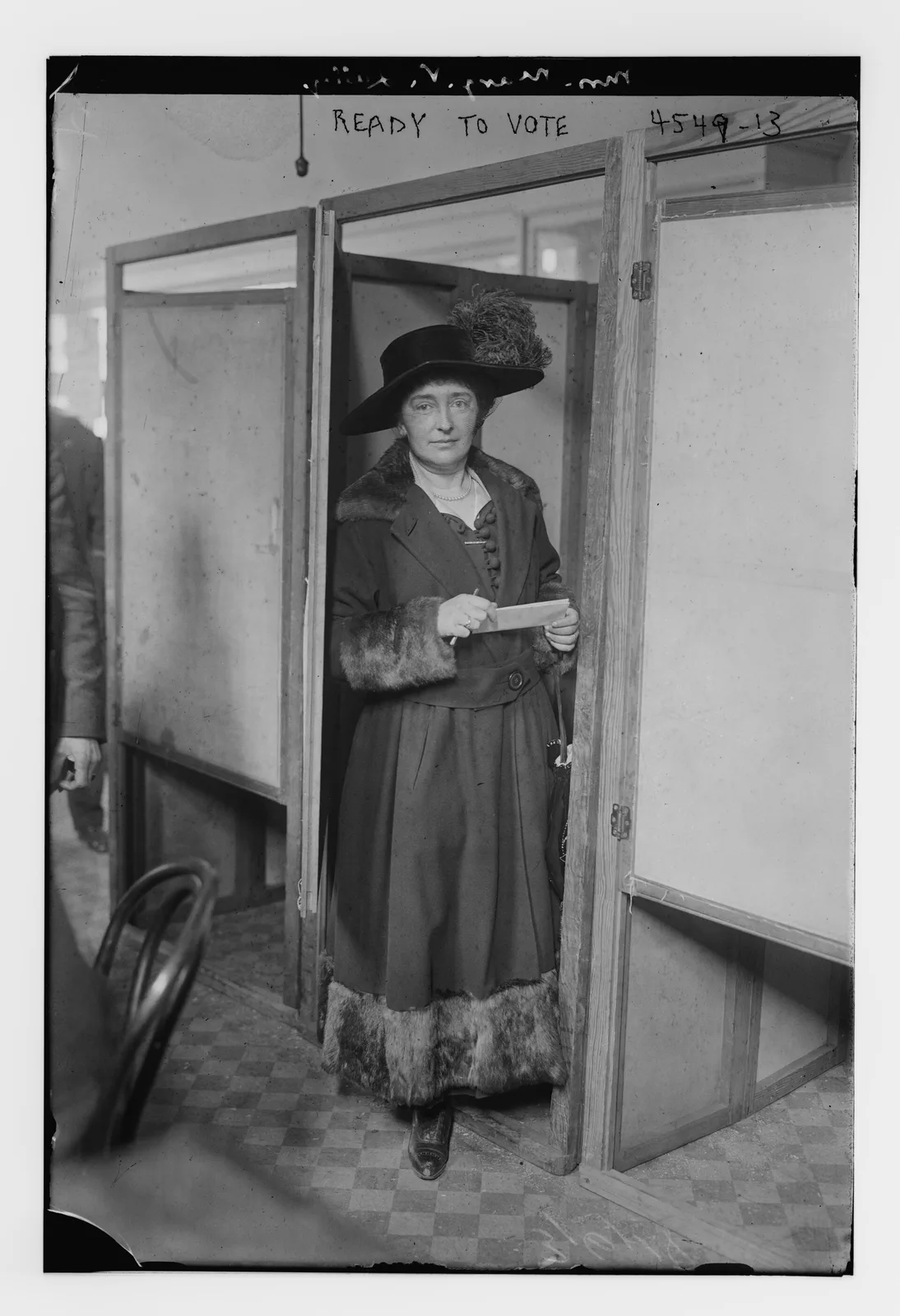
Voters waiting to cast ballots in New York, 1918. Then as now, the count was run by local officials, and the official totals came only after Election Day.
Ten Facts Worth Knowing
A quick-reference set of facts drawn from the sourced material throughout this page, useful for a fast read or a classroom discussion starter.
Every one of the 435 voting seats in the U.S. House is on the ballot at every midterm. Representatives serve just two years, the shortest term of any federal official.
Since the Civil War, the president's party has gained House seats in only three midterms: 1934, 1998, and 2002. In every other midterm it lost ground.
Only about a third of the Senate, one of three “classes” of 33 or 34 seats, is contested in any midterm. Two-thirds of senators are not on the ballot at all.
Midterm turnout fell to about 36 percent of eligible voters in 2014, the lowest since 1942, then rose to roughly 50 percent in 2018, the highest since 1914.
A president's second midterm, the “six-year itch,” has been especially costly for the president's party in 1938, 1958, 1966, 1974, 1986, and 2006. The lone modern exception is 1998.
Federal law has fixed Election Day as the Tuesday after the first Monday in November since 1845 for presidential elections and 1872 for the House. The timing was built around the fall harvest and the Sunday sabbath.
Most U.S. governors are elected in midterm years rather than presidential years. Thirty-six states choose a governor during a midterm.
About 6,000 of the roughly 7,400 state legislative seats in the country are contested in a midterm, across 46 states, along with control of dozens of legislative chambers.
The Twentieth Amendment moved the start of a member of Congress's term from March 4 up to January 3, ending the long “lame duck” gap in which a Congress rejected by voters kept legislating well into the next year.
Election-night results are always unofficial projections. Official totals exist only after each state's formal canvass and certification, and under the Constitution each chamber of Congress is the final judge of its own members' elections.
Sources & Further Reading
- National Archives, Constitution Annotated: Article I (House and Senate terms)
- National Archives, Constitution Annotated: Twentieth Amendment
- U.S. House of Representatives, Office of the Historian: Party Divisions
- U.S. Senate: Class I, II, and III Senators (staggered terms)
- U.S. Senate: Elections and Vacancies Reference
- The American Presidency Project, UC Santa Barbara: Seats Gained or Lost by the President's Party in Midterm Elections
- Brookings Institution: Vital Statistics on Congress
- Pew Research Center: U.S. Politics and Elections research
- United States Elections Project: Voter Turnout Data
- U.S. Census Bureau: Voting and Registration
- National Conference of State Legislatures: State Elections 2026
- National Governors Association: Governors
- U.S. Election Assistance Commission: Election Administration and Voting
- Ballotpedia: Elections calendar and offices on the ballot
- vote.gov: Register to vote and confirm your registration
- National Association of Secretaries of State: Can I Vote
- Encyclopaedia Britannica: midterm election
This page draws on the U.S. Constitution and the Constitution Annotated guide published by the Library of Congress and Congress.gov, the historical offices of the U.S. House and Senate, turnout data from the United States Elections Project and the U.S. Census Bureau, midterm seat-change tallies from the American Presidency Project and the Brookings Institution, and election-administration and calendar material from the U.S. Election Assistance Commission, the National Conference of State Legislatures, the National Governors Association, and Ballotpedia. Turnout percentages, seat totals, and state rules are current as of 2026 and should be checked against the cited authority before being relied on for a specific race or deadline.