
The American Civil War
The deadliest conflict in American history, fought over slavery, the survival of the Union, and what kind of country America would become. More than 620,000 soldiers died. Slavery was abolished. And then the peace was only half-kept.

Confederate forces opened fire on Fort Sumter at 4:30 a.m. on April 12, 1861. The Civil War had begun.
Road to War
1619–1861
The Civil War didn't start in 1861. It had been building for more than 40 years. Almost every major political crisis from 1820 onward was really about one thing: slavery, whether it would expand into new territories, whether free and slave states could keep coexisting, and whether the slaveholding South's power could survive in a modernizing nation. By the time the first cannon fired on Fort Sumter, the country had already been tearing apart at the seams for a generation.
Key Topics
What Happened
When the first enslaved Africans arrived at Point Comfort, Virginia in 1619, no one could have imagined the catastrophe that would unfold 242 years later. Over the following two centuries, enslaved labor built the South into an agricultural powerhouse.
By 1860, the American South produced roughly two-thirds of the world's cotton supply, the country's leading export, and every bale of it was picked by enslaved people. Cotton alone made up about 60 percent of all U.S. exports on the eve of the war.
The 4 million enslaved Black Americans in the South in 1860 were collectively valued at about $3.5 billion, more than all the railroads and factories in the country combined, and more than the entire federal budget for decades. Enslaved people were, by dollar value, the single largest class of property in the United States.
This was not just an economic system. It was the foundation of Southern society, politics, religion, and culture. Wealthy planters who owned large numbers of enslaved people dominated state governments, courts, newspapers, and churches, even though most white Southern households owned no enslaved people at all.
To the planter class, slavery was not merely profitable, it was their entire way of life, and they were convinced it was morally justified. Southern churches produced elaborate theological defenses of slavery as God's will, and Southern schoolbooks taught children that enslaved people were content and that abolitionists were dangerous fanatics. This was not just propaganda; it was what millions of white Southerners genuinely believed.
Why It Matters
Understanding this is essential to understanding why the South was willing to secede and fight. The Southern ruling class wasn't going to give up $3.5 billion in 'property' and a way of life built over 250 years without a war. The Civil War didn't start because of abstract political principles, it started because of money, power, and a moral catastrophe that had been growing for two and a half centuries.
4 million
Enslaved people in the South (1860)
~$3.5 billion
Value of enslaved people (1860)
~67%
Share of world cotton produced by the South
242 years
Years slavery existed before the Civil War
What Happened
The Missouri Compromise of 1820 was the first major sign that the country was fracturing. When Missouri applied for statehood as a slave state, it threatened to upset the Senate's balance between free and slave states. Congress solved it by admitting Missouri as a slave state and Maine as a free state, then drew a line at latitude 36 degrees 30 minutes: north of it, no slavery in new territories; south of it, slavery was allowed.
The aging Thomas Jefferson wrote that the news, 'like a fire bell in the night, awakened and filled me with terror,' and John Quincy Adams privately called it 'a title page to a great, tragic volume.' Both saw it as a warning that the two halves of the country were becoming incompatible.
The Compromise of 1850 patched things again, admitting California as a free state but also passing the harsh Fugitive Slave Act, which required citizens and officials in Northern states to help capture and return escaped enslaved people. Suddenly slavery was not just a Southern institution; Northern citizens were being legally compelled to take part in it, and the reaction was fury.
Harriet Beecher Stowe's 1852 novel Uncle Tom's Cabin, which dramatized slavery's cruelties, sold 300,000 copies in its first year in the United States and is often credited with shifting Northern opinion. Lincoln, on meeting Stowe during the war, reportedly greeted her as 'the little woman who wrote the book that started this great war.' (The greeting comes from Stowe family tradition; it is commonly attributed to Lincoln but not verified.)
By 1854 the compromises stopped working. The Kansas-Nebraska Act, pushed by Senator Stephen Douglas, repealed the Missouri Compromise line and let settlers in new territories vote on slavery, a policy called 'popular sovereignty' that immediately produced violence and shattered the existing party system.
Why It Matters
Each compromise convinced the South that the federal government would keep protecting slavery, and convinced the North that slavery was an expanding moral and political cancer. By 1854, the political system that had papered over the conflict for 34 years was crumbling. What came next would be a preview of the war itself.
What Happened
After the Kansas-Nebraska Act opened Kansas territory to a popular vote on slavery, both pro-slavery and anti-slavery settlers flooded in, each side trying to control the territory's political future. What followed was a guerrilla war.
Pro-slavery 'Border Ruffians' from Missouri crossed the line, stuffed ballot boxes, and attacked free-state settlers, who formed their own armed militias in response. In May 1856, pro-slavery men sacked the free-state town of Lawrence; three days later, the radical abolitionist John Brown led a night raid that hacked five pro-slavery settlers to death with broadswords at Pottawatomie Creek. More than 50 people were killed in Kansas political violence over three years.
The crisis spilled onto the floor of the U.S. Senate. In May 1856, Representative Preston Brooks of South Carolina beat abolitionist Senator Charles Sumner of Massachusetts nearly to death with a metal-tipped cane as other senators looked on. The South celebrated Brooks and mailed him replacement canes; the North was horrified.
Meanwhile the Republican Party, founded in 1854 specifically to stop the spread of slavery, was rising fast. Its first presidential candidate, John C. Frémont, ran in 1856 on halting slavery's expansion and carried eleven states. The country was accelerating toward catastrophe.
Why It Matters
Bleeding Kansas proved that political compromise on slavery was no longer possible. The two halves of the country could not agree on the most basic question, whether slavery would be allowed in new American territory, and they were now willing to kill each other over it. It also gave rise to John Brown, whose later raid on Harpers Ferry would push the country over the final edge.
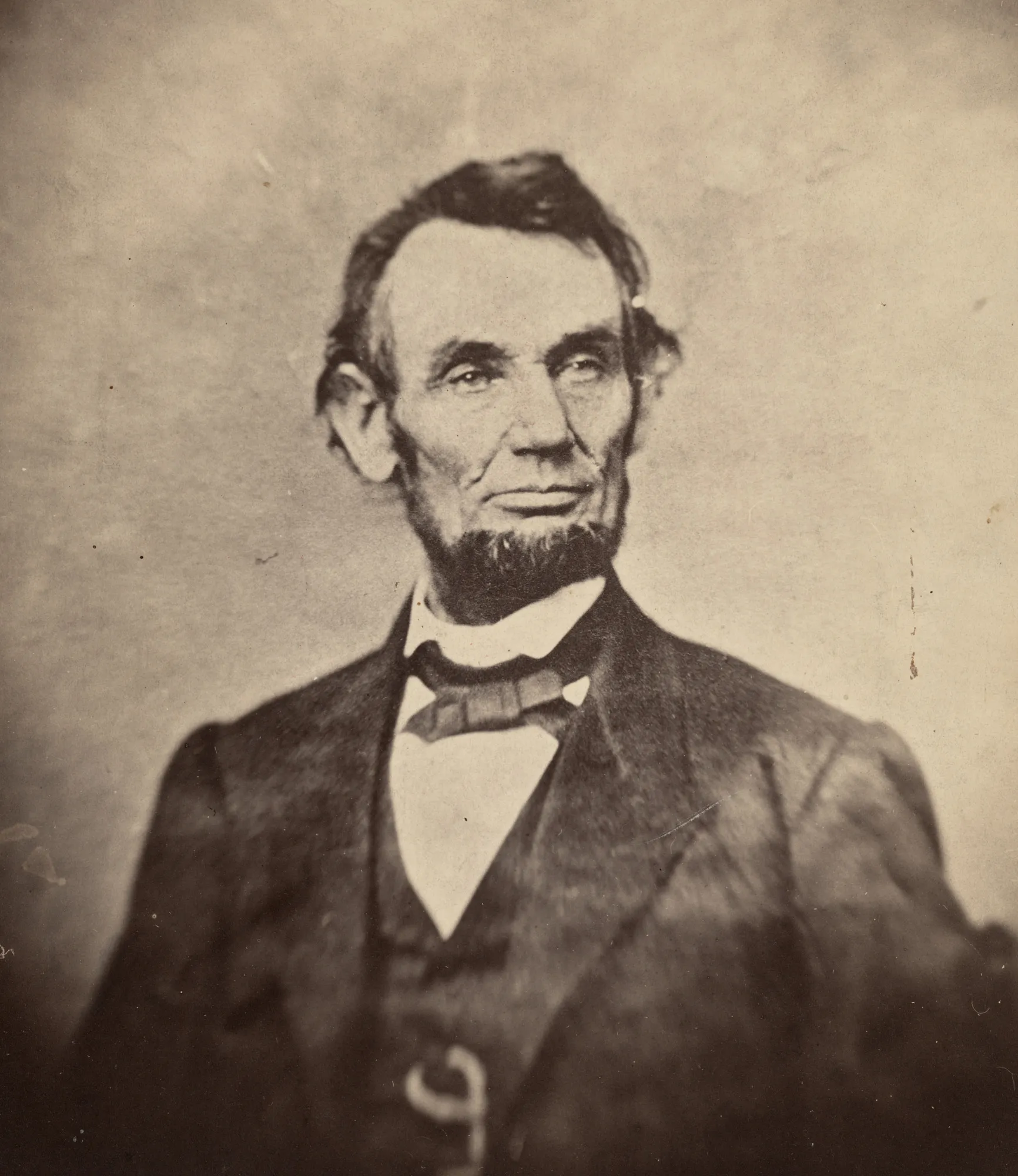
Abraham Lincoln was elected president in November 1860 without a single electoral vote from the South, triggering the secession crisis.
What Happened
Dred Scott was an enslaved man who had lived for years with his enslaver in the free state of Illinois and the free territory of Wisconsin, and who sued for his freedom on the ground that living on free soil had made him free. The case moved through the courts for eleven years.
In March 1857, Chief Justice Roger Taney, himself a former slaveholder, delivered the Supreme Court's answer: no. In a 7-to-2 decision, the Court held that Black Americans, free or enslaved, were not and could not be citizens of the United States and had no right to sue in federal court.
The Court went further, ruling that the Missouri Compromise had been unconstitutional all along and that Congress had never had the power to ban slavery in any territory. Slaveholders, the majority held, could take enslaved people into any federal territory.
Republicans warned that if the Court could force slavery into the territories, a future ruling could force it into the free states as well, and the decision convinced many Northerners of a 'Slave Power' conspiracy to make slavery permanent and national. It made the Republican Party's core platform effectively unconstitutional overnight, and it is still widely regarded as the worst decision in the Court's history; the Fourteenth Amendment overturned it eleven years later.
Why It Matters
Dred Scott made political compromise on slavery effectively impossible. Republicans couldn't accept slavery spreading everywhere; the South would accept nothing less. The decision radicalized moderate Northerners who had been willing to live with slavery in the South but were now being told they had no legal power to keep it out of their own territory. The 1860 election was fought in the shadow of Dred Scott.
What Happened
John Brown was not a politician or a writer but a militant who believed slavery was an act of war that demanded a violent answer. After his role in Bleeding Kansas, he devised a plan to seize the federal arsenal at Harpers Ferry, Virginia, arm the enslaved population of the surrounding region, and set off a general uprising.
On October 16, 1859, Brown and 21 followers, five of them Black men, crossed the Potomac and took the arsenal. The uprising never came: local enslaved people had no advance warning and did not rise, and Brown's party was quickly pinned down.
Local militia surrounded the raiders, and a company of U.S. Marines under Colonel Robert E. Lee and Lieutenant J.E.B. Stuart stormed the engine house where Brown made his stand. Brown was captured, tried for treason against Virginia, and hanged on December 2, 1859. On the way to the gallows he handed over a note predicting that 'the crimes of this guilty land will never be purged away but with blood.'
What alarmed the South most was not the raid, which failed, but that prominent Northerners hailed Brown as a martyr. Ralph Waldo Emerson called him a 'new saint,' and Henry David Thoreau published a defense. If that was how the North felt, many white Southerners concluded, there could be no safety left in the Union.
Why It Matters
John Brown's raid did more to polarize the country than almost any single event before the war. The South saw it as proof that the North intended to incite slave revolts and destroy Southern civilization. The North increasingly saw Brown as a man who had tried to do what the law refused to: end slavery by force. Within a year, the election of 1860 would finish what Harpers Ferry started.
What Happened
Abraham Lincoln won the presidency on November 6, 1860, with 180 electoral votes and none from the South; he was not even on the ballot in ten Southern states. The Southern response was immediate.
South Carolina, which had threatened secession for decades, voted to leave the Union on December 20, 1860, and Mississippi, Florida, Alabama, Georgia, Louisiana, and Texas followed within six weeks. On February 8, 1861, representatives of the seven states met in Montgomery, Alabama, formed the Confederate States of America, wrote a constitution that explicitly protected slavery, and elected Jefferson Davis of Mississippi as president.
In his inaugural address on March 4, 1861, Lincoln promised not to interfere with slavery where it already existed, but insisted that secession was illegal and that he would hold federal property in the South, including Fort Sumter in Charleston Harbor.
With the fort's garrison running low on food, Lincoln announced he was sending unarmed resupply ships, food only, no weapons. Davis chose to open fire rather than let them through. Confederate batteries bombarded Fort Sumter on April 12, 1861; over the following weeks Virginia, North Carolina, Tennessee, and Arkansas seceded, bringing the Confederacy to eleven states, and Lincoln called for 75,000 volunteers.
Why It Matters
Lincoln's election triggered secession not because he had immediate plans to abolish slavery, he didn't, but because his election represented the permanent political marginalization of the South. The Republican Party, which existed solely to stop slavery's expansion, had won the presidency without a single Southern vote. The South saw the writing on the wall: if the North could win the presidency without them now, it could always outvote the South. Secession, they calculated, was their only option.
What Happened
Fort Sumter sits on a small artificial island in the middle of Charleston Harbor. The roughly 80-man Union garrison under Major Robert Anderson was ringed by Confederate guns on every side. After South Carolina seceded, the Confederacy had demanded the fort's surrender, and Anderson had refused; a tense standoff dragged on for months.
When Lincoln announced that resupply ships were coming, Jefferson Davis ordered his commanders to take the fort first. Anderson refused a final demand, and at 4:30 a.m. on April 12, 1861, Confederate General P.G.T. Beauregard, who had been Anderson's own artillery student at West Point, ordered the bombardment to begin.
Confederate cannon on four sides poured an estimated 4,000 shells into the fort over 34 hours. The heavily outgunned garrison returned fire when it could, but with the fort ablaze and ammunition nearly gone, Anderson surrendered on April 13. No one was killed in the battle itself; two Union soldiers died in an accidental explosion during the surrender salute.
Lincoln's call for 75,000 volunteers drew hundreds of thousands within weeks, and four more Southern states seceded over the following weeks. Both sides expected a quick, decisive victory, the North thought a battle or two would end the rebellion, the South thought Northern men would not fight far from home, and both were catastrophically wrong.
Why It Matters
Fort Sumter handed Lincoln a political gift: the South had fired first. The attack united the North behind the war effort in a way no political argument ever could have. The Confederacy, in firing on the US flag, had transformed what might have been a prolonged political crisis into a shooting war that the entire North felt honor-bound to answer.
Sources & Further Reading
- National Archives
- Library of Congress
- Smithsonian National Museum of American History
- National Park Service, American Civil War
- American Battlefield Trust
- Britannica, American Civil War
Casualty figures, troop strengths, and dates above are drawn from the National Archives, the National Park Service's American Battlefield Protection Program, the Smithsonian National Museum of American History, and the sources linked here. Where historians' estimates vary, such as total war deaths, this page states the commonly cited range rather than a single disputed figure.