
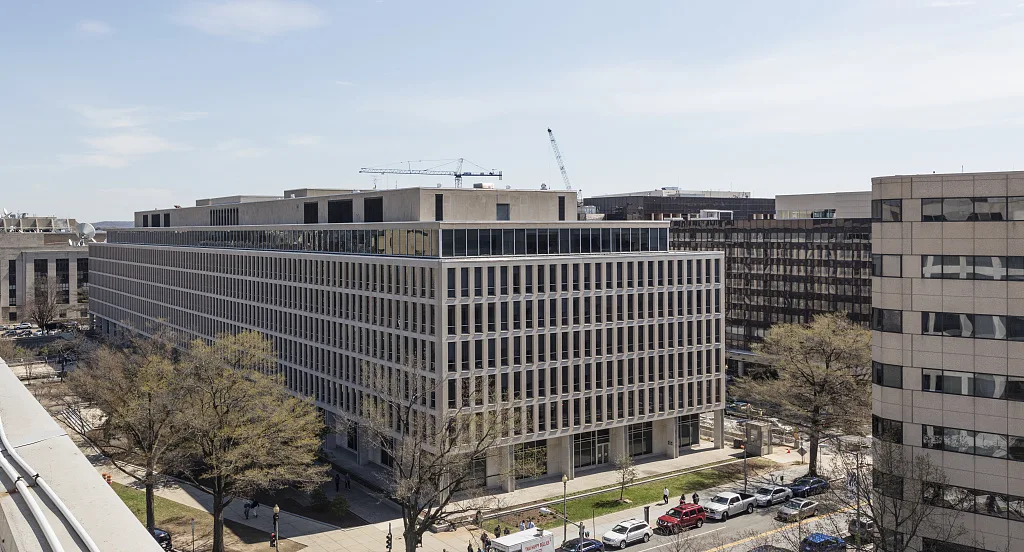
What The Education Department Does
Established May 4, 1980, The U.S. Department of Education is one of the fifteen Cabinet-level departments of the U.S. federal government.
The Education Department does not run schools directly, since education in the United States is constitutionally a state and local responsibility; instead, the department distributes federal funding to states and school districts, enforces federal education civil rights laws, and manages the federal student financial aid system.
Its Federal Student Aid office oversees more than $1.6 trillion in outstanding federal student loan debt, the largest single financial portfolio managed by any federal agency outside of Treasury, and administers Pell Grants, which provide need-based college funding to millions of low- and moderate-income students each year.
The department also enforces the Individuals with Disabilities Education Act, which guarantees students with disabilities a right to a free, appropriate public education, and administers Title I funding, which directs billions of dollars annually toward schools serving concentrations of low-income students.
The department has always been a subject of debate. It does not set curriculum, licensing, graduation requirements, or teacher standards, all of which remain with the states, and a provision of its founding statute expressly bars it from doing so. Its future has been contested since 2025, when the administration proposed to close it and move its functions to other agencies, a step that most legal analysts say requires an act of Congress; litigation and legislative proposals over that question were ongoing.

The Secretary of Education
The Secretary of Education leads The Education Department, sits on the President's Cabinet, and is confirmed by a majority vote of the U.S. Senate.
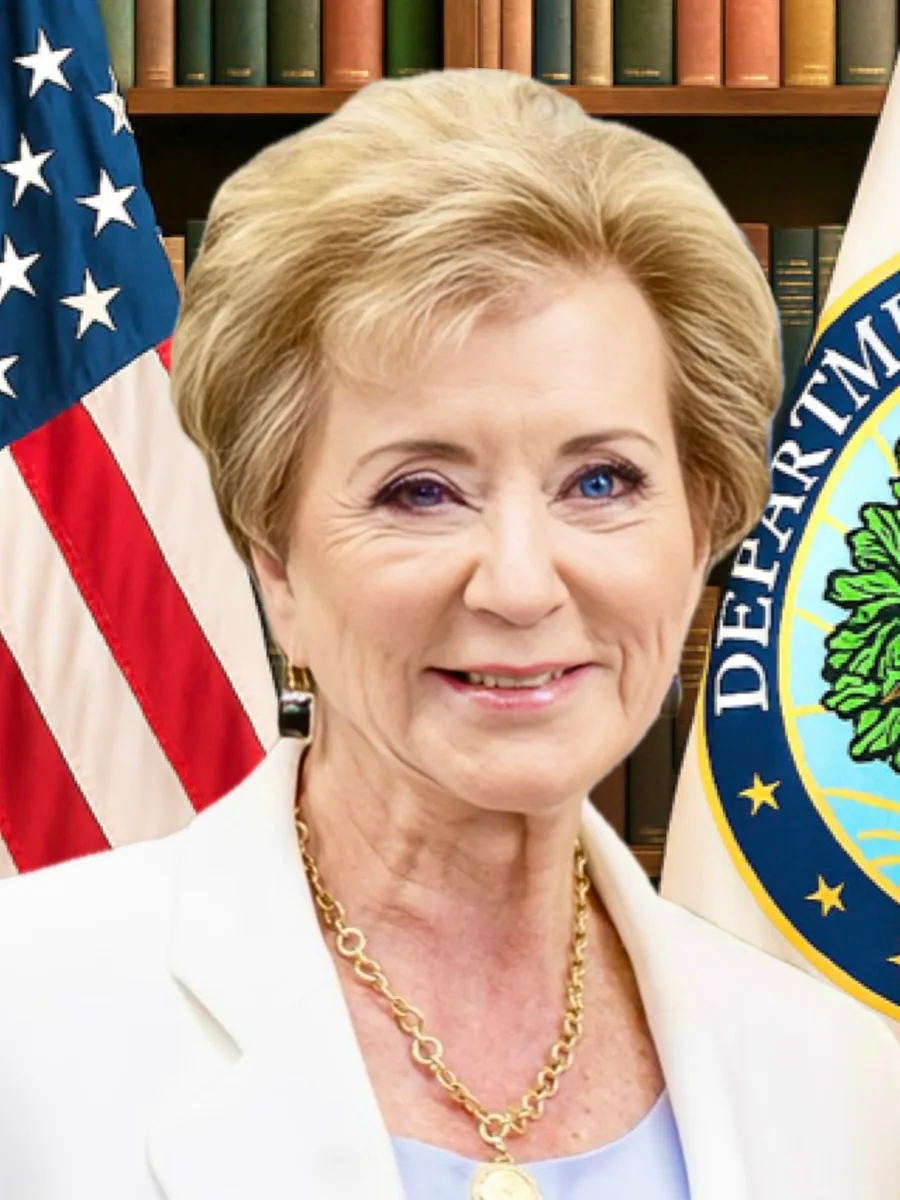
Current Secretary of Education
Linda McMahon
In office since
March 3, 2025
Prior role: Administrator, U.S. Small Business Administration (2017-2019); co-founder and former CEO, WWE
Linda McMahon was confirmed as Secretary of Education on March 3, 2025. She co-founded World Wrestling Entertainment (WWE) with her husband Vince McMahon and served as its CEO for decades before entering government, first as Small Business Administration administrator during the first Trump administration.
McMahon has publicly supported significant restructuring of the department's role, including proposals to shift more education funding and decision-making authority directly to individual states, a position she has pursued as secretary alongside the administration's broader push to reduce the department's footprint.
Major Sub-Agencies & Bureaus
The Education Department carries out its mission through operating divisions and sub-agencies, each with its own specific mandate.
Federal Student Aid manages the federal student loan and grant system, including Pell Grants, Direct Loans, and loan servicing for tens of millions of current and former college students, overseeing a loan portfolio exceeding $1.6 trillion, larger than the entire economy of most countries.
The office has faced sustained public and congressional scrutiny in recent years over loan servicing errors, the rollout of income-driven repayment plans, and the legal fights over broader loan forgiveness proposals, making it one of the most closely watched parts of the entire department's operations.
It runs the Free Application for Federal Student Aid (FAFSA), which about 17 million students file each year to qualify for grants, work-study, and loans; a troubled 2024 redesign delayed aid offers for millions of families. Day-to-day loan servicing is contracted out to a handful of private companies under federal oversight.
Federal loans paused all payments and interest from March 2020 through late 2023 during the pandemic, one of the largest consumer-finance interventions in U.S. history. The office is also responsible for policing colleges' eligibility for federal aid, including "gainful employment" rules and closures of schools that defraud students.
This office investigates complaints alleging discrimination in schools and colleges receiving federal funding based on race, sex, disability, and national origin, enforcing laws including Title IX, which prohibits sex discrimination in federally funded education programs, most visibly in school athletics.
The office resolves thousands of complaints annually and can require schools to change policies or, in rare severe cases, ultimately move to cut off federal funding for institutions found to be in serious, sustained violation of civil rights law.
It enforces Title VI of the Civil Rights Act (race, color, national origin), Title IX (sex), Section 504 of the Rehabilitation Act and the ADA (disability), and the Age Discrimination Act. It receives roughly 20,000 complaints a year with a staff of only a few hundred attorneys and investigators, and most cases end in a negotiated resolution agreement rather than a funding cutoff, which has been used only a handful of times in the office's history.
Its rules on how schools must handle sexual-assault complaints under Title IX were rewritten in 2011, 2020, and again in the 2020s, each time changing the required standard of evidence and hearing procedures, and its interpretation of whether Title IX covers gender identity has shifted with each administration.
This office administers the Individuals with Disabilities Education Act, distributing federal funding to states to support special education services for roughly 7.5 million students with disabilities nationwide, and requires schools to develop individualized education programs tailored to each qualifying student's specific needs.
The office also oversees vocational rehabilitation programs that help people with disabilities prepare for, obtain, and retain employment, coordinating with state vocational rehabilitation agencies that deliver most direct services on the ground.
About 15 percent of all public-school students, one in seven, receive special-education services under IDEA, up from about 8 percent when the law passed in 1975, with specific learning disabilities and speech impairments the most common categories. Parents who disagree with a school's plan have a federal right to a "due process" hearing and can sue.
The vocational rehabilitation program it funds, created by the Rehabilitation Act of 1973, is a roughly $4 billion federal-state grant that serves close to a million people a year with job training, assistive technology, and placement help.
This office administers Title I, the largest source of federal K-12 funding, which directs money to school districts based on the concentration of low-income students they serve, along with other major federal K-12 programs addressing English language learners, rural schools, and school safety.
Title I funding formulas have remained a persistent subject of policy debate, since critics on different sides argue the current formula either under-targets the highest-poverty schools or creates disincentives for districts to reduce concentrated poverty, a tension inherent in how the formula's funding mechanics work.
The office also runs Impact Aid, which reimburses districts that lose local property-tax base because of federal land such as military bases and tribal reservations, and it distributed most of the roughly $190 billion in pandemic "ESSER" relief that flowed to schools between 2020 and 2024.
Title I is delivered through four overlapping formulas that Congress has never simplified; analyses by researchers and the Government Accountability Office have found the formulas can send more per-pupil money to some wealthier states than to poorer ones because part of the calculation is tied to each state's own spending level.
From May 4, 1980 to Today
The predecessor of The Education Department was the education functions of the Department of Health, Education, and Welfare. Here is how the department reached its current form.
Congress created the original Department of Education in 1867 as a small, non-Cabinet statistics-gathering agency intended to collect information on schools nationwide, but within a year it was downgraded to an Office of Education due to political concerns about federal overreach into what was seen as strictly local school governance.
This early agency operated for over a century with minimal funding or authority, primarily compiling education statistics, and moved between several different parent departments before eventually landing inside the Department of Health, Education, and Welfare in 1953.
Federal involvement expanded episodically before 1980: the Morrill Acts of 1862 and 1890 funded land-grant colleges, the GI Bill of 1944 sent millions of veterans to college, and the National Defense Education Act of 1958, a Cold War response to Sputnik, funded science, math, and foreign-language instruction.
The Elementary and Secondary Education Act of 1965, part of President Johnson's Great Society and War on Poverty agenda, created Title I funding for schools serving low-income students, dramatically expanding the federal government's financial role in K-12 education for the first time.
The law has been reauthorized and renamed multiple times since, including as No Child Left Behind in 2001 and the Every Student Succeeds Act in 2015, but its core Title I funding structure targeting high-poverty schools has remained the backbone of federal K-12 education funding for six decades.
The 1965 higher-education companion law created the federal student grant and loan programs that became Pell Grants and Stafford Loans. No Child Left Behind (2001) tied Title I money to annual testing and school-improvement sanctions; the Every Student Succeeds Act (2015) kept the testing but returned most accountability decisions to the states.
President Carter signed legislation in 1979 creating a standalone, Cabinet-level Department of Education, which formally began operations in May 1980, splitting education functions off from the Department of Health, Education, and Welfare, which was simultaneously renamed Health and Human Services.
The department's creation was politically controversial from the start, opposed by many who argued education should remain a state and local matter, and it has remained a recurring target for proposed elimination or significant restructuring by critics who share that view across subsequent decades.
The bill passed the House by only four votes. President Reagan's 1980 platform called for abolishing the department, and his first education secretary was tasked with dismantling it, but the effort failed in Congress; similar proposals have been introduced in nearly every Congress since without becoming law.
The Education for All Handicapped Children Act of 1975 was renamed the Individuals with Disabilities Education Act (IDEA) in 1990 and expanded to strengthen the legal rights of students with disabilities to a free, appropriate public education in the least restrictive environment appropriate for their needs.
IDEA has been reauthorized several times since, most substantially in 2004, and remains the primary federal law shaping how public schools nationwide are legally required to identify and serve students with a wide range of physical, cognitive, and learning disabilities.
Before 1975, U.S. public schools educated only about one in five children with disabilities, and many states had laws explicitly allowing schools to exclude children deemed "uneducable." Two 1972 federal court rulings, in Pennsylvania and Washington, D.C., established a constitutional right to education for these children and spurred Congress to act.
The Health Care and Education Reconciliation Act of 2010 ended the previous system where private banks originated federally guaranteed student loans, moving the federal government to become the direct lender for nearly all federal student loans, a structural shift that significantly expanded the department's own loan portfolio and servicing responsibilities.
This shift consolidated federal student lending under direct department control for the first time, eliminating the middleman role banks had previously played and setting the stage for the department's now-dominant position as the primary lender to American college students.
The change ended the Federal Family Education Loan program, under which the government had paid banks subsidies and covered defaults on loans the banks issued. The Congressional Budget Office projected it would save tens of billions of dollars, much of which the 2010 law redirected to Pell Grants.
Defining Moments
Events that reshaped the department's authority, structure, or public role.
Following the Supreme Court's 1954 Brown v. Board of Education decision, federal education civil rights enforcement, eventually consolidated within the Education Department's Office for Civil Rights, became a central tool for desegregating public schools across the country, often paired with Justice Department litigation.
The threat of losing federal education funding became one of the most effective practical levers the federal government had to compel school desegregation compliance, since by the 1960s many districts had become significantly dependent on federal Title I funding.
Title VI of the Civil Rights Act of 1964, which bars discrimination in any federally funded program, made this leverage possible; in the first years after Title I money began flowing in 1965, the share of Black students in the South attending majority-white schools rose from near zero to over 30 percent within a decade.
The office still conducts most K-12 civil-rights work through data collection and voluntary resolution agreements, and it continues to enforce roughly 200 school-desegregation court orders that date back to that era and have never been formally lifted.
The department's 1983 report 'A Nation at Risk' warned of a 'rising tide of mediocrity' in American public education and is widely credited with launching the modern school accountability and standardized testing movement that has shaped federal and state education policy debates for the four decades since.
The report's stark language and findings prompted a wave of state-level education reforms in the years that followed and remains one of the most influential and frequently cited education policy documents in American history.
It was produced by a commission appointed by Reagan's education secretary, Terrel Bell, partly to build a case for the reforms Bell favored inside an administration that wanted to abolish his department. Its Cold War framing, that mediocre schools amounted to "an act of war," gave education a national-security urgency it had not carried since Sputnik.
Later analysts questioned some of its data, noting for example that average SAT scores had fallen partly because far more students were taking the test. But the report durably shifted the debate toward measurable standards, and every major federal K-12 law since has included some form of testing and accountability.
Outstanding federal student loan debt grew from a few hundred billion dollars in the early 2000s to more than $1.6 trillion today, a surge driven by rising tuition costs and expanded borrowing access, transforming loan management from a secondary department function into arguably its single largest financial responsibility.
The scale of student debt has made loan forgiveness and repayment reform among the most politically contested issues the department handles, with major forgiveness proposals repeatedly challenged in federal court in recent years.
About 43 million Americans hold federal student debt, with a median balance in the low tens of thousands of dollars; a small share of borrowers with graduate and professional degrees hold a large share of the total. Public tuition roughly tripled in inflation-adjusted terms between 1980 and the 2010s as state funding per student fell.
In 2023 the Supreme Court struck down a plan to cancel up to $20,000 per borrower, ruling the department lacked authority for a program of that scale under the law it cited. The department has since pursued narrower cancellation through existing programs such as Public Service Loan Forgiveness and revised income-driven repayment plans, several of which have themselves been challenged in court.
Notable Programs & Initiatives
A selection of the programs The Education Department runs, and what each one is actually for.
Pell Grants provide need-based financial aid to low- and moderate-income undergraduate students, and unlike loans, do not need to be repaid, making them one of the most important tools for expanding college access for students who otherwise could not afford tuition, serving more than 6 million students annually.
The maximum Pell Grant award has not kept pace with rising college costs over recent decades, covering a much smaller share of average tuition today than it did when the program was created in the 1970s, a gap that has fueled broader debates over college affordability.
The maximum award is about $7,400 a year and covered roughly three-quarters of the cost of a four-year public college in the mid-1970s but only about a quarter to a third today. Roughly a third of all undergraduates receive one, and most recipients come from families earning under about $40,000 a year.
The program is technically discretionary but has a mandatory funding add-on, and it has swung between multibillion-dollar shortfalls and surpluses depending on college enrollment. The FAFSA Simplification Act of 2020 restored Pell eligibility to certain incarcerated students, effective July 2023, for the first time since 1994.
Title I is the largest source of federal funding for K-12 education, distributing billions of dollars annually to school districts based on the concentration of low-income students they serve, supporting reading and math intervention programs, additional teachers, and other resources in high-poverty schools nationwide.
Roughly nine in ten U.S. school districts receive some Title I funding, though the amount any individual school receives can vary significantly based on the specific funding formula calculations Congress has periodically debated revising.
Title I distributes about $18 billion a year and reaches roughly 25 million students in about 90,000 schools. The federal share is only about 8 to 10 percent of total K-12 spending, so Title I is influential mainly at the margins and through the strings attached to it.
Schools where at least 40 percent of students are low-income can run "schoolwide" programs that spend the money on the whole school rather than tracking it to individual eligible students, which most Title I schools now do.
Federal IDEA funding helps states and school districts cover the often significantly higher cost of educating students with disabilities, though Congress has never fully funded the program at the 40% federal cost-share level it originally promised when the law passed in 1975, leaving states to cover the funding gap.
This persistent underfunding gap has remained a recurring point of frustration for school districts and disability advocates for decades, since districts remain legally required to provide the mandated services regardless of whether federal funding fully covers the associated costs.
Federal IDEA aid has generally covered only about 13 to 18 percent of the extra cost of special education rather than the authorized 40 percent, a shortfall districts fill from their general budgets, which advocates say pits special-education and general-education spending against each other.
IDEA also funds early-intervention services for infants and toddlers with disabilities (Part C) and has spawned decades of Supreme Court cases defining what a "free appropriate public education" requires, including a 2017 ruling that schools must offer more than minimal progress.
The department offers several income-driven repayment plans that cap federal student loan payments as a percentage of a borrower's discretionary income, with remaining balances forgiven after a set number of years of qualifying payments, and also administers the Public Service Loan Forgiveness program for government and nonprofit employees.
These repayment programs have grown increasingly complex over successive policy changes, and loan servicing errors affecting borrowers' progress toward forgiveness have prompted multiple rounds of congressional hearings and department reform efforts in recent years.
Public Service Loan Forgiveness, enacted in 2007, cancels remaining federal debt after 10 years of payments while working for government or a qualifying nonprofit; when the first cohort became eligible in 2017, more than 98 percent of applications were initially denied, mostly over technicalities, before a 2021-22 overhaul approved hundreds of thousands more.
The newer income-driven plans generally set payments at 5 to 10 percent of discretionary income and forgive balances after 20 to 25 years (or as few as 10 for small original balances). The most generous version, the 2023 SAVE plan, was blocked by federal courts in 2024; the 2025 reconciliation law then ended SAVE and created a new Repayment Assistance Plan beginning in July 2026, and a December 2025 settlement closed SAVE to new enrollment.
How This Affects Everyday Americans
More than 40 million Americans currently hold federal student loans, and the department's loan servicing, forgiveness, and repayment policy decisions directly affect their monthly budgets and long-term financial planning in ways few other federal agencies touch as personally or as widely.
Nearly every public school district in the country receives some form of federal Title I or IDEA funding, meaning department funding decisions directly affect classroom resources, teacher staffing, and services for students with disabilities in schools nationwide, even though most day-to-day education decisions remain with state and local officials.
For the millions of families navigating a child's disability accommodations at school or a college financial aid application, the department's civil rights enforcement and student aid programs are often the most direct and consequential point of contact an ordinary family has with federal education policy.
Every prospective college student who fills out the FAFSA is dealing with this department, and the accuracy and timing of that one form determines what grants, work-study, and loans a family is offered, which for many students decides whether and where they enroll at all.
Quick Facts & Figures
Key statistics and reference information about The Education Department.
| Established | May 4, 1980 |
| Headquarters | LBJ Department of Education Building, Washington, D.C. |
| Current Secretary | Linda McMahon |
| Annual Budget | ~$79 billion (FY2025 discretionary) |
| Employees | ~2,200, smallest Cabinet department by headcount |
| Outstanding Student Loan Debt Managed | ~$1.6 trillion |
| Predecessor Agency | Office of Education within HEW |
| Website | ed.gov |
Did You Know?
The Education Department is the smallest Cabinet agency by employees, roughly 2,200 staff after 2025 cuts, but manages over $1.6 trillion in student loan debt, making it one of the largest financial operations in the entire federal government.
The federal government did not become the direct lender for nearly all federal student loans until 2010, before which private banks originated federally guaranteed loans.
Congress has never actually funded IDEA special education grants at the 40% federal cost-share level it originally promised back in 1975.
The department's 1983 report 'A Nation at Risk' is widely credited with launching the modern school accountability and standardized testing movement still shaping education policy debates today.
Title IX, enforced by the department's Office for Civil Rights, is best known for reshaping school athletics, but it actually covers sex discrimination across all federally funded education programs, not just sports.