

How a Bill
Becomes a Law
You've heard it summarized in 60 seconds. Here's the real story, every step, every obstacle, and why most bills never make it.
The Big Picture
Every law in the United States, from the income tax to the interstate highway system to your health insurance rules, started as a bill. A bill is just a written proposal for a new law, or a change to an existing one. Anyone can have the idea, but only a member of Congress can officially introduce it.
The path from idea to law is long, complicated, and full of places where a bill can die. The founders designed it that way on purpose, they wanted making new laws to be hard, so that only ideas with broad support would make it through.
The Brutal Reality
In a typical two-year Congress, roughly 10,000 to 15,000 bills are introduced. Fewer than 400 become law. That's less than 4%. The vast majority die in committee without ever getting a single vote. The ones that do make it through face a gauntlet of debates, amendments, negotiations, and the ever-present threat of a presidential veto.
Here's every step of that gauntlet, explained plainly.
The 9 Steps, From Idea to Law
Click any step to expand the full details.
Any member of Congress, House or Senate, can write a bill. It could be their own idea, something a voter asked them about, a request from a business or organization, or even a suggestion from the President. The idea gets written up as formal legislation.
In the House, the member drops the bill into a wooden box near the clerk's desk called the "hopper." In the Senate, it's placed on the clerk's desk. Once introduced, the bill gets an official number, House bills start with "H.R." and Senate bills start with "S."
Members rarely write the legal text themselves. Nonpartisan lawyers in the House and Senate Offices of Legislative Counsel draft the precise wording, and outside groups, executive-branch agencies, and lobbyists frequently supply model language. Roughly 10,000 to 15,000 bills are introduced in each two-year Congress, and only about 3 to 5 percent become law.
A bill gains momentum by attracting cosponsors, other members who formally add their names. A large, bipartisan cosponsor list signals to leadership that a measure has support and is worth scheduling. Companion bills, identical texts introduced in both chambers at once, are a common way to move a priority faster.
Only members of Congress can formally introduce a bill, but the President's budget request and State of the Union effectively hand Congress a legislative agenda every year, and a sympathetic member will introduce "the administration's bill" on the White House's behalf.
The bill gets assigned to a committee that specializes in that topic. A tax bill goes to the Ways and Means Committee. A military bill goes to Armed Services. A healthcare bill goes to Energy and Commerce. This is where most bills quietly die, the committee simply never schedules a vote on it.
The committee can hold hearings, invite experts to testify, rewrite the bill entirely, or just let it sit there forever. If the committee votes to move it forward, it's said to have been "reported out" of committee. If they never vote on it, the bill is dead. This is called "dying in committee" and it happens to the majority of all bills introduced.
The line-by-line rewrite session is called a "markup," where committee members offer and vote on amendments. A bill may be referred to more than one committee if it touches several areas; the Speaker or the Senate parliamentarian decides. Subcommittees often do the first round of work before sending a bill up to the full committee.
The committee chair controls the schedule and can bury a bill simply by never calling it up. The House has a rarely successful workaround, a "discharge petition" signed by 218 members forces a bill out of committee to the floor, but leadership pressure keeps most members from signing one against their own party.
When a committee reports a bill, it publishes a written "committee report" explaining the bill's purpose, cost, and section-by-section meaning. Courts and agencies later consult these reports as legislative history when a statute's wording is ambiguous.
In the House, before a bill can be debated on the floor, it has to go through the Rules Committee, which sets the terms of debate. How long can members speak? Can amendments be added? Which amendments? This committee has enormous power over what gets a real shot.
The Senate works differently, it has no Rules Committee controlling floor debate the same way. Instead, the Majority Leader schedules bills and senators can speak for as long as they want (hello, filibuster). Getting 60 votes to end debate (cloture) is often harder than passing the bill itself.
In the House, the Rules Committee issues a "rule" for each major bill. A "closed rule" bars all amendments; an "open rule" allows any germane amendment; a "structured rule" permits only a listed set. The Rules Committee is stacked for the majority party by a fixed 9-to-4 ratio regardless of the overall House margin, giving leadership tight control of the floor.
The House also uses "suspension of the rules" for non-controversial bills, limiting debate to 40 minutes and barring amendments but requiring a two-thirds vote to pass. Hundreds of minor bills, post office namings, commemorative resolutions, technical fixes, move this way each Congress.
In the Senate, most business actually happens by "unanimous consent agreements" negotiated between the two party leaders, which set debate time and which amendments are in order. A single senator can block one of these, which is why Senate floor scheduling is a constant negotiation.
The full chamber debates the bill. Members argue for it, against it, propose changes (amendments), and make their case on the record. In the House, debate is strictly timed. In the Senate, it can go on for days, or be blocked indefinitely by a filibuster.
During debate, members can propose amendments, changes to the bill's text. Some amendments improve the bill. Some are designed to kill it by making it unpassable. Some are political statements that members know will fail but want on the record. Floor debate is often where the real negotiating happens.
House amendments must be "germane," directly relevant to the bill, a rule the Senate largely lacks, which is why unrelated "riders" are far more common on Senate bills. A "poison pill" amendment adds something so objectionable that members who backed the bill must now vote against it.
Time is managed differently in each chamber. In the House, the majority and minority floor managers each control half of a fixed debate time and yield short blocks to colleagues. In the Senate, a member who has the floor can hold it until they yield, sit down, or are cut off by cloture.
Debate is recorded verbatim in the Congressional Record, though members may "revise and extend" their remarks afterward, inserting text they never actually spoke. C-SPAN has carried live House floor proceedings since 1979 and the Senate since 1986.
After debate, the chamber votes. In the House, a simple majority wins, 218 out of 435 votes. In the Senate, a simple majority is 51 out of 100. If the bill passes, it moves to the other chamber. If it fails, it's dead.
House members vote electronically, they insert a card into a station anywhere in the chamber and have 15 minutes to do it. Senate votes are done by voice or roll call and can take longer. A member who is absent doesn't vote, there's no "present but not voting" counted toward the majority.
The threshold is a majority of members present and voting, so if many members are absent, a House bill can pass with fewer than 218 yes votes. Some measures need supermajorities set by the Constitution or Senate rule: two-thirds to override a veto, propose an amendment, or expel a member, and 60 to end a Senate filibuster.
Voice votes ("all in favor say aye") are used for uncontested items; any member can demand a recorded roll-call vote instead. In the House a roll call requires the support of one-fifth of a quorum; in the Senate, eleven senators.
Leadership counts votes in advance through the whip system, and a bill is usually not scheduled unless the outcome is known. A "motion to recommit" in the House gives the minority one last chance to send a bill back to committee just before final passage; since 2021, House rules no longer let that motion carry amending instructions.
After passing one chamber, the bill goes to the other one and starts the whole process over, committee review, floor debate, vote. The other chamber can pass it as-is, change it, or kill it entirely. Both chambers must pass the EXACT same version of the bill.
This is where things often get complicated. The Senate might like the House bill but want to change some details. Or the House might not like what the Senate did to their bill. Both chambers have to end up with identical text before it can go to the President.
Chambers reconcile differences in one of two ways: "ping-pong," where the bill bounces back and forth with each side amending the other's version until they match, or a formal conference committee (next step). Since the 2010s, ping-pong has become far more common than conference for major bills.
The second chamber can also simply pass the first chamber's bill unchanged, sending it straight to the President; this is common when leadership has pre-negotiated the text or when a deadline, a government-funding lapse or a debt-limit date, leaves no time to amend.
A bill that does not clear both chambers before the two-year Congress ends is dead and must be reintroduced from scratch in the next Congress. This "sine die" deadline is why year-end sessions are often crowded with last-minute passage attempts.
If the House and Senate pass different versions of the same bill, a conference committee is formed, a group of members from both chambers who sit down together and hammer out a single agreed-upon version. Both chambers then vote on this final version.
Conference committees are where some of the most important deal-making in Congress happens. Members from both sides negotiate in detail, sometimes trading provisions back and forth. The result, called the "conference report", goes back to both chambers for a final up-or-down vote with no further amendments allowed.
Conferees ("managers") are appointed by the leadership of each chamber, usually drawn from the committees that handled the bill, and are supposed to stay within the scope of the differences between the two versions, though in practice conference reports sometimes add new material.
Once conferees agree, the conference report cannot be amended and gets a single yes-or-no vote in each chamber. For budget reconciliation bills, Senate debate on the report is capped at 10 hours, so it cannot be filibustered; an ordinary conference report can still be filibustered and may need a cloture vote. This makes conference a powerful tool for locking in a compromise.
Formal conferences have grown rare: for years the Senate minority routinely blocked the procedural motions needed to convene one, so leaders shifted to ping-pong. High-profile bills like the annual defense authorization act are among the few that still regularly use a full conference.
Once both chambers pass identical versions, the bill goes to the President. The President has four options: sign it into law, veto it, do nothing for 10 days while Congress is in session (it becomes law automatically), or do nothing for 10 days while Congress is NOT in session (pocket veto, it dies).
Most bills that make it this far get signed. Presidents typically work with Congress on legislation they want passed, so a bill rarely reaches the President's desk as a surprise. A veto sends the bill back to Congress with the President's objections. It's a serious political confrontation.
The 10-day clock (Sundays excluded) starts when the enrolled bill is formally presented to the White House, which congressional leaders sometimes delay deliberately. If Congress adjourns during the 10 days and the President has not signed, the bill dies without a return veto, the "pocket veto," which Congress cannot override because there is nothing to send back.
Presidents often issue a "signing statement" when they sign a bill, sometimes noting provisions they consider unconstitutional and intend not to enforce, a practice that expanded sharply under recent administrations and that critics call a form of line-item veto the Constitution does not allow.
The President cannot veto part of a bill. Congress gave the president a line-item veto in 1996, but the Supreme Court struck it down in Clinton v. City of New York (1998) as a violation of the Presentment Clause, so a president must accept or reject each bill whole.
If the President vetoes the bill, Congress can still make it law, but only with a two-thirds supermajority vote in BOTH chambers. That means 290 out of 435 House members and 67 out of 100 senators all have to vote yes. This is extremely difficult to pull off.
Veto overrides are rare, historically, Congress overrides only about 7% of presidential vetoes. It requires members of the President's own party to vote against their party leader, which is a politically painful move. Most vetoed bills simply die at this stage.
Through 2024, presidents had issued about 2,580 vetoes (roughly 1,520 regular vetoes and 1,066 pocket vetoes), and Congress had overridden 112 of them. Franklin Roosevelt vetoed the most bills, 635 over 12 years; several presidents, including John Adams, Thomas Jefferson, and John Quincy Adams, never vetoed a single bill.
An override vote happens first in the chamber where the bill originated; if it fails there, the other chamber does not vote. A pocket veto cannot be overridden at all, because the bill is simply dead and there is no veto message to act on.
The first veto override in U.S. history came in 1845, over President John Tyler's rejection of a revenue-cutter bill. High-profile modern overrides include the 1986 sanctions on apartheid South Africa (over Reagan's veto) and the 2016 law letting 9/11 families sue Saudi Arabia (over Obama's veto).
The Path at a Glance
Any member of Congress
Most bills die here
Simple majority needed
Must pass in identical form
Negotiated compromise
10 days to act
Done!
Congress can override with 2/3 vote in both chambers, very rare
What the President Can Do With a Bill
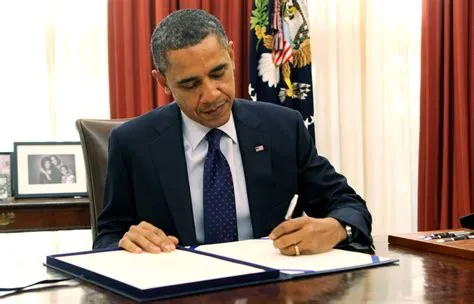
A bill signing ceremony at the White House, the final step before a bill becomes law (Public Domain)
When a bill lands on the President's desk, they have four options, and each one has a different outcome:
Sign It
Becomes LawThe President signs the bill and it immediately becomes the law of the land. Most bills that make it this far get signed, the President usually knows what's coming and has been involved in shaping it.
Veto It
Sent Back to CongressThe President rejects the bill and sends it back to Congress with a written explanation of their objections. Congress can try to override the veto with a two-thirds vote in both chambers, but that rarely succeeds.
Do Nothing (Congress in Session)
Becomes Law After 10 DaysIf the President does nothing for 10 days while Congress is still in session, the bill becomes law automatically, without a signature. Presidents sometimes do this to distance themselves from an unpopular bill they still want passed.
Pocket Veto
Bill DiesIf the President does nothing for 10 days AND Congress adjourns during that time, the bill dies automatically. This is called a pocket veto, named because the President effectively "pockets" the bill and ignores it. Congress cannot override a pocket veto.
House vs Senate, The Process Is Different in Each
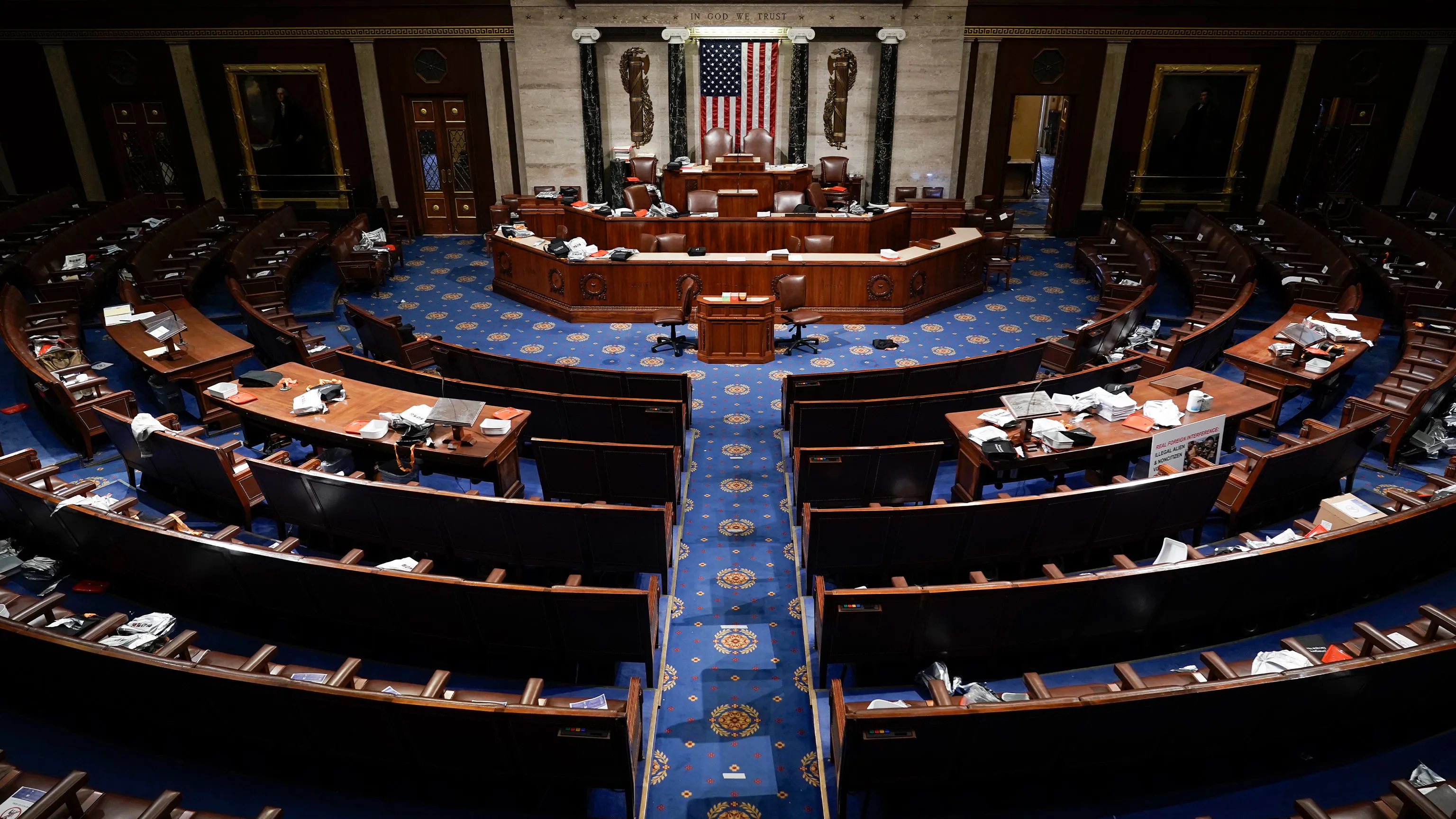
The House chamber, 435 members, strict debate rules
In the House
- ›Debate time is strictly limited, usually just a few minutes per member
- ›The Rules Committee controls exactly what can be debated and amended
- ›Bills need 218 votes to pass (simple majority of 435)
- ›Revenue and tax bills MUST start here, the Constitution requires it
- ›The Speaker of the House controls the agenda and what gets a vote
- ›Faster moving, a determined majority can pass things quickly
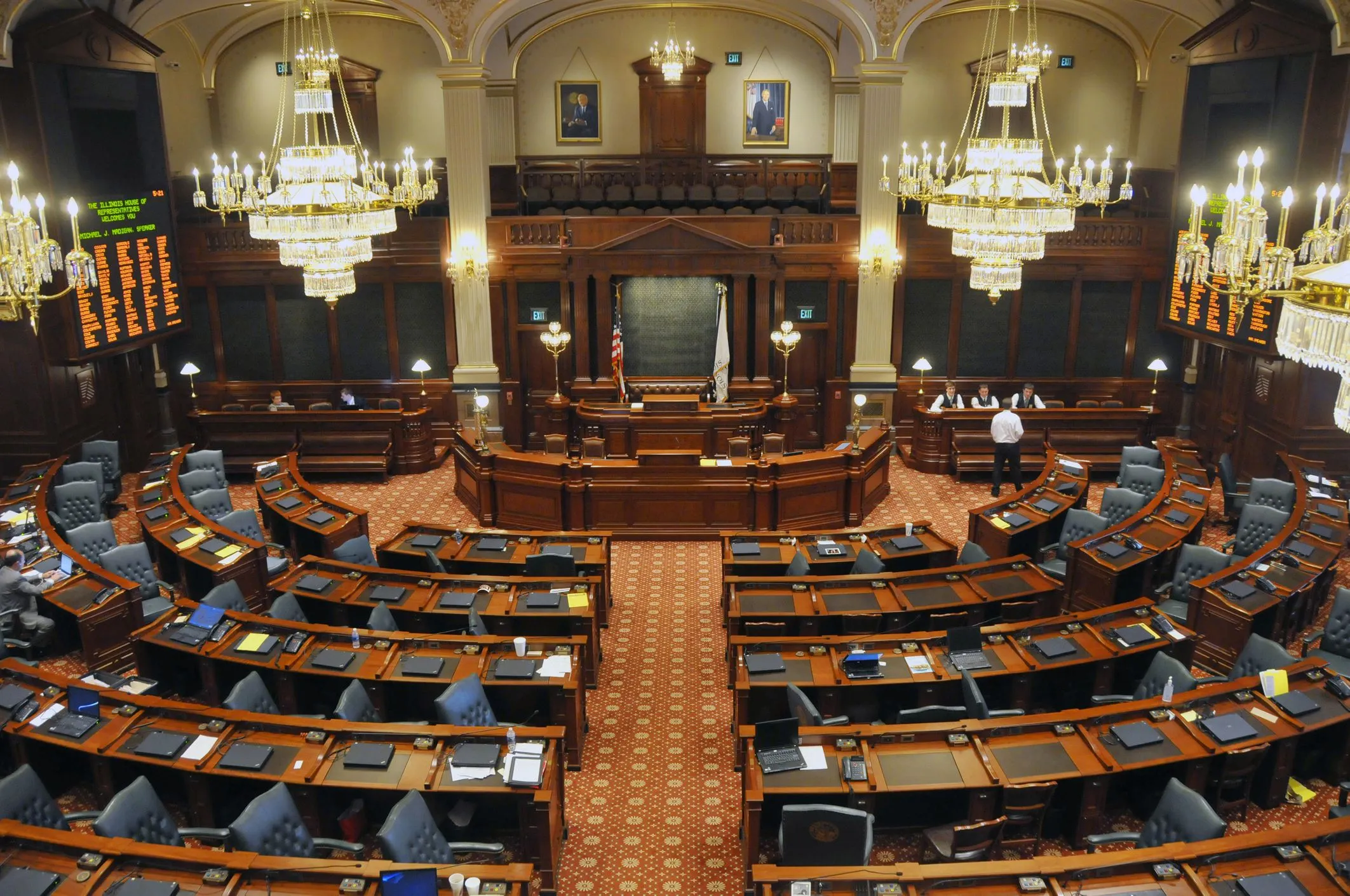
The Senate chamber, 100 members, unlimited debate
In the Senate
- ›Debate has almost no time limits, senators can speak as long as they want
- ›Any senator can filibuster, talking indefinitely to block a vote
- ›60 votes needed to end a filibuster (cloture), harder than the 51 to pass
- ›Bills need 51 votes to pass, but 60 to even get to a vote
- ›The Majority Leader schedules bills but has less control than the Speaker
- ›Slower moving, the minority party has real power to delay things
Not All Bills Are the Same
Congress doesn't just pass one kind of legislation. There are several different types, each with slightly different rules:
Bills (H.R. or S.)
The most common type. Proposes a new law or changes an existing one. Has to pass both chambers and be signed by the President. Becomes a Public Law.
Joint Resolutions
Similar to bills, must pass both chambers and usually get presidential approval. Often used for emergency measures or declaring war. Joint resolutions proposing constitutional amendments are the exception: they need two-thirds of each chamber and go to the states, not the President.
Concurrent Resolutions
Passed by both chambers but does NOT go to the President and does NOT become law. Used for setting congressional rules or expressing the sense of Congress on an issue.
Simple Resolutions
Passed by only ONE chamber. Used for internal rules, expressing opinions, or honoring individuals. Does not become law and doesn't require the other chamber's approval.
Appropriations Bills
Special bills that fund the government. Must be passed every year, without them, the government shuts down. There are 12 of them covering every area of federal spending.
Reconciliation Bills
A special fast-track process for budget-related legislation that bypasses the filibuster in the Senate. Requires only 51 votes instead of 60. Used for major tax and spending changes.
The Real Talk: Why It's So Hard
The process you just read about was designed to be hard. The founders were deeply suspicious of fast, sweeping change, they'd just fought a revolution against a government that acted without the people's consent. So they built a system with speed bumps at every turn.
Divided government makes it even harder
When one party controls the House and the other controls the Senate, or when a president of one party faces a Congress controlled by the other, passing almost anything is nearly impossible. Each side can block the other at multiple points.
Riders and poison pills
Members sometimes attach unrelated provisions to popular bills to either sneak them through or force the other side to vote against something they'd otherwise support. A bill funding disaster relief might have a controversial immigration provision attached, forcing a painful vote.
The 60-vote Senate problem
In theory, the Senate needs only 51 votes to pass a bill. In practice, almost everything needs 60 votes to get past the filibuster threat. This single rule is responsible for more legislative gridlock than almost anything else in the modern era.
Lobbyists and outside pressure
Corporations, unions, nonprofits, and interest groups spend billions of dollars lobbying Congress to shape legislation in their favor, or kill it entirely. A bill that seems straightforward can run into a wall of organized opposition from well-funded outside groups.
Quick Facts
Where to Find It
Did You Know?
The "Hopper"
In the House, bills are introduced by dropping them into a wooden box called the hopper near the clerk's desk. It's been used since 1789. There's nothing high-tech about it.
A bill can sit for years
There's no expiration date within a two-year Congress, a bill introduced on Day 1 can still become law on the last day. But when a new Congress begins, all unfinished bills die and have to be reintroduced from scratch.
The longest one-person filibuster
Senator Strom Thurmond spoke for 24 hours and 18 minutes straight in 1957 to block the Civil Rights Act. He ate steak beforehand and kept a bucket nearby. The bill passed anyway. Senator Cory Booker's 25-hour, 5-minute speech in April 2025 broke Thurmond's record for the longest Senate floor speech, though it was not a filibuster against a bill.
Some bills are just a sentence long
Not all bills are hundreds of pages. Some are a single sentence changing one word in an existing law. Others, like major healthcare or tax bills, run thousands of pages that almost nobody reads in full before voting.