
Two Failed Central Banks Before the Fed Ever Existed
The Federal Reserve was not the country's first attempt at a central bank, it was the third, arriving only after the First and Second Banks of the United States were each killed for political reasons and the country spent 77 years without any lender of last resort at all. That history of repeated failure and repeated financial panic is why the 1913 Federal Reserve Act split power across 12 regional banks rather than concentrating it in one place, a design choice still shaping the System's structure and its legal disputes today.
Treasury Secretary Alexander Hamilton persuaded Congress to charter the First Bank of the United States in 1791 to stabilize the young nation's finances, manage the Revolutionary War debt Hamilton had convinced the federal government to assume from the states, and issue a uniform currency. Thomas Jefferson and other opponents argued the Constitution granted Congress no explicit power to charter a bank, a dispute President Washington resolved by signing the bill after Hamilton argued the power was implied by Congress's authority to regulate commerce and currency.
The Bank operated with a 20-year charter, part public and part privately owned, and served as the federal government's fiscal agent while also functioning as the country's largest commercial bank. Its charter expired in 1811 after the Senate deadlocked and Vice President George Clinton cast the tie-breaking vote against renewal, leaving the United States without a central bank just as it entered the War of 1812.
Hamilton's 1790 Report on a National Bank drew on the model of the Bank of England, founded in 1694. Congress chartered the Bank with $10 million in capital, of which the federal government subscribed $2 million and private investors the rest, and it opened its main office in Philadelphia with branches in eight cities.
The constitutionality argument, implied powers versus strict construction, became a founding template for American constitutional debate and was vindicated a generation later when Chief Justice John Marshall, in McCulloch v. Maryland (1819), upheld the Second Bank and Congress's implied power to create it.
Wartime inflation and a chaotic patchwork of state-chartered bank notes during the War of 1812 convinced Congress to charter the Second Bank of the United States in 1816, again for 20 years, with a structure similar to the first: part private ownership, part federal oversight, and headquartered in Philadelphia in the building whose HABS photograph appears below. President James Madison, who had opposed the First Bank's constitutionality in 1791, signed the Second Bank's charter after concluding the country's monetary chaos left little practical alternative.
Under President Nicholas Biddle, the Second Bank grew into the country's dominant financial institution, effectively regulating the lending practices of smaller state banks by choosing whether to accept their notes at face value. That regulatory power over state banks, welcomed by some as a stabilizing force, became the central grievance in the political fight that ended the Bank a generation later.
The Second Bank was capitalized at $35 million, three and a half times the first, and the federal government again held a one-fifth stake and appointed five of its 25 directors. Its early years were troubled: mismanagement under its first president contributed to the Panic of 1819, the nation's first major peacetime financial crisis.
McCulloch v. Maryland (1819) settled the Bank's constitutionality when Maryland tried to tax its Baltimore branch; Marshall's opinion held that "the power to tax involves the power to destroy" and that a state could not tax a federal instrument. The ruling entrenched the doctrine of implied powers but did not save the Bank politically.
President Andrew Jackson viewed the Second Bank as an unaccountable concentration of financial power benefiting wealthy elites and vetoed its 1832 recharter bill, arguing in his veto message that the Bank was unconstitutional and operated for private profit at the public's expense. Jackson then ordered federal deposits withdrawn from the Bank and redistributed to state banks, a move so controversial his own Treasury Secretary refused to carry it out and was replaced before Jackson found one who would.
The Second Bank's federal charter expired in 1836 and was not renewed, and the United States went without any form of central bank for the next 77 years. That gap coincided with a long stretch of recurring financial panics, including major crises in 1837, 1857, 1873, 1893, and 1907, each of which exposed the country's lack of any institution able to act as a lender of last resort during a banking crisis.
Jackson's July 1832 veto message framed the Bank as a tool of "the rich and powerful" who "bend the acts of government to their selfish purposes," and it became a model of populist executive rhetoric. Henry Clay, the Bank's champion, made recharter the centerpiece of his losing 1832 presidential campaign against Jackson.
After the charter lapsed, federal deposits sat in politically selected "pet banks," fueling a speculative land boom that collapsed in the Panic of 1837 and a long depression. The Independent Treasury system that followed kept federal funds in government vaults, cut off from the banking system, an arrangement that lasted in various forms until 1913.
Congress passed the National Banking Acts of 1863 and 1864 during the Civil War, primarily to help finance the Union war effort and create a stable national currency. The Acts established a system of federally chartered national banks authorized to issue a uniform national currency backed by U.S. government bonds, replacing the confusing array of thousands of different state bank notes then in circulation.
The new system solved the currency problem but did nothing to prevent bank panics, since it created no institution with the authority to expand the money supply during a crisis or act as a lender of last resort to banks facing a run. The system's rigidity, unable to flexibly respond to seasonal or emergency demands for currency, is widely cited by economic historians as a direct contributor to the severity of the Panic of 1907.
A 10 percent federal tax on state bank notes, enacted in 1865, drove most state notes out of circulation and pushed banks to take national charters. The Acts also created the Office of the Comptroller of the Currency to charter and examine national banks, an agency that still exists within the Treasury.
Because national bank note issuance was tied to the amount of federal bonds a bank deposited, the currency supply could not expand when the public suddenly wanted cash, as happened every autumn at harvest time and in every panic. This "inelastic currency" problem was the specific defect the 1913 Federal Reserve Act set out to fix.
The Panic of 1907, in which financier J.P. Morgan personally organized a coalition of bankers to backstop the financial system because no central bank existed to do so, convinced Congress that the United States needed a permanent lender of last resort. Congress created the National Monetary Commission under the 1908 Aldrich-Vreeland Act to study the problem, and its work, along with a compromise plan crafted by Representative Carter Glass and Senator Robert Owen, became the basis for the Federal Reserve Act.
President Woodrow Wilson signed the Federal Reserve Act into law on December 23, 1913, creating a system of 12 regional Federal Reserve Banks overseen by a Federal Reserve Board in Washington, D.C. The design deliberately diffused power geographically, a response to widespread fear, especially outside the Northeast, that a single central bank would be dominated by Wall Street, according to the Federal Reserve's own historical account of the Act's signing.
The 1910 secret meeting at Jekyll Island, Georgia, attended by Senator Nelson Aldrich and several New York bankers, produced the "Aldrich Plan" for a banker-controlled central bank, which Democrats rejected as a Wall Street scheme. The Glass-Owen bill that passed instead added the Washington-based, presidentially appointed Federal Reserve Board on top of the regional banks.
The Act was a compromise: bankers got a lender of last resort and an elastic currency, the Federal Reserve note still in use today, while agrarian and Western interests got geographic decentralization and public oversight. Wilson signed it on December 23, 1913, two days before Christmas, using four pens he distributed to the bill's sponsors and allies.
The original Federal Reserve Board included the Treasury Secretary and the Comptroller of the Currency as voting members, giving the executive branch direct influence over the System's governance. The Banking Act of 1935, passed in the aftermath of the Great Depression, removed both officials from the Board, renamed it the Board of Governors, and restructured it as seven presidentially appointed members serving staggered 14-year terms, a structure designed to insulate the Board from short-term political pressure.
The 1935 Act also formally created the Federal Open Market Committee (FOMC) in roughly its current form, with the Board of Governors and a rotating group of Reserve Bank presidents jointly setting national monetary policy through securities purchases and sales, replacing an earlier, looser arrangement in which each regional Reserve Bank had set its own policy with far less central coordination.
The 1933 Glass-Steagall Act had already separated commercial and investment banking and created federal deposit insurance; the 1935 Act completed the New Deal overhaul of the Fed by concentrating power in Washington. Marriner Eccles, President Roosevelt's Fed chairman and the law's chief architect, wanted a strong central board able to run a national monetary policy.
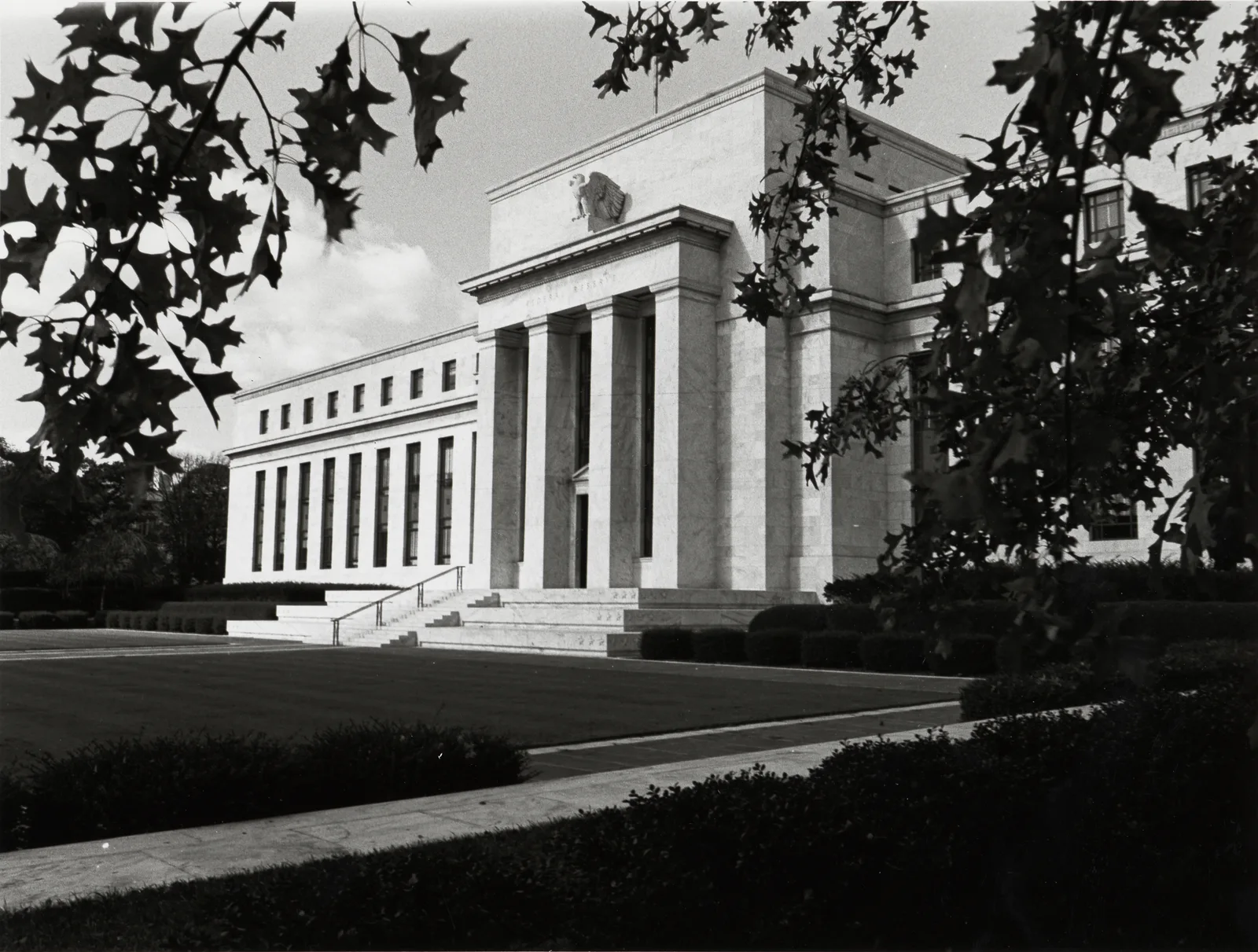
The 1935 Act stripped the Reserve Banks of their independent power to set discount rates without Board approval and gave the new Board of Governors control over reserve requirements. The Fed's Washington headquarters, completed in 1937, is named the Marriner S. Eccles Building for him.
During and after World War II, the Fed was obligated to keep interest rates on government bonds low and stable to help the Treasury finance the war debt cheaply, effectively subordinating monetary policy to the Treasury's debt-management needs. As inflation rose after the war, this arrangement increasingly conflicted with the Fed's ability to fight rising prices by raising interest rates.
On March 4, 1951, the Treasury and the Federal Reserve announced they had reached "full accord with respect to debt management and monetary policies," ending the Fed's obligation to peg interest rates on government debt. Historians and the Federal Reserve's own historical archive both describe the 1951 Accord as the moment the Fed became operationally independent to set monetary policy based on economic conditions rather than the government's borrowing needs.
The dispute came to a head in 1950 and 1951 when the Fed, under Chairman Thomas McCabe, refused Treasury Secretary John Snyder's demand to keep pegging the long-term bond rate at 2.5 percent as Korean War spending stoked inflation. President Truman summoned the entire FOMC to the White House, an almost unheard-of step, and briefly claimed it had agreed to hold the peg.
The Accord announced on March 4, 1951 freed the Fed to let rates move with the economy. McCabe resigned days later and was replaced by William McChesney Martin, who had negotiated the deal for Treasury and went on to serve as Fed chair for nearly 19 years, the longest tenure in the institution's history.
By the late 1970s, the United States faced double-digit inflation combined with stagnant growth, a combination economists called "stagflation" that conventional monetary policy tools of the era struggled to address. President Jimmy Carter appointed Paul Volcker as Fed chair in August 1979, and Volcker moved quickly to prioritize fighting inflation over supporting near-term economic growth, a shift that would define his chairmanship.
Volcker's Fed pushed the federal funds rate above 19 percent by 1981, deliberately inducing a sharp recession and pushing unemployment above 10 percent in order to break the inflationary spiral. Inflation fell from a peak above 13 percent in 1980 to under 4 percent by 1983, and Volcker's tenure is widely credited by economic historians with restoring the credibility of the Fed's commitment to price stability for decades afterward.
On October 6, 1979, in a rare Saturday announcement, Volcker's Fed shifted from targeting interest rates to targeting money-supply growth directly, accepting that rates would swing sharply as a result. The federal funds rate, around 11 percent when he took over, exceeded 19 percent at its 1981 peak, and the prime lending rate hit 21.5 percent.
The 1981 to 1982 recession was the deepest since the 1930s, with unemployment reaching 10.8 percent in late 1982. Volcker was reappointed by President Reagan in 1983 and served until 1987; the long stretch of low inflation that followed, into the 2000s, is often called the "Great Moderation."
The 2008 global financial crisis, triggered by the collapse of the U.S. subprime mortgage market and the failure of major financial institutions including Lehman Brothers, pushed the Fed to invoke emergency lending powers under Section 13(3) of the Federal Reserve Act on a scale not seen since the Great Depression, extending credit to banks, investment firms, and even non-financial commercial paper markets to prevent a broader collapse of the financial system.
Congress responded with the Dodd-Frank Wall Street Reform and Consumer Protection Act of 2010, which gave the Fed expanded authority to supervise large, systemically important financial institutions, created the Financial Stability Oversight Council to monitor system-wide risk, and required the Fed to conduct annual stress tests on major banks, while also imposing new restrictions on the emergency lending powers the Fed had relied on during the crisis.
Between 2007 and 2009 the Fed cut the funds rate from 5.25 percent to a range of 0 to 0.25 percent and launched the first rounds of large-scale asset purchases, buying Treasuries and mortgage-backed securities to push down long-term rates once short-term rates could go no lower. Its balance sheet roughly tripled, from about $900 billion to $2.3 trillion, by 2010.
Dodd-Frank required that any future 13(3) emergency lending be broad-based rather than aimed at a single failing firm, and subject to Treasury Secretary approval and prompt disclosure to Congress. It also moved consumer financial protection out of the Fed into a new Consumer Financial Protection Bureau.
As the COVID-19 pandemic triggered a sudden economic shutdown in March 2020, the Fed cut its target interest rate to near zero and, working with the Treasury Department, stood up an unprecedented set of emergency lending facilities under its 13(3) authority, including programs to directly purchase corporate bonds and support lending to mid-sized businesses through the Main Street Lending Program, tools well beyond the Fed's traditional focus on banks.
The Fed's balance sheet, which stood under $1 trillion before the 2008 crisis, grew past $4 trillion during the pandemic response and peaked near $9 trillion in 2022 after a subsequent round of asset purchases, before the Fed began deliberately shrinking its holdings through a process known as quantitative tightening, according to the Fed's own published balance sheet data.
In March 2020 the Fed cut rates to near zero in two emergency moves, restarted asset purchases at a pace of up to $75 billion a day in Treasuries at the peak, and used roughly $450 billion in Treasury-provided loss backing under the CARES Act to launch 13(3) facilities for corporate credit, municipal debt, and mid-sized business loans.
Most of the 2020 emergency facilities lent far less than their headline capacity and closed by early 2021, but the signal that the Fed would backstop markets was credited with stabilizing them quickly. The inflation surge of 2021 and 2022, which the Fed initially called "transitory," led to the fastest rate increases since Volcker, from near zero to over 5 percent in about 16 months.
Jerome Powell's term as Fed chair, which began in 2018, expired on May 15, 2026, capping a tenure that included the COVID-19 emergency response, the fastest interest rate increases in decades to fight the inflation that followed, and a running political conflict with President Trump over both interest rate policy and a Justice Department criminal investigation into cost overruns on the Fed's headquarters renovation project, an investigation the Department dropped without charges in April 2026. Powell served briefly as chair pro tempore and, per the Federal Reserve Board, remained on the Board of Governors afterward, with his term as a governor continuing until January 2028.
The Senate confirmed Kevin Warsh as the 11th Fed chair of the modern era on a 54-45 vote on May 13, 2026, one of the closest and most party-line confirmation votes for a Fed chair in the position's history, and he was sworn in on May 15 with his first FOMC meeting as chair held June 16-17, 2026. The narrow, largely partisan vote marked a departure from the historically bipartisan confirmations most modern Fed chairs have received, according to reporting on the confirmation by NPR and CNBC.
By statute the Fed chair serves a renewable four-year term as chair, separate from a 14-year term as a governor, and the President designates the chair from among sitting governors subject to Senate confirmation. Powell, a Republican first named chair by President Trump in 2018 and reappointed by President Biden in 2022, had a governor term running to January 2028.
Kevin Warsh served as a Fed governor from 2006 to 2011, during the financial crisis, and had been a frequent candidate for the chairmanship in earlier years. Most modern Fed chairs, including Volcker, Greenspan, Bernanke, Yellen, and Powell, were confirmed by broad bipartisan Senate majorities regardless of which party nominated them, a norm reporting described the 2026 vote as breaking.
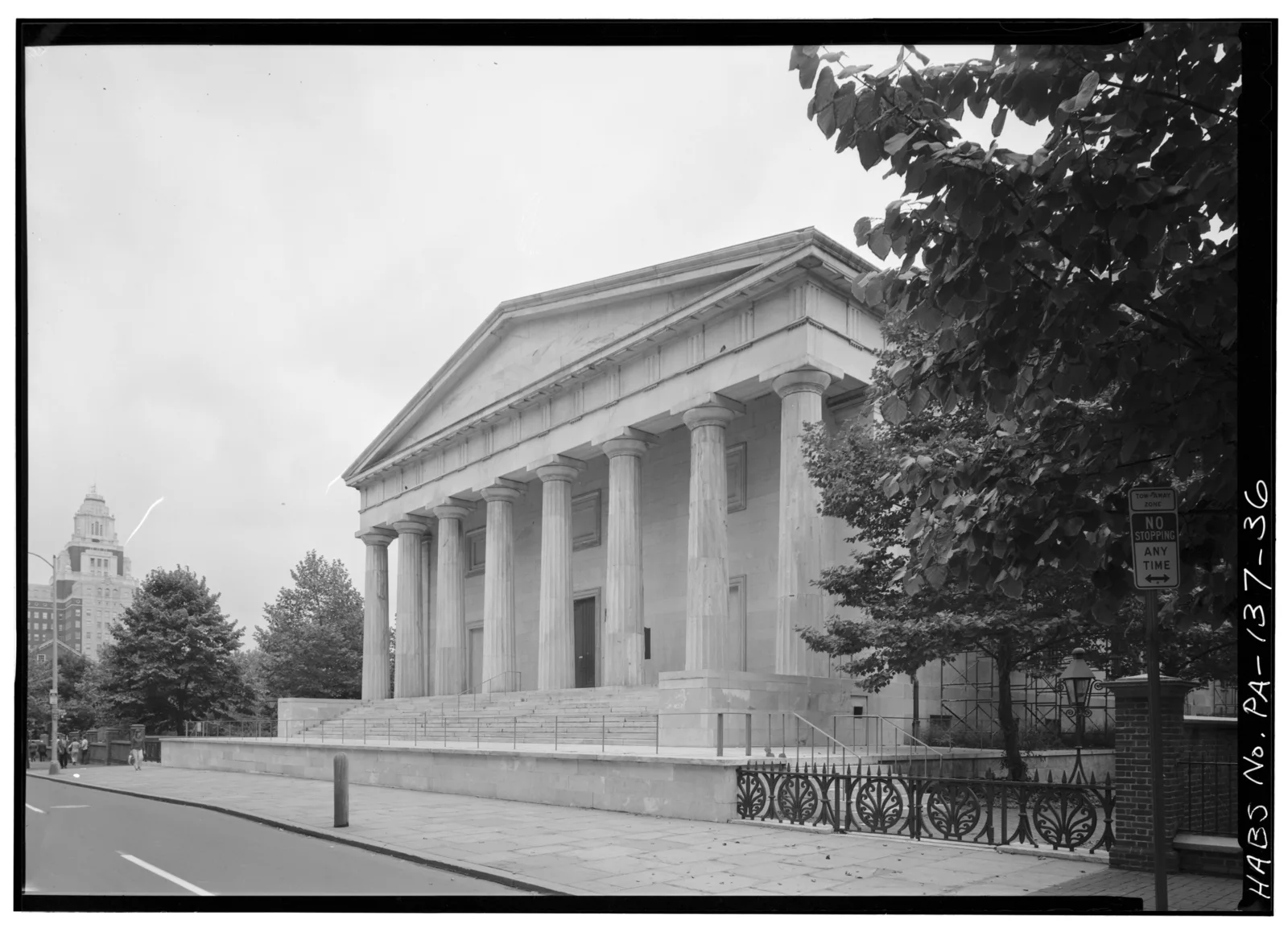
The Second Bank of the United States in Philadelphia, chartered in 1816 and closed after Andrew Jackson's 1832 veto of its recharter, one of two earlier central banks that preceded the Federal Reserve by nearly a century.
A System of Three Parts, Deliberately Divided
The 1913 Federal Reserve Act split authority across a Washington board, 12 regional Reserve Banks, and a rate-setting committee specifically so no single city or interest group could dominate the country's money supply the way critics accused Wall Street and the earlier national banks of doing. That original compromise still defines how the Fed is funded, staffed, and governed more than a century later.
The Federal Reserve System is not one institution but three working together: a Board of Governors in Washington, D.C., 12 regional Federal Reserve Banks spread across the country, and the Federal Open Market Committee (FOMC), which sets national monetary policy by combining members of the Board with a rotating group of Reserve Bank presidents. This deliberately divided structure traces directly back to the 1913 Federal Reserve Act's compromise design, meant to balance centralized authority against regional representation.
The 12 regional Reserve Banks, headquartered in Boston, New York, Philadelphia, Cleveland, Richmond, Atlanta, Chicago, St. Louis, Minneapolis, Kansas City, Dallas, and San Francisco, each serve a specific multi-state district, supervise the banks within it, and operate largely independent budgets and staff, even though monetary policy itself is set centrally through the Board and the FOMC.
The 12 districts were drawn in 1914 by an organizing committee based on trade and banking connections rather than state lines, which is why Missouri has two Reserve Banks (St. Louis and Kansas City) and why the boundaries have never been redrawn despite a century of population shift toward the South and West. Each Bank also runs branch offices, 24 in all.
The 1913 design blended public and private elements deliberately: the Board is a federal agency whose members are Senate-confirmed, while the Reserve Banks are federally chartered corporations owned on paper by their member banks. Courts have described the Reserve Banks as private corporations for some legal purposes and as federal instrumentalities for others.
The Board of Governors consists of seven members, each nominated by the President and confirmed by the Senate, serving staggered 14-year terms so that one seat becomes vacant roughly every two years, a structure the Banking Act of 1935 designed specifically to prevent any single president from reshaping the entire Board during one term in office. The Chair and Vice Chair are designated by the President from among sitting Governors to serve four-year, renewable terms in those specific roles, separate from their underlying 14-year Governor term.
Because Governor terms are staggered and run far longer than a presidential term, a Board can end up with a majority of members appointed by a previous administration, a structural feature intended to keep the Fed's composition, and by extension its policy outlook, from shifting all at once with every change of the presidency.
By law, no two governors may come from the same Federal Reserve district, and appointments are meant to give "fair representation" to the financial, agricultural, industrial, and commercial interests and geographic divisions of the country. In practice few governors serve a full 14 years; most leave early for the private sector or academia, so vacancies are frequent.
The chair is the Fed's public face and runs FOMC meetings but formally holds one vote of seven on the Board and one of 12 on the FOMC. A vice chair for supervision, a role created by Dodd-Frank in 2010, separately leads the Fed's bank-regulation agenda on a four-year term.
Each regional Federal Reserve Bank is technically structured as a quasi-private institution: the commercial banks that are members of the Federal Reserve System within that district are required to hold stock in their regional Reserve Bank, but that stock cannot be sold or traded and pays only a small statutory dividend, and it does not confer the kind of ownership control shareholders normally have over a private corporation. Each Reserve Bank is run by a president chosen by that Bank's own board of directors, subject to approval by the Board of Governors in Washington.
This unusual, part-public, part-private structure has repeatedly become a legal flashpoint in recent years, including in 2025 Supreme Court litigation over presidential removal power, where the government argued the Fed's design, tracing back to the First and Second Banks of the United States, makes it constitutionally distinct from ordinary federal regulatory agencies.
Each Reserve Bank has a nine-member board of directors: three "Class A" directors elected by member banks to represent them, three "Class B" directors elected by member banks to represent the public, and three "Class C" directors, including the chair, appointed by the Board of Governors. A 1977 law barred Class B and C directors from being bank officers or employees.
Reserve Banks earn income on their share of the System's securities portfolio and on services, pay their own operating costs and the small statutory dividend to member banks, and send the rest to the Board, which forwards the System's net earnings to the Treasury. Their combined workforce is around 20,000.
The FOMC is the Fed's principal monetary policy body and consists of 12 voting members: all seven Governors, the president of the Federal Reserve Bank of New York, who holds a permanent vote because New York is where the Fed conducts its open market operations, and four of the remaining 11 Reserve Bank presidents, who rotate onto the Committee annually. All 12 Reserve Bank presidents attend and participate in FOMC discussions regardless of whether they hold a vote that year.
The FOMC meets eight times a year on a pre-set schedule, plus additional emergency sessions when conditions require, and its post-meeting statement setting the target range for the federal funds rate is closely watched by financial markets worldwide. Detailed minutes of each meeting are released three weeks later, and full transcripts are released to the public after a five-year lag.
The four rotating seats are grouped so one Bank from each of four clusters votes each year: New York always votes, and the Cleveland-Chicago, Boston-Philadelphia-Richmond, Atlanta-St. Louis-Dallas, and Minneapolis-Kansas City-San Francisco groups each contribute one rotating voter. Every president speaks and submits economic projections regardless of voting status.
The decision is announced in a statement at 2 p.m. Eastern on the second day of a meeting, followed by the chair's press conference at 2:30. Dissents are recorded by name in the statement and explained in the minutes; a chair being outvoted is essentially unheard of in the modern era, though multiple dissents in one direction can signal a coming shift.
Unlike most federal agencies, the Federal Reserve does not receive an annual appropriation from Congress. It funds its own operations primarily through interest earned on the Treasury and mortgage-backed securities it holds, along with fees for services it provides to banks, and it remits any earnings above its operating costs directly to the U.S. Treasury, a practice that has sent hundreds of billions of dollars to the federal government over the decades.
That funding model flipped after the Fed's aggressive 2022-2023 interest rate increases, since the Fed now pays substantial interest to banks on the reserves they hold at the Fed, and that interest expense has, in recent years, exceeded the interest income the Fed earns on its own securities holdings. The Fed has addressed the resulting shortfall by recording a "deferred asset" on its books rather than an operating loss, an accounting treatment the Fed itself has published detailed explanations of, and remittances to the Treasury paused until that deferred asset is worked off.
For decades the Fed's remittances were a routine revenue source for the Treasury, running around $20 billion to $30 billion a year before 2008 and spiking above $80 billion to $100 billion in some post-crisis years when the Fed held a large, low-cost bond portfolio. Cumulatively the Fed has sent the Treasury well over a trillion dollars since 1913.
The post-2022 losses arise because the Fed pays market-rate interest on roughly $3 trillion in bank reserves while much of its bond portfolio was bought when yields were near zero. The Fed continues to operate normally and cover its costs; the deferred asset, around $200 billion and still growing in the mid-2020s, simply records remittances it will resume once income again exceeds expenses.
Governors are appointed to fixed 14-year terms specifically to reduce the political incentive for a sitting president to remove one over a policy disagreement, and the Federal Reserve Act has long been understood to allow a president to remove a Governor only "for cause," a legal standard historically read to mean demonstrated misconduct or neglect of duty, not disagreement over interest rate decisions.
That understanding was tested directly in 2025 and 2026 when President Trump attempted to remove Governor Lisa Cook, a dispute covered in depth in the Independence & Accountability tab, and which produced the first attempted removal of a sitting Fed Governor in the System's 111-year history, according to reporting on the case by NPR and the Supreme Court's own docket.
The "for cause" language in the Federal Reserve Act, "each member shall hold office for a term of fourteen years... unless sooner removed for cause by the President," has never been definitively interpreted by a court as to what "cause" means for a Fed governor. By analogy to other independent agencies, it has long been read to require inefficiency, neglect of duty, or malfeasance, not a policy disagreement.
No president had ever removed or seriously attempted to remove a Fed governor before 2025. Presidents pressured the Fed publicly, Lyndon Johnson reportedly berated Chairman William McChesney Martin at his Texas ranch, and Richard Nixon leaned on Arthur Burns before the 1972 election, but the removal power itself went untested for the institution's first 111 years.
More Than Just Interest Rates
The federal funds rate announcement that makes headlines eight times a year is only the most visible part of the Fed's job. Day to day, the System also supervises large banks, runs the emergency lending window that gives it its lender-of-last-resort role, and operates the payment infrastructure that moves money between banks across the entire country.
Congress formally directed the Fed to pursue "maximum employment, stable prices, and moderate long-term interest rates" through the Federal Reserve Reform Act of 1977 and the Full Employment and Balanced Growth Act of 1978 (commonly called the Humphrey-Hawkins Act), writing specific economic goals into the Fed's statutory mission for the first time since its 1913 founding. Because the third goal, moderate long-term rates, is generally understood to follow naturally from achieving the first two, economists and the Fed itself typically describe this as a "dual mandate."
The Fed has interpreted "stable prices" since 2012 as a 2 percent annual inflation target, a specific numerical goal the FOMC adopted and published rather than one Congress wrote into statute, giving the Fed considerable discretion in how it defines and pursues its legal mandate in practice.
The Humphrey-Hawkins Act also requires the Fed to submit a written Monetary Policy Report to Congress twice a year and the chair to testify on it, the origin of the semiannual "Humphrey-Hawkins testimony." The law's original numerical unemployment and inflation targets for the government as a whole were aspirational and are not enforced against the Fed.
The Fed treats "maximum employment" as a level it cannot put a single fixed number on, since it depends on demographics and labor-market structure, and estimates it indirectly. In 2020 the FOMC adopted "flexible average inflation targeting," allowing inflation to run moderately above 2 percent after periods below it, then revised that framework again in 2025.
The federal funds rate, the interest rate banks charge each other for overnight loans of reserves, is the Fed's primary and most closely watched policy tool. The FOMC sets a target range for this rate at each of its eight annual meetings, and changes to it ripple outward into mortgage rates, credit card rates, business borrowing costs, and savings account yields across the entire economy.
Since the 2008 financial crisis left the banking system holding far more reserves than before, the Fed's main mechanism for actually hitting its target range shifted from the older method of buying and selling securities day to day toward simply setting the interest rate it pays banks on the reserves they hold at the Fed, a tool known as interest on reserve balances (IORB).
The FOMC sets a target range, usually a quarter-point wide, for example 4.25 to 4.50 percent, rather than a single number. It steers the actual market rate by adjusting the interest it pays on reserves, near the top of the range, and the rate on its overnight reverse-repurchase facility, near the bottom.
Rate changes transmit to the economy with a lag of roughly a year or more, through borrowing costs, asset prices, exchange rates, and expectations. Because most U.S. mortgages are fixed-rate and tied to longer-term bond yields rather than the funds rate directly, the Fed's influence on housing works largely through market anticipation of its future path.
Open market operations, the buying and selling of U.S. Treasury securities on the open market, remain the Fed's traditional tool for managing the overall level of reserves in the banking system and keeping short-term rates near the FOMC's target. The Federal Reserve Bank of New York executes these operations on behalf of the whole System, which is why the New York Fed's president holds a permanent FOMC vote.
Large-scale, sustained asset purchases of this kind, commonly called quantitative easing, became a major additional tool after 2008 and again in 2020, used specifically when the federal funds rate was already near zero and the Fed wanted to provide further economic support by directly lowering longer-term interest rates.
In the pre-2008 "scarce reserves" system, the New York Fed's trading desk had to fine-tune reserves almost daily to keep the funds rate on target. In today's "ample reserves" system, day-to-day operations are minimal, and open market operations mainly change the overall size of the balance sheet, expanding it through purchases or shrinking it by letting bonds mature without replacement.
The Fed does not buy corporate stock or, ordinarily, corporate bonds. Critics on the left have argued QE inflated asset prices and widened wealth inequality, while critics on the right have warned it risked future inflation and blurred the line between monetary and fiscal policy.
Each regional Reserve Bank operates a "discount window" through which it can lend directly to banks in its district that need short-term funding, typically against collateral, filling the lender-of-last-resort role that the country lacked for 77 years between the end of the Second Bank in 1836 and the Fed's creation in 1913. Loans are available at several rates depending on the borrowing bank's financial condition, from routine "primary credit" for healthy banks to "secondary credit" for banks facing more significant financial stress.
Discount window borrowing has historically carried a stigma, since banks worry that being seen borrowing from the Fed signals financial weakness to markets and depositors, a dynamic that showed up again during the March 2023 regional bank failures, when the Fed had to stand up an additional, less stigmatized emergency lending facility, the Bank Term Funding Program, to get banks to actually use emergency liquidity when they needed it.
The window offers primary credit to sound banks at a rate set slightly above the top of the funds-rate target, secondary credit at a higher rate for banks in weaker condition, and seasonal credit for small agricultural and tourism banks. Loans are fully collateralized, and the Fed has almost never lost money on discount-window lending.
After the March 2023 failures of Silicon Valley Bank and Signature Bank, the Fed disclosed it had lent SVB tens of billions through the window in its final days, and it launched the Bank Term Funding Program, which valued pledged bonds at face rather than market value, to stem the runs. That program closed to new loans in March 2024.
Beyond monetary policy, the Fed supervises and regulates bank holding companies, state-chartered banks that are members of the Federal Reserve System, and, since the 2010 Dodd-Frank Act, large financial institutions the Financial Stability Oversight Council designates as systemically important, meaning their failure could threaten the broader financial system.
A central supervisory tool is the annual stress test, formally called the Comprehensive Capital Analysis and Review, in which the Fed models how each large bank's balance sheet would hold up under a hypothetical severe recession and requires banks that fail to show adequate capital cushions to restrict dividends and share buybacks until they do.
The Fed shares bank oversight with the OCC for national banks and the FDIC for state non-member banks and deposit insurance, and state regulators oversee state charters. The Fed is the umbrella supervisor for bank holding companies and, since Dodd-Frank, for a handful of very large non-bank financial firms designated as systemically important.
The stress tests, run every year since 2009, publicly disclose each large bank's projected losses under a severe hypothetical downturn and set a "stress capital buffer" each firm must hold. The Fed's own inspector general and the GAO faulted its supervision of Silicon Valley Bank in 2023 for being too slow to act on identified weaknesses.
The 12 regional Reserve Banks physically distribute U.S. currency and coin to commercial banks, process checks, and operate Fedwire, the real-time settlement system banks use to move large-value payments between each other, a function that keeps the day-to-day plumbing of the U.S. financial system running regardless of what the FOMC decides about interest rates.
In July 2023 the Fed launched FedNow, an instant payment settlement service that lets banks and credit unions offer their customers immediate, around-the-clock money transfers, a modernization effort the Fed has described as its most significant new payments infrastructure since Fedwire itself.
The Reserve Banks clear a large share of the nation's checks and help operate the automated clearinghouse (ACH) network that moves payroll, Social Security, and bill payments. Fedwire settles trillions of dollars a day in bank-to-bank and securities transactions with finality, and a Fedwire outage in 2019 briefly delayed payments nationwide.
FedNow competes with the bank-owned RTP network to provide instant retail payments, and adoption has been gradual as banks integrate it. The Fed has studied but not committed to a U.S. central bank digital currency, and a January 2025 executive order (EO 14178) barred federal agencies from establishing a retail "digital dollar"; the House passed a bill in July 2025 to write that ban into law.
Independent by Statute, Not by the Constitution
Congress designed the Fed to operate with real distance from short-term political pressure, but that independence rests entirely on a statute Congress wrote and can rewrite, not on any special constitutional status. A 2025-2026 legal fight over whether a sitting Fed Governor could be removed by the president tested exactly how far that statutory independence actually extends.
The core argument for giving a central bank independence from day-to-day political control is that elected officials face strong short-term incentives to keep interest rates low and the economy running hot heading into an election, even when doing so risks higher long-term inflation. Insulating monetary policy decisions from that pressure, the theory goes, lets a central bank make harder, less popular choices, like raising rates to fight inflation, that pay off over years rather than election cycles.
This is a policy design choice made by Congress, not a constitutional requirement. The Fed exists only because Congress created it by statute in 1913, Congress has amended its structure and mandate repeatedly since (most significantly in 1935, 1951, 1977-1978, and 2010), and Congress retains the legal authority to restructure or even abolish the Federal Reserve System entirely.
Economists formalized the case in the 1970s and 1980s: work by Finn Kydland and Edward Prescott, Nobel laureates in 2004, and by Robert Barro and David Gordon showed that a government free to reset policy period by period will produce higher average inflation for no lasting employment gain, because the public anticipates the temptation. A credibly independent central bank addresses this "time-inconsistency" problem.
Cross-country studies through the 1990s generally found that countries with more independent central banks had lower average inflation without worse growth, driving a global wave of independence, including the Bank of England's operational independence in 1997 and the European Central Bank's founding in 1998. Some economists caution the correlation is weaker than early studies suggested.
Congress requires the Fed chair to testify twice a year before the House Financial Services Committee and the Senate Banking Committee, delivering a Monetary Policy Report and answering questions on the Fed's decisions and the broader economy. The Government Accountability Office (GAO) can audit most Fed operations, including its financial statements, internal controls, and bank supervision activities.
A 1978 amendment to the GAO's authorizing statute specifically exempts the Fed's actual monetary policy deliberations, discussions of specific bank supervisory matters, and transactions with foreign central banks from GAO audit, a carve-out that has fueled a long-running "Audit the Fed" political movement, discussed further in the Fights & Controversies tab, arguing the exemption shields the Fed's most consequential decisions from real oversight.
Congress sets the Fed's mandate, structure, and powers by statute and can change any of them by ordinary legislation; it has done so repeatedly. It confirms every governor and the chair, and although the appropriations committees do not fund the Fed, they still hold hearings and can attach conditions to related laws.
The Fed's financial statements are audited annually by an independent public accounting firm, and the GAO has completed hundreds of Fed audits over the years on operations, supervision, and specific programs. The standing exemption covers only monetary-policy deliberations, specific supervisory decisions, and dealings with foreign central banks.
The Supreme Court's 1935 decision in Humphrey's Executor v. United States established that Congress can protect the heads of certain independent multi-member agencies, in that case the Federal Trade Commission, from being removed by the president except for cause, rejecting the idea that the president must have unrestricted power to fire every executive branch official. For nearly 90 years, that precedent was widely understood to also protect Federal Reserve Governors from at-will removal.
In its May 22, 2025 decision in Trump v. Wilcox, the Supreme Court allowed President Trump to remove NLRB and MSPB members without cause pending further litigation, narrowing Humphrey's Executor's practical reach, but the majority specifically described the Federal Reserve as a "uniquely structured, quasi-private entity" with a "distinct historical tradition" tracing to the First and Second Banks of the United States, suggesting the Fed might be treated differently. Justice Kagan's dissent argued this carve-out rested on a single footnote from the Court's earlier Seila Law decision that, in her reading, did not actually support the weight the majority placed on it.
Humphrey's Executor (1935) upheld for-cause removal protection for FTC commissioners, reasoning that such agencies exercise "quasi-legislative" and "quasi-judicial" functions and are meant to be independent of presidential control. The Court reaffirmed the principle for multi-member independent boards in Wiener v. United States (1958).
The current Court has narrowed the doctrine: Seila Law v. CFPB (2020) struck removal protection for the single director of the Consumer Financial Protection Bureau, and Collins v. Yellen (2021) did the same for the FHFA director, both distinguishing single-director agencies from multi-member boards. A footnote in Seila Law suggested the Fed's structure and history might make it a special case, language later opinions have leaned on.
On June 29, 2026, in Trump v. Slaughter, the Court went further: ruling 6-3 in an opinion by Chief Justice Roberts, it held that the FTC Act's for-cause removal protection is unconstitutional and overruled Humphrey's Executor, so the president may remove FTC commissioners at will. The same day, in Trump v. Cook, the Court treated the Federal Reserve differently, leaving the Fed's removal protection in place for now, which is why commentators describe a 'Federal Reserve exception' to the Slaughter rule.
In August 2025, President Trump attempted to remove Federal Reserve Governor Lisa Cook, citing alleged misrepresentations Cook made on mortgage applications for two properties before her Senate confirmations in 2022 and 2023 to the Board, the first time in the Fed's 111-year history a president has attempted to fire a sitting Governor. Cook, nominated by President Biden in 2022, sued, arguing the attempted removal was not supported by the kind of "cause" the Federal Reserve Act requires and that she had not been given the legally required notice and opportunity to respond before being fired.
On June 29, 2026, the Supreme Court ruled 5-4 in Cook's favor, with Chief Justice Roberts writing for a majority that included Justices Sotomayor, Kagan, Kavanaugh, and Jackson, holding that Trump's attempted removal failed because Cook had not received the pretermination process the law and Constitution require, and that any renewed attempt to remove her would need to include a specific explanation of the evidence against her, a real opportunity for her to respond, and a set deadline for that response. The ruling was procedural, resolving the process Cook was owed rather than whether the underlying misconduct allegations were true, and President Trump said afterward he intended to pursue further action against her.
The dispute turned on two questions: whether alleged mortgage-application misstatements predating a governor's Senate confirmation can constitute "cause" for removal under the Federal Reserve Act, and what process, notice of the specific charges and a chance to respond, a president must provide first. Lower courts had blocked the removal while the case was litigated.
Reporting noted the stakes went beyond one governor: a ruling that a president may remove Fed governors at will, or on thin grounds, would let a president reshape the Board and, through it, the FOMC majority within a single term, which is precisely what the staggered 14-year terms were designed to prevent. The Court's narrow, process-focused ruling left the underlying removal-power question for another day.
Beyond twice-yearly congressional testimony, the Fed chair has held a press conference after every FOMC meeting since 2019, up from the quarterly schedule used in earlier years, giving markets and the public more frequent direct explanation of the Committee's reasoning. FOMC meeting minutes are published three weeks after each meeting, and full verbatim transcripts, along with detailed policymaker forecasts, are released on a five-year delay.
The Fed also publishes detailed weekly balance sheet data (the H.4.1 release), regular economic projections from individual FOMC participants (the "dot plot"), and extensive research through its 12 regional Reserve Banks, a level of routine public disclosure considerably more extensive than most other federal regulatory agencies provide about their internal deliberations.
The Fed moved toward openness gradually: it began announcing policy decisions only in 1994, adopted a numerical inflation target in 2012, and started publishing participants' individual rate projections, the "dot plot," in 2012. Before the 1990s, markets had to infer policy changes from the size of the New York desk's daily operations.
The five-year transcript delay was adopted in 1993 after the Fed acknowledged, under congressional questioning, that it had been keeping verbatim recordings all along. Publishing them on a lag is meant to preserve candid internal debate while ensuring an eventual full record, and the transcripts have become a major source for historians of monetary policy.
The Fed draws criticism from genuinely opposite directions. Some critics, echoing the long-running "Audit the Fed" movement associated with former Congressman Ron Paul, argue the institution remains insufficiently accountable to elected officials and the public given the size of its balance sheet and its influence over the entire economy, and have repeatedly pushed legislation to remove the GAO's monetary-policy audit exemption entirely.
Others, including a range of economists and former Fed officials across the political spectrum, argue that recent events, including the sustained public pressure campaign President Trump has waged for lower interest rates, the Justice Department's now-closed criminal investigation into the Fed's headquarters renovation costs, and the attempted removal of Governor Cook, represent exactly the kind of short-term political interference the Fed's independent structure was designed to prevent, and warn that eroding it could damage the Fed's credibility in fighting future inflation.
A separate strand of criticism, from some academic economists and market participants, faults the Fed not for its independence but for specific judgment calls: staying too easy during the mid-2000s housing boom, calling 2021 inflation "transitory," or, at other times, tightening too much and risking recession. These critiques accept the independent structure but debate how well the Fed has used its discretion.
Defenders of the status quo, including most former chairs of both parties, argue that the alternative, monetary policy set or closely steered by the administration or Congress, has a poor historical record wherever it has been tried, and that the Fed's imperfections are better addressed through appointments, transparency, and its statutory mandate than by weakening its insulation from the election calendar.
From the Bank War to the Supreme Court
The Fed and its predecessor institutions have been fighting for their survival and their independence in one form or another since Andrew Jackson's veto message in 1832. The specific dispute in each era changes, private banking power, wartime debt, 1970s inflation, a 2008 bailout, a 2026 removal case, but the underlying question, how much control elected officials should have over the nation's money supply, has never fully gone away.
President Andrew Jackson's veto of the Second Bank of the United States' recharter became one of the defining political fights of his presidency. Jackson's veto message argued the Bank concentrated dangerous financial power in the hands of a small group of wealthy stockholders, many of them foreign, and operated for private benefit rather than the public good, language that made the Bank's fate a central issue of the 1832 presidential election.
Bank president Nicholas Biddle responded by deliberately restricting credit across the economy in an attempt to demonstrate the Bank's necessity and pressure Congress into overriding Jackson, a strategy that instead triggered a recession and further damaged the Bank's public standing. Jackson won re-election decisively in 1832, treated the result as a mandate against the Bank, and the institution's federal charter lapsed for good in 1836.
Jackson's removal of federal deposits in 1833 required replacing two Treasury Secretaries, Louis McLane and William Duane, before Roger Taney, later Chief Justice, carried it out. The Senate censured Jackson in 1834 over the deposit removal, the only formal censure of a sitting president; it was expunged from the record in 1837.
The Bank continued for a few years as a Pennsylvania-chartered institution but failed in 1841. The episode left the United States with no central bank and a Treasury that held its own funds separately from the banking system, a setup that repeatedly worsened panics because federal cash sat idle while banks scrambled for reserves.
Paul Volcker's decision to push interest rates above 19 percent to break 1970s-era inflation triggered fierce backlash while it was happening, including from homebuilders who mailed the Fed pieces of lumber to protest sky-high mortgage rates and farmers who drove tractors to blockade the Fed's Washington headquarters in 1979 to protest borrowing costs that were crushing agricultural credit.
Unemployment climbed above 10 percent during the resulting 1981-1982 recession, the worst since the Great Depression at that point, and Volcker faced repeated calls from members of Congress to resign. Inflation nonetheless fell from double digits to under 4 percent within a few years, and economic historians widely credit Volcker's willingness to accept a severe recession as the moment that restored lasting public and market confidence in the Fed's commitment to price stability.
Volcker was appointed by a Democratic president, Jimmy Carter, whose own re-election prospects the resulting rate spike and recession are widely thought to have damaged, an illustration of the political cost independence can impose on the president who allows it. Reagan then reappointed him and largely shielded him from congressional pressure to reverse course.
The lumber and tractor protests were vivid but the Fed held firm; car dealers mailed coffins containing keys to unsold vehicles. When inflation broke, Volcker's successors inherited a credibility that let them fight later inflation scares with smaller rate moves, the payoff economists cite for accepting the 1982 pain.
The Fed's 2008 decision to extend an $85 billion emergency loan to insurance giant AIG, followed by revelations that AIG used federal bailout funds to pay large employee bonuses and make banks whose trades AIG had insured whole at full value, triggered intense public anger and congressional hearings, with lawmakers from both parties demanding to know exactly which institutions had received emergency Fed lending and on what terms.
A provision in the 2010 Dodd-Frank Act, championed by Senator Bernie Sanders, required the GAO to conduct a one-time audit of the Fed's emergency lending programs during the crisis, which revealed the Fed had extended more than $16 trillion in cumulative loans (much of it short-term and overlapping) to banks and corporations worldwide. That disclosure fueled the broader "Audit the Fed" movement pushing, so far unsuccessfully, for permanent GAO authority to audit the Fed's monetary policy decisions themselves.
The initial AIG loan grew, with later restructurings, to a commitment of up to $182 billion across Fed and Treasury programs; the government ultimately recovered the full amount plus a profit of roughly $22 billion by 2012. The controversy centered less on the eventual repayment than on the secrecy at the time and the decision to pay AIG's trading counterparties, including large U.S. and foreign banks, 100 cents on the dollar.
A parallel Bloomberg lawsuit forced disclosure of borrower names alongside the 2011 GAO audit. Bills to give the GAO standing authority to audit monetary policy have passed the House more than once but never the Senate, opposed by Fed leadership of both parties as a threat to independence.
The renovation of the Fed's Washington headquarters, initially estimated at $1.9 billion in 2019, grew to roughly $2.5 billion after the project encountered unexpected asbestos, contaminated soil, a higher-than-expected water table, and design changes requested by the U.S. Commission of Fine Arts, along with broader increases in the cost of steel, cement, and other materials, according to Powell's own July 2025 testimony to the Senate Banking Committee.
In November 2025, the Justice Department opened a criminal investigation, approved by U.S. Attorney Jeanine Pirro, into testimony Powell gave about the renovation, reportedly issuing grand jury subpoenas, a probe Powell publicly characterized as a pretext for a broader White House pressure campaign aimed at forcing the Fed to cut interest rates rather than a good-faith inquiry into the project's cost overruns, according to reporting by CNBC and Axios.
The Justice Department dropped the investigation entirely on April 24, 2026, without bringing any charges, according to reporting by NPR and CNN. The roughly five-month probe closed without a public explanation for why it was opened or why it ended.
Construction and renovation of federal buildings routinely runs over early estimates, and the Fed's project covered two century-old structures, adding underground space and modern security and mechanical systems. The Fed funds the work from its own earnings rather than appropriations, which is part of why cost oversight of the project has been contested territory between the Fed and Congress.
President Trump announced in August 2025 that he was removing Federal Reserve Governor Lisa Cook, citing allegations that she made misrepresentations on mortgage applications for properties in Michigan and Georgia before her 2022 nomination to the Fed by President Biden, marking the first attempt in the Fed's 111-year history to remove a sitting Governor.
Cook refused to leave her post and sued, arguing the allegations did not meet the Federal Reserve Act's "for cause" removal standard and that she had been denied the notice and opportunity to respond that federal law requires before removal, setting up the legal fight that would reach the Supreme Court within a year.
Cook, an economist and former Michigan State University professor, was confirmed to the Board in 2022 as the first Black woman to serve as a Fed governor and reconfirmed in 2023 for a full term running to 2038. The mortgage-application allegations were referred by a federal housing official and concerned whether two homes were each claimed as a primary residence.
Legal scholars split on whether pre-confirmation conduct unrelated to a governor's official duties can be "cause" for removal, and on whether a president or only a court can make that determination. The case was widely followed as the first real test of the Fed's removal protections and of the Seila Law footnote suggesting the Fed is constitutionally distinct.
On June 29, 2026, the Supreme Court ruled 5-4 that Cook could remain in her position while her case proceeded, with Chief Justice Roberts writing that Trump's attempted removal failed to provide Cook the pretermination due process the law required, joined by an ideologically mixed majority that included Justices Sotomayor, Kagan, Kavanaugh, and Jackson.
The ruling left open whether a properly conducted removal, with adequate notice, evidence, and a chance to respond, could ultimately succeed, and Trump said on social media afterward that the decision was on "a strictly procedural basis" and that he intended to pursue further action against Cook, ensuring the underlying dispute over presidential removal power at the Fed remained unresolved.
The 5-4 majority resolved only the process question: because Cook had not received advance notice of the specific evidence and a genuine chance to respond, the attempted removal could not take effect. The Court did not decide whether the alleged conduct would qualify as "cause," nor whether the Federal Reserve Act's removal limit is itself constitutional.
The mixed majority, with Chief Justice Roberts and Justice Kavanaugh joining the three liberal justices, and the dissents tracked the Court's ongoing division over how far to extend Seila Law's logic to multi-member boards. Commentators noted the ruling bought time for the institution without settling the constitutional stakes.
Kevin Warsh's May 13, 2026 Senate confirmation as Fed chair passed 54-45, almost entirely along party lines, with only Pennsylvania Democratic Senator John Fetterman crossing over to vote in favor. Modern Fed chair confirmations have historically drawn broad bipartisan support regardless of which party controlled the Senate or the White House, making the closeness of Warsh's vote a marked departure covered widely by outlets including NPR, CNBC, and Al Jazeera.
Warsh took office amid renewed inflation concerns and public speculation about whether the Fed would need to resume raising rates, a notably different starting position than several of his predecessors faced, and his first meeting as FOMC chair, held June 16-17, 2026, was watched closely for signs of how the change in leadership might affect the Committee's approach to a increasingly politically charged environment surrounding the Fed's independence.
By contrast, Alan Greenspan was confirmed 91-2 in 1987, Ben Bernanke 70-30 in 2010 during a financial crisis, Janet Yellen 56-26 in 2014, and Jerome Powell 84-13 in 2018 and 80-19 in 2022. A near-party-line vote for a Fed chair had no clear modern precedent.
Analysts linked the polarization to the broader 2025-2026 conflict over the Fed's independence, the Cook removal fight, and disagreement over the future path of interest rates. A chair confirmed on a narrow partisan vote, some noted, may face more pressure to demonstrate independence from the administration that nominated them, not less.
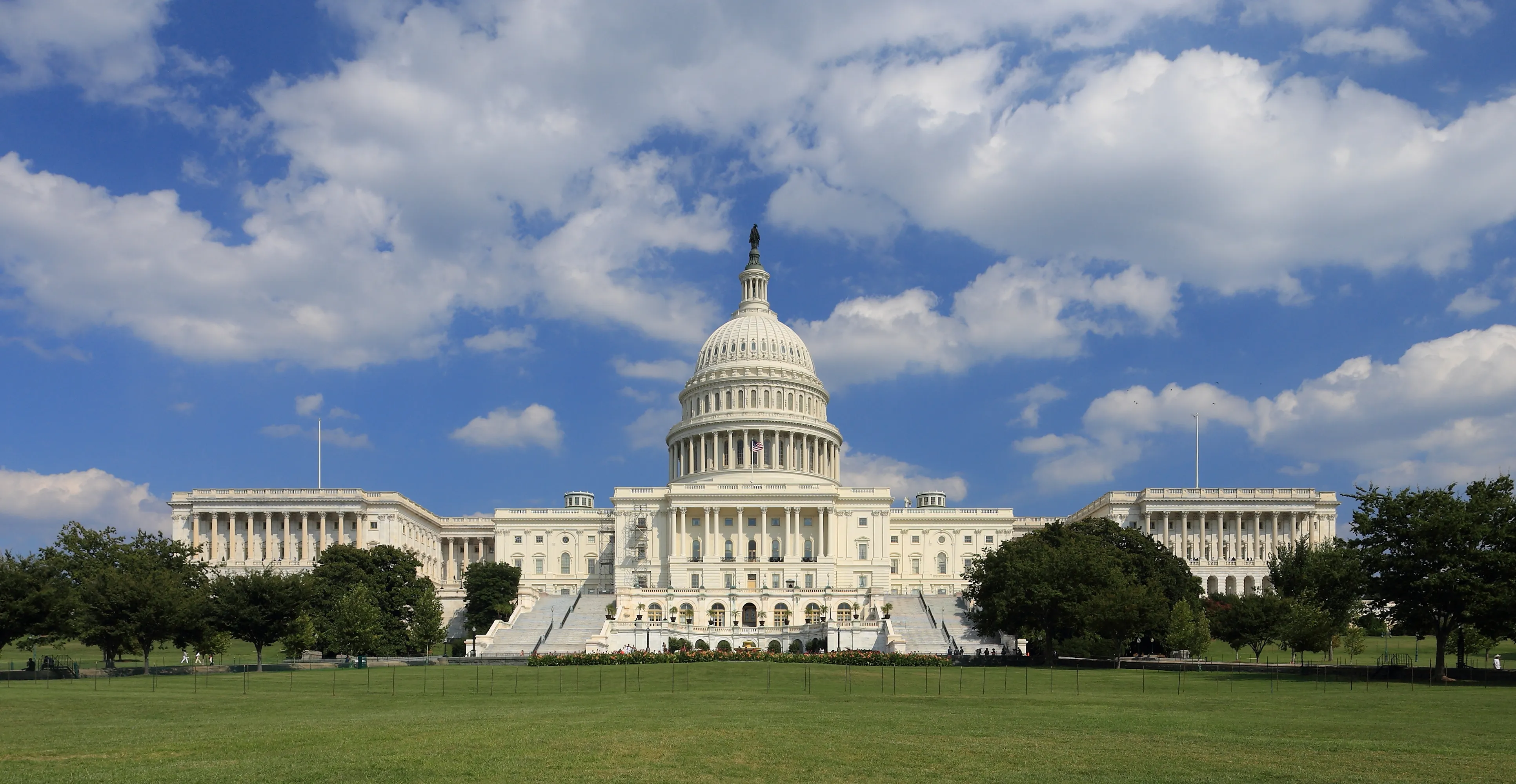
Congress created the Federal Reserve by statute in 1913 and retains the authority to amend or abolish it, the basis for the twice-yearly testimony every Fed chair delivers on Capitol Hill.
Ten Facts Worth Knowing
A quick-reference set of facts drawn from the sourced material throughout this page, useful for a fast read or a classroom discussion starter.
The United States operated without any central bank for 77 years, from the Second Bank of the United States' 1836 closure until the Federal Reserve's creation in 1913, a period marked by recurring financial panics in 1837, 1857, 1873, 1893, and 1907.
President Woodrow Wilson signed the Federal Reserve Act into law on December 23, 1913, using four separate pens so he could give one to each of the bill's leading congressional sponsors.
The Fed does not receive an annual appropriation from Congress. It funds itself mainly through interest on the securities it holds and remits its excess earnings directly to the U.S. Treasury.
Paul Volcker pushed the federal funds rate above 19 percent between 1979 and 1981 to break double-digit inflation, triggering a severe recession that farmers protested by driving tractors to blockade the Fed's Washington headquarters.
The Fed's balance sheet grew from under $1 trillion before the 2008 financial crisis to a peak near $9 trillion in 2022, following two rounds of large-scale asset purchases known as quantitative easing.
A one-time 2011 GAO audit required by the Dodd-Frank Act revealed the Fed had extended more than $16 trillion in cumulative emergency loans during the 2008 financial crisis, fueling the "Audit the Fed" political movement.
In August 2025, President Trump attempted to remove Federal Reserve Governor Lisa Cook, the first attempt in the Fed's 111-year history to fire a sitting Governor.
On June 29, 2026, the Supreme Court ruled 5-4 that Governor Cook could remain in her position while her legal challenge proceeded, finding she had not received the legally required process before her attempted removal.
Kevin Warsh's May 2026 Senate confirmation as Fed chair passed 54-45, one of the closest and most party-line votes for the position in the modern era, a departure from the broad bipartisan support most Fed chairs have historically received.
The Federal Reserve Bank of New York holds a permanent vote on the FOMC, unlike the other 11 regional Reserve Banks, because it is the Bank that actually executes the System's open market operations.
Sources & Further Reading
- Federal Reserve History (Federal Reserve Board / Richmond Fed), Federal Reserve Act Signed into Law
- Federal Reserve History, The Treasury-Fed Accord
- Federal Reserve History, The Panic of 1907
- Board of Governors of the Federal Reserve System, About the Fed
- Board of Governors of the Federal Reserve System, Federal Reserve Board names Jerome H. Powell chair pro tempore
- Board of Governors of the Federal Reserve System, FOMC Statement, June 2026
- Supreme Court of the United States, Trump v. Cook, No. 25A312 (June 29, 2026)
- NPR, Supreme Court says Fed's Lisa Cook can stay in her job for now
- NPR, Senate confirms Kevin Warsh as next chair of the Federal Reserve
- CNBC, Powell confirms he will step aside at the end of his term as chair
- CNBC, Powell asks inspector general to review $2.5 billion renovation
- NPR, Justice Department drops inquiry into Fed Chair Jerome Powell
- SCOTUSblog, The Supreme Court and whether the Fed is special
- Just Security, The Federal Reserve Exception to the Slaughter Rule
- Government Accountability Office, Federal Reserve System: Audit Requirements and Restrictions
- Library of Congress, Historic American Buildings Survey, Second Bank of the United States
This page draws on the Federal Reserve Board's own historical essays and press releases, the Supreme Court's June 2026 opinion in Trump v. Cook, Government Accountability Office reports on the Fed's audit requirements and its 2011 emergency lending audit, and contemporaneous reporting on the 2025-2026 Fed chair transition and removal-power litigation from NPR, CNBC, and SCOTUSblog. Historical building photographs are from the Library of Congress's Historic American Buildings Survey and the Federal Reserve Board's own archives.