Midway Atoll MQ
A remote North Pacific atoll forever linked to one of World War II's most decisive naval battles, now home to the world's largest Laysan albatross colony and a thriving National Wildlife Refuge.
About Midway Atoll
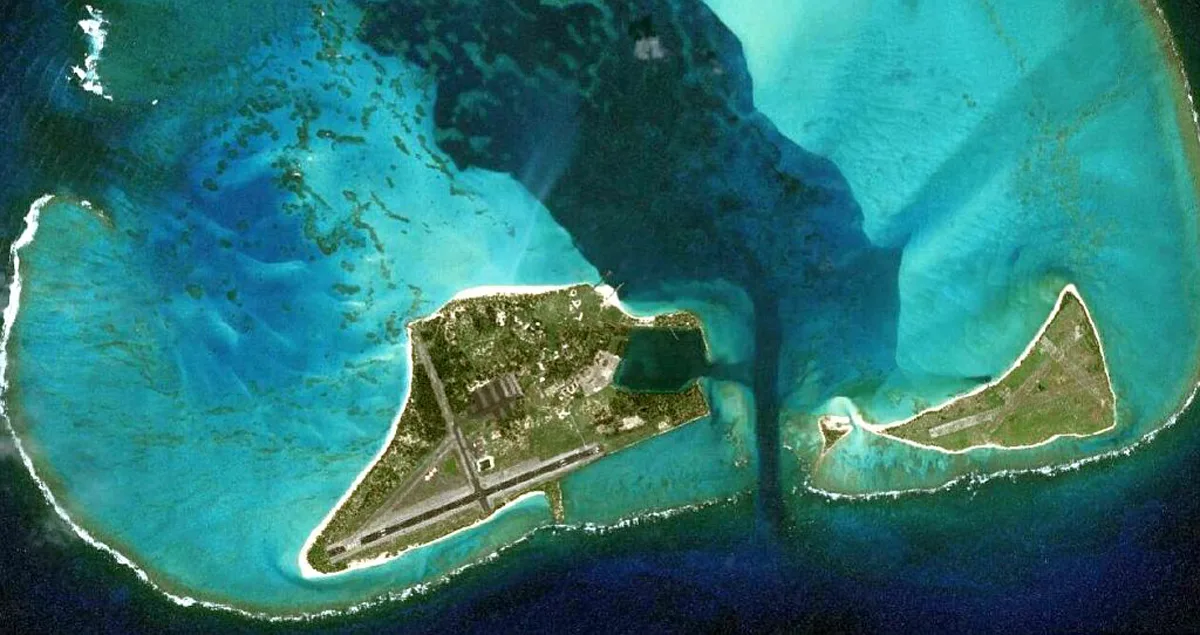
Midway Atoll sits at the northwestern end of the Hawaiian archipelago, roughly 1,300 miles from Honolulu, in the heart of the North Pacific. It consists of two main islands, Sand Island and Eastern Island, enclosed within a coral reef lagoon. Together they cover about 2.4 square miles, the largest land area of any U.S. minor outlying island with actual terrain.
Midway carries more history than almost any place its size on Earth. It was the site of the Battle of Midway in June 1942, widely considered the turning point of the Pacific War, where American forces, tipped off by codebreakers, sank four Japanese aircraft carriers and reversed the momentum of the war. Before that, it was a glamorous Pan American Airways Clipper stopover. After the war, it hosted a major naval air station through the Cold War until 1993.
Today Midway is at peace, and its greatest distinction is ecological. It hosts the world's largest Laysan albatross colony, over a million seabirds nesting annually, and is a critical refuge for the endangered Hawaiian monk seal. Its surrounding waters form part of the vast Papahanaumokuakea Marine National Monument.

Aerial view of Midway Atoll
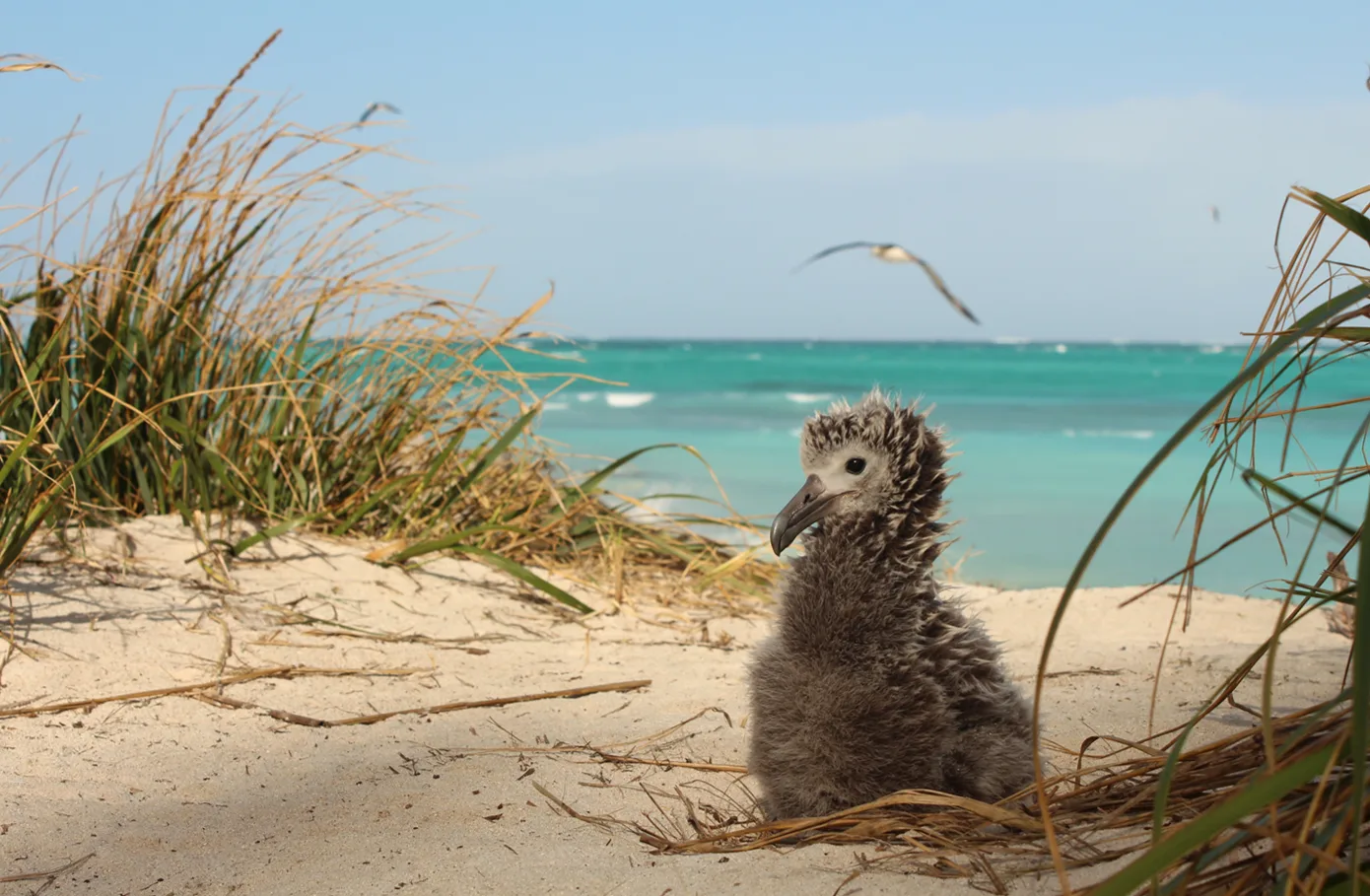
Laysan albatross colony, the world's largest
Midway Atoll vs. a U.S. State
| Feature | Midway Atoll | U.S. State |
|---|---|---|
| Permanent Population | None (civilian) | Yes |
| Local Government | None | State government |
| Congressional Representation | None | Senators + Representatives |
| Voting in Federal Elections | No residents | Yes |
| U.S. Constitution Applies | Partially (by statute) | Fully |
| Administered By | Fish & Wildlife Service | Elected officials |
| Incorporated Territory | No | Yes (as a state) |
| Public Access | Limited (refuge permit) | Generally open |
Geography at a Glance
- Location
- North Pacific Ocean
- Coordinates
- 28°12′N 177°21′W
- Land Area
- ~2.4 sq mi (6.2 km²)
- Islands
- 2 main (Sand & Eastern)
- Highest Point
- ~43 ft (13 m) above sea level
- Nearest Land
- ~1,300 miles NW of Honolulu
- Distance to HI
- ~1,300 miles NW of Honolulu
- Time Zone
- UTC−11:00
- Climate
- Subtropical, warm, breezy, low rainfall
- Administration
- U.S. Fish & Wildlife Service
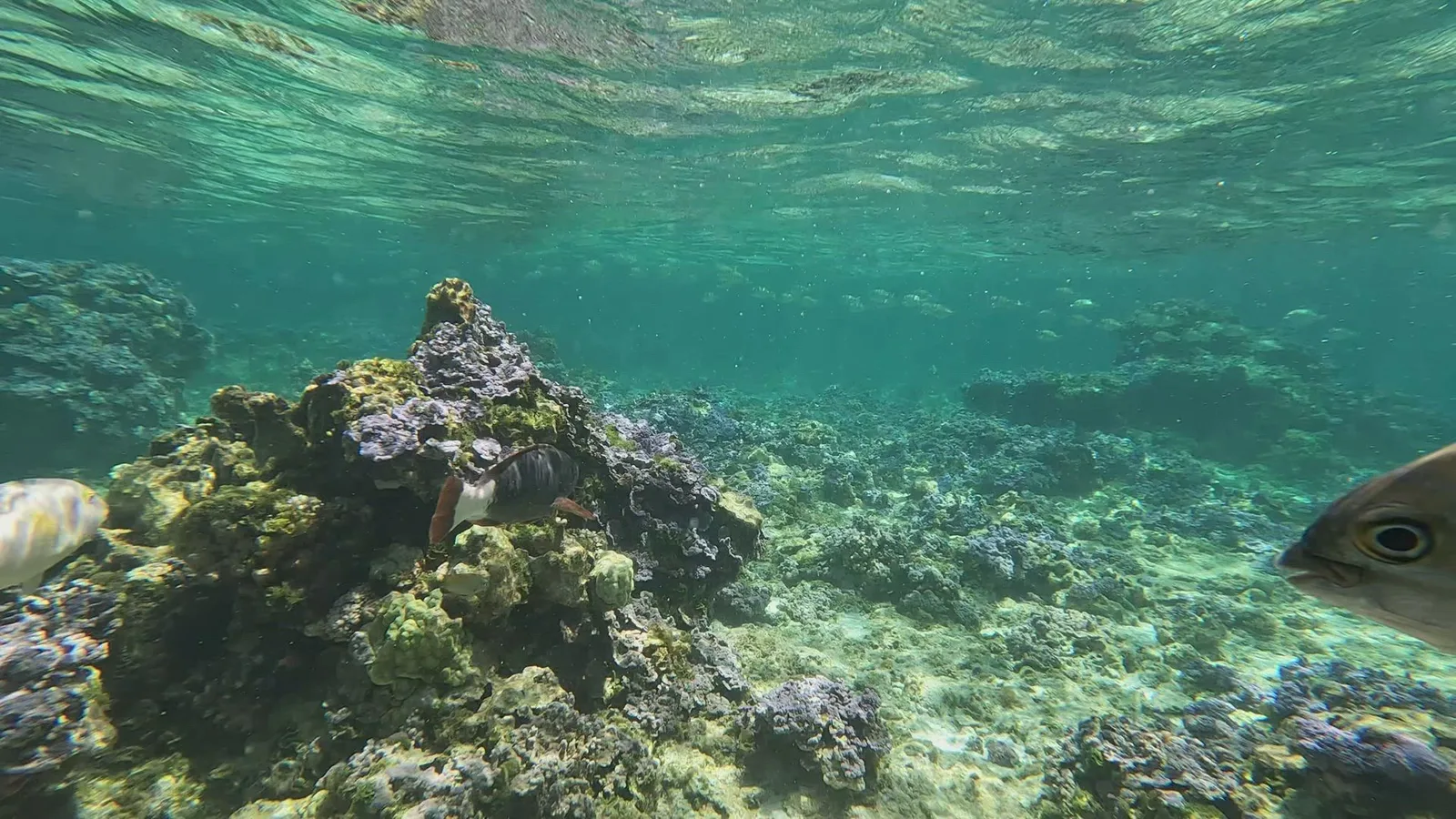
Midway Atoll's lagoon and reef system within the Papahanaumokuakea Marine National Monument
Wildlife of Midway Atoll
Midway Atoll is one of the most ecologically significant wildlife refuges in the United States. More than a million seabirds nest here each year, including the largest albatross colony on the planet, alongside some of the rarest marine mammals on Earth.
Midway hosts the world's largest colony of Laysan albatrosses, roughly 70 percent of the entire global population nests here, around 450,000 breeding pairs. The birds return to the same nest sites year after year, with some individuals documented at over 70 years of age.
The critically endangered Hawaiian monk seal, one of the rarest marine mammals on Earth, rests and pups on Midway's beaches. About 1,600 individuals remain in the wild, and Midway is one of their most important refuges.
Green sea turtles nest on Midway's beaches, and the surrounding reef and lagoon support spinner dolphins, reef sharks, and hundreds of coral and fish species within the Papahanaumokuakea Marine National Monument.
Beyond the Laysan albatross, Midway hosts the world's largest black-footed albatross colony, along with red-tailed tropicbirds, Bonin petrels, and white terns. Over a million seabirds nest on the atoll annually.
Midway Atoll Through Time
- ✦1859
First Sighting and U.S. Claim
Captain N. C. Brooks of the Hawaiian bark Gambia recorded the atoll in 1859 and claimed it under the Guano Islands Act; it briefly bore his name before becoming 'Midway' for its position roughly midway between California and Asia.
Midway is the westernmost point of the Hawaiian archipelago that is not part of the state of Hawaii, two sand islands, Sand and Eastern, on a reef about 1,300 miles northwest of Honolulu.
- ✦1867
Formal U.S. Annexation
The USS Lackawanna raised the American flag over the atoll in 1867, the first Pacific island group the United States formally annexed (earlier guano islands such as Navassa, Baker, and Howland had been claimed under the 1856 Guano Islands Act).
An 1870 attempt to blast a ship channel through the reef, using a congressional appropriation, ran out of money and failed, and for the next three decades Midway saw only the occasional shipwreck and castaway.
- ✦1903
Telegraph Cable Station
In 1903 the Commercial Pacific Cable Company routed its new San Francisco-to-Manila telegraph cable through Midway and built a relay station on Sand Island, bringing the atoll its first permanent residents and its first fresh water and buildings.
President Theodore Roosevelt put Midway under Navy jurisdiction the same year, partly to stop Japanese feather poachers who were slaughtering the atoll's albatrosses for the millinery trade.
- ✦1935–1941
Pan American Airways Clipper Base
Pan American Airways developed Midway into a major stop on its China Clipper flying-boat route between San Francisco and Manila, dredging a seaplane landing area and building the Pan American Inn, a small hotel where passengers stayed overnight.
The Clipper stops made Midway one of the more glamorous names in 1930s travel, and the cable and airline staffs planted the ironwood trees and gardens that still shade Sand Island.
- ✦1940–1941
Naval Air Station Midway
As war with Japan loomed, the Navy turned Midway into a fortified air and submarine base, building an airfield, hangars, fuel tanks, gun batteries, and a garrison.
The night after the Pearl Harbor attack, on December 7, 1941, two Japanese destroyers shelled Midway, killing several defenders, an opening move in a campaign Japan would return to finish six months later.
- ✦1942
Battle of Midway
From June 4 to 7, 1942, U.S. naval and air forces defeated a far larger Japanese fleet in one of the most consequential naval battles in history. Navy codebreakers had partly cracked the Japanese fleet code and identified Midway as the target, letting Admiral Chester Nimitz position three carriers to ambush the attackers.
American dive bombers sank four Japanese aircraft carriers, Akagi, Kaga, Soryu, and Hiryu, over June 4 and 5, 1942, and the heavy cruiser Mikuma on June 6, at the cost of the carrier Yorktown, gutting Japan's naval air arm.
The battle is widely regarded as the turning point of the Pacific War: from Midway on, Japan was on the strategic defensive. About 307 Americans and more than 3,000 Japanese were killed.
- ✦1942–1945
Pacific War Fortress
After the battle Midway became a major forward base for U.S. submarines hunting Japanese shipping and for Pacific Fleet logistics, with thousands of personnel on the two small islands.
The wartime buildup left the runway, seawalls, and dozens of buildings that shaped the atoll for the rest of the century.
- ✦1993
Naval Air Station Closes
The Navy closed Naval Air Station Midway in 1993 in the post-Cold War base drawdown, ending more than 50 years of continuous military presence, and began transferring the atoll to the U.S. Fish and Wildlife Service.
Before leaving, the Navy carried out a large cleanup of fuel, lead paint, PCBs, and debris, and demolished many wartime structures.
- ✦1996–2000
National Wildlife Refuge
Midway became the Midway Atoll National Wildlife Refuge in 1996, and for a time a concessionaire ran a small ecotourism program, the only regular public access ever allowed at any U.S. remote outlying island.
Midway hosts the world's largest colony of Laysan albatrosses, roughly 70 percent of the global population, close to a million nesting birds, and the visitor program was meant to build support for protecting them; it has since been suspended and restarted several times over funding and an invasive-mouse problem.
- ✦2006–2016
Papahanaumokuakea Marine National Monument
In 2006 President George W. Bush created the Papahanaumokuakea Marine National Monument, covering Midway and the entire chain of Northwestern Hawaiian Islands, and gave it a Native Hawaiian name reflecting the islands' deep cultural significance.
President Obama expanded the monument in 2016 to about 583,000 square miles, then among the largest protected areas on Earth. Midway is the only part of the monument people can visit, and it remains a working refuge station with a few dozen staff and volunteers.
Did You Know?
Interesting facts about one of America's most storied territories.
Wisdom, a Laysan albatross banded at Midway in 1956, is the oldest known wild bird on Earth. She was still returning to nest and successfully raising chicks at over 70 years of age as of her last confirmed sighting.
The Battle of Midway in June 1942 is considered the turning point of the Pacific War. American codebreakers gave the U.S. Navy foreknowledge of the Japanese attack plan, turning a likely American defeat into a decisive victory.
Before World War II, Midway was a glamorous stop on Pan American Airways' China Clipper route. Passengers dined and slept at the Pan American Inn on Sand Island while their flying boat was refueled for the next leg to Wake Island.
Midway sits almost exactly at the midpoint of the Pacific Ocean, roughly equidistant between North America and Asia. The name Midway reflects this geography, it was seen as the halfway point on the trans-Pacific crossing.
The Hawaiian monk seal is one of only two monk seal species left on Earth (the other being the Mediterranean monk seal). Midway is one of its last refuges, and the species remains endangered with about 1,600 individuals.
Midway is one of the few minor U.S. territories that has ever been open to public visits. A limited ecotourism program operated through the refuge, allowing visitors to walk among the nesting albatross colonies at close range.
Quick Facts and Common Questions
Short answers to the questions people most often ask about Midway Atoll: where it is, whether it is part of Hawaii, the Battle of Midway, and its wildlife.
Midway Atoll is in the North Pacific Ocean near the northwestern end of the Hawaiian Islands chain, about 1,300 miles northwest of Honolulu and roughly midway between North America and Asia. Its two main islands are Sand Island and Eastern Island. It has no permanent residents, only a small staff of Fish and Wildlife Service employees, contractors, and volunteers.
No. Although Midway lies in the Hawaiian Islands chain, it was never part of the Territory or State of Hawaii. It is an unincorporated, unorganized territory of the United States with no local government.
Captain N. C. Middlebrooks claimed the atoll for the United States in 1859, and on August 28, 1867, Captain William Reynolds of the USS Lackawanna formally took possession, making it one of the first Pacific islands the United States annexed. The Navy controlled Midway for most of the 20th century.
From June 4 to 7, 1942, U.S. Navy aircraft from carriers and from Midway itself sank four Japanese aircraft carriers that were part of a force trying to capture the atoll. The victory, six months after Pearl Harbor, is widely seen as the turning point of the Pacific war in World War II. The site was designated the Battle of Midway National Memorial in 2000.
Midway became a national wildlife refuge in 1988, and after the Naval Air Facility closed, the Navy transferred the atoll to the Department of the Interior in 1996. The U.S. Fish and Wildlife Service manages it, and it is part of Papahānaumokuākea Marine National Monument, created in 2006.
Midway is home to the world's largest colony of Laysan albatrosses, along with black-footed albatrosses and many other seabirds. One Laysan albatross named Wisdom, first banded there in 1956, is the oldest known wild bird in the world and has continued to nest on Midway.
No. Midway has no permanent residents, is not part of any state or congressional district, and has no delegate in Congress.