The Market Street, the Town, and the Dial Between Them
A mixed economy is a free market with a few things the whole town decided to do together.
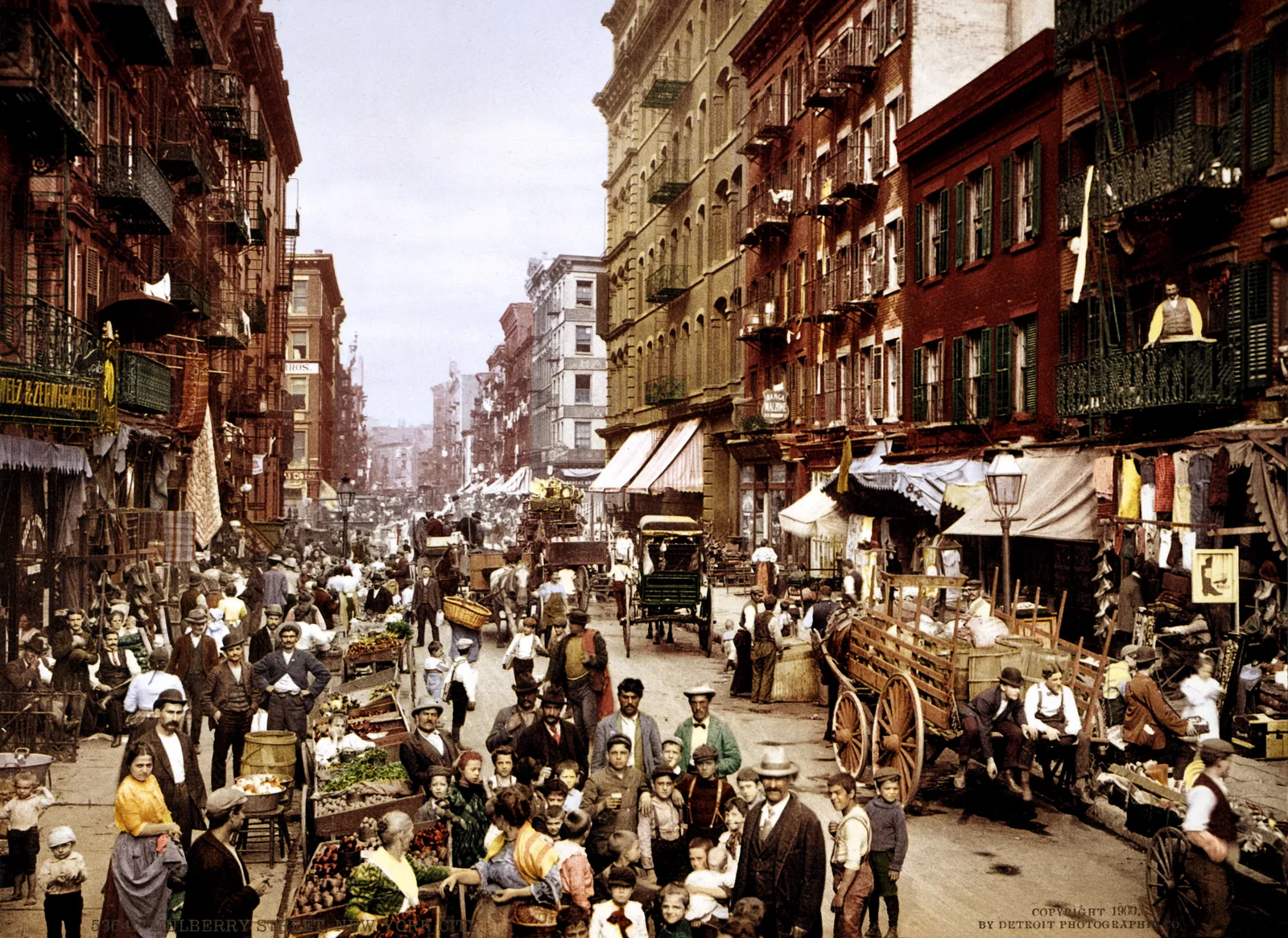
Imagine a busy market street in a town called Fairhaven. Every stall is private. The baker bakes what she likes and charges what she can get. The butcher, the tailor, and the toy maker do the same. That’s free enterprise, and it keeps the street full of people and ideas.
But the street itself belongs to everyone. The town paves it, lights it, and keeps the scales honest. That’s where the mixing starts, and every town argues about where it should stop.
Fairhaven is a republic. Its council is elected, its members swear an oath to the town’s constitution, and the constitution protects every stall from being taken. Beyond that, at first, the stalls are on their own.
If you get sick, you get poorer. If your bank fails, your savings go with it. If the butcher sells bad meat, you find out the hard way.
Then the butcher does sell bad meat.
A writer goes behind the counter and prints what he sees: spoiled meat, filthy floors, and workers treated like scraps. The town is so disgusted that the council hires an inspector (food safety laws).
Nobody takes the butcher’s stall. They just start checking his meat.
Next, a few of the biggest stalls buy up all the others. Once they’re the only stalls left, they charge whatever they like, and new stall owners can’t get a spot on the street. The council passes a rule against it (antitrust laws).
Then comes the year the bank fails.
Families who saved for thirty years lose everything in an afternoon. When word spreads, savers at every other bank rush to pull their money out before it’s too late, and the panic closes those banks too. So the town makes a promise: if a bank fails, every saver gets paid back, up to a set amount (deposit insurance). The runs stop.
Old age comes next. Too many people who worked their whole lives end them poor. So every worker starts paying a little into a fund that pays them back when they’re old (Social Security). Then comes a floor under wages (the minimum wage), and help with doctor’s bills for the old and the poor (Medicare and Medicaid).
Each change is made after a crisis, by an elected council, under the town’s constitution. Each one solves a real problem.
Ah, but every one of them comes with a bill, a rule, and a clerk.
Taxes go up. Forms multiply. Some stalls spend more time on paperwork than on bread. A small stall pays the same cost to follow the rules as a big one, with fewer hands to do it. And once a program starts, it almost never ends, even when the crisis that started it is long gone.
Every time the council turns the dial toward “together,” someone asks whether it turned too far.
So sometimes the town turns it back. For years, the town set every ferry’s route and fare, and the fares stayed high. Then the council let the boats compete, and the fares fell (deregulation).
There’s one more danger, and it comes from inside the dial itself. The biggest stalls learn that rules can be useful. A rule that costs a small stall too much to follow can drive it off the street. So the big stalls start helping to write the rules (regulatory capture).
Fairhaven never picks a side. The stalls still belong to the people who run them. The street still belongs to everyone. And at every election, the voters argue about where the line between them should go.
Too far toward the stalls, and the hard years fall on whoever is weakest. Too far toward the town, and nobody has much reason to bake better bread.
The argument never ends, and maybe it isn’t supposed to.