About Colorado
Colorado takes its name from the Colorado River, which Spanish explorers named "Rio Colorado" meaning "red-colored river," for the reddish-brown silt that gives the river its distinctive color as it flows through the canyons of the Colorado Plateau. Spanish missionaries and explorers used the name for the river beginning in the 1700s. When the United States organized the territory after the Pike's Peak Gold Rush of 1859, Congress named it Colorado Territory in 1861, and it became a state in 1876, earning the nickname the Centennial State for being admitted exactly one hundred years after the Declaration of Independence.
Colorado sits at the crossroads of the American West, a state defined by its dramatic geography, independent spirit, and willingness to lead on national issues before anyone else does. Admitted to the Union on August 1, 1876, just weeks after the nation's 100th birthday, it earned the nickname "The Centennial State" and has been forging its own path ever since.
The Rocky Mountains divide the state in two: to the east, wide open plains roll toward Kansas and Nebraska; to the west, rugged canyons and mesa country stretch toward Utah. The Front Range, Denver, Boulder, Colorado Springs, is one of the fastest-growing metropolitan corridors in America, attracting tech workers, aerospace engineers, and outdoor enthusiasts from across the country.
Colorado has a long history of going first. It was a leader in environmental protection, became one of the first two states (with Washington) to legalize recreational marijuana in 2012, and has consistently ranked among the most educated, healthiest, and economically dynamic states in the nation.
Geography, Four Main Regions
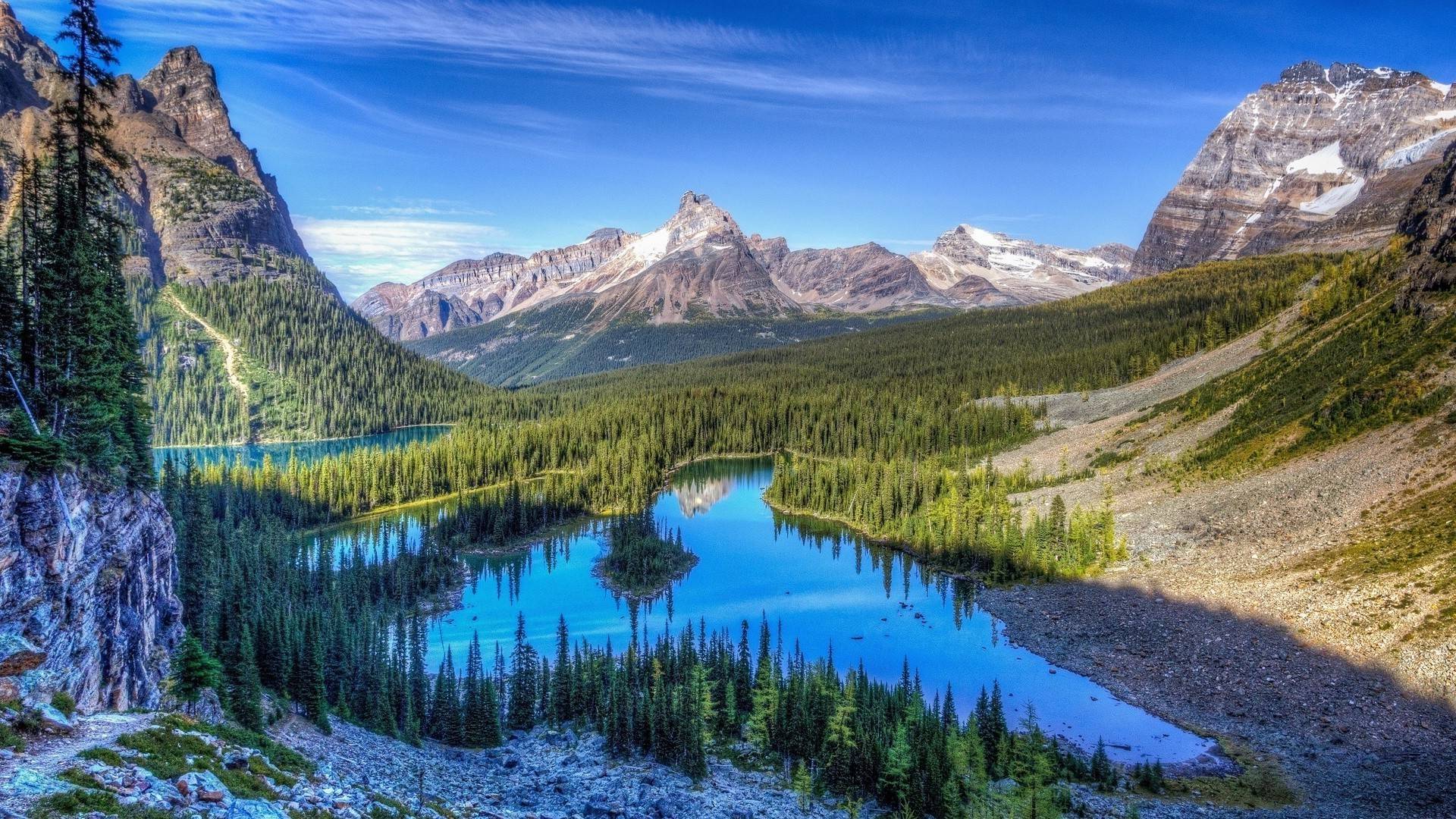
From the highest peaks in the lower 48 to flat prairie stretching to the horizon, Colorado's geography is one of the most varied of any state.
The defining feature of Colorado, the Rockies run through the center of the state, containing 54 peaks above 14,000 feet (known as 'fourteeners'). Home to world-class ski resorts like Aspen, Vail, Breckenridge, and Steamboat Springs, as well as Rocky Mountain National Park.
Mount Elbert, at 14,440 feet, is Colorado's tallest peak and the second-highest summit in the contiguous United States, after California's Mount Whitney. The Continental Divide, which determines whether rivers flow toward the Pacific or the Atlantic, runs directly through this range.
These mountains are the headwaters of the West: the Colorado, Rio Grande, Arkansas, and Platte rivers all rise here, and Colorado is bound by nine interstate compacts to send most of that water downstream to 18 other states and Mexico. Snowpack in the Colorado Rockies helps supply water to roughly 40 million people across the Southwest.
Mining built the range's towns, Leadville, Cripple Creek, Central City, before skiing remade them. Rocky Mountain National Park, established in 1915, draws more than four million visitors a year, and Trail Ridge Road through it tops 12,000 feet, the highest continuous paved road in the United States.
The densely populated strip running along the eastern base of the Rockies, including Denver, Boulder, Colorado Springs, Fort Collins, and Pueblo. About 80% of Colorado's population lives in this corridor. Home to universities, aerospace firms, and a booming tech sector.
Several federal science agencies, including NOAA and the National Institute of Standards and Technology, maintain major research campuses in Boulder, reflecting the corridor's decades-long role as a hub for federally funded scientific research.
The corridor holds about 4.9 million of Colorado's 5.9 million people and has been one of the fastest-growing metro regions in the country; Denver grew so quickly in the 2010s that housing costs roughly doubled. Denver International Airport, opened in 1995 on the plains east of the city, is the largest airport in the Western Hemisphere by land area and among the busiest in the world.
Colorado Springs at the corridor's south end is a military city, home to the Air Force Academy, Fort Carson, Peterson and Schriever Space Force bases, and NORAD's operations center inside Cheyenne Mountain. Boulder, to the north, pairs the University of Colorado with a cluster of federal labs and has one of the most educated populations of any U.S. city.
The western edge of the Great Plains, stretching east from the Front Range to the Kansas and Nebraska borders. This flat, wide-open region is critical for Colorado's agriculture and ranching economy, wheat, corn, cattle, and feedlots dominate the landscape.
Parts of the Eastern Plains were hit hard by the Dust Bowl of the 1930s, when overplowing and drought stripped away topsoil and forced many farm families to abandon their land, prompting the creation of federal soil conservation programs still used today.
The plains are drier than the rest of the state and have depended on the Ogallala Aquifer, which is being pumped faster than it recharges; some counties have already seen wells go dry. This is Colorado's most rural and most conservative region, and its shrinking population has fueled a periodic, unserious movement for the plains counties to secede and form a 51st state.
Colorado's plains supply much of the beef the country eats: enormous feedlots and packing plants around Greeley and Fort Morgan finish and process millions of cattle a year, drawing an immigrant workforce that made Greeley's JBS plant a national story when a COVID-19 outbreak there in 2020 killed several workers. Sugar beets, sunflowers, and winter wheat fill the fields between the feedlots.
The region west of the Continental Divide, characterized by dramatic canyons, mesa country, high desert, and the Colorado River. Includes Grand Junction, Glenwood Canyon, Mesa Verde National Park, and the Four Corners region. Known for fruit orchards, oil and gas production, and outdoor recreation.
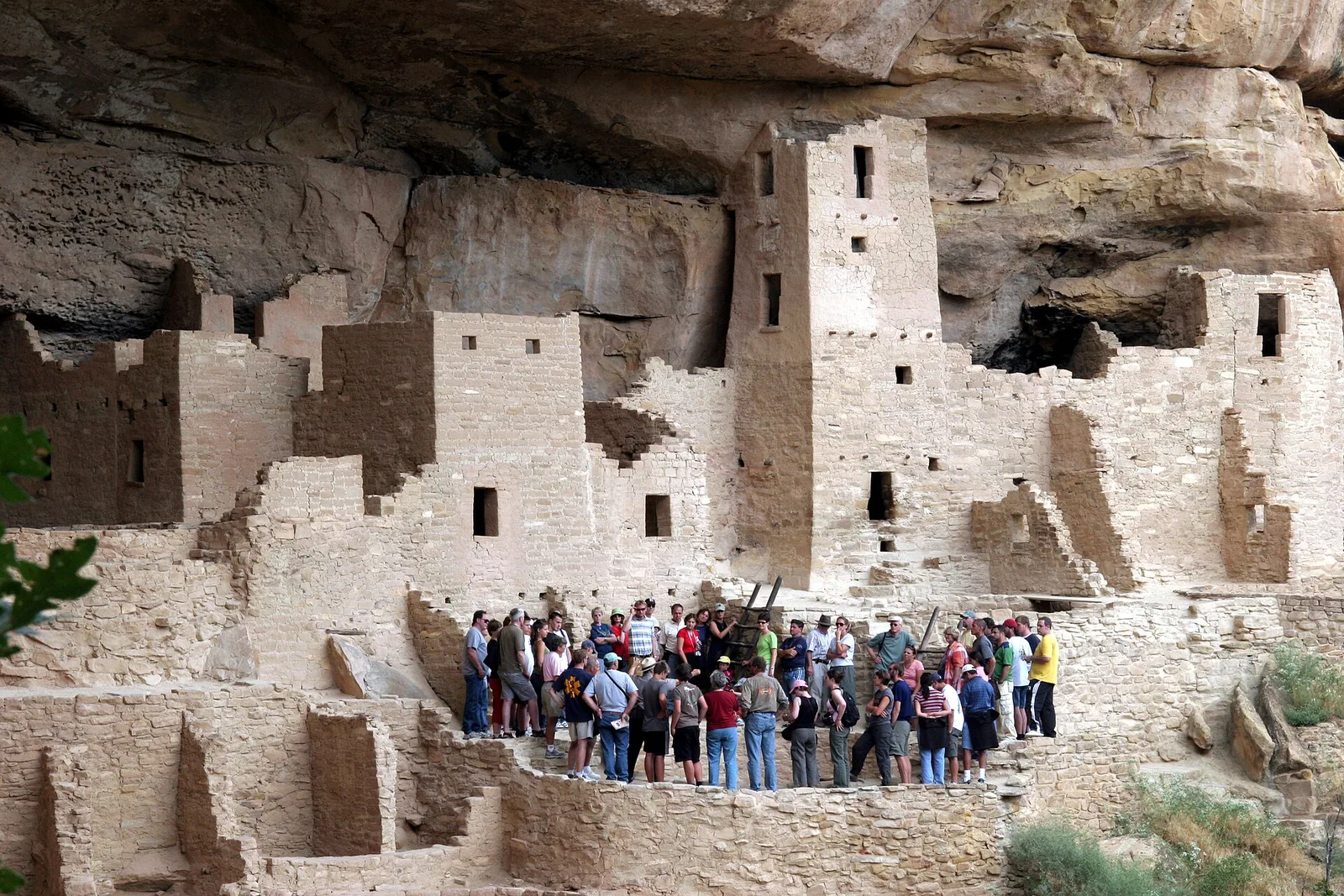
Mesa Verde became a national park in 1906, the first in the U.S. National Park System created specifically to protect and preserve works of human hands rather than natural scenery, safeguarding centuries-old Ancestral Puebloan cliff dwellings.
About 90 percent of Colorado's people live east of the Continental Divide, but most of its water falls to the west, so a network of tunnels bores under the Divide to carry Western Slope water to Denver and the plains, a long-running source of Western Slope resentment. Grand Junction, the region's largest city, has ridden booms and busts with oil shale, uranium, and natural gas.
Mesa Verde protects more than 600 Ancestral Puebloan cliff dwellings, including the roughly 150-room Cliff Palace, abandoned by around 1300. The Western Slope also holds Colorado National Monument's red-rock canyons, the peach orchards and vineyards of Palisade, the ski town of Telluride in its box canyon, and the Four Corners, the only spot in the U.S. where four states meet.

Economy
Colorado's economy is diverse and resilient, built on aerospace, technology, outdoor recreation, agriculture, and energy in roughly equal measure.
The Denver metro area is home to Lockheed Martin Space, Raytheon, Boeing Defense, and the U.S. Space Command headquarters. Colorado ranks among the top states in defense spending and aerospace employment, making it critical to national security infrastructure.
U.S. Space Command is headquartered at Peterson Space Force Base near Colorado Springs, a legacy that traces back to NORAD's Cold War-era command center built inside nearby Cheyenne Mountain to withstand a nuclear attack.
Colorado has the second-largest space economy in the country after California, with roughly 240 space companies and tens of thousands of direct jobs; Lockheed Martin builds NASA's Orion crew capsule and many interplanetary probes just south of Denver, and most U.S. military satellites are flown from Schriever or Buckley bases in the state.
The headquarters of U.S. Space Command, split off from the Air Force in 2019, became a political tug-of-war: assigned to Colorado Springs in 2019, moved on paper to Huntsville, Alabama, in 2021, and reassigned back to Colorado Springs in 2025. Five of the six major military space installations in the country are in Colorado, along with NORAD.
Colorado's tech sector has exploded in recent decades, with major presences from Google, Amazon, Oracle, and hundreds of startups. Boulder has become renowned as one of the most innovative mid-sized tech cities in the country, driven by its university research ecosystem.
Boulder's tech density owes much to the presence of the University of Colorado and federal research labs like NIST and NOAA, which have spun off numerous private technology and biotech companies since the mid-20th century.
The Denver-Boulder corridor drew a wave of tech offices and workers in the 2010s: Google's largest campus outside California is in Boulder, and companies including Palantir and Dish Network moved or grew headquarters in the metro. Colorado now has one of the highest shares of tech workers of any state.
Boulder punches far above its size: the Techstars startup accelerator was founded there in 2006 and spread worldwide, and the town's federal labs, the National Center for Atmospheric Research, NIST, and NOAA, have spun off companies in weather, quantum sensing, and biotech. Fort Collins and Colorado Springs anchor smaller tech and semiconductor clusters.
Colorado's outdoor recreation economy, skiing, hiking, mountain biking, rafting, and climbing, supports over 500,000 jobs and generates more than $62 billion annually. The state hosts some of the world's most famous ski resorts and national parks.
Colorado is home to four national parks, Rocky Mountain, Mesa Verde, Great Sand Dunes, and Black Canyon of the Gunnison, along with 42 state parks, together drawing millions of visitors each year and anchoring the state's reputation as an outdoor recreation destination.
Colorado created the first state Outdoor Recreation Industry Office in the country in 2015, and outdoor recreation is written into the state's economic identity; it lured the industry's national trade show away from Utah in 2018 for several years.
Skiing is the anchor: Colorado's resorts record more skier visits than any other state, around 13 million a year, and Vail Resorts, based in Broomfield, is the largest ski company in the world. But the industry faces a warming climate, growing water demands for snowmaking, and a housing crisis in mountain towns where workers cannot afford to live near the resorts they run.
Colorado is a top producer of beef cattle, wheat, corn, and dairy products. The Eastern Plains support large-scale farming and cattle ranching operations, while the Western Slope is known for peaches, wine grapes, and specialty crops.
The state is known for regional specialty crops tied to specific microclimates, including Rocky Ford cantaloupes from the Arkansas Valley and Palisade peaches from the Western Slope, both marketed nationally as distinctly Colorado products.
Cattle are Colorado's largest agricultural product by far, and the state ranks near the top nationally in cattle on feed; the JBS beef plant in Greeley is one of the biggest in the country. The San Luis Valley in the south is the second-largest fresh-potato growing region in the United States, irrigated from a closed aquifer that farmers are now being paid to stop pumping.
Water is the constant constraint. Colorado agriculture uses the large majority of the state's water, and as Front Range cities keep growing, they buy up farm water rights and retire the land, a practice called 'buy and dry' that has hollowed out some plains and valley communities. Recent state programs let farmers lease water to cities temporarily instead of selling it outright.
The Denver-Julesburg Basin and Piceance Basin are major oil and natural gas producing regions. At the same time, Colorado has aggressive renewable energy standards and leads the nation in wind energy growth, solar installations, and clean energy policy.
Colorado's Front Range corridor experiences some of the strongest sustained wind resources in the country, and the state has consistently ranked among the top ten nationally for total wind power generation capacity.
Colorado is one of the top oil- and gas-producing states; the Denver-Julesburg Basin under Weld County is one of the most drilled areas in the country, with tens of thousands of wells among the subdivisions, which has driven repeated ballot fights over drilling setbacks. A 2019 law, Senate Bill 181, shifted the state's oil-and-gas regulator from promoting production to prioritizing health and the environment.
On the other side, Colorado has set some of the most aggressive climate targets in the country, a legal requirement to cut greenhouse emissions 50 percent by 2030 and 90 percent by 2050, and Xcel Energy, its largest utility, plans to close all its Colorado coal plants by 2031. The state now gets more than a third of its electricity from wind and solar, and the National Renewable Energy Laboratory in Golden is a national research hub.
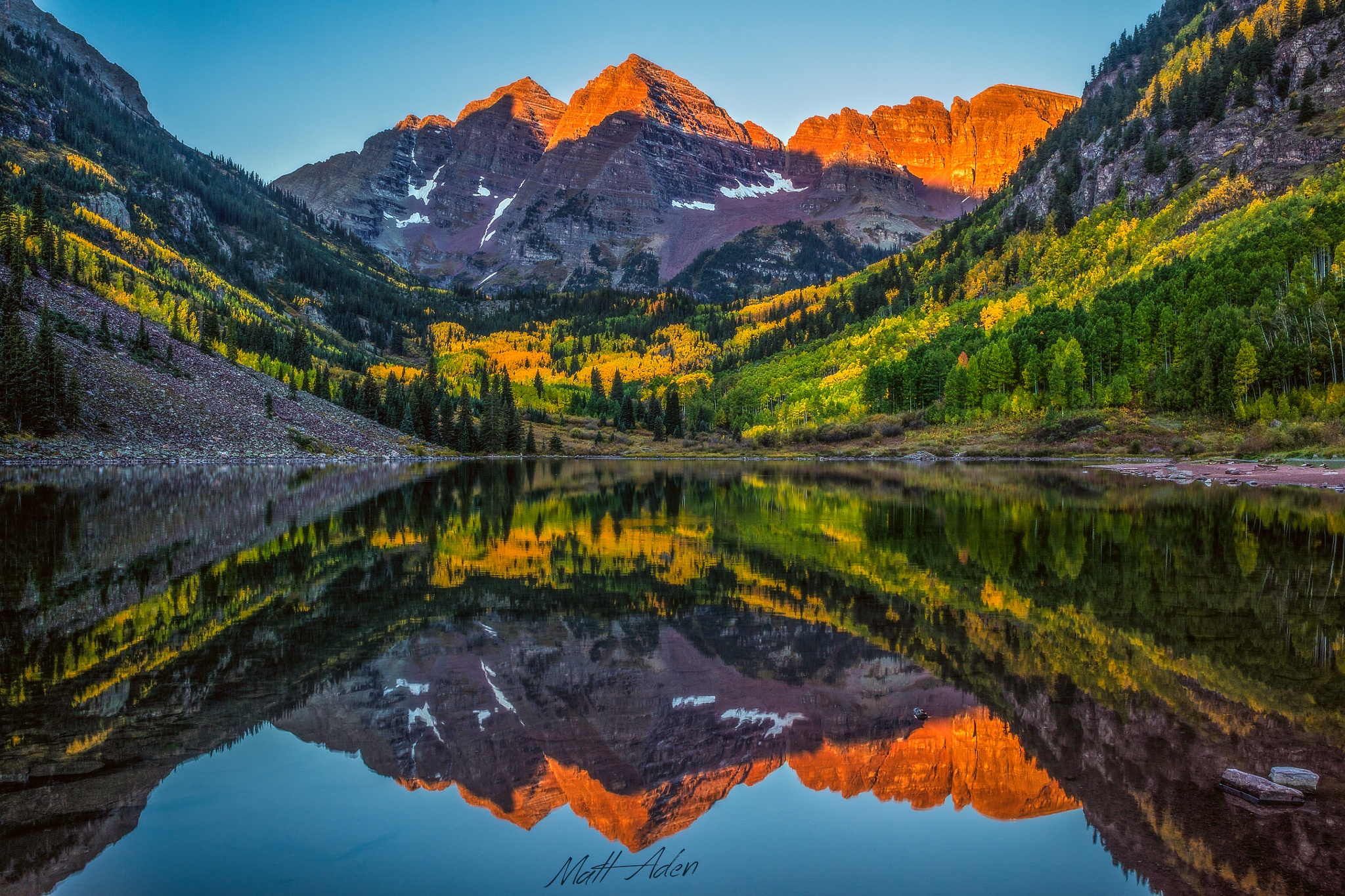
How Colorado's State Government Works
Colorado operates under a three-branch state government modeled after the federal system. The state constitution, adopted in 1876 when Colorado entered the Union, has been amended many times but retains its foundational structure of separated powers.
Colorado has a strong tradition of direct democracy, the state's initiative and referendum process allows citizens to propose and pass laws directly, bypassing the legislature. This has produced landmark decisions like the legalization of recreational marijuana (Amendment 64) and major campaign finance reforms.
The General Assembly consists of a 35-member Senate (4-year terms) and a 65-member House of Representatives (2-year terms). Colorado has term limits for both the governor and legislators.
Governor of Colorado
Current Governor
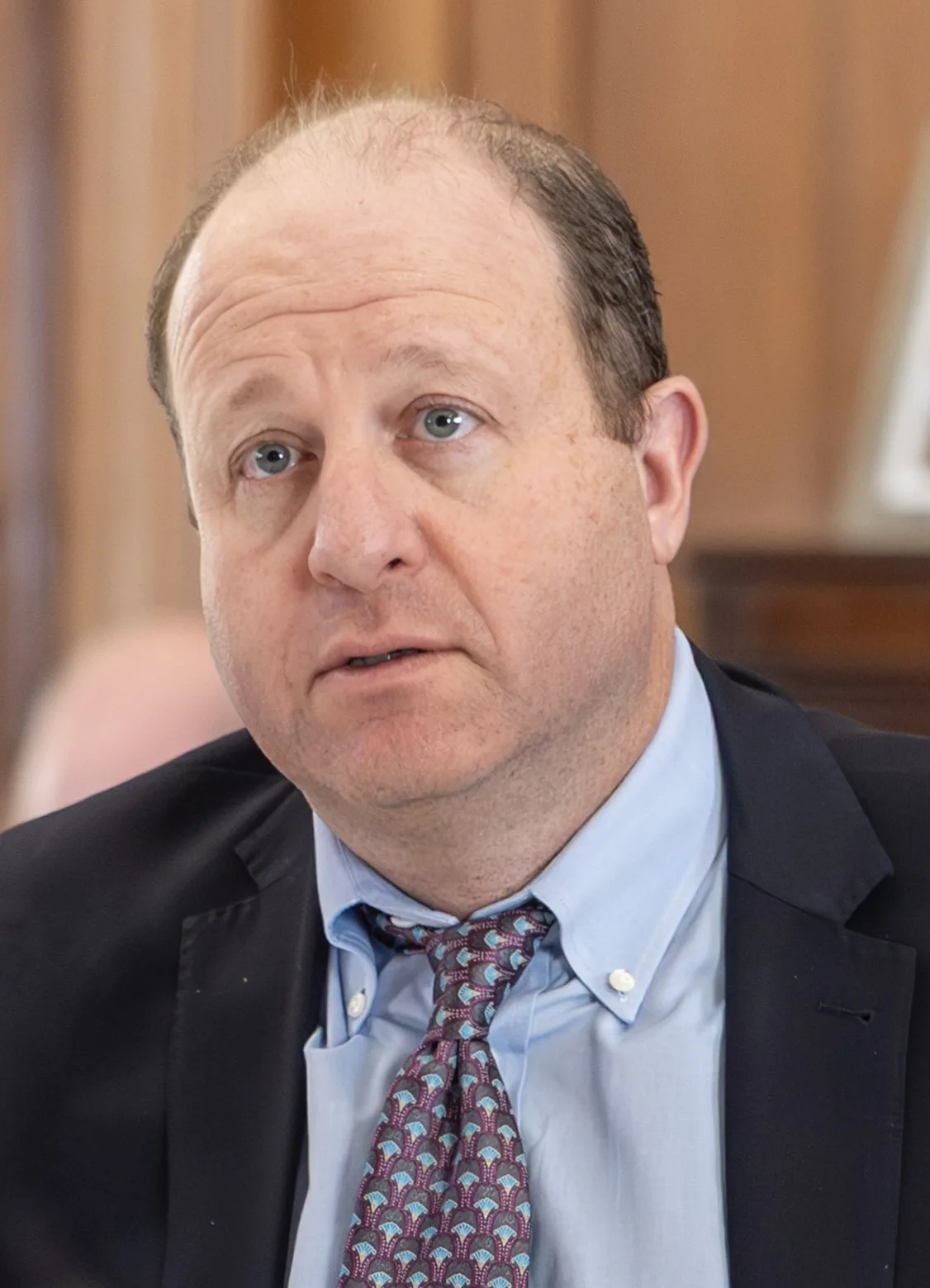
Jared Polis
- Party
- Democrat
- In Office Since
- January 8, 2019
- Elected
- 2018, re-elected 2022
- Term Ends
- January 2027
- Born
- May 12, 1975, Boulder, Colorado
- Prior Role
- U.S. Representative, CO-2nd District (2009-2019)
Jared Polis is the 43rd Governor of Colorado and the first openly gay man elected governor in U.S. history. A tech entrepreneur before entering politics, he founded several successful companies before serving five terms in Congress. As governor, he has focused on affordable health care, free full-day kindergarten and preschool, and clean energy transition.
Other Current State Officials
Lieutenant Governor
Dianne Primavera
In office since January 2019. Co-leads the Office of Saving People Money on Health Care.
Attorney General
Phil Weiser
In office since January 2019. Former dean of the University of Colorado Law School.
Secretary of State
Jena Griswold
In office since January 2019. First Democratic Secretary of State in Colorado in 60 years.
State Treasurer
Dave Young
In office since January 2019. Former state representative from Weld County.
The Colorado General Assembly
Colorado State Senate
- Seats: 35 members
- Terms: 4-year terms
The upper chamber. Colorado senators serve staggered 4-year terms, with roughly half the chamber up for election every two years. Term limits restrict senators to two consecutive 4-year terms (8 years).
Colorado House of Representatives
- Seats: 65 members
- Terms: 2-year terms
The lower chamber. All 65 House seats are on the ballot every two years. Representatives are limited to 4 consecutive terms (8 years), the same cumulative limit as senators.
Colorado's U.S. Senators
U.S. Senator
Michael Bennet
Appointed to fill Ken Salazar's seat in 2009 after Salazar became Secretary of the Interior. Subsequently elected in 2010, 2016, and 2022. Former superintendent of Denver Public Schools. Focuses on education, rural policy, and bipartisan legislation.
U.S. Senator
John Hickenlooper
Former Governor of Colorado (2011–2019) and former Mayor of Denver (2003–2011). Won the 2020 Senate race against incumbent Republican Cory Gardner. Known for pragmatic, bipartisan approach to energy, water, and western land issues.
Colorado Through the Years
From early settlement to the present day. Tap any era to read more.
Long before European arrival, Colorado was home to the Ute people in the mountains, the Arapaho and Cheyenne on the plains, and ancestral Pueblo peoples in the southwest (Mesa Verde). These nations had complex societies, trade networks, and deep ties to the land.
In 1864, U.S. troops attacked a peaceful Cheyenne and Arapaho encampment at Sand Creek in southeastern Colorado, killing an estimated 150 to 200 people, mostly women, children, and the elderly. Congress officially designated the site the Sand Creek Massacre National Historic Site in 2007.
The Ute are the oldest continuous residents of Colorado, and the state's name comes from the Spanish for 'colored red,' first applied to the river. The Ute once controlled most of the mountains and Western Slope, but a series of treaties and the discovery of silver on their reservation shrank their land to two small strips in the far southwest by 1880, where the Southern Ute and Ute Mountain Ute tribes remain.
The Cheyenne and Arapaho had ceded most of eastern Colorado in an 1861 treaty they said was signed under fraud and pressure, keeping only the small Sand Creek reserve where the 1864 massacre took place. Congress investigated and condemned the killing, but no one was ever punished; the commander, Colonel John Chivington, was a Methodist minister and had been a rising political figure.
The discovery of gold near present-day Denver triggered a massive westward migration. 'Pikes Peak or Bust' became the rallying cry of 100,000 fortune seekers. Mining camps quickly became towns, and the pressure for territorial government grew rapidly.
Despite the rush of prospectors, the actual gold finds fell well short of expectations, and many disillusioned arrivals scrawled 'Pikes Peak Hoax' or turned back within a year or two. Even so, the population surge was significant enough that Congress created the Colorado Territory in 1861.
The rush brought about 100,000 people to a region with no organized government, no railroads, and land that belonged by treaty to the Cheyenne and Arapaho. Miners founded Denver, Boulder, and Golden within months, but the biggest strike came much later, in 1891, when a cowboy named Bob Womack found gold at Cripple Creek, which became the largest gold district in Colorado history.
Congress carved Colorado Territory out of four existing territories in 1861, on the eve of the Civil War. Colorado volunteers then marched south and turned back a Confederate invasion of New Mexico at the Battle of Glorieta Pass in 1862, sometimes called 'the Gettysburg of the West,' ending Confederate hopes of reaching the Colorado gold fields and the Pacific.
Colorado was admitted to the Union on August 1, 1876, just 28 days after the nation's centennial on July 4, 1876. That timing earned it the permanent nickname 'The Centennial State.' Colorado entered with a constitution that was ahead of its time on several civil rights provisions.
In 1893, Colorado became the second state in the nation, after Wyoming, to grant women the right to vote, and the first to do so through a ballot measure decided directly by male voters rather than through a territorial or constitutional convention decision.
Statehood had been delayed for years: President Andrew Johnson vetoed Colorado admission bills twice in 1866 and 1867, partly because the proposed constitution limited voting to white men. When Colorado finally came in in 1876, its constitution still barred women from voting, which is why the 1893 referendum was needed.
The new state's economy ran on silver, and the Panic of 1893, when the federal government stopped buying silver, collapsed Colorado's mines and banks and threw the state into a depression. Leadville, once the second-largest city in Colorado, and dozens of other camps emptied within a few years.
Silver and gold mining shaped Colorado's early economy, followed by coal extraction. Cattle ranching spread across the Eastern Plains. The New Deal brought major infrastructure projects, including dams and irrigation systems that made large-scale agriculture possible in the arid state.
In 1914, the Colorado National Guard attacked a tent colony of striking coal miners' families near Trinidad in what became known as the Ludlow Massacre, killing roughly 20 people, including women and children, making it one of the deadliest events in American labor history.
After silver crashed, Colorado's mining economy shifted to coal, which by 1910 employed tens of thousands of immigrant workers in dangerous mines owned largely by John D. Rockefeller's Colorado Fuel and Iron. The 1913-14 southern Colorado coal strike, which ended in the Ludlow Massacre and a ten-day guerrilla war, pushed Rockefeller toward one of the first modern corporate labor-relations plans.
Federal water projects reshaped the state: the Colorado-Big Thompson Project, begun in 1938, tunnels water under the Continental Divide to the northern Front Range and northeastern farms and made large-scale irrigated agriculture possible on the plains. Denver spent the mid-20th century as a quiet regional capital before defense spending, and later tech, turned it into a boomtown.
Vail opened in 1962, joining Aspen and other resorts to launch Colorado as the ski capital of North America. The outdoor recreation industry transformed the state's economy and identity, today, recreation rivals energy and agriculture as an economic driver.
Many of Colorado's early ski resort founders were veterans of the U.S. Army's 10th Mountain Division, an elite unit that trained in winter mountain warfare at Camp Hale during World War II and returned home afterward to help build and popularize the state's ski industry.
The 10th Mountain Division trained at Camp Hale near Leadville from 1942 to 1945; after the war its veterans founded or shaped Aspen, Vail, Arapahoe Basin, and dozens of other areas and helped invent the modern American ski school. President Biden protected the Camp Hale site as a national monument in 2022.
Colorado voters rejected hosting the 1976 Winter Olympics, the only place ever to turn down a Games it had already been awarded, over the cost and environmental impact; the event went to Innsbruck instead. The vote helped launch the career of Richard Lamm, elected governor in 1974, and cemented a Colorado tradition of environmental skepticism toward big development.
Colorado voters approved Amendment 64, making it, along with Washington state, the first in the nation to legalize recreational marijuana. The decision launched a nationwide policy debate and a billion-dollar regulated industry that has been studied and replicated across the country.
Colorado's first licensed recreational marijuana stores opened on January 1, 2014. Tax revenue from the industry has since helped fund public school construction and renovation projects through the state's Building Excellent Schools Today program.
Colorado had legalized medical marijuana by ballot in 2000 and by 2012 had a large, visible dispensary industry, which made full legalization feel less like a leap. Amendment 64 passed with about 55 percent of the vote, ahead of a similar measure in Washington the same day; possession became legal in December 2012.
Marijuana remains illegal under federal law, which has left the industry cash-heavy because banks are wary and has complicated everything from taxes to interstate commerce. Colorado's regulated market has sold well over $15 billion of product and generated more than $2 billion in state taxes and fees, and roughly two dozen states have since legalized recreational use.
Colorado's Defining Moments in American History
These are the events that didn't just shape Colorado, they changed the nation.
The 1858–59 gold rush didn't just bring settlers to Colorado, it accelerated the development of the entire American Mountain West. Denver grew from a mining camp to a major American city in just decades, becoming the economic and cultural center of a vast region.
Denver's rapid growth during and after the gold rush helped it win a statewide vote in 1881 to become Colorado's permanent state capital, beating out rival cities including Colorado Springs and Pueblo.
The rush also began Colorado's long, hard history with its original inhabitants: it flooded Cheyenne and Arapaho hunting grounds with settlers, set the stage for the 1864 Sand Creek Massacre, and put Denver's business elite at the center of a territorial politics organized around removing Native people and landing a railroad.
Denver secured its future by fighting for that railroad. When the transcontinental line bypassed it for southern Wyoming in 1867, local boosters built their own spur to connect to it in 1870, and the city grew into the rail, banking, and supply hub for the entire Rocky Mountain mining region, a role it still plays.
Colorado didn't invent skiing, but it perfected the American ski resort experience. From Aspen's post-WWII renaissance to Vail's creation from scratch in 1962, Colorado established the template for destination ski culture that spread across the Mountain West and influenced winter recreation worldwide.
Unlike Aspen, which grew out of an existing 19th-century mining town, Vail was built essentially from scratch on undeveloped ranchland starting in 1962, the vision of former 10th Mountain Division soldier Pete Seibert, making it one of the first fully planned ski resort towns in the country.
Aspen's transformation was bankrolled by the Chicago industrialist Walter Paepcke, who after the war turned the fading silver town into a resort and an intellectual retreat, founding the Aspen Institute and the summer music festival alongside the ski area. The model, ski by day, culture and conspicuous wealth by night, made Aspen shorthand for a certain kind of American luxury.
The resorts reshaped the mountains: Interstate 70 was blasted through the Rockies to reach them, culminating in the Eisenhower Tunnel in 1973, the highest vehicular tunnel in the world, and mountain towns filled with second homes and service workers who commute in from down-valley. The industry now draws visitors from around the world but depends on a snowpack that climate models show shrinking.
When Colorado passed Amendment 64 on November 6, 2012, it became, along with Washington, one of the first two U.S. states to legalize recreational marijuana. The experiment, watched by policymakers across the country, generated billions in tax revenue, provided a regulatory model, and influenced more than 20 states to follow with their own legalization measures.
Colorado's 'seed-to-sale' tracking system, designed to monitor legal cannabis from cultivation to retail sale, became a regulatory model studied and adapted by numerous other states as they wrote their own legalization laws in the years that followed.
Colorado's experiment gave the country its first large data set on legal cannabis: studies have found no clear rise in teen use, an increase in adult use and in emergency-room visits for edibles, and roughly $2 billion in state revenue over a decade. Nebraska and Oklahoma sued Colorado in 2014 over marijuana crossing their borders, but the Supreme Court declined to hear the case.
The gap between state and federal law has never closed. Congress has blocked the Justice Department from prosecuting state-legal medical operations since 2014, but recreational sellers still cannot use normal banks, deduct business expenses on federal taxes, or ship across state lines, and full federal legalization or rescheduling has repeatedly stalled.
Notable Coloradans
Kit Carson
Frontiersman, scout, and U.S. Army officer who explored the American West
John Denver
Singer-songwriter who immortalized Colorado in Rocky Mountain High, lived in Aspen
Byron White
U.S. Supreme Court Justice and former NFL star, born in Fort Collins
Temple Grandin
Animal science professor and autism advocate who revolutionized livestock handling, based in Fort Collins
Patricia Schroeder
First woman from Colorado elected to the U.S. Congress, served 24 years
Ouray
Ute Nation chief known for his diplomacy with the U.S. government on behalf of his people
State Symbols & Quick Facts
| Nickname | "The Centennial State" |
| Capital | Denver |
| Largest City | Denver |
| Statehood | August 1, 1876 (38th state) |
| Population | ~5.9 million (2025 est.) |
| Area | 104,094 sq mi, 8th largest state |
| Motto | Nil Sine Numine (Nothing Without Providence) |
| State Bird | Lark Bunting |
| State Flower | Rocky Mountain Columbine |
| State Tree | Colorado Blue Spruce |
| State Animal | Rocky Mountain Bighorn Sheep |
| State Fish | Greenback Cutthroat Trout |
| State Song | "Where the Columbines Grow" |
| Time Zone | Mountain Time (UTC−7 / UTC−6) |
| Borders | Wyoming & Nebraska (N), Kansas (E), Oklahoma & New Mexico (S), Utah (W) |
Did You Know?
Colorado has 54 mountain peaks over 14,000 feet, called 'fourteeners', more than any other U.S. state. Only Alaska has more high peaks overall.
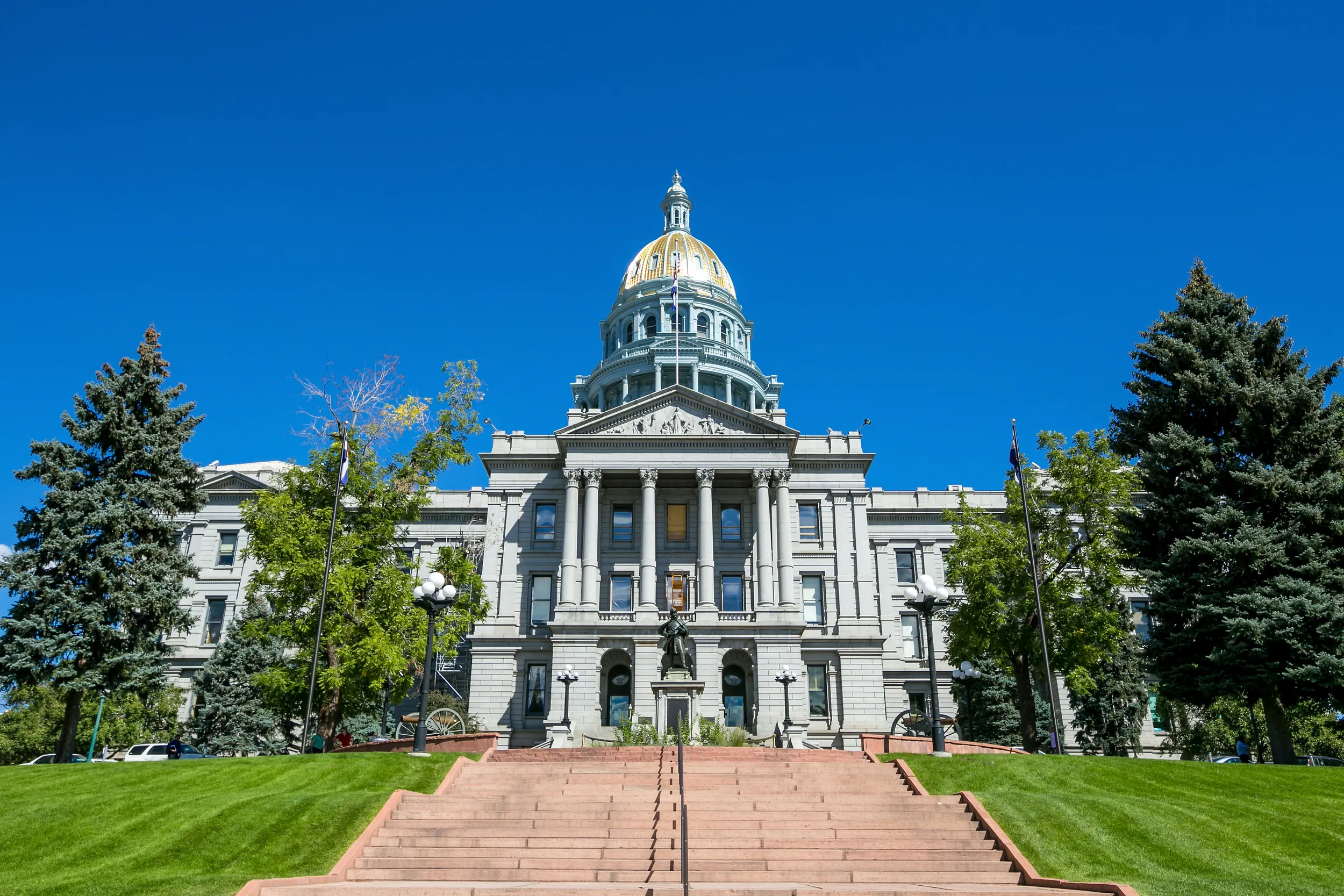
Denver is called "The Mile High City" because the 13th step of the State Capitol building sits at exactly 5,280 feet above sea level.
Colorado and Wyoming are the only states whose borders are drawn entirely along lines of latitude and longitude, with no rivers or mountain ridges, though 1800s surveying errors put small kinks in Colorado's lines.
Denver receives more annual sunshine than Miami or San Diego, averaging 300 sunny days per year. The dry climate means snow melts quickly.
The first Chipotle Mexican Grill opened in Denver in 1993. The chain is now one of the largest fast-casual restaurant brands in the world.
Quick Facts and Common Questions
Short answers to the questions people most often ask about Colorado: its abbreviation, how it became a state, its capital, and its place in Congress.
Colorado's two-letter postal abbreviation is CO. The U.S. Census Bureau places it in the West region, in the Mountain division, and about 5.77 million people lived there in the 2020 census.
Colorado became the 38th state on August 1, 1876, less than a month after the nation's 100th birthday, which is why it is called "The Centennial State." Congress had created the Colorado Territory on February 28, 1861, after the Pikes Peak Gold Rush of 1858 and 1859 drew thousands of settlers.
Colorado is a Spanish word meaning "colored red" or "reddish." Spanish explorers first gave it to the Colorado River for its reddish, silt-laden water, and the territory and state took the river's name.
Denver has been the capital since 1867. The territorial legislature first met in Colorado City in 1862, quickly moved to Denver, and then met in Golden from 1862 to 1867 before returning to Denver for good. Voters confirmed Denver as the permanent capital in 1881, and one step of the Capitol's west entrance is marked as exactly one mile above sea level.
Colorado borders Wyoming and Nebraska to the north, Kansas to the east, Oklahoma and New Mexico to the south, and Utah to the west. It also touches Arizona at the Four Corners, the only point where four states meet.
Colorado's motto is "Nil Sine Numine," Latin for "Nothing Without Providence." Its state bird is the lark bunting, its flower is the Rocky Mountain columbine, its tree is the Colorado blue spruce, and its animal is the Rocky Mountain bighorn sheep.
Based on the 2020 census, Colorado gained a seat and now has 8 in the U.S. House of Representatives, which gives it 10 votes in the Electoral College.
Colorado has the highest average elevation of any state, about 6,800 feet. Its highest point, Mount Elbert, rises to 14,440 feet, and dozens of its peaks top 14,000 feet.
In November 1893 Colorado's male voters approved women's suffrage, making Colorado the first state to give women the vote through a popular election. Wyoming had granted women the vote earlier, as a territory in 1869, through its legislature.
Rocky Mountain National Park
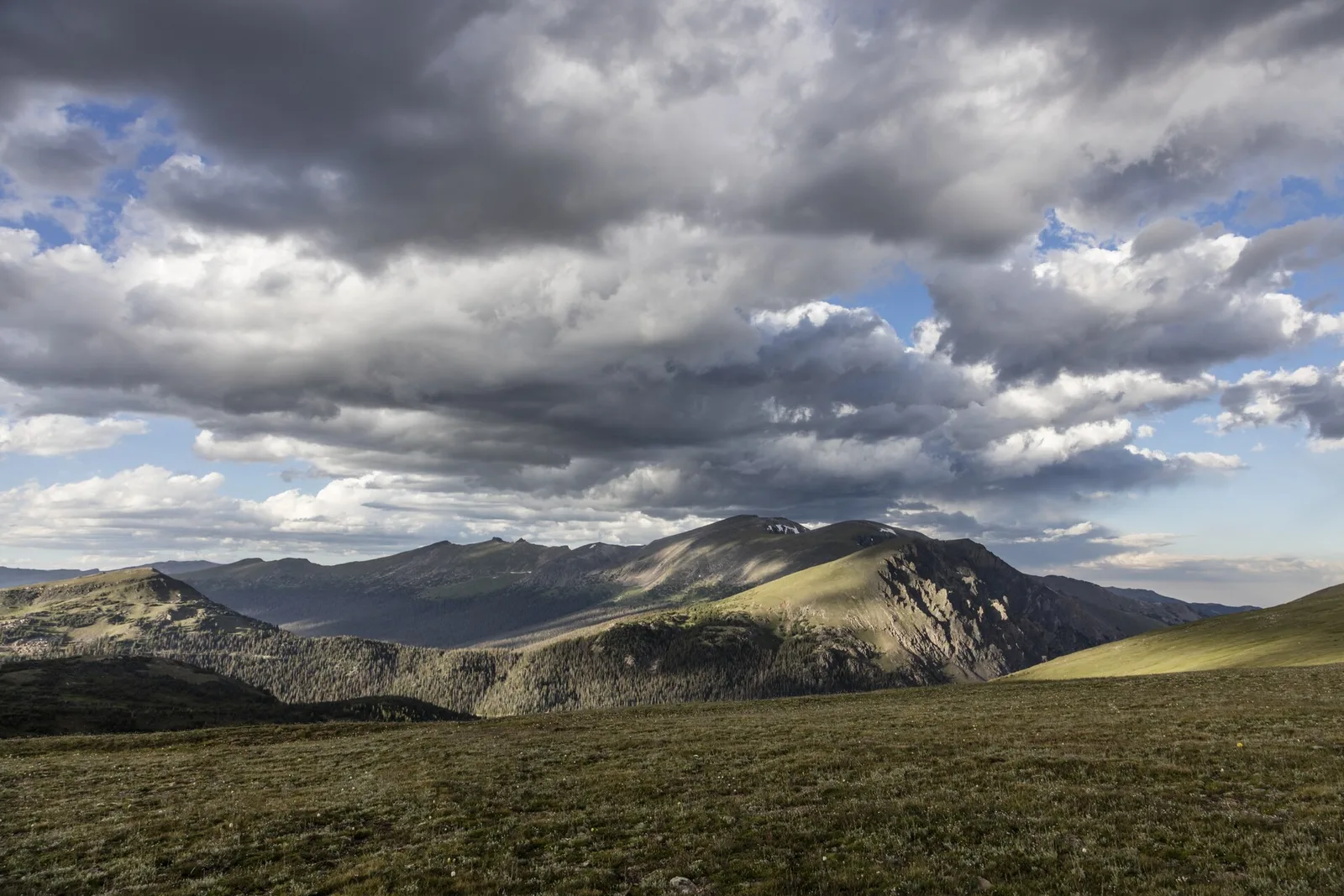
Where the Rockies Rise Above the Clouds, 76 Peaks Above 12,000 Feet
About Rocky Mountain National Park
Rocky Mountain National Park straddles the Continental Divide in north-central Colorado, packing 76 named peaks above 12,000 feet and the 14,259-foot summit of Longs Peak, the park's only 'fourteener,' into about 265,000 acres.
Trail Ridge Road climbs to 12,183 feet as it crosses the park, the highest continuous paved road in the country, and runs 11 miles above the trees across alpine tundra that looks more Arctic than Coloradan. It opened in 1932; the older one-lane Fall River Road had been the first auto route over the divide since 1920.
The naturalist and lodge owner Enos Mills led the fight for the park, which Congress created on January 26, 1915. In 2009 Congress designated about 250,000 acres of it, roughly 95 percent, as wilderness.
With around 4.3 million visitors a year, Rocky is among the three or four busiest national parks, and since 2020 it has required timed-entry reservations for the summer and fall to hold down tundra damage and gridlock at the most popular trailheads.
- Designation
- National Park
- Location
- Larimer and Grand Counties, Colorado
- Established
- 1915
- Annual Visitors
- ~4.5 million
Life Zones of Rocky Mountain
The montane zone covers the park's lower east side in open ponderosa pine on sunny slopes, Douglas fir on shaded ones, and lodgepole pine where old fires cleared the ground.
Its meadows and streamside willow, in places like Moraine Park and Horseshoe Park, are the best wildlife habitat in the park and where most visitors first see elk at dawn and dusk.
This is the zone of the park's history: the town of Estes Park, the 1909 Stanley Hotel, and the site of Enos Mills's homestead cabin all sit here, and most park facilities are at these elevations.
Ponderosa here depend on frequent low-intensity fire, and a century of suppression thickened the forest; the 2020 Cameron Peak and East Troublesome fires burned through parts of this zone on both sides of the park.
Dense Engelmann spruce and subalpine fir cover this zone, broken by wildflower meadows and by glacial cirques holding lakes such as Bear, Dream, and Emerald.
Most of the park's accessible day hikes climb through it, and the Bear Lake corridor is busy enough that a free shuttle bus and, in summer, a separate timed permit are needed to reach the trailhead.
Moose, absent historically, spread into the park's willow-lined west side after Colorado released animals near North Park in 1978 and 1979, and are now regular sights along the Colorado River headwaters.
A bark beetle outbreak between roughly 2000 and 2015 killed a large share of the mature lodgepole and spruce in this zone, and the standing dead timber raised fire danger for years afterward.
Above treeline the tundra spreads across rolling uplands in cushion plants, sedges, and dwarf wildflowers built to survive fierce wind, deep cold, and a growing season measured in weeks.
Trail Ridge Road and the Alpine Visitor Center at 11,796 feet, the highest visitor center in the national park system, let people stand in true tundra without a technical climb.
Many tundra plants are decades to centuries old despite standing an inch tall, and a single step off-trail can kill growth that took a lifetime, so the park lines the popular routes with rope and rock.
Pikas, small relatives of rabbits that do not hibernate and cannot tolerate heat, live in the talus here and are watched closely as an early indicator of a warming climate.
The Continental Divide runs the length of the park; rain and snow on the east side drain toward the Atlantic, and on the west toward the Pacific by way of the Colorado River, which rises in the park's northwest corner.
Pleistocene glaciers ground out the park's U-shaped valleys, cirques, and moraines; Glacier Gorge, with Alberta Falls, Mills Lake, and the Black Lake headwall, is among the most dramatic of them.
The small ice bodies still clinging to the high east-facing walls, Andrews, Tyndall, Sprague, and a few others, are not Ice Age leftovers but formed during the cold centuries of the Little Ice Age and are now shrinking.
On the west side, the Grand Ditch, a hand-dug diversion canal begun in the 1890s, still skims snowmelt off the Never Summer Mountains and sends it across the divide to Front Range farms; a 2003 breach sent a debris flow through the Lulu City wetland and led to a federal restoration settlement.
Indigenous Connections
Ute People
The Ute, or Nuche, have lived in the Colorado mountains for many centuries and hold the high country sacred, moving up to the tundra in summer to hunt elk and bighorn and to gather plants along routes that later became park trails.
The Ute Trail across Trail Ridge and Tombstone Ridge follows one of those travel routes; game-drive walls and hunting blinds built of stacked rock survive on the tundra as protected archaeological sites.
After the treaties of 1868 and 1873 and the 1879 Meeker conflict, the United States forced the Ute out of most of Colorado, removing the northern bands to the Uintah reservation in Utah in 1881.
The Ute Mountain Ute Tribe and Southern Ute Indian Tribe are federally recognized tribes located in southwestern Colorado. The Northern Ute (Uintah and Ouray Ute) are based in Utah. All maintain cultural ties to their mountain homeland.
Arapaho People
Arapaho bands hunted and traveled through the park area in the 1700s and 1800s, often in the parks and valleys west of the divide, and gave names to many features, among them the Never Summer Mountains.
In 1914 the Colorado Mountain Club brought two elderly Arapaho men, Gun Griswold and Sherman Sage, back to the region to record Arapaho place names and trails; their account is a primary source for the park's Indigenous geography.
The Arapaho and Cheyenne were pushed onto reservations after the treaties of 1851 and 1861 and the 1864 Sand Creek Massacre, and the Colorado bands never returned.
The Northern Arapaho Tribe is based on the Wind River Indian Reservation in Wyoming, and the Southern Arapaho are part of the Cheyenne and Arapaho Tribes in Oklahoma. Both groups maintain cultural connections to the Rocky Mountain region.
Adventures in Rocky Mountain
Trail Ridge Road Scenic Drive
Trail Ridge Road runs 48 miles from Estes Park to Grand Lake, topping out at 12,183 feet, and holds 11 miles of its length above the trees.
It was built between 1929 and 1932 to a design that keeps the grade gentle and follows the ridgelines for the views; it is usually open from late May to mid-October and is plowed clear each spring by rotary plows working through drifts up to 20 feet deep.
Pullouts at Rainbow Curve, Forest Canyon Overlook, and the Alpine Visitor Center offer short tundra walks and reliable views of elk, and often of bighorn sheep and marmots.
The Old Fall River Road, a one-way gravel route built in 1920, still climbs the other side of the valley toward the same summit area for drivers who want the historic experience.
Emerald Lake Trail
From the Bear Lake trailhead the path climbs past Nymph Lake, then Dream Lake, and ends at Emerald Lake under the cliffs of Hallett Peak and Flattop Mountain, 3.6 miles round trip with about 600 feet of gain.
It is one of the most heavily used trails in the park, and in summer the Bear Lake parking lot fills before dawn, so most hikers ride the free park shuttle from a lot near the highway.
The lakes sit in a stepped glacial cirque, and pikas and yellow-bellied marmots are easy to spot in the boulder fields along the way.
In winter the same route is a popular snowshoe, the lakes freeze solid, and avalanche paths cross the upper section after heavy snow.
Long's Peak Summit
Longs Peak, at 14,259 feet, is the park's only peak above 14,000 feet and one of the most climbed mountains in Colorado.
The standard Keyhole Route is a 14 to 15 mile round trip with about 5,000 feet of gain and, above the Keyhole notch at 13,100 feet, roughly a mile of exposed Class 3 scrambling on ledges named the Narrows and the Homestretch.
Most parties leave the trailhead between midnight and 3 a.m. to be off the summit before the afternoon thunderstorms that build almost daily in summer.
The peak has killed more than 70 people since records began; the route is snow-free and reasonably safe only from about mid-July to early September and is a technical mountaineering climb the rest of the year.
Conservation Challenges
Timed Entry Permit System
Visitation climbed past 4.5 million in 2019, overwhelming parking, restrooms, and the narrow tundra shoulders of Trail Ridge Road.
The park brought in timed-entry reservations in 2020 and has run the system every summer and fall since, with a separate, harder-to-get permit for the Bear Lake corridor.
Reservations are sold in monthly blocks on recreation.gov and typically sell out within minutes of release, a recurring source of visitor frustration.
Park studies credit the system with cutting midday congestion and off-trail trampling, and it has become a test case that other crowded parks watch.
Spruce Bark Beetle Epidemic
Native bark beetles, mountain pine beetle in the lodgepole and spruce beetle in the Engelmann spruce, killed a large fraction of the park's mature conifers between about 2000 and 2015.
Warm winters that no longer killed overwintering larvae, together with drought that weakened the trees, let the outbreak spread far beyond its normal bounds.
The dead standing forest sharply raised fire risk, and much of it burned in the 2020 East Troublesome Fire, which crossed the Continental Divide above treeline in a single day.
Regeneration is under way, but spruce-fir forest at this elevation takes many decades to recover, and the new forest may come back as a different mix of species.
Nitrogen Deposition
Prevailing winds carry nitrogen from Front Range traffic and industry, and especially from fertilizer and feedlots in eastern Colorado, up onto the park's east side, where it falls in rain, snow, and dust.
The park's high lakes and thin tundra soils are naturally very low in nitrogen, so even small additions change which plants and algae thrive and begin to acidify the water.
Long-term monitoring at Loch Vale and other sites has made Rocky one of the most studied places in the country for nitrogen effects on a mountain ecosystem.
A 2007 agreement among the park, the state, and agricultural groups set a nitrogen deposition reduction plan with target levels, but deposition has been slow to fall.
At a Glance
Did You Know?
Trail Ridge Road is closed every winter by massive snowdrifts that can be 20 to 30 feet deep. A fleet of rotary plows works for weeks each spring to reopen the road, sometimes not completing the work until late May or early June.
The tundra plants at Rocky Mountain National Park can be hundreds of years old despite standing only an inch or two tall. A single careless step can destroy decades of slow growth in the extreme alpine environment.
The park's elk herd stages a spectacular autumn rut each September and October, when bull elk bugle loudly across the meadows and valleys. Elk Meadow and Moraine Park are top viewing locations for this extraordinary natural event.
The Continental Divide passes directly through the park, meaning rainfall on the east side flows to the Gulf of Mexico and rainfall on the west side flows to the Gulf of California.
Plan Your Visit
Location
Larimer and Grand Counties, Colorado
Designation
National Park
Best Time to Visit
June through September for full access; fall elk rut in September is spectacular
Admission
$30 per vehicle; timed entry reservations required May through October