The First Lady of
the United States
No salary. No official duties. No constitutional definition. And yet the role of First Lady has shaped American history, culture, and public health for over 230 years.
🌹 What Is the First Lady?
The First Lady of the United States is the official hostess of the White House and the spouse of the President. The role is defined by exactly zero words in the Constitution. There is no job description, no official title in law, no salary, and no formal duties. And yet the First Lady is one of the most visible and influential positions in American public life.
The term "First Lady" wasn't even commonly used until the 1860s , Martha Washington was called "Lady Washington." What the role means has been entirely shaped by the women who held it, and it has looked radically different depending on the era and the person.
Congress has acknowledged the position only glancingly. A 1978 law, the White House Personnel Authorization Act, refers to staff who "assist the President in the discharge of the President's duties" including through the spouse, which courts have read as recognizing the Office of the First Lady. In Association of American Physicians and Surgeons v. Clinton (1993), a federal appeals court concluded that for purposes of open-government law the First Lady functions as the functional equivalent of a government employee.
Not every president has had a wife serve in the role. Bachelor President James Buchanan relied on his niece Harriet Lane, and widowers such as Thomas Jefferson, Andrew Jackson, and Chester Arthur turned to daughters, daughters-in-law, or other female relatives as White House hostess. The word "First" has also been claimed for others: Franklin Roosevelt's confidante Missy LeHand, and in the modern era a "Second Lady" or "Second Gentleman" for the vice president's spouse.
🏛️ The East Wing, The First Lady's Office
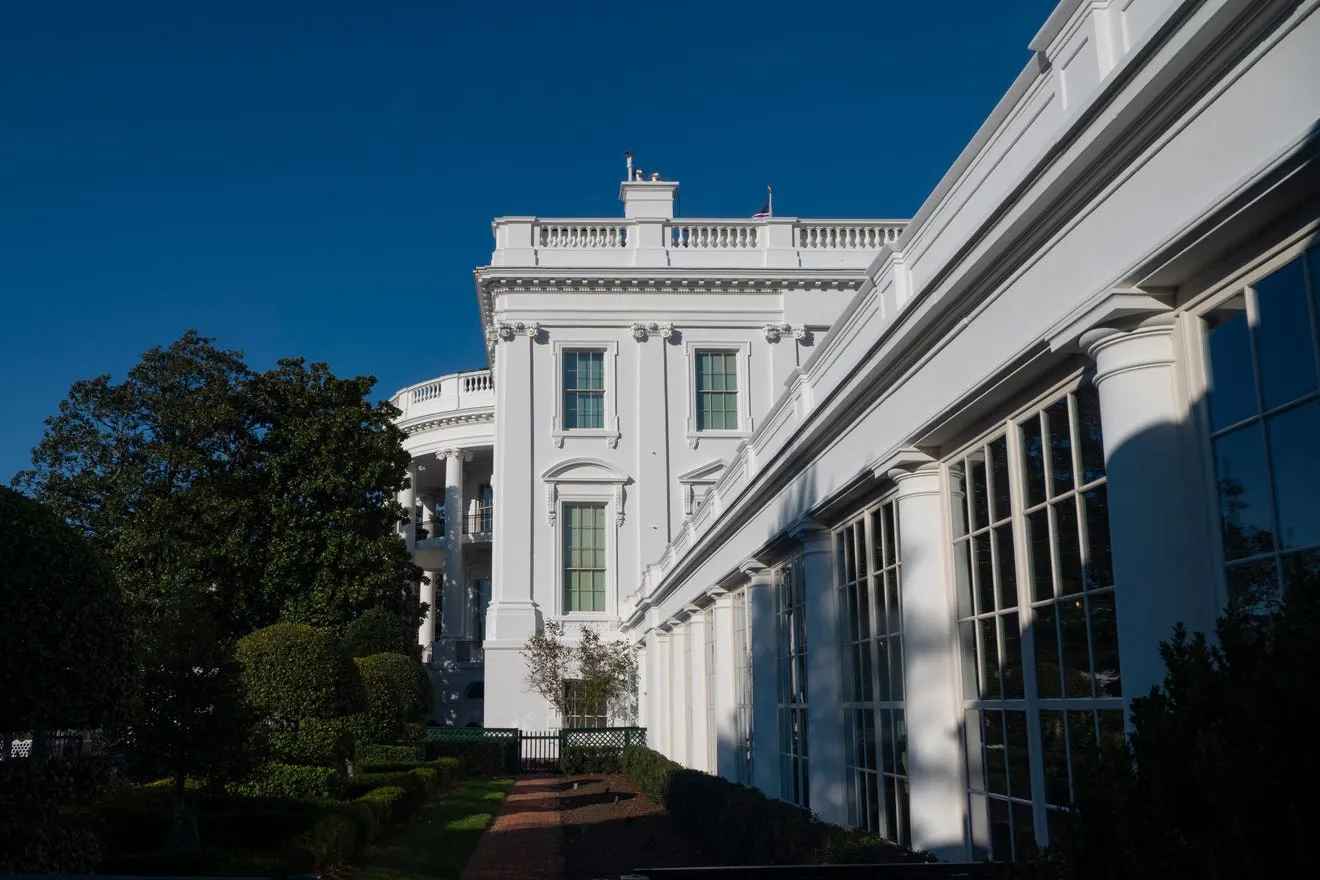
The White House has two wings. The West Wing is where the President and senior staff work. The East Wing is the First Lady's domain, housing the Office of the First Lady and the staff that supports her work. The East Wing wasn't always used this way: it was originally a ceremonial entrance. FDR converted it during World War II for security reasons, and it became the First Lady's office space under later administrations.
The Office of the First Lady employs a Chief of Staff, press secretary, social secretary, correspondence office, and various policy and scheduling staff, all paid by the taxpayer and all serving at the pleasure of the First Lady. The staff size varies dramatically by administration, but modern First Ladies typically have a team of about 15 to 25 people.
A formal Office of the First Lady is a fairly recent invention. Edith Roosevelt hired the first paid staffer, a social secretary, in 1901. Jacqueline Kennedy expanded the operation in the 1960s, and Rosalynn Carter, whose chief of staff was given the same pay grade as the president's senior aides in 1978, is generally credited with turning it into a true policy shop with an East Wing office.
The two-story East Wing itself dates to a 1902 renovation and was rebuilt in 1942; the wartime construction hid the entrance to the Presidential Emergency Operations Center beneath it. The First Lady's staff has been housed there since the mid-20th century, though a few First Ladies, most notably Hillary Clinton, have instead taken office space in the West Wing to signal a policy role.
What the First Lady Typically Does
- •Hosts state dinners and official White House social events
- •Represents the US at official functions domestically and abroad
- •Selects and champions a signature social initiative
- •Manages the White House's public image and aesthetic
- •Receives foreign dignitaries and their spouses
- •Attends official ceremonies alongside the President
- •Manages the private residence of the White House
The Unwritten Rules
- •Choose a cause, every modern First Lady has a signature initiative
- •Be visible but not overshadow the President
- •Be a surrogate on the campaign trail
- •Manage the White House's cultural programming
- •Respond to national tragedies with public compassion
- •Represent the nation's ideals to the world
- •Navigate constant public scrutiny of appearance and behavior
Melania Trump
47th First Lady · January 20, 2025 – Present
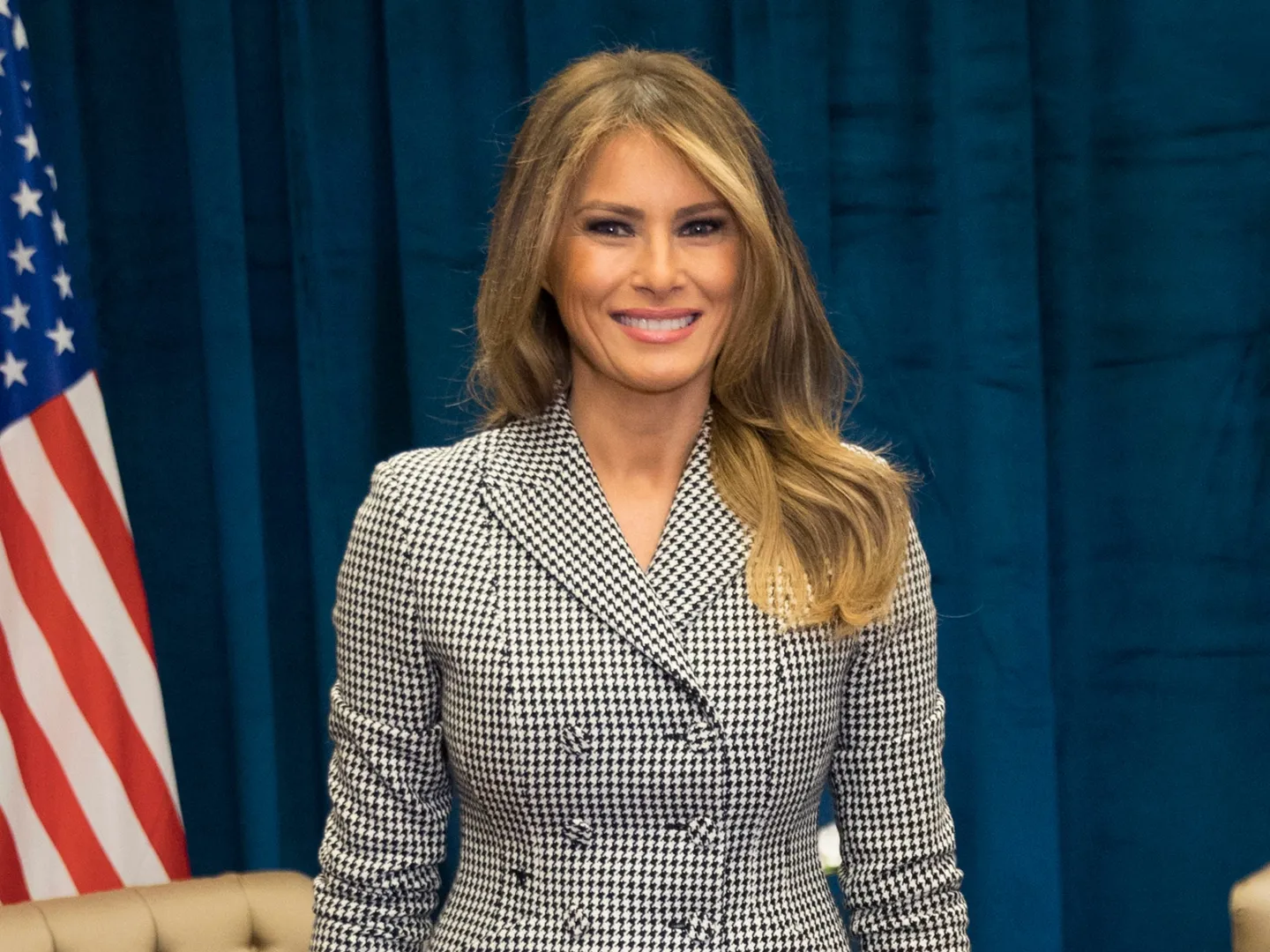
Melania Trump, 47th First Lady of the United States
Melania Trump, born Melanija Knavs on April 26, 1970, in Novo Mesto, Slovenia (then part of Yugoslavia), is the second foreign-born First Lady in American history. The first was Louisa Adams, wife of John Quincy Adams. She grew up in Sevnica, Slovenia, where her father was a car dealer and local Communist Party official, and her mother worked as a textile factory pattern maker who also designed children's clothes.
She began modeling at 16, and by her early twenties had moved to Milan and Paris, eventually coming to New York in 1996. She became a US citizen in 2006. She married Donald Trump in 2005; their son Barron was born in 2006.
She served as First Lady during Trump's first term (2017–2021) and returned to the role on January 20, 2025 , making her one of only two people to serve as First Lady twice, the other being Frances Cleveland (Grover Cleveland's wife).
🌟 Be Best, Her Signature Initiative (2018–Present)
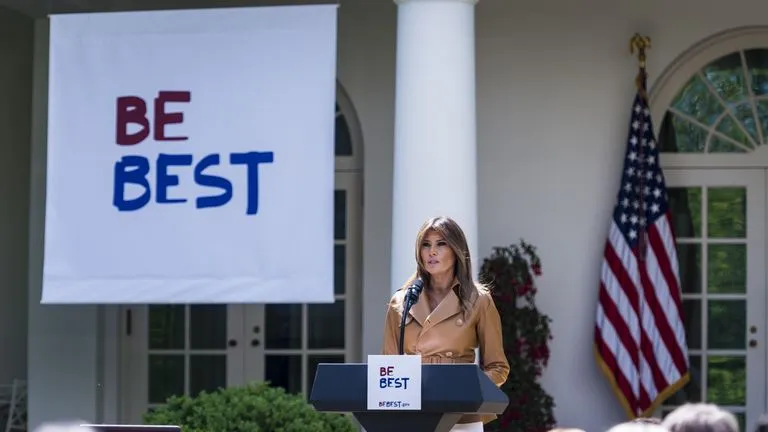
Launched on May 7, 2018, Be Best is Melania Trump's signature initiative focusing on children's wellbeing across three pillars: social-emotional wellbeing, online safety, and the opioid epidemic. The campaign grew out of her observations about the pressures children face , particularly around cyberbullying and social media , and evolved significantly over both her terms.
Be Best was one of the first major First Lady initiatives to address online safety and cyberbullying at a national level, predating the current wave of legislation on children's digital safety by several years. Under the initiative, Melania visited schools and children's hospitals across the country and engaged with international partners.
🤝 Fostering the Future, Her Second Term Focus (2025–Present)
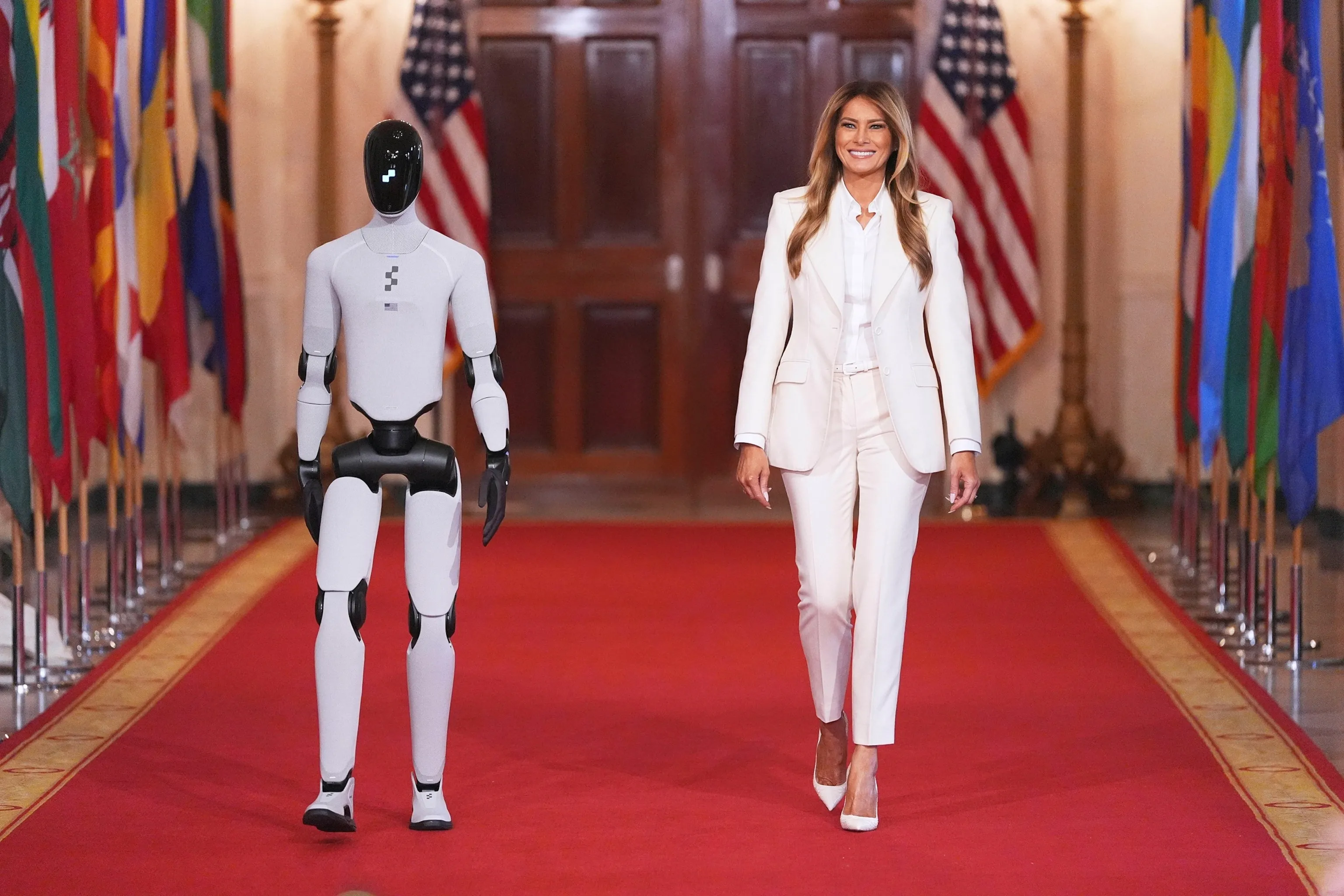
In her second term, Melania significantly expanded Be Best with a major new branch called Fostering the Future, focused on youth aging out of foster care. Originally established as a scholarship program in 2021, it was elevated to a White House priority in November 2025 when President Trump signed an Executive Order on "Fostering the Future for American Children and Families", a rare instance of a First Lady's initiative becoming formal executive policy.
In September 2025, she launched Fostering the Future Together at the United Nations General Assembly, a global coalition of nations committing to improve children's wellbeing through education, innovation, and technology. The coalition's inaugural summit was held at the White House in March 2026, bringing together representatives from 45 nations.
Key 2025–2026 Accomplishments
- ›TAKE IT DOWN Act, legislation she championed against nonconsensual intimate images, including AI deepfakes, signed into law May 19, 2025
- ›Executive Order on Fostering the Future signed by President Trump
- ›Fostering the Future Together global coalition launched at UNGA, 45 member nations
- ›Inaugural global coalition summit hosted at the White House (March 2026)
- ›HUD and Treasury roundtables launched with foster youth across the country
📌 A Notable First
Melania Trump is only the second foreign-born First Lady in American history, the first being Louisa Catherine Adams, born in London in 1775. She and Frances Cleveland (who served 1886–1889 and 1893–1897) are the only First Ladies to serve two non-consecutive terms. According to her official biography, she speaks five languages: Slovenian, English, French, Serbian, and German.
📜 How the Role Evolved Over Time
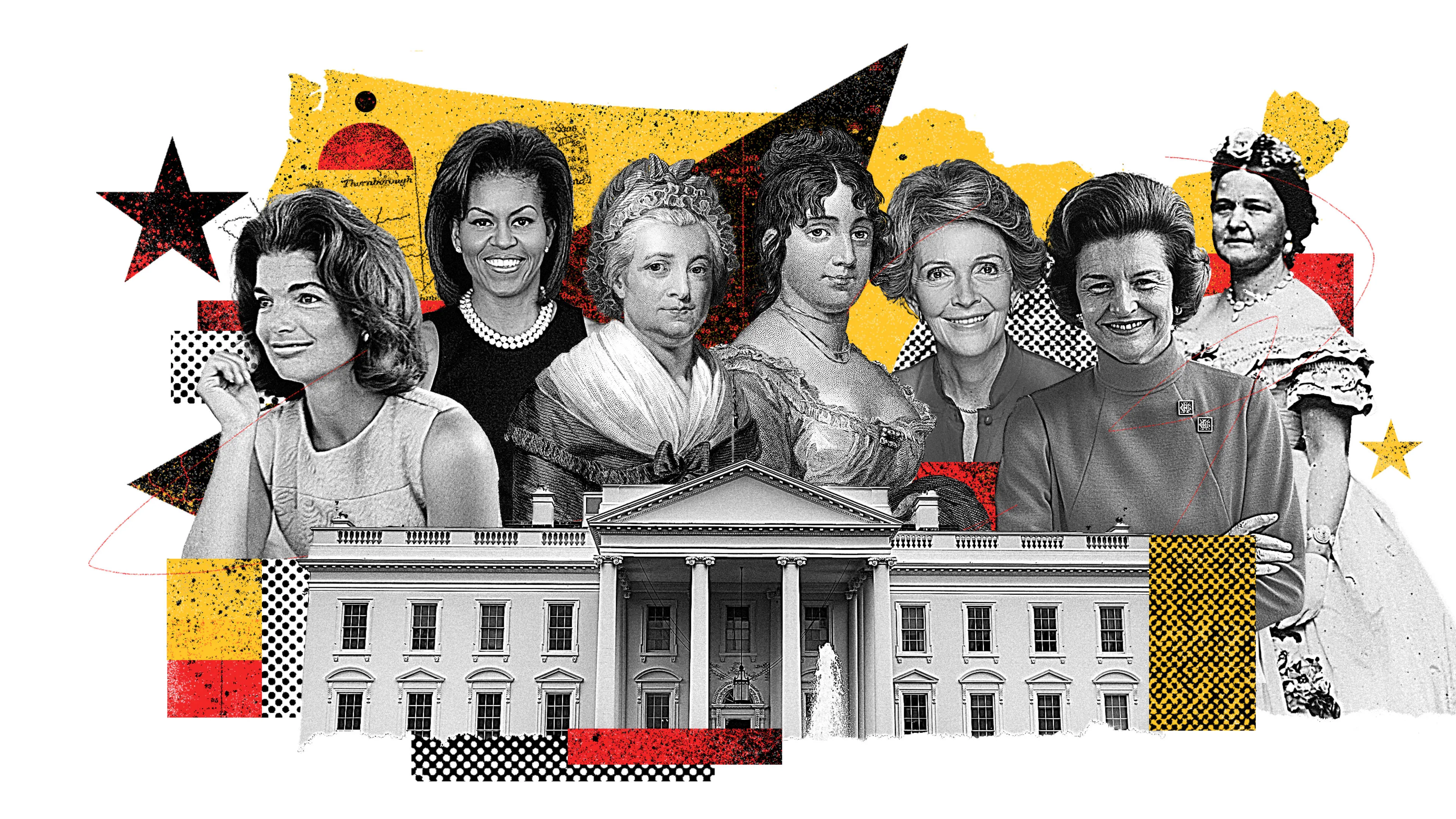
The First Lady role has been transformed by the women who held it, each one inheriting a set of expectations and either meeting them, reshaping them, or shattering them. The trajectory has been broadly toward greater visibility, greater policy involvement, and greater independence.
1789–1860: The Hostess Era
Early First Ladies saw their role as primarily social, managing the White House as a home and hosting the political elite. Martha Washington set the template of dignified public service while maintaining deep privacy. Dolley Madison elevated it to political art, using social events as diplomatic tools. The role was seen as an extension of domesticity, not politics.
1860–1900: The Transitional Period
The Civil War era brought First Ladies into painful public spotlight. Mary Todd Lincoln endured accusations of Confederate sympathy. Julia Grant was enormously popular but strictly apolitical. The role remained primarily ceremonial, but the scrutiny intensified dramatically.
1900–1940: The Reform Era
Progressive Era First Ladies began to use the platform for public causes. Edith Roosevelt quietly advised her husband on appointments. Edith Wilson took the role to its informal extreme, managing government during Wilson's incapacitation. Eleanor Roosevelt then exploded every convention, press conferences, columns, policy work, world travel, establishing that a First Lady could be an independent public figure.
1940–1970: The Cause Era
Post-Eleanor, every First Lady was expected to have a cause. Bess Truman retreated to privacy and was criticized for it. Mamie Eisenhower focused on domesticity. Jackie Kennedy brought culture and historic preservation. Lady Bird Johnson achieved genuine legislative impact with highway beautification. The template of 'signature initiative' was now firmly established.
1970–2000: The Partner Era
Betty Ford's radical honesty about personal health issues opened a new dimension of the role. Rosalynn Carter attended Cabinet meetings. Nancy Reagan wielded significant behind-the-scenes influence. Hillary Clinton took formal policy leadership and was criticized fiercely for it, then went further after leaving the White House than any predecessor.
2000–Present: The Modern Era
Michelle Obama combined policy effectiveness ('Let's Move!'), cultural impact, and extraordinary personal popularity. Jill Biden broke precedent by maintaining outside employment. Melania Trump brought an international, multilingual perspective and focused on children's wellbeing through Be Best and its global expansion. The role continues to evolve with each woman who holds it.
Notable First Ladies, Fully Explained
From Martha Washington to Jill Biden, the women who shaped the role. Click any to expand the full story.
The Full Story
Martha Washington was the first to hold the role and had no template to follow, she invented it. She managed Mount Vernon while Washington commanded the Continental Army, and spent each winter of the war at his headquarters, including Valley Forge in 1777-78, organizing sewing circles and visiting sick soldiers to keep up morale.
She was never called "First Lady" in her lifetime; the public and press addressed her as "Lady Washington" or "Mrs. President." She hosted a formal public reception every Friday evening in New York and then Philadelphia, the temporary capitals, deliberately pitched between a royal court and a common gathering to give the new republic a dignified but not regal style.
A wealthy widow when she married Washington in 1759, she brought to the marriage a large estate and, under Virginia law, control of more than 80 enslaved people; the households at Mount Vernon and the presidential residence were run with enslaved labor. Washington's will freed the people he owned outright upon Martha's death, and she freed them about a year after his, at the start of 1801.
She reportedly disliked public life, once writing that she felt "more like a state prisoner than anything else." After Washington died in 1799 she burned nearly all of their personal correspondence, so historians reconstruct her from a handful of surviving letters and the accounts of others.
Historical Legacy
Defined the role itself, First Hostess, moral anchor, presidential partner.
The Full Story
Abigail Adams was arguably the most politically engaged First Lady until the 20th century. Her thousands of letters to John Adams, who was away for years at the Continental Congress and then on diplomatic missions in Europe, are among the richest primary sources on the era, and the couple's correspondence was published by their grandson beginning in 1840.
In her March 1776 letter she urged him to "Remember the Ladies" and warned that women "will not hold ourselves bound by any Laws in which we have no voice, or Representation." Adams replied that he could not help laughing; nothing came of it in the new laws, but the phrase became a touchstone for later women's-rights advocates.
She ran the family farm in Braintree, Massachusetts, through the war, managed its finances and hired labor, and invested in government bonds on her own account against her husband's advice, at a profit. During his presidency she was such a visible adviser that critics nicknamed her "Mrs. President."
She was the first First Lady to live in the still-unfinished White House, moving in during November 1800 and famously hanging laundry to dry in the East Room. She was the only woman to be both wife and mother of a president, John Quincy Adams took office in 1825, until Barbara Bush, whose son George W. Bush took office in 2001.
Historical Legacy
The original political partner. Her letters are foundational documents of early American feminism.
The Full Story
Dolley Madison was one of the most popular public figures of the early republic. As British troops advanced on Washington in August 1814 during the War of 1812, she stayed at the President's House until the full-length Gilbert Stuart portrait of George Washington could be unscrewed from the wall and carried to safety; the mansion was burned hours later. (The document she is sometimes said to have saved, the Declaration of Independence, was actually removed by State Department clerks.)
She is credited with inventing the role of the president's wife as a political hostess. Her Wednesday-night "squeezes" drew hundreds of guests from both parties, and she used them to smooth over the fierce Federalist-Republican divisions of the day, so effectively that even opponents of her husband attended.
Because Thomas Jefferson was a widower, Dolley acted as White House hostess for him during his presidency before doing so for her own husband, giving her 16 years at the center of Washington society. She had been raised a Quaker but was read out of the meeting for marrying Madison, an Episcopalian, outside the faith.
Widowed and in financial trouble in old age, she sold her husband's notes on the Constitutional Convention to Congress. In 1844 she became the first private citizen to send a message over Samuel Morse's telegraph line, and Congress granted her an honorary seat on the House floor.
Historical Legacy
Defined political entertaining as diplomatic statecraft. A genuine heroine of the War of 1812.
The Full Story
Mary Todd Lincoln lost three of her four sons, Eddie in 1850, Willie in the White House in 1862, and Tad in 1871, and was seated beside her husband when he was shot at Ford's Theatre in April 1865. In 1875 her only surviving son, Robert, had her briefly committed to a private asylum in Illinois; she secured her release after several months and the two were largely estranged afterward.
She came from a prominent Kentucky slaveholding family, and several of her half-brothers fought and died for the Confederacy, which fueled Northern rumors that she was a Southern sympathizer or spy. She was well educated, fluent in French, and had followed politics closely since girlhood in Springfield.
As First Lady she oversaw a costly refurbishment of a shabby White House and overran the congressional appropriation, drawing heavy criticism in wartime and leaving her fearful of her husband's reaction. She also organized aid for freed people, made repeated visits to Union military hospitals, and corresponded with figures such as the formerly enslaved dressmaker and memoirist Elizabeth Keckley, who became a close companion.
After Lincoln's death Congress eventually granted her a pension, though only after a bruising public debate. Later scholarship, including analysis of her documented symptoms, has treated her more sympathetically, with some historians suggesting bipolar disorder or the effects of a possible earlier head injury.
Historical Legacy
Her life remains one of the great American tragedies. Her wartime relief work has been underappreciated.
The Full Story
Edith Bolling Galt married the widowed Woodrow Wilson in December 1915, 16 months after his first wife died. During World War I she followed "gasless Sundays" and "meatless Mondays," sewed for the Red Cross, and grazed sheep on the White House lawn.
In October 1919, while campaigning for the Treaty of Versailles and the League of Nations, Wilson suffered a severe stroke that left him partly paralyzed and bedridden. His doctors and Edith concealed the extent of it. For roughly the last year and a half of his term she screened every document and visitor, deciding what reached his bedside and relaying what she said were his instructions.
She always insisted she made no decisions herself, describing her role as a "stewardship" in which she only decided what was important enough to bring to her husband. Historians disagree about how far that went; some call it the gravest concealment of a presidential disability in U.S. history.
Vice President Thomas Marshall was never formally briefed and refused to act without a clear declaration that the office was vacant, which no one would make. The episode is frequently cited as background to the 25th Amendment, ratified in 1967, which created a procedure for presidential incapacity.
Historical Legacy
The most dramatic exercise of informal presidential power by any First Lady in history.
The Full Story
Eleanor Roosevelt transformed the First Lady role from White House hostess into an independent political force. Beginning in 1933 she held her own weekly press conferences and admitted only women reporters, which forced news organizations to keep at least one woman on staff to cover them.
From 1935 until shortly before her death she wrote "My Day," a syndicated newspaper column that ran six days a week in scores of papers. She traveled constantly, inspecting relief programs, coal mines, and, during the war, troops in the Pacific, and brought back reports to a president who could not easily move about himself.
In 1939 she resigned from the Daughters of the American Revolution after the group barred the Black contralto Marian Anderson from Constitution Hall, and helped arrange Anderson's Easter Sunday concert at the Lincoln Memorial before a crowd of 75,000. She pressed FDR to appoint more women and to move faster on civil rights, and publicly backed an anti-lynching bill he would not endorse.
After FDR's death, President Truman named her a delegate to the new United Nations. As chair of the drafting committee she guided the Universal Declaration of Human Rights to a unanimous adoption by the General Assembly in December 1948, and delegates gave her a standing ovation.
Historical Legacy
The standard against which all subsequent First Ladies are measured. Redefined what the role could be.
The Full Story
Jacqueline Kennedy, 31 when she became First Lady, made the historic restoration of the White House her signature project. She created a Fine Arts Committee, secured legislation in 1961 designating the house a museum whose furnishings could not be discarded, and hunted down period pieces and paintings that had left the collection over the decades.
On February 14, 1962, she led a televised tour of the restored rooms that drew about 56 million viewers across the three networks and won a special Emmy. She also founded the White House Historical Association to fund future preservation and published the first official White House guidebook.
Educated at Vassar and George Washington University and a former newspaper "inquiring photographer," she spoke French, Spanish, and Italian and used them on state visits; on a 1961 trip to Paris the president introduced himself as "the man who accompanied Jacqueline Kennedy to Paris."
She was beside her husband in the motorcade when he was assassinated in Dallas on November 22, 1963. She refused to change out of her bloodstained pink Chanel-style suit for Lyndon Johnson's swearing-in aboard Air Force One, saying she wanted people to "see what they have done," and she planned the state funeral around that of Abraham Lincoln.
Historical Legacy
Her White House restoration and television presence modernized the First Lady role for the media age.
The Full Story
Claudia Alta "Lady Bird" Johnson made conservation and "beautification" her cause. The Highway Beautification Act of 1965, which she promoted so openly that members of Congress called it "Lady Bird's Bill," limited billboards and required screening of junkyards along the Interstate and primary highway systems, and encouraged native plantings on the right-of-way.
She founded the First Lady's Committee for a More Beautiful Capital, which planted millions of daffodils, dogwoods, and other plants around Washington, and she was an early public supporter of Head Start, the preschool program launched in 1965.
In 1943 she had used a modest inheritance to buy a struggling Austin radio station; she built it into a broadcasting company that made the Johnsons millions and gave her genuine business standing at a time when few First Ladies had independent careers.
During the 1964 campaign she took a 47-stop, four-day whistle-stop tour of eight Southern states aboard the "Lady Bird Special," speaking, sometimes over heckling, in defense of the Civil Rights Act her husband had just signed, in a region deeply hostile to it.
Historical Legacy
Her environmental advocacy reshaped the American landscape. The wildflowers along highways today are her legacy.
The Full Story
Betty Ford became First Lady abruptly in August 1974 when Richard Nixon resigned. Weeks later she was diagnosed with breast cancer and had a radical mastectomy, and she chose to announce it publicly at a time when the disease was rarely named in polite conversation. Doctors reported a surge in women seeking mammograms and breast exams, an effect researchers later called the "Betty Ford blip."
She spoke openly in interviews about subjects First Ladies had avoided: her earlier treatment for depression, her support for the Equal Rights Amendment, and her belief that the Supreme Court's Roe v. Wade decision was "a great, great decision," a stance at odds with much of her husband's party. Polls showed her approval far above the president's.
In 1978, after her family staged an intervention, she publicly acknowledged addiction to alcohol and to prescription painkillers she had taken for a pinched nerve and arthritis, and she entered treatment at Long Beach Naval Hospital.
In 1982 she co-founded the Betty Ford Center in Rancho Mirage, California, a nonprofit addiction-treatment facility that became one of the best known in the country and that pioneered programs giving equal space to women. She chaired it for years and later merged it with the Hazelden Foundation.
Historical Legacy
Her openness about breast cancer, addiction, and mental health helped destigmatize all three.
The Full Story
Nancy Reagan adopted drug abuse prevention as her project and, from about 1982, built it around the phrase "Just Say No," which she said came from a schoolgirl who asked her what to do if offered drugs. She visited hundreds of schools and treatment centers, taped a 1983 episode of the sitcom Diff'rent Strokes, and in 1985 hosted a First Ladies' summit on drugs at the United Nations.
Researchers who later studied the school programs associated with the campaign, especially D.A.R.E., generally found little measurable effect on drug use, and critics argued the abstinence message drew attention and money away from treatment. Supporters credited it with raising awareness during the crack epidemic, and reported teen drug use did decline through the late 1980s.
A former film actress, she was a demanding manager of her husband's image and schedule. After the 1981 assassination attempt she quietly consulted a San Francisco astrologer, Joan Quigley, about the timing of trips and events, which became public in a 1988 memoir by ousted chief of staff Donald Regan and drew ridicule.
Aides and biographers describe her as a significant behind-the-scenes force in personnel decisions and in nudging the president toward arms-control talks with the Soviet Union in his second term. She also faced early criticism for accepting designer gowns as loans and for a costly new set of White House china.
Historical Legacy
'Just Say No' became a cultural touchstone. Her influence on Reagan's schedule and staff was substantial.
The Full Story
Hillary Rodham Clinton arrived at the White House as a Yale-trained lawyer who had chaired the Legal Services Corporation and been named twice to lists of the most influential lawyers in America. Days into the term the president put her in charge of the Task Force on National Health Care Reform, one of the most prominent policy roles ever given to a First Lady (Rosalynn Carter had served as honorary chair of the President's Commission on Mental Health in 1977); the plan collapsed in Congress in 1994 without a floor vote.
She kept an office in the West Wing rather than the East Wing, an unprecedented arrangement, and a federal appeals court ruled in 1993 that for legal purposes she functioned as a government official. She was later questioned by a grand jury and testified before Congress in the Whitewater investigation, though no charges resulted.
In 1995 she told a UN women's conference in Beijing that "human rights are women's rights, and women's rights are human rights," a line widely quoted afterward. She also helped win enactment of the State Children's Health Insurance Program in 1997.
While still First Lady she ran for and won a U.S. Senate seat from New York in 2000, took office in 2001, was re-elected in 2006, served as Secretary of State from 2009 to 2013, and in 2016 became the first woman nominated for president by a major party, winning the popular vote but losing the Electoral College.
Historical Legacy
Expanded what a First Lady could do, then built the most prominent post-White House political career of any.
The Full Story
Michelle Obama, a Princeton and Harvard Law graduate who had been a hospital executive and city official in Chicago, launched "Let's Move!" in February 2010 to reduce childhood obesity within a generation. The linked Healthy, Hunger-Free Kids Act, signed that December, gave the Agriculture Department authority to set stronger nutrition rules for school meals and raised reimbursement rates for the first increase in about 30 years.
She planted a roughly 1,100-square-foot kitchen garden on the South Lawn, the first working vegetable garden there since Eleanor Roosevelt's World War II victory garden, and brought local schoolchildren to plant and harvest it.
She also founded Joining Forces in 2011 with Jill Biden to support military families in employment and education, and Reach Higher and Let Girls Learn to promote education beyond high school in the United States and abroad.
She consistently drew high favorability ratings in national polls, and her prime-time speeches at the 2008, 2012, 2016, and 2020 Democratic conventions were among the most watched of those events. Her 2018 memoir Becoming sold millions of copies in its first months.
Historical Legacy
The updated school-meal standards reach tens of millions of children each school day.
The Full Story
Jill Biden continued teaching writing and English at Northern Virginia Community College while First Lady, commuting to class under Secret Service protection, the first person in the role to keep an outside salaried job the entire time in the White House.
She holds a doctorate in education from the University of Delaware, earned in 2007, and uses the title "Dr. Biden"; a 2020 newspaper op-ed urging her to drop it set off a widely covered debate about honorifics and about women's credentials.
Her main causes were community college access and workforce training, military and veteran families through a revived Joining Forces, and cancer research and prevention through the reignited Cancer Moonshot, which set a goal of cutting the U.S. cancer death rate by half over 25 years.
A veteran of decades of her husband's campaigns, she was one of his most active surrogates in 2020 and 2024 and traveled abroad on her own, including leading the U.S. delegation to the Tokyo Olympics in 2021.
Historical Legacy
Broke precedent by working outside the White House and by publicly holding to her professional identity.
🌹 An Unofficial Office with Real Power
The First Lady is one of the most studied and least formally defined roles in American public life. She commands enormous media attention, has direct access to the most powerful person in the world, and can use the platform of the White House to drive national conversations on any topic she chooses. And yet she has no official power, no constitutional standing, and no formal accountability.
In practice, First Ladies have passed legislation, shaped foreign policy, saved historic buildings, changed how Americans talk about addiction and cancer, fed 50 million children healthier school lunches, and launched global coalitions. They have done all of this without a title, a salary, or a job description.
"The position of First Lady is undefined, ambiguous, and crucial."