How Federal Holidays Began
Congress created the first four in 1870 as holidays within Washington, D.C. Eleven are now written into federal law, and each one got there by an act of Congress.
What a Federal Holiday Is, and Is Not
A federal holiday is a day off set by Congress for federal employees. It is not a law that tells states, businesses, or schools to close, although most of them follow along.
11
Permanent holidays in 5 U.S.C. 6103(a)
1870
Year Congress created the first four
1971
Year the Monday holiday rule took effect
2021
Year Juneteenth became the newest
The list of federal holidays lives in one short section of the U.S. Code, 5 U.S.C. 6103. Its first line reads, "The following are legal public holidays," and it names eleven days, from New Year's Day to Christmas Day. Title 5 is the part of federal law that governs the government's own workforce, which tells you who the list is for.
The Congressional Research Service (CRS), which writes nonpartisan reports for Congress, explains that although these days are often called national holidays, "legally they are only applicable to federal employees and the District of Columbia." The first holiday law in 1870 applied only within the capital, and the list still covers Washington, D.C. today.
Each state decides its own legal holidays. According to the same report, neither Congress nor the President has claimed the power to declare a national holiday that would bind the 50 states. States can also use different names: CRS notes that many states and cities call the February holiday Presidents' Day, although federal law does not.
Private employers are not required to give the day off. The U.S. Department of Labor states that the Fair Labor Standards Act "does not require payment for time not worked, such as vacations or holidays (federal or otherwise)." Paid holidays at a private company are a matter of agreement between the employer and its workers.
Most federal employees work Monday through Friday, so a holiday on a Saturday or Sunday would give them nothing. Two rules fix that. Under 5 U.S.C. 6103(b), when a holiday falls on a Saturday, "the Friday immediately before is a legal public holiday" for employees whose workweek is Monday through Friday.
The Sunday rule comes from a presidential order, not the statute. Executive Order 11582, signed by President Richard Nixon on February 11, 1971, and effective January 1, 1971, says employees are excused "on the next workday" when a holiday falls on a Sunday. For most workers that is the following Monday.
The Office of Personnel Management (OPM), the government's human resources agency, calls the substitute day the holiday observed "in lieu of" the real one. Employees on other schedules get the workday before their regular day off instead, and the law sets special rules for employees at duty posts overseas and for agencies that use compressed work schedules.
The rule shapes the calendar in a visible way. In 2026, July 4 falls on a Saturday, so federal offices close on Friday, July 3. In 2027, Juneteenth and Christmas fall on Saturdays and Independence Day on a Sunday, so the days off are Friday, June 18, Monday, July 5, and Friday, December 24. New Year's Day 2028 also falls on a Saturday, so it is observed on Friday, December 31, 2027.
Inauguration Day is the one federal holiday that is not on the main list and not for everyone. Congress created it in a joint resolution approved by President Dwight D. Eisenhower on January 11, 1957 (Public Law 85-1, 71 Stat. 3). The 1966 recodification of federal employment law moved it into 5 U.S.C. 6103(c).
The holiday applies only in what the law calls the Washington metropolitan area: the District of Columbia, Montgomery and Prince George's Counties in Maryland, Arlington and Fairfax Counties in Virginia, and the cities of Alexandria and Falls Church. It covers federal employees and D.C. government employees who work there. Before 1957, CRS notes, arrangements had been made for several inaugurations to give federal workers the day off, and the law ended the need to decide it each time.
The day is January 20 of every fourth year after 1965, when the new President takes the oath of office. When January 20 falls on a Sunday, the holiday moves to "the next succeeding day selected for the public observance of the inauguration of the President."
There is no Saturday rule. OPM explains that January 20, 2029, falls on a Saturday, so only employees scheduled to work that Saturday get holiday time, and no other day is given. In 2025, January 20 was a Monday that was also the Birthday of Martin Luther King, Jr., so capital-area employees had two holidays on the same day.
Only Congress can add a permanent holiday, but a President can close federal offices for a single day by executive order. These orders follow a standard form: all executive departments and agencies "shall be closed," agency heads may keep some offices open "for reasons of national security, defense, or other public need," and the day is treated like a holiday for pay and leave under Executive Order 11582 and 5 U.S.C. 6103(b).
The most common use is around Christmas. Federal Register records since 1994 show orders closing offices on December 24 in 2001, 2007, 2012, 2018, 2019, 2020, and 2024, on December 26 in 1997, 2003, 2008, and 2014, and for half of December 24 in 1998, 2002, 2009, and 2015. On December 18, 2025, President Donald Trump signed Executive Order 14371, closing federal offices on both Wednesday, December 24, and Friday, December 26, 2025.
Presidents also close the government to mark the death of a former President. Executive Order 13852 closed federal offices on December 5, 2018, "as a mark of respect for George Herbert Walker Bush." Executive Order 14133, signed by President Joe Biden on December 30, 2024, closed them on January 9, 2025, for James Earl Carter, Jr., and Biden's proclamation on Carter's death named that day a National Day of Mourning.
These closings apply to the executive branch only and do not change the law. Each order covers one date, so it has to be issued again if a President wants the same day off the next year. As of mid-November 2026, the Federal Register showed no order closing federal offices on an extra day in 2026.
The Federal Reserve observes the federal holidays, with one twist. When a holiday falls on a Saturday, the Federal Reserve Banks stay open on the Friday before, while the Board of Governors in Washington closes. Its published schedule lists July 3, 2026, and June 18 and December 24, 2027, as days the Reserve Banks are open but the Board is closed. When a holiday falls on a Sunday, all Federal Reserve offices close the next Monday.
The Postal Service lists the federal holidays as its own, but it does not always follow the Friday rule for customers. For 2027 it says post offices "will be open on Friday, June 18, and Friday, Dec. 24, and deliveries will occur as normal," even though most federal employees have those days off.
Stock markets set their own schedules. The New York Stock Exchange's holiday list for 2026 through 2028 includes Good Friday, which is not a federal holiday, and does not include Columbus Day or Veterans Day, which are. The exchange also closes early, at 1:00 p.m. Eastern Time, on the day after Thanksgiving.
Banks, schools, and private businesses each make their own choices, guided by state law and their own policies. That is why the same Monday in October can be a day off at a federal office and a normal workday at the store next door.
Members of Congress propose new holidays often, and very few become law. Like any other bill, a holiday bill has to pass both chambers and be signed, as described in how a bill becomes law. CRS counts twelve permanent federal holidays created since 1870, counting Inauguration Day, out of numerous proposals.
One of the most common ideas is making Election Day a federal holiday. In the current 119th Congress, Representative Brian Fitzpatrick introduced H.R. 154, the Election Day Act, on January 3, 2025, with Representative Debbie Dingell. It would add "Election Day" to the list in 5 U.S.C. 6103(a) and was referred to the House Committee on Oversight and Government Reform.
Similar bills came before it. CRS lists H.R. 222 in the 117th Congress and several bills in the 116th, including H.R. 1, which passed the House on March 8, 2019, with Election Day holiday language among many other provisions. None of these became law, and Election Day is not on OPM's 2026 or 2027 holiday schedule.
Other proposals would add a person to an existing holiday instead of creating a new one. In the 110th Congress, for example, H.R. 856 would have added Susan B. Anthony to the people honored on the third Monday in February. CRS reports that no further action was taken on it.
How the List Grew, Law by Law
Every federal holiday exists because Congress passed a law and a President approved it. These are the laws that built today's list, in order.
An act approved on June 28, 1870 (16 Stat. 168), during President Ulysses S. Grant's first term, made four days "holidays within the District of Columbia": New Year's Day, the Fourth of July, Christmas Day, and "any day appointed or recommended by the President of the United States as a day of public fast or thanksgiving."
The law was written for business as much as for rest. It said bills, checks, and promissory notes due on those days would be treated as if due on a Sunday. CRS reports that it was apparently drafted in response to a petition from local "bankers and business men" and was meant to match the laws of nearby states.
At the time the government employed about 5,300 workers in Washington and about 50,600 elsewhere, according to CRS. Only the Washington workers were covered, a limit that lasted for years.
An act approved on January 31, 1879 (20 Stat. 277), under President Rutherford B. Hayes, added "the twenty-second day of February" to the District's holidays. A clause said the act would not apply to February 22, 1879, which is why some histories, including CRS's summary, date the holiday to 1880.
In April 1880 Hayes signed a further law giving Government Printing Office workers the same holidays as other government employees. A House committee had found they were denied pay for New Year's Day while other federal workers were paid.
A joint resolution approved on January 6, 1885 (23 Stat. 516), near the end of President Chester A. Arthur's term, gave per diem employees of the government "on duty at Washington, or elsewhere in the United States" five paid holidays: January 1, February 22, July 4, December 25, and any national thanksgiving day named by the President.
CRS describes this as the first law that, at least in a limited way, extended holiday benefits to all federal employees, not only those in the capital.
An act approved on August 1, 1888 (25 Stat. 353), during President Grover Cleveland's first term, made "the thirtieth day of May in each year, usually called 'Decoration Day,'" a holiday in the District of Columbia.
A year earlier, a law approved February 23, 1887, had given per diem laborers pay for the day. CRS explains that many federal workers belonged to the Grand Army of the Republic, the Union veterans' group, and lost a day's wages when they joined the ceremonies.
An act approved on June 28, 1894 (28 Stat. 96), during Cleveland's second term, made the first Monday in September, "being the day celebrated and known as Labor's Holiday," a legal public holiday.
Every earlier holiday law had named a fixed date or left the day to the President; this one set the day by a weekday rule. CRS notes that it also stood apart in purpose, honoring the nation's workers instead of a traditional celebration, a patriotic anniversary, a war, or a person.
An act approved on May 13, 1938 (52 Stat. 351, H.R. 6656), under President Franklin D. Roosevelt, made November 11 "a day to be dedicated to the cause of world peace and to be hereafter celebrated and known as Armistice Day."
The law marked the end of fighting in World War I on November 11, 1918. CRS notes the day was already a holiday in all 48 states, 44 by law and four by a governor's action.
After two years in which Americans celebrated Thanksgiving on two different Thursdays, Congress fixed the date. A joint resolution approved on December 26, 1941 (55 Stat. 862, H.J. Res. 41, Public Law 77-379) made "the fourth Thursday of November in each year after the year 1941" a legal public holiday.
Until then the date had been set each year by presidential proclamation. The House first voted for the last Thursday of November; the Senate changed it to the fourth Thursday, and the House agreed, according to the National Archives.
Public Law 83-380 (68 Stat. 168, H.R. 7786), approved June 1, 1954, by President Dwight D. Eisenhower, struck the word "Armistice" from the 1938 law and inserted "Veterans."
The change did not create a new holiday. The House Judiciary Committee's report, quoted by CRS, said it broadened the meaning of an existing one so that the nation could "pay homage to all of its veterans," including those of World War II and Korea.
Public Law 85-1 (71 Stat. 3), the first law of the 85th Congress, approved January 11, 1957, made January 20, 1957, and every fourth January 20 after it a holiday for federal and D.C. employees in the Washington metropolitan area.
Its Sunday clause mattered right away, because January 20, 1957, fell on a Sunday. In that case the law made "the next succeeding day selected for the public observance" of the inauguration the holiday instead.
Public Law 90-363 (82 Stat. 250, H.R. 15951), approved June 28, 1968, by President Lyndon B. Johnson, moved Washington's Birthday to the third Monday in February, Memorial Day to the last Monday in May, and Veterans Day to the fourth Monday in October. It also created a new holiday, Columbus Day, on the second Monday in October.
The House passed the bill on May 9, 1968, by a vote of 213 to 81. According to CRS, the House and Senate committee reports said Monday holidays would give families more time together and more time to travel, and would help industry by cutting the absences that midweek holidays caused. The House report cited polls showing "almost 93 percent" support.
The changes took effect on January 1, 1971, as the law required. President Nixon's Executive Order 11582, signed February 11, 1971, and effective as of January 1, set the Sunday rule that still applies.
Public Law 94-97 (89 Stat. 479), approved September 18, 1975, under President Gerald R. Ford, changed Veterans Day back to November 11, effective January 1, 1978. The Senate passed it on March 13, 1975, and the House on September 9.
CRS reports that veterans' groups opposed the Monday date and that 46 states had either never moved the day or had moved it back.
Public Law 98-144 (97 Stat. 917, H.R. 3706), approved November 2, 1983, by President Ronald Reagan, added "Birthday of Martin Luther King, Jr., the third Monday in January" to the list. The House passed it 338 to 90 on August 2, 1983, and the Senate 78 to 22 on October 19.
The Senate vote came after a filibuster started on October 3 by Senator Jesse Helms of North Carolina, who stopped the next day and agreed to a vote later in the month, according to the American Presidency Project. The law took effect on the first January 1 after a two-year waiting period, so the first holiday fell on January 20, 1986.
Public Law 117-17 (135 Stat. 287, S. 475), approved June 17, 2021, by President Joe Biden, added "Juneteenth National Independence Day, June 19" to the list. The Senate passed it by unanimous consent on June 15, 2021, and the House voted 415 to 14 on June 16.
It was the first new permanent federal holiday since 1983. Because June 19, 2021, fell on a Saturday, OPM told agencies to observe the first one on Friday, June 18, the day after the signing.
The Eleven Holidays, One by One
Each holiday below is listed with its name exactly as the law writes it, the day it falls on, and the law that created it.
New Year's Day is one of the original four federal holidays. The act approved on June 28, 1870, named "the first day of January, commonly called New Year's day" first on its list of holidays within the District of Columbia.
Federal offices in Washington were already closing on the day before Congress acted. In 1903, Acting Attorney General James C. McReynolds wrote that for "many years" before 1870 it had been "customary to close the Executive Departments" on New Year's Day, Washington's Birthday, Independence Day, Thanksgiving, and Christmas, because District law treated them as holidays.
Pay for the day spread unevenly. In 1880 Congress acted after Government Printing Office workers were denied pay for New Year's Day while other federal workers were paid, and the joint resolution of January 6, 1885, gave per diem employees across the country January 1 as a paid holiday.
Because the date is fixed, the weekend rule sometimes moves it into the old year. January 1, 2022, was a Saturday, so it was observed on Friday, December 31, 2021, and the same will happen again on Friday, December 31, 2027, for New Year's Day 2028.
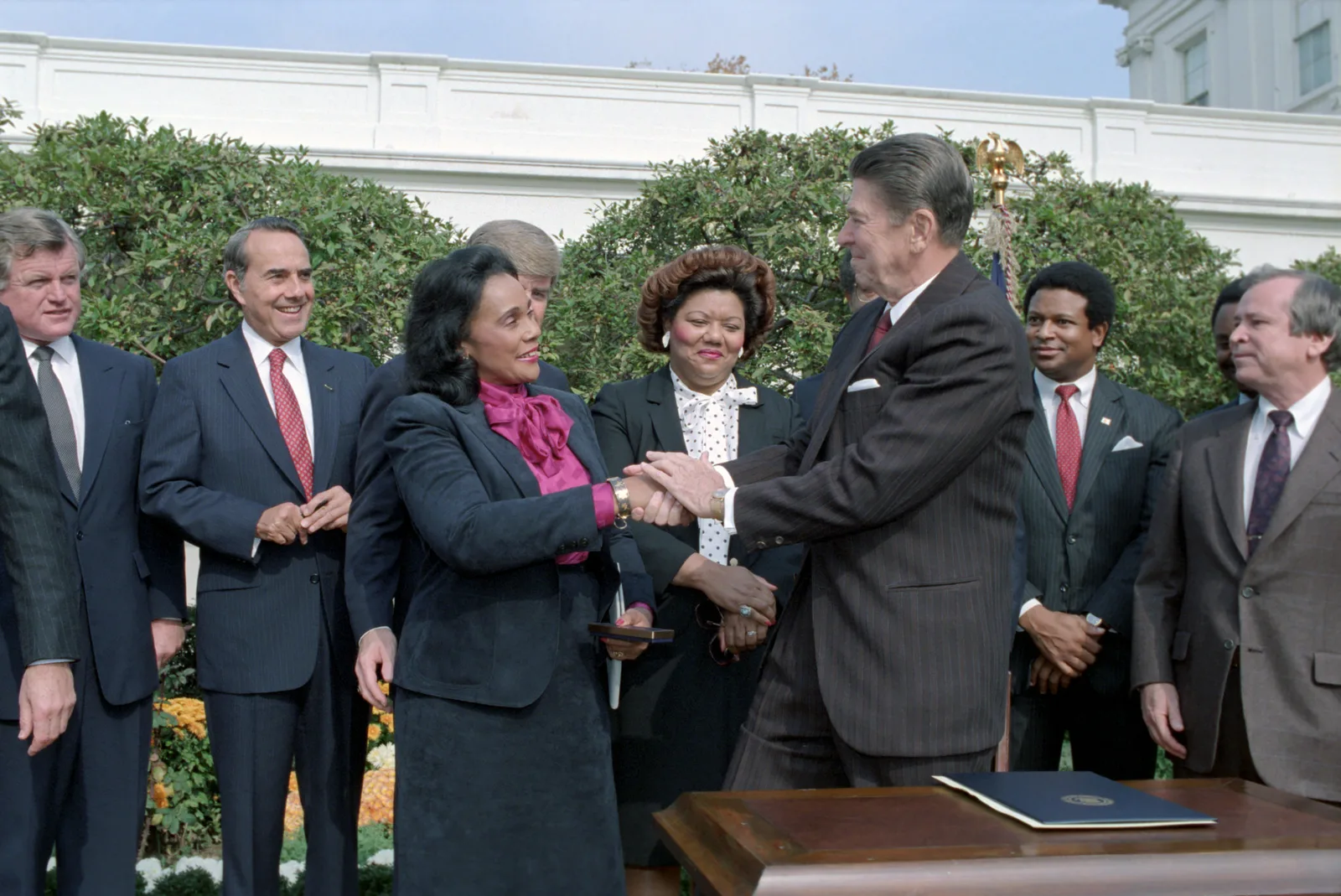
Representative John Conyers of Michigan introduced the first bill, H.R. 16510, on April 8, 1968, four days after Dr. King was assassinated, according to the American Presidency Project and Stanford's King Institute. The Southern Christian Leadership Conference gathered more than 3 million petition signatures by April 1971, the House historian reports, and a later lobbying office in Washington, funded by the singer Stevie Wonder, gathered more than 6 million.
The first House vote failed. On November 13, 1979, the House voted 252 to 133 for H.R. 5461, a King holiday bill, short of the two-thirds majority required under the procedure used. In December 1979 the House voted 207 to 191 to move the observance to a Sunday, and the bill did not pass.
In 1983 Representative Katie Hall of Indiana managed the bill. The House passed H.R. 3706 by 338 to 90 on August 2, 1983. In the Senate, a motion to send the bill back to committee failed 12 to 76, and a proposal to observe the day on a Sunday failed 16 to 74. Cost was also debated: the Congressional Budget Office estimated about $24 million in premium pay for each new holiday. The Senate passed the bill 78 to 22 on October 19. The holiday's history is part of the larger story of the civil rights movement.
President Reagan had said earlier that year he would have preferred a day of recognition to a paid holiday, but he signed the bill in the Rose Garden on November 2, 1983, saying Dr. King had "stirred our nation to the very depths of its soul." The first holiday was observed on January 20, 1986. In June 1999, New Hampshire became the last state to pass some form of King holiday law, according to the King Institute.
George Washington's birthday, February 22, was the first holiday Congress created to honor an American. The act of January 31, 1879, added it to the District of Columbia's holidays, and the joint resolution of 1885 made it a paid day for per diem federal workers nationwide.
CRS reports that the main purpose was to make February 22 "a bank holiday," so commercial paper due that day would be treated like Sunday business. The 1879 law said it would not apply to February 22, 1879, so the first observance under it came in 1880.
The Uniform Monday Holiday Act moved the holiday to the third Monday in February starting in 1971. The third Monday can only fall between February 15 and February 21, so the federal holiday can never land on Washington's actual birthday.
The law still calls it Washington's Birthday. CRS states that neither the 1968 act "nor any subsequent action by Congress or the President" changed the name to Presidents Day, and OPM's schedule always uses the legal name, noting that state and local governments and private businesses "may use other names." Washington's life and service are covered on the U.S. history page.
Memorial Day began as Decoration Day, a day to place flowers on the graves of soldiers. The National Cemetery Administration notes that after the Civil War, communities in the North and South, Black and white, held springtime "decoration days," and that recent scholarship points to the women of Columbus, Georgia, who chose April 26, 1866. Earlier still, on May 1, 1865, Black freedmen and their white allies in Charleston, South Carolina, held a large program at a cemetery where 257 Union dead were buried.
On May 5, 1868, General John A. Logan, commander of the Grand Army of the Republic, issued General Orders No. 11 setting May 30 for decorating the graves of the Union dead of the Civil War. The first national ceremony was held that day at Arlington National Cemetery, where James A. Garfield, then a congressman, spoke. New York became the first state to recognize the day, in 1873.
Congress made May 30 a holiday in the District of Columbia by an act approved August 1, 1888. CRS says many federal employees were Union veterans who lost a day's pay when they attended ceremonies; one congressman argued in 1886 that they should not "suffer loss of wages" for honoring the dead. After World War I the day came to honor those who died in all of America's wars.
The 1968 Monday holiday law moved the federal observance to the last Monday in May, starting in 1971. A 1950 joint resolution asks the President to call for prayers for permanent peace each Memorial Day, and the National Moment of Remembrance Act of 2000 created a commission that asks Americans to pause at 3 p.m. local time.
On June 19, 1865, Major General Gordon Granger of the Union Army issued General Order No. 3 at Galveston, Texas. It began, "The people of Texas are informed that, in accordance with a proclamation from the Executive of the United States, all slaves are free." The National Park Service notes that the announcement came two and a half years after the Emancipation Proclamation of January 1, 1863. The original handwritten order is kept at the National Archives.
Black communities in Texas began celebrating the day in 1866, the National Archives reports, and CRS notes that some, like the founders of Emancipation Park in Houston, bought land for the celebrations. Texas made Juneteenth a state holiday on January 1, 1980, through a bill by state Representative Al Edwards. The day's history is told more fully on the Black American history page.
Resolutions honoring Juneteenth had been introduced in Congress since at least 2005, according to CRS, and the first bills to make it a federal holiday came in 2020. In 2021 the companion bills S. 475 and H.R. 1320 were introduced on February 25. The Senate passed S. 475 by unanimous consent on June 15, and the House approved it 415 to 14 on June 16.
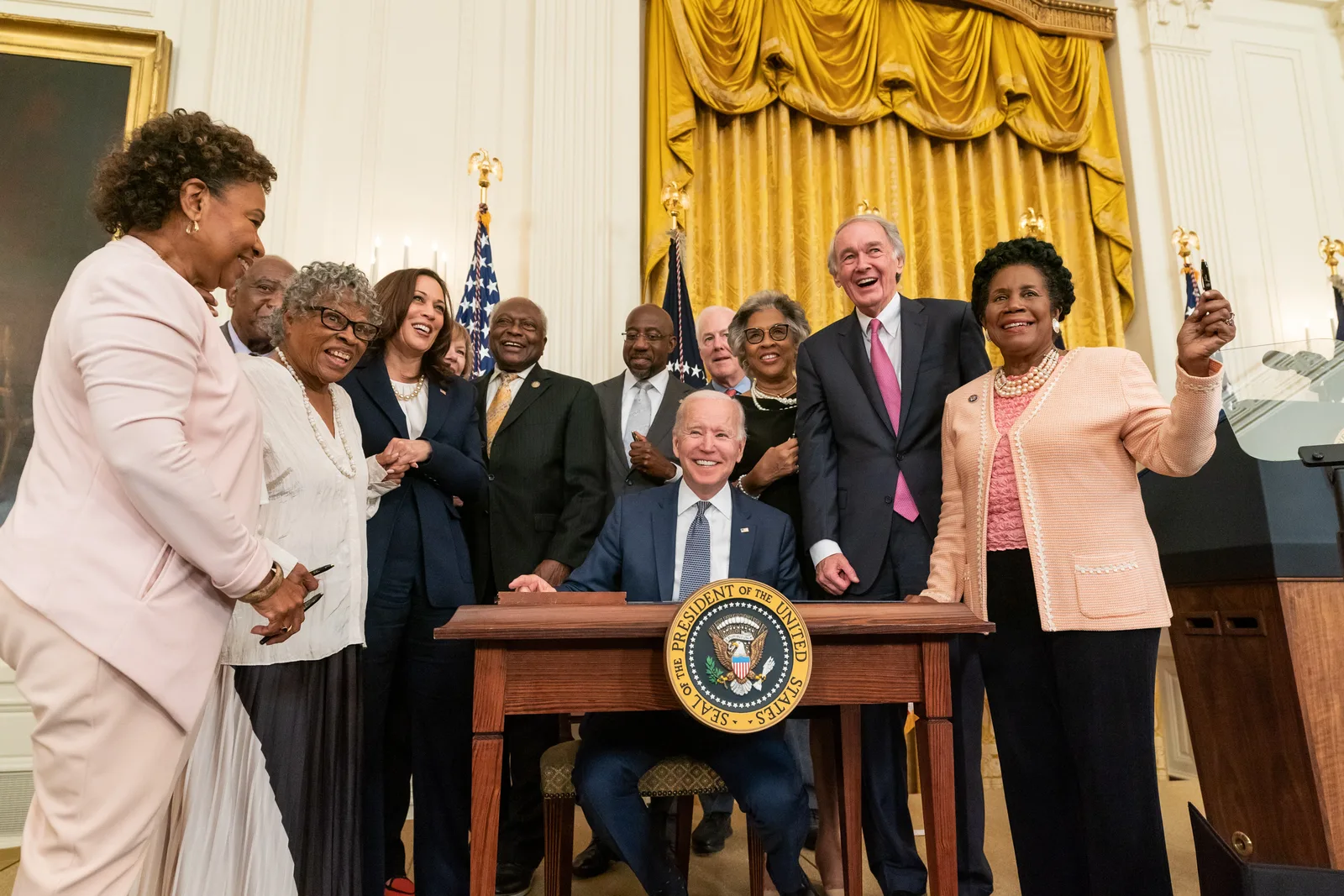
President Biden signed the Juneteenth National Independence Day Act on June 17, 2021. In a proclamation he wrote, "In its celebration of freedom, Juneteenth is a day that should be recognized by all Americans." It was the first new permanent federal holiday since 1983, and its first observance came the next day, Friday, June 18, because June 19 fell on a Saturday.
The Continental Congress voted for independence on July 2, 1776, when it adopted Richard Henry Lee's resolution, and then turned to revising the Declaration of Independence. The National Archives says revision continued "into the late morning of July 4," when the Declaration was officially adopted. The signing of the engrossed parchment began on August 2.
July 4 was one of the four days in the first holiday law of June 28, 1870. The 1885 joint resolution added "the fourth day of July" to the paid holidays of per diem federal workers across the country, and later holiday laws, including the 1894 Labor Day act, used it as one of the days already "made by law public holidays."
In 2026 the country marks 250 years since the Declaration, as described on the 250th anniversary page. July 4, 2026, falls on a Saturday, so federal employees observed the holiday on Friday, July 3.
In 2027, July 4 falls on a Sunday, so the federal holiday is Monday, July 5. The New York Stock Exchange closes on both of those observed days, July 3, 2026, and July 5, 2027.
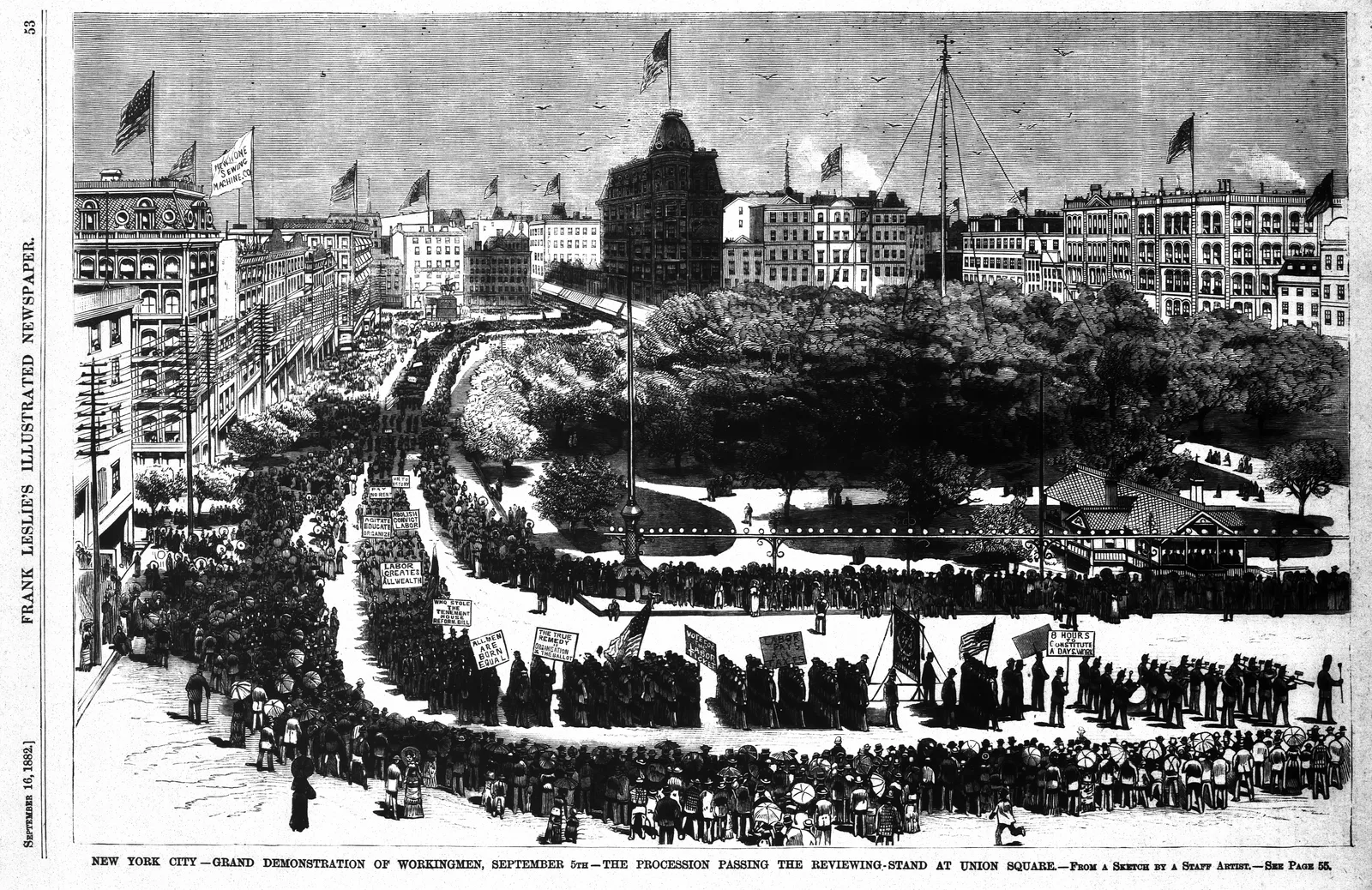
The U.S. Department of Labor says the first Labor Day was celebrated on Tuesday, September 5, 1882, in New York City, organized by the Central Labor Union, which held a second one on September 5, 1883. Credit for the idea is disputed. Some records name Peter J. McGuire, a carpenters' union leader and co-founder of the American Federation of Labor, while the Department notes that research supports machinist Matthew Maguire, then secretary of the Central Labor Union.
States acted first. Oregon passed the first Labor Day law on February 21, 1887, and Colorado, Massachusetts, New Jersey, and New York followed that same year. When the House Committee on Labor reported the federal bill in 1894, it noted that 23 states already recognized the day.
The committee's report argued that honoring work would make better citizens: "So long as the laboring man can feel that he holds an honorable as well as a useful place in the body politic, so long will he be a loyal and faithful citizen." The act approved on June 28, 1894, made the first Monday in September a legal public holiday.
Labor Day was a Monday holiday from the start, more than 70 years before the Uniform Monday Holiday Act. The federal agency for workers, the Department of Labor, still keeps the official history of the day.
Before it was a federal holiday, Columbus Day was a day the President proclaimed at Congress's request. A joint resolution of April 30, 1934, as amended in 1968 and now at 36 U.S.C. 107, asks the President to proclaim the second Monday of October each year as Columbus Day. Presidents still cite that request in their Columbus Day proclamations.
The Uniform Monday Holiday Act of 1968 made Columbus Day a legal public holiday, starting in 1971. CRS reports that it was already a holiday in 45 states, 38 by law and seven by a governor's action, and that Congress saw it as a way to honor the courage of generations of immigrants. A Senate report called it "an annual reaffirmation by the American people of their faith in the future."
The law still calls the day Columbus Day, but what the day should mark has been debated. On October 8, 2021, President Biden issued the first presidential proclamation of Indigenous Peoples' Day, and he issued both a Columbus Day and an Indigenous Peoples' Day proclamation each year from 2021 through 2024. The history of the peoples the day now often honors is covered on the Native American history page.
President Trump issued Columbus Day proclamations in 2025 and 2026, and the Federal Register shows no Indigenous Peoples' Day proclamation in either year. His 2025 proclamation called Columbus "the original American hero." The 2026 proclamation said a replica of a Baltimore statue of Columbus, which it said rioters tore down on July 4, 2020, had been installed on the White House grounds. The federal holiday itself, set by Congress, did not change.
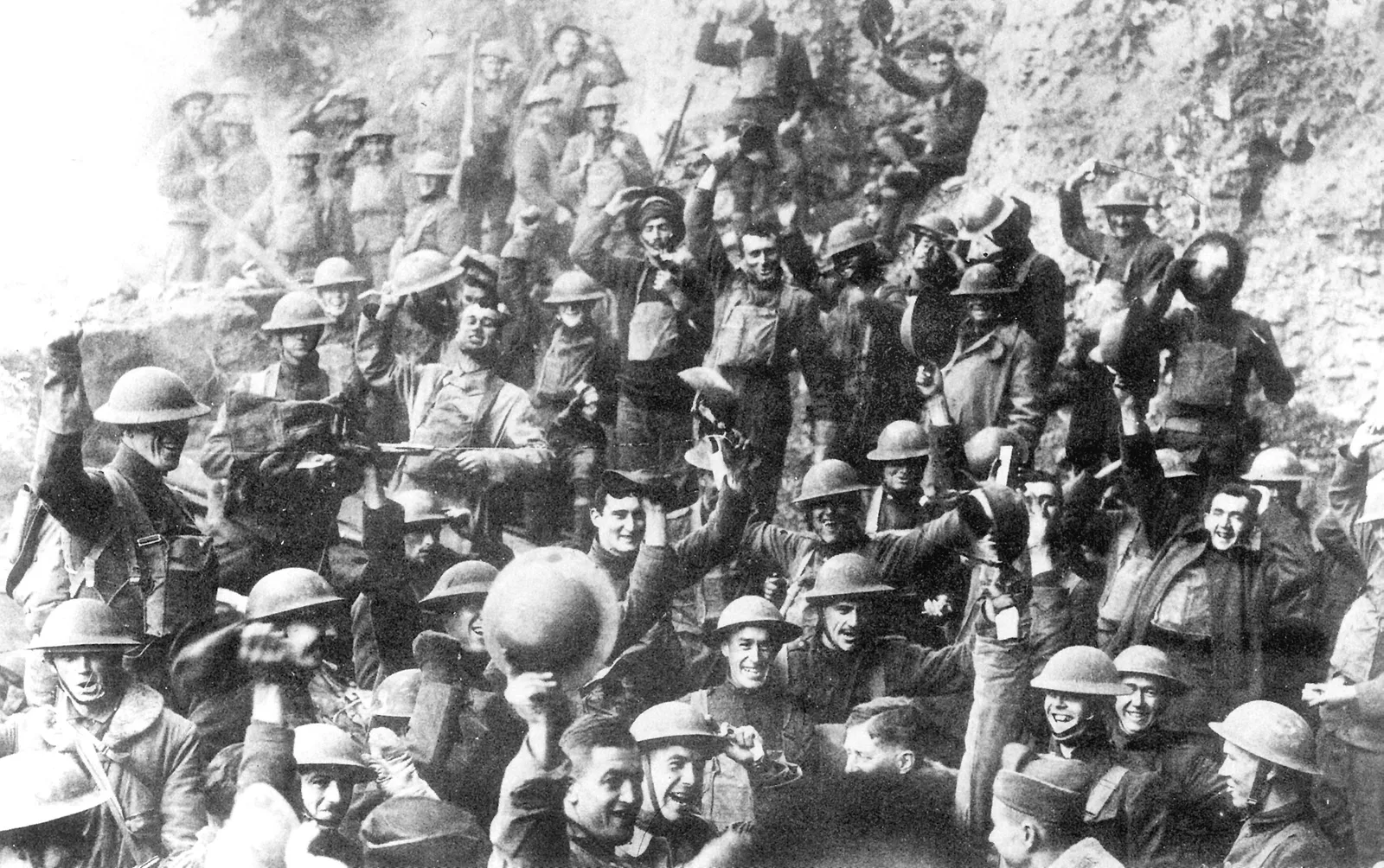
Fighting in World War I stopped at the eleventh hour of the eleventh day of the eleventh month, November 11, 1918. In November 1919, President Woodrow Wilson proclaimed the first Armistice Day, and the Department of Veterans Affairs says the plan was parades, public meetings, and a brief pause in business at 11:00 a.m. A concurrent resolution of Congress on June 4, 1926, noted that 27 states had already made the day a legal holiday.
The act of May 13, 1938, made November 11 a legal public holiday, "a day to be dedicated to the cause of world peace." In 1954, after World War II and the Korean War, Congress replaced the word "Armistice" with "Veterans," and on October 8, 1954, President Eisenhower issued the first Veterans Day proclamation, naming the head of the Veterans Administration to lead a national committee.
The Uniform Monday Holiday Act moved the day to the fourth Monday in October. The VA says the first Veterans Day under the new law, on October 25, 1971, was observed "with much confusion," and many states kept November 11. Congress restored November 11 in 1975, effective in 1978.
Veterans Day now stays on November 11 whatever the day of the week, unless it falls on a weekend, when the federal holiday moves to the Friday before or the Monday after. In 2026 it falls on a Wednesday. Since 1989 the Secretary of the Department of Veterans Affairs has chaired the Veterans Day National Committee, which plans the national observance.
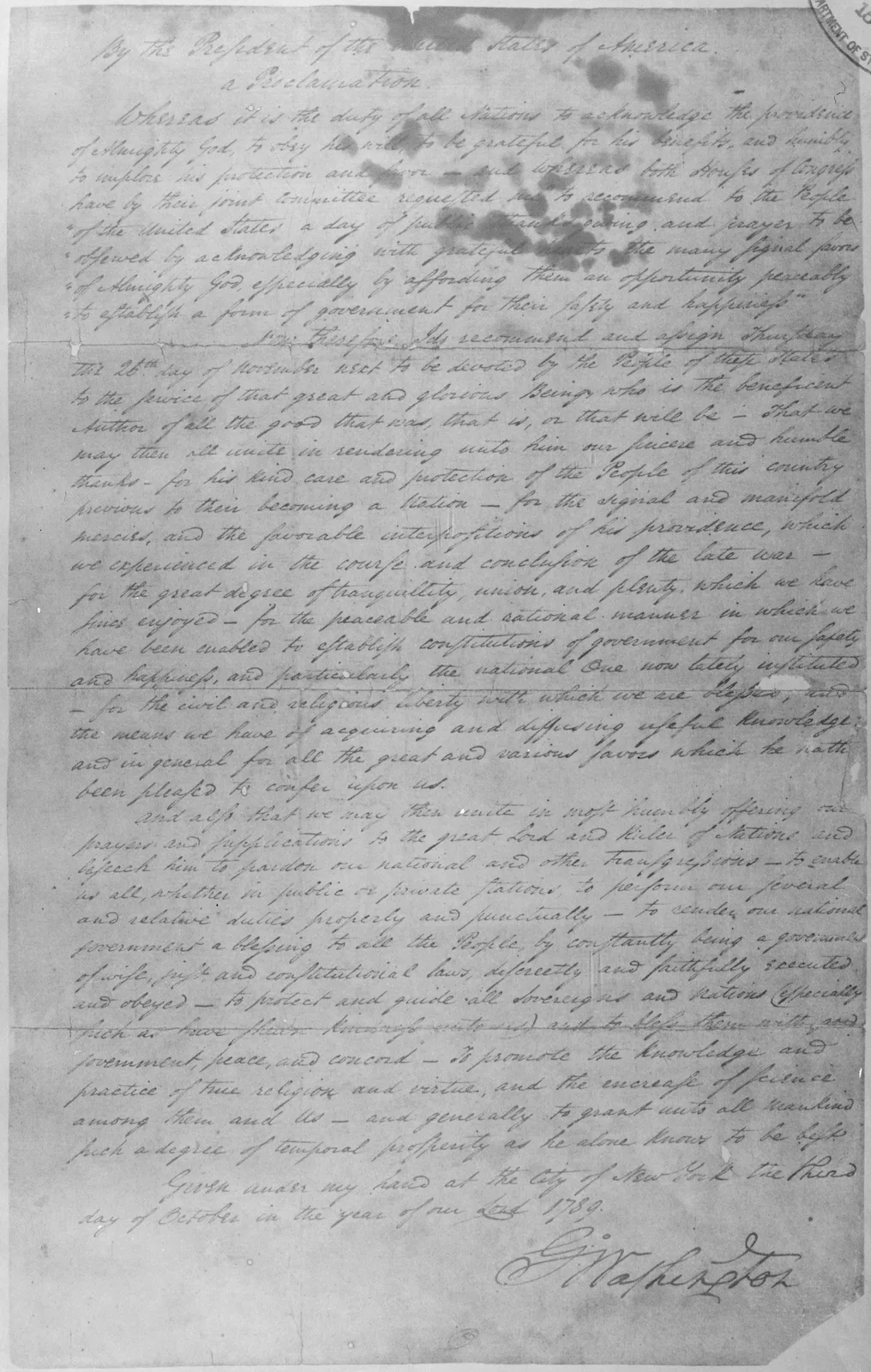
On September 28, 1789, the First Congress asked the President to recommend a day of thanksgiving, and George Washington proclaimed Thursday, November 26, 1789, as the first under the Constitution, according to the National Archives. Later Presidents issued their own proclamations, but the dates and even the months varied. Abraham Lincoln's 1863 proclamation named the last Thursday of November, and from then on, CRS notes, the nation observed the day every year.
Thanksgiving was part of the first holiday law in 1870 as "any day appointed or recommended by the President" for thanksgiving, so the President, not Congress, still chose the date. In 1939 the last Thursday fell on November 30, the last day of the month. Worried that a short Christmas shopping season could slow the economic recovery, the National Archives explains, President Franklin D. Roosevelt proclaimed the second-to-last Thursday instead.
The change split the country. The National Archives reports that 32 states followed Roosevelt while 16 kept the last Thursday, so for two years Americans celebrated on two different days. Roosevelt kept the earlier date in 1940, but by May 1941 his administration concluded the experiment had not worked.
Congress then fixed the date. The House passed a resolution for the last Thursday of November on October 6, 1941, the Senate changed it to the fourth Thursday so the date would not depend on how many Thursdays a November has, and Roosevelt signed it on December 26, 1941. The National Archives holds both versions of H.J. Res. 41.
Christmas Day was one of the original four holidays. The act of June 28, 1870, named "the twenty-fifth day of December, commonly called Christmas day" a holiday in the District of Columbia, and the 1885 joint resolution made it a paid day for per diem federal workers everywhere.
The holiday has been challenged in court. In Ganulin v. United States, decided December 6, 1999, a federal district court in Ohio rejected a claim that a Christmas holiday violates the Establishment Clause, the part of the First Amendment discussed on the separation of church and state page. Judge Dlott held that "the establishment of Christmas Day as a legal public holiday does not violate the Establishment Clause," finding that the holiday has a valid secular purpose.
Christmas is also the holiday Presidents most often stretch. Executive orders have closed federal offices on Christmas Eve or the day after Christmas many times, including all day on December 24, 2024, and on both December 24 and December 26, 2025.
In 2026, Christmas falls on a Friday. In 2027 it falls on a Saturday, so the federal holiday is Friday, December 24, although the Postal Service says post offices will be open and deliveries will run as normal that day.
When Federal Holidays Fall in 2026 and 2027
These are the days federal offices close, from the Office of Personnel Management's official schedule. A note marks each holiday observed on a different day because the real date falls on a weekend.
| Holiday | 2026 | 2027 |
|---|---|---|
| New Year's Day | Thursday, January 1 | Friday, January 1 |
| Birthday of Martin Luther King, Jr. | Monday, January 19 | Monday, January 18 |
| Washington's Birthday | Monday, February 16 | Monday, February 15 |
| Memorial Day | Monday, May 25 | Monday, May 31 |
| Juneteenth National Independence Day | Friday, June 19 | Friday, June 18Observed: June 19 is a Saturday |
| Independence Day | Friday, July 3Observed: July 4 is a Saturday | Monday, July 5Observed: July 4 is a Sunday |
| Labor Day | Monday, September 7 | Monday, September 6 |
| Columbus Day | Monday, October 12 | Monday, October 11 |
| Veterans Day | Wednesday, November 11 | Thursday, November 11 |
| Thanksgiving Day | Thursday, November 26 | Thursday, November 25 |
| Christmas Day | Friday, December 25 | Friday, December 24Observed: December 25 is a Saturday |
New Year's Day 2028 falls on a Saturday, so federal employees also get Friday, December 31, 2027, off, according to OPM's 2028 schedule.
There is no Inauguration Day holiday in 2026 or 2027. The next one is January 20, 2029, a Saturday, and OPM says no other day will be given in its place.
Extra closings by executive order, such as Christmas Eve, are announced separately each year and are not part of this schedule.
Common Questions About Federal Holidays
Federal law, 5 U.S.C. 6103(a), lists eleven permanent holidays: New Year's Day, the Birthday of Martin Luther King, Jr., Washington's Birthday, Memorial Day, Juneteenth National Independence Day, Independence Day, Labor Day, Columbus Day, Veterans Day, Thanksgiving Day, and Christmas Day. Inauguration Day is a twelfth, but only every fourth year and only in the Washington, D.C., area.
No. Federal holidays legally apply to federal employees and the District of Columbia. The Department of Labor says the Fair Labor Standards Act does not require payment for holidays, so paid holidays at a private company are a matter of agreement between the employer and its workers.
For most federal employees, a Saturday holiday is observed on the Friday before, under 5 U.S.C. 6103(b), and a Sunday holiday on the Monday after, under Executive Order 11582. In 2026, Independence Day is observed on Friday, July 3.
An act approved on June 28, 1870, made New Year's Day, the Fourth of July, Christmas Day, and any day of thanksgiving named by the President holidays for federal workers in the District of Columbia. Washington's Birthday was added in 1879.
No. The law still calls it Washington's Birthday, observed on the third Monday in February. The Congressional Research Service says no act of Congress or the President changed the name, though many states and businesses use Presidents Day.
Juneteenth National Independence Day, June 19. President Biden signed it into law on June 17, 2021, after the Senate passed it by unanimous consent and the House voted 415 to 14. It was the first new permanent federal holiday since the King holiday in 1983.
Only Congress can add a permanent holiday to the law. A President can close federal offices for a single day by executive order, as with Christmas Eve in several years or the National Day of Mourning for President Carter on January 9, 2025.
Sources & Further Reading
- 5 U.S.C. 6103: Holidays (with notes and Executive Order 11582)
- Congressional Research Service: Federal Holidays, Evolution and Current Practices (R41990)
- Office of Personnel Management: Federal Holidays
- Statutes at Large: Act of June 28, 1870 (16 Stat. 168)
- Statutes at Large: Washington's Birthday, January 31, 1879 (20 Stat. 277)
- Statutes at Large: Holiday pay joint resolution, January 6, 1885 (23 Stat. 516)
- Statutes at Large: Decoration Day, August 1, 1888 (25 Stat. 353)
- Statutes at Large: Labor Day, June 28, 1894 (28 Stat. 96)
- Statutes at Large: Armistice Day, May 13, 1938 (52 Stat. 351)
- Statutes at Large: Thanksgiving, December 26, 1941 (55 Stat. 862)
- Statutes at Large: Veterans Day, June 1, 1954 (68 Stat. 168)
- Statutes at Large: Inauguration Day, January 11, 1957 (71 Stat. 3)
- Statutes at Large: Uniform Monday Holiday Act, June 28, 1968 (82 Stat. 250)
- Statutes at Large: Veterans Day returned to November 11, 1975 (89 Stat. 479)
- Statutes at Large: Martin Luther King, Jr. holiday, 1983 (97 Stat. 917)
- Statutes at Large: Juneteenth National Independence Day Act, 2021 (135 Stat. 287)
- Federal Register: Executive Order 14371, closing on December 24 and 26, 2025
- Federal Register: Executive Order 14133, closing on January 9, 2025
- Federal Register: Proclamation 10283, Indigenous Peoples' Day, 2021
- Federal Register: Proclamation 11073, Columbus Day, 2026
- Department of Veterans Affairs: History of Veterans Day
- National Cemetery Administration: Memorial Day History
- U.S. Department of Labor: History of Labor Day
- National Archives: Congress Establishes Thanksgiving
- National Archives: The Original Juneteenth General Order
- Congressional Research Service: Juneteenth National Independence Day, A New Federal Holiday (IN11697)
- House Office of the Historian: Martin Luther King, Jr., National Holiday
- The King Institute, Stanford University: King National Holiday
- Federal Reserve Board: Holidays Observed by the Federal Reserve System
- U.S. Postal Service: Holidays and Events
The list of holidays and the weekend and Inauguration Day rules are quoted from 5 U.S.C. 6103 and Executive Order 11582. The original laws are cited from the Statutes at Large on govinfo.gov. The history follows the Congressional Research Service report Federal Holidays: Evolution and Current Practices (R41990, updated July 1, 2021) and the agencies named in each section. Vote counts come from the Congressional Record as compiled by Voteview. Observed dates for 2026 and 2027 are from the Office of Personnel Management, and executive orders and proclamations are from the Federal Register, current as of November 2026.