What the Constitution Actually Says
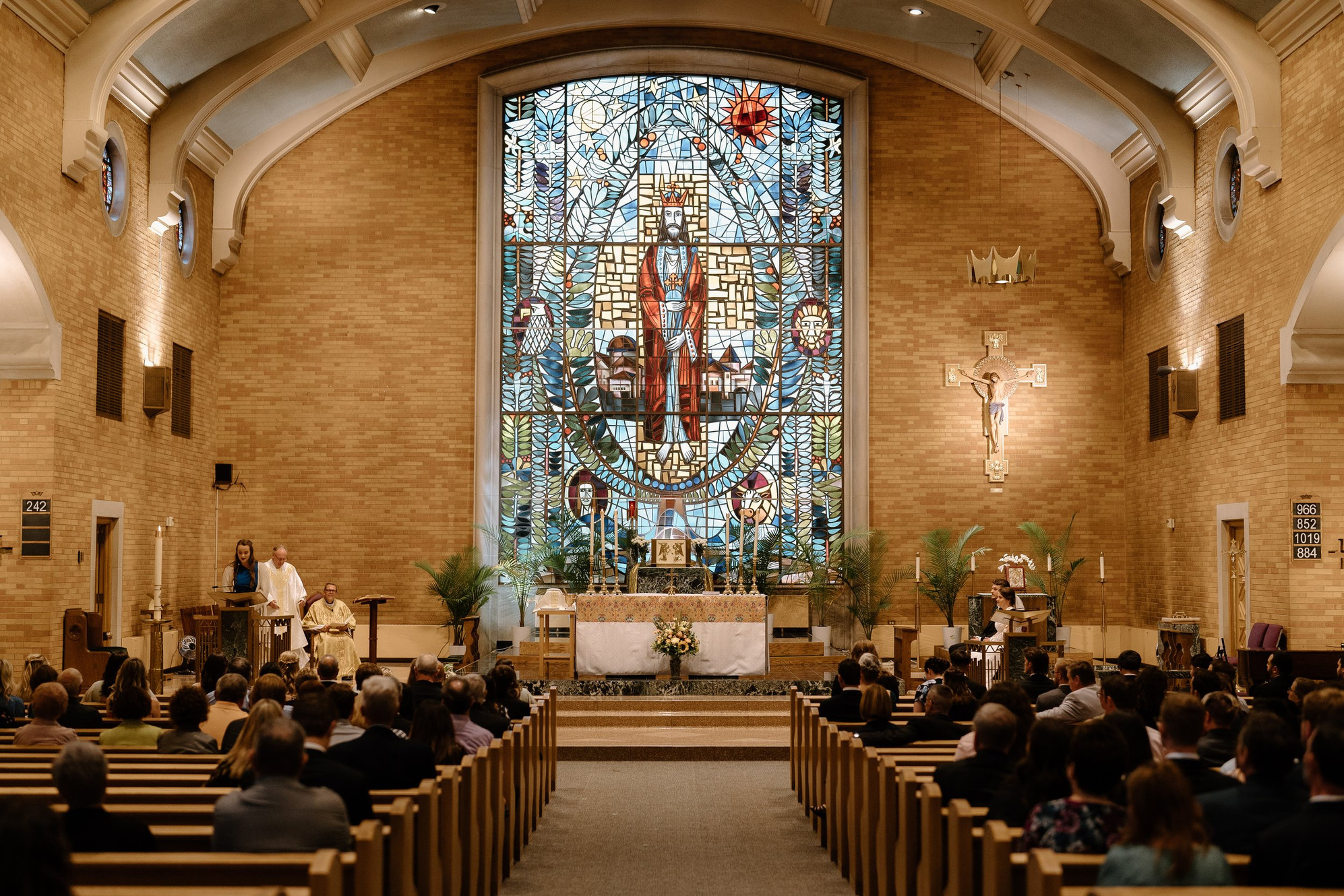
The Constitution contains two provisions about religion. Article VI says no religious test shall ever be required as a qualification for any federal office. The First Amendment begins with two clauses about religion, separated only by a comma: "Congress shall make no law respecting an establishment of religion, or prohibiting the free exercise thereof."
That is it. Two provisions. Sixteen words in the First Amendment. Yet those words have produced more Supreme Court cases, more political controversy, and more genuine constitutional disagreement than almost any other part of the document.
The phrase "separation of church and state" does not appear in the Constitution. It comes from a letter Thomas Jefferson wrote in 1802. Courts, scholars, and citizens have argued ever since about how much weight Jefferson's metaphor should carry in interpreting the actual constitutional text, and whether it accurately describes what the Founders intended.
The Two Religion Clauses
The Establishment Clause
"Congress shall make no law respecting an establishment of religion"
The Establishment Clause prohibits the government from establishing an official religion, favoring one religion over another, or favoring religion over non-religion (or vice versa). It was the Founders' direct rejection of the Church of England model, where the monarch headed the state church, clergy sat in Parliament, and religious conformity was legally enforced.
What exactly the clause requires beyond that basic prohibition has been enormously contested. Does it prohibit any government support for religion, or only preferential support? Does it prohibit religious expression in public spaces, or only coerced participation? These questions have generated hundreds of Supreme Court cases.
The Free Exercise Clause
"...or prohibiting the free exercise thereof"
The Free Exercise Clause protects individuals' rights to hold religious beliefs and, to a lesser extent, to act on those beliefs. The belief itself is absolutely protected: the government cannot punish you for what you believe religiously, full stop. Religious conduct is somewhat less protected, because permitting every religiously motivated action to override general laws would make religious belief a wholesale exemption from civic obligation.
The tension between the two clauses is real and permanent. Aggressively enforcing the Establishment Clause can restrict the free exercise of religious people in public life. Aggressively protecting free exercise can shade into government accommodation of religion that looks like establishment. Courts navigate this tension case by case.
What Separation Does and Does Not Mean
Clearly prohibited
- -Government establishing an official national or state religion
- -Government requiring attendance at religious services
- -Government imposing religious tests for public office
- -Public schools sponsoring prayer or religious instruction
- -Government compelling financial support for a specific religion
Clearly permitted
- -Private religious expression by individuals, including on public property
- -Student-led religious clubs in public schools on equal terms with secular clubs
- -Legislative prayers (upheld in Marsh v. Chambers, 1983)
- -Tax exemptions for religious organizations
- -Military and prison chaplains
- -Religious references in historical monuments and documents
Actively contested
- -Public funding for religious schools through voucher and scholarship programs
- -Religious exemptions from anti-discrimination laws
- -Religious symbols on government property
- -Teacher and coach religious expression visible to students
- -Government accommodation of religious practices that burden third parties
Where the Idea Came From
The separation of church and state was not an abstract philosophical experiment. It was a practical response to a century and a half of colonial experience with religious persecution, established churches, and the use of government power to enforce religious conformity. The Founders had seen what state religion produced. Several of them had personally experienced or witnessed religious persecution in the colonies.
James Madison, the primary author of the Bill of Rights, had seen Baptist ministers jailed in Virginia for preaching without a license. Thomas Jefferson had been attacked as an atheist and infidel during his presidential campaigns. Roger Williams had been banished from Massachusetts for his religious views a century and a half before the Constitution was written.
The history below traces the ideas and events that shaped what eventually became the First Amendment's 16 words.
Church and State Through the Years
From colonial religious persecution to the modern Supreme Court, the key events that shaped how America defines the boundary between government and religion.
Roger Williams, a minister banished from the Massachusetts Bay Colony for his religious views, founded Providence and later Rhode Island as the first colony to guarantee religious liberty and separate civil government from church authority. Williams coined the phrase 'wall of separation between the garden of the church and the wilderness of the world,' arguing that mixing church and state corrupted both. His thinking directly influenced the Founders a century and a half later.
Williams later founded the First Baptist Church in America in Providence in 1638, though he left it within a year over further theological disagreements. Rhode Island's royal charter of 1663 was the first in the colonies to explicitly guarantee liberty of conscience to all residents, not just the colony's own founding denomination.
Williams was tried by the Massachusetts General Court in 1635 and sentenced to banishment for, among other things, denying that the civil magistrate had authority over matters of worship. He fled south in the winter of 1636 and bought land from the Narragansett people, founding Providence on the principle that government authority reached only civil, not spiritual, questions.
In his 1644 treatise The Bloudy Tenent of Persecution, Williams argued that forced worship offended God and that a free conscience was a natural right of Jews, Muslims, and 'pagans' alike. Rhode Island under his influence imposed no religious qualification for voting or office, a sharp break from every other New England colony.
Maryland passed the Act Concerning Religion, one of the earliest laws in the colonies mandating religious toleration, though it applied only to Christians. While limited in scope, it represented an early recognition that civil peace required the government to stay out of religious disputes among its residents.
The Act also made it a capital offense to deny the divinity of Jesus Christ, a reminder that its protections were narrowly Christian rather than universal by modern standards. Maryland's Puritan-controlled assembly repealed the act just five years later, in 1654, and its protections were not durably restored until after the English Toleration Act of 1689.
Maryland had been founded in 1634 as a refuge for English Catholics by Cecil Calvert, the second Lord Baltimore, but Protestants soon outnumbered Catholics in the colony. The 1649 Act was in part a defensive measure by the Calvert proprietors to protect the shrinking Catholic minority as Protestant political power grew.
After Protestant forces took control in 1654 they repealed the Act and briefly barred Catholics from voting. Toleration was restored under the Calverts, lost again after the Glorious Revolution when the Church of England was established in Maryland in 1692, and Catholics there remained legally disabled until the Revolution.
English philosopher John Locke published his influential Letter Concerning Toleration, arguing that civil government has no legitimate authority over matters of religious belief and practice. The soul's salvation is beyond the government's jurisdiction, Locke argued. His writings were enormously influential on the American Founders, particularly Thomas Jefferson and James Madison.
Locke's Letter was itself a response to religious wars that had devastated Europe for over a century, including England's own civil war fought partly along religious lines. Jefferson kept multiple editions of Locke's works in his personal library and later named Locke as one of the three greatest men who ever lived, alongside Francis Bacon and Isaac Newton.
Locke drew a line between the 'commonwealth,' concerned with civil interests like life, liberty, and property, and the 'church,' a voluntary society for the worship of God. Because belief cannot be compelled by force, he argued, a magistrate who punishes heresy accomplishes nothing but tyranny.
Locke's toleration had limits the American Founders later exceeded: he would not extend it to atheists, whom he thought could not be trusted to keep oaths, or to Catholics, whom he saw as owing allegiance to a foreign prince. Madison's and Jefferson's Virginia statutes dropped both exclusions and protected conscience regardless of creed.
George Mason drafted the Virginia Declaration of Rights, which included a provision for religious toleration. James Madison, then 25, successfully pushed to strengthen the language from 'toleration' (which implies the government grants permission to believe) to 'free exercise' (which treats religious liberty as an inherent right). This distinction later shaped the First Amendment's language.
Madison's wording change had a large legal consequence beyond Virginia: toleration implies government permission for a disfavored practice, while free exercise treats religious liberty as a right the government cannot grant or withhold. The Virginia Declaration became a model several other newly independent states drew on when drafting their own constitutions in the years immediately following 1776.
Mason's draft had used the language of 'the fullest toleration in the exercise of religion,' echoing the English Toleration Act of 1689. Madison, a delegate to the Virginia Convention, proposed replacing it with 'all men are equally entitled to the free exercise of religion,' which the convention adopted with modifications.
The final Article 16 declared that religion 'can be directed only by reason and conviction, not by force or violence,' and that all are 'equally entitled to the free exercise of religion, according to the dictates of conscience.' Pennsylvania, Delaware, and other states borrowed the phrasing within months, and it fed into the 1789 draft of the First Amendment.
Thomas Jefferson drafted and James Madison shepherded through the Virginia legislature the Virginia Statute for Religious Freedom. It declared that no person shall be compelled to attend or support any church, and that civil rights shall not depend on religious opinions. Jefferson considered it one of his three greatest achievements alongside the Declaration of Independence and founding the University of Virginia. It served as the direct template for the First Amendment's religion clauses.
The Statute took more than seven years to pass after Jefferson first introduced it in 1779, facing sustained opposition from legislators who wanted to retain public tax support for Christian teachers. Jefferson was proud enough of the achievement that he had it listed on his own tombstone, deliberately omitting his two terms as President of the United States.
The immediate trigger was Patrick Henry's 1784 bill to levy a general tax for the support of 'teachers of the Christian religion,' with taxpayers able to designate a denomination. Madison's anonymous 1785 'Memorial and Remonstrance Against Religious Assessments' rallied opposition, arguing that a government that could tax 'three pence' for religion could establish any creed.
The petition campaign against Henry's bill gathered more than 10,000 signatures, and the assembly instead passed Jefferson's long-pending statute in January 1786. Its preamble declared 'that Almighty God hath created the mind free,' and its operative text barred any compelled support of worship and any civil penalty or advantage tied to belief.
The original Constitution, before any amendments, contains one explicit religion provision in Article VI: 'no religious Test shall ever be required as a Qualification to any Office or public Trust under the United States.' This was the Founders' direct rejection of the English practice of requiring officeholders to affirm specific religious doctrines. It remains in force today.
Article VI applied only to federal offices, so several states retained their own religious tests for state office long after ratification; North Carolina did not drop its Christian requirement for officeholders until 1868, and it still keeps a clause disqualifying anyone who denies "the being of Almighty God"; such provisions, unenforceable since Torcaso v. Watkins (1961), lingered symbolically in a few state constitutions well into the 20th century.
The clause was proposed by Charles Pinckney of South Carolina and adopted with only North Carolina dissenting and Maryland divided. During ratification, some opponents warned it would allow 'Jews, Turks, and infidels' to hold federal office, an objection supporters like Oliver Ellsworth answered by defending exactly that result.
The Supreme Court applied the principle to the states in Torcaso v. Watkins (1961), striking a Maryland requirement that officeholders declare belief in God, and again in McDaniel v. Paty (1978), voiding a Tennessee ban on clergy serving in the legislature. Several state constitutions still contain dead-letter God-belief clauses these rulings render unenforceable.
The First Amendment was ratified on December 15, 1791. It begins: 'Congress shall make no law respecting an establishment of religion, or prohibiting the free exercise thereof.' The two clauses, the Establishment Clause and the Free Exercise Clause, have been the subject of continuous litigation ever since. Note that the amendment originally applied only to the federal government. The Supreme Court applied it to state governments beginning in 1940.
The First Amendment was one of twelve amendments Congress originally proposed in 1789; only ten were ratified in 1791 and became known as the Bill of Rights, while a third proposed amendment on congressional pay was not ratified until 1992, more than two centuries later, as the 27th Amendment.
Madison's original House draft read that 'no religion shall be established by law, nor shall the equal rights of conscience be infringed.' The Senate rejected narrower versions that would have barred only preferring 'one religious sect or society,' and a conference committee produced the final 'respecting an establishment of religion' language.
The word 'respecting' does double duty: Congress may neither establish a national church nor interfere with the state establishments that still existed in 1791. That original federalism reading was overtaken when the Court incorporated the clause against the states in 1947, after which the same words came to forbid establishment at every level of government.
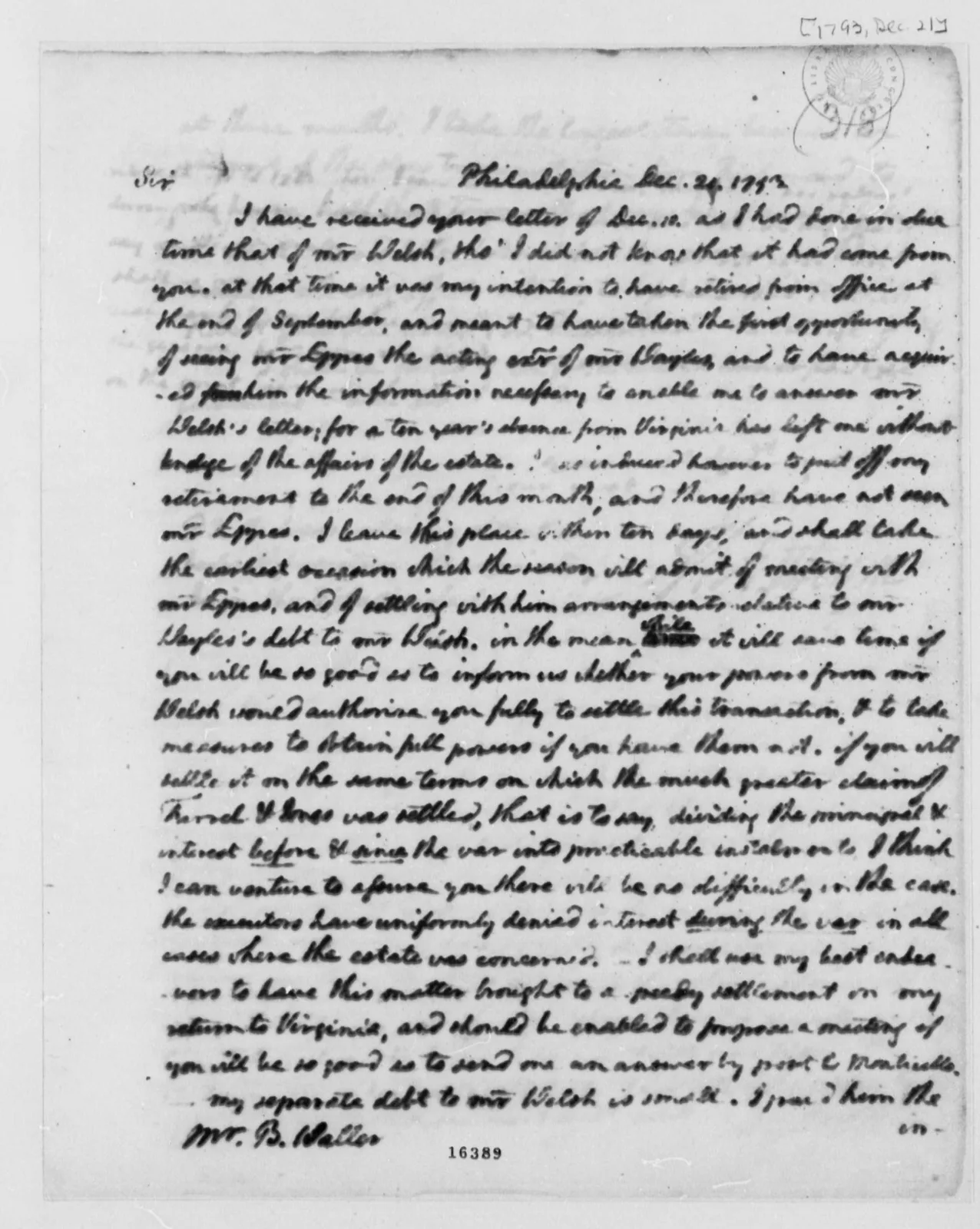
On January 1, 1802, President Thomas Jefferson wrote a letter to the Danbury Baptist Association of Connecticut, who had written to congratulate him on his election and express concern about religious liberty. Jefferson described the First Amendment as building 'a wall of separation between church and state.' The phrase was not in the Constitution, but Jefferson's framing became enormously influential in how courts later interpreted the Establishment Clause, particularly in the 20th century.
Jefferson reportedly consulted two members of his own cabinet, Attorney General Levi Lincoln and Postmaster General Gideon Granger, before sending the letter, aware it would be read as a statement of policy rather than private correspondence. The Supreme Court did not cite the letter in an opinion until Reynolds v. United States in 1879, seventy-seven years after Jefferson wrote it.
The Danbury Baptists were a minority in Congregationalist Connecticut, which still had an established church, and they hoped a president would affirm that religious liberty was a right, not a legislative favor. Jefferson used the reply to explain why, unlike his predecessors, he declined to proclaim national days of fasting and thanksgiving.
On Lincoln's advice Jefferson softened a passage that might offend New England sensibilities about executive prayer proclamations. The 'wall of separation' phrase drew little notice for decades until Reynolds (1879) and then Everson (1947) made it a fixture of constitutional argument.
The 14th Amendment, ratified after the Civil War, provides that no state shall deprive any person of liberty without due process of law. Through a process called incorporation, the Supreme Court used this clause to apply most of the Bill of Rights, including the First Amendment's religion clauses, to state and local governments. This process happened gradually across the 20th century, fundamentally changing the practical scope of church-state separation.
Incorporating the First Amendment's religion clauses did not happen all at once: it took two separate Supreme Court decisions nearly eighty years after the 14th Amendment's ratification, Cantwell v. Connecticut in 1940 for the Free Exercise Clause and Everson v. Board of Education in 1947 for the Establishment Clause.
The amendment's framers focused on protecting freed slaves' civil rights, and there is little evidence they specifically intended to apply the religion clauses to the states. Incorporation of the Bill of Rights instead developed case by case over the 20th century under the Due Process Clause's protection of 'liberty.'
By the 1940s the Court had incorporated the free speech, press, and assembly guarantees; it added Free Exercise in Cantwell (1940) and Establishment in Everson (1947). A minority of scholars and at least one sitting justice have argued the Establishment Clause, as a federalism provision, is a poor fit for incorporation, but the doctrine remains settled.
The Supreme Court struck down an Oregon law requiring all children to attend public schools, ruling it violated parents' rights to direct their children's education, including religious education. The case established that the government cannot compel attendance at public schools as a way of suppressing religious or private education.
The Oregon law at issue had been passed in 1922 with public support from the Ku Klux Klan, which campaigned openly against Catholic parochial schools in the state at the time. The unanimous decision remains the foundational case establishing a constitutional right for parents to choose private and religious education over public schooling.
The plaintiffs were the Society of the Sisters of the Holy Names of Jesus and Mary, which ran Catholic schools, and the Hill Military Academy, a secular private school; both stood to be shut down. Justice McReynolds's opinion held the law had no reasonable relation to a legitimate state purpose.
Pierce was decided on 14th Amendment liberty grounds rather than the religion clauses, which were not yet applied to the states, but it became a cornerstone of later parental-rights and religious-schooling cases and is routinely cited alongside Meyer v. Nebraska (1923).
The Supreme Court unanimously held that the Free Exercise Clause of the First Amendment applied to state governments through the 14th Amendment. A Jehovah's Witness had been convicted under a Connecticut law for soliciting without a permit while distributing religious literature. The Court reversed the conviction, marking the beginning of the modern era of church-state jurisprudence at the state level.
The case involved Jesse Cantwell, one of three Jehovah's Witnesses who had been playing an anti-Catholic phonograph record on a New Haven street in a predominantly Catholic neighborhood. The ruling did not just apply the Free Exercise Clause to the states; it also struck down the permit requirement itself as an unconstitutional prior restraint on religious solicitation.
Newton Cantwell and his sons were convicted under a statute that let a state official decide whether a solicited cause was 'religious.' Jesse Cantwell was also convicted of common-law breach of the peace for playing the record to two Catholic men who were offended by it.
Justice Roberts's unanimous opinion held the licensing scheme an unconstitutional prior restraint because it let an official judge what counted as religion, and reversed the breach-of-peace count as finding no clear and present danger. Cantwell is the first case holding the Free Exercise Clause binding on a state.
The Supreme Court held that the Establishment Clause applied to state governments, dramatically expanding the reach of church-state separation. The case involved a New Jersey law reimbursing parents for the cost of busing children to Catholic schools. The Court upheld the program on neutrality grounds but used the occasion to apply the Establishment Clause to the states for the first time, Justice Black's majority opinion containing extensive discussion of Jefferson's wall metaphor.
The vote was close, 5-4, with all nine justices agreeing the Establishment Clause applied to the states but splitting sharply over whether reimbursing bus fare to religious schools actually violated it. Justice Black's description of a wall 'high and impregnable' between church and state became one of the most quoted lines in Establishment Clause litigation for the next 75 years.
Arch Everson, a New Jersey taxpayer, challenged a township's reimbursement of parents for bus fare to parochial schools. Black reasoned the payments were a general public-welfare benefit, like police and fire protection, that reached children regardless of the school they attended.
The four dissenters, led by Justice Rutledge, argued that any tax money aiding attendance at religious schools crossed the line Madison's Remonstrance had drawn, and Rutledge appended the full text of the Remonstrance to his opinion. The case set the pattern for decades of aid cases turning on whether help flowed to children and parents or to religious institutions.
The Cases That Shaped Church-State Law
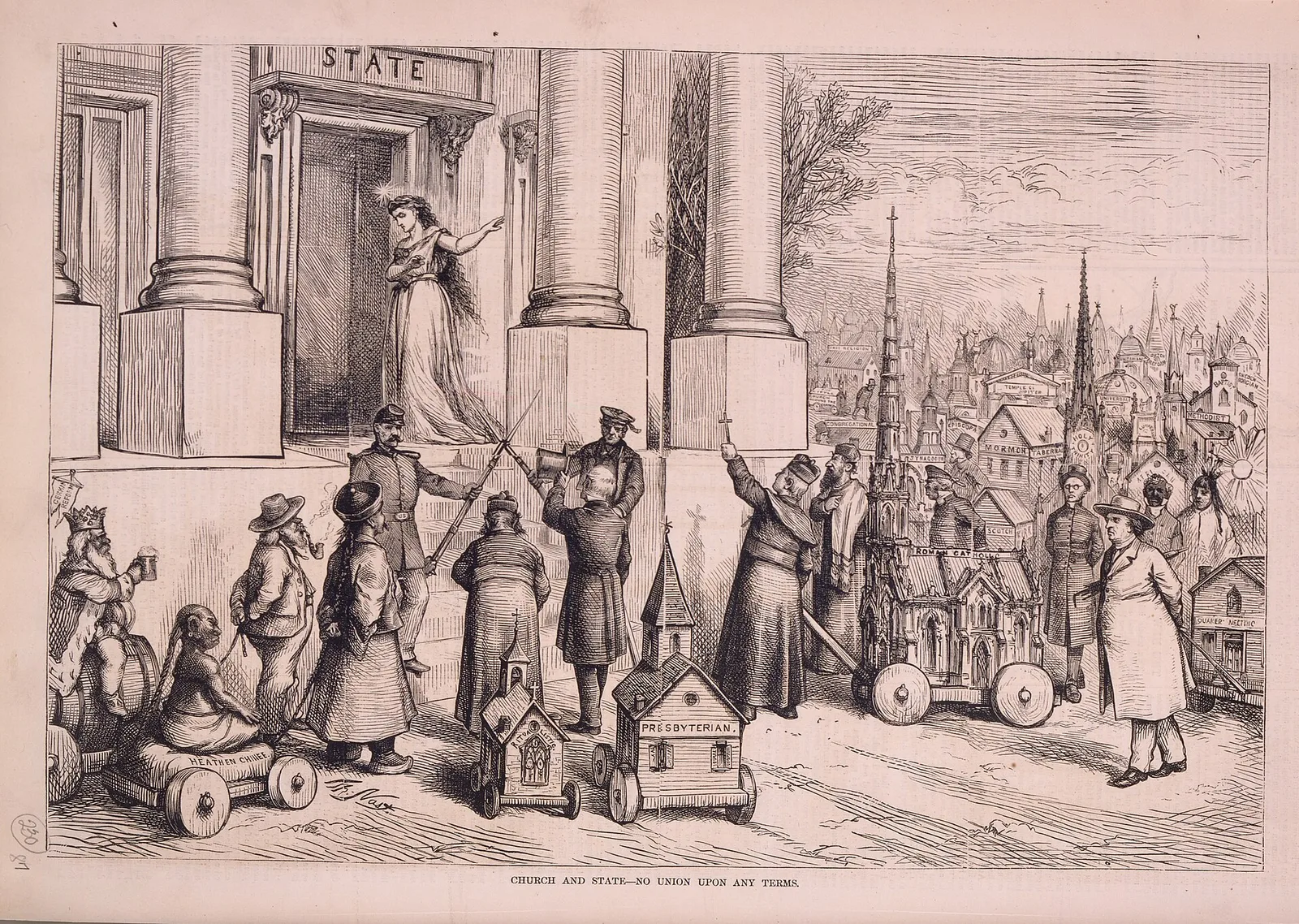
Unlike many areas of constitutional law where a handful of decisions define the field, church-state jurisprudence involves dozens of significant cases, frequent reversals, and ongoing doctrinal evolution. The Supreme Court has applied different tests at different times, sometimes within a few years of each other, and has explicitly abandoned tests it previously used.
The cases below represent the most significant decisions, focusing on those that established or changed the governing legal framework. They are not a complete list. The decisions since 2017 in particular reflect a significant shift in the Court's approach toward greater accommodation of religion in public life.
Landmark Supreme Court Decisions
The Court upheld public funding of busing to parochial schools as a neutral benefit but, more significantly, applied the Establishment Clause to state governments for the first time. Justice Black's majority opinion described the clause as erecting a high and impregnable wall between church and state.
The opinion is remembered less for its actual holding, upholding the busing reimbursement, than for its extensive discussion of Jefferson's wall metaphor, language that shaped Establishment Clause doctrine for decades even though it appeared in a case that upheld, rather than struck down, government support connected to religious schools.
The 5-4 majority announced a sweeping principle: neither a state nor the federal government may 'aid one religion, aid all religions, or prefer one religion over another,' or force a person to attend or support any worship. Black grounded that reading in Madison's and Jefferson's Virginia campaign.
Justice Jackson's dissent noted the irony that the Court 'first adopts a great principle and then, having done so, finds no way to apply it.' The wall metaphor and the surrounding history shaped every major aid case for the next half century.
The Court struck down the practice of official prayer in New York public schools, even a bland, nondenominational prayer composed by the state Board of Regents. The decision was enormously controversial, generating more critical mail to the Court than any prior decision. It established that government-sponsored prayer in public schools violates the Establishment Clause regardless of how generic or voluntary it appears.
The prayer at issue read, in full: "Almighty God, we acknowledge our dependence upon Thee, and we beg Thy blessings upon us, our parents, our teachers and our Country." Justice Black's majority opinion held that it did not matter how nondenominational the prayer was, since the Establishment Clause forbids government composition of any official prayer at all.
The Board of Regents had written the 22-word prayer in 1951 and recommended, not required, its daily classroom recitation; students could remain silent or leave. The 6-1 opinion held that composing an official prayer 'is no part of the business of government' and did not turn on any showing of coercion.
The backlash was immediate and lasting: members of Congress introduced dozens of constitutional amendments to permit school prayer, and none passed. The decision is often misdescribed as 'banning prayer in schools,' though it bars only government-composed or government-sponsored prayer, not private student prayer.
The Court struck down Bible reading and recitation of the Lord's Prayer in public schools. Building on Engel, the Court held that the government cannot sponsor religious exercises in public schools even if individual students may opt out. The majority established a two-part test: does the law have a secular legislative purpose, and does its principal effect neither advance nor inhibit religion?
The case combined two separate lawsuits, one from the Schempp family in Pennsylvania and one brought on behalf of activist Madalyn Murray in Maryland, both challenging mandatory Bible readings in public schools. The purpose-and-effect test the majority announced here became the first two prongs of the Lemon Test eight years later.
The Pennsylvania law required that 'at least ten verses from the Holy Bible shall be read, without comment, at the opening of each public school on each school day.' The 8-1 opinion by Justice Clark held the readings were a religious exercise with a religious purpose, and that an available excuse did not cure the problem.
Justice Brennan's lengthy concurrence surveyed the history of religion in American public schools and is still cited as a reference on the subject. The decision, with Engel, ended state-sponsored devotional exercises in public classrooms.
The Court struck down state programs paying the salaries of teachers in parochial schools and articulated the famous Lemon Test, the three-part framework that governed Establishment Clause analysis for the next 50 years. To survive constitutional challenge, a law must have a secular purpose, its primary effect must neither advance nor inhibit religion, and it must not create excessive government entanglement with religion.
The case combined challenges to Rhode Island and Pennsylvania laws that used state funds to supplement the salaries of teachers, including those teaching secular subjects, at religious schools. Although the Supreme Court formally abandoned the Lemon Test in 2022, some lower federal courts have continued to reference parts of its framework in specific factual disputes where the newer historical-practices test provides little direct guidance.
Rhode Island paid a 15 percent salary supplement to teachers of secular subjects in nonpublic schools; Pennsylvania reimbursed church schools for teacher salaries, textbooks, and materials. Chief Justice Burger found both schemes required continuous state monitoring to keep the aided instruction secular, producing 'excessive entanglement.'
The three-part test drew criticism from justices across the spectrum for being manipulable. Justice Scalia in 1993 likened Lemon to 'some ghoul in a late-night horror movie' that the Court kept killing and reviving; it finally set the test aside in Kennedy v. Bremerton (2022).
The Court ruled, with Justice Douglas dissenting in part, that Amish families could not be compelled to send their children to school beyond the 8th grade, despite a Wisconsin compulsory education law. The Amish religious community's interest in raising children according to their faith outweighed the state's interest in universal secondary education. Yoder remains the high-water mark of free exercise protection for religious practices that conflict with generally applicable laws.
Chief Justice Burger's majority opinion emphasized that the Amish had maintained a self-sufficient, centuries-old way of life and that additional formal schooling would actively endanger their religious community's survival, a fact-specific finding the Court has been reluctant to extend broadly to other religious groups seeking similar exemptions since.
Jonas Yoder and two other Amish fathers were fined $5 each for refusing to send their 14- and 15-year-old children to high school. Applying the compelling-interest test then in force, the Court found the state's interest in two more years of schooling did not outweigh a 300-year-old community's claim.
Justice Douglas dissented in part, arguing the children's own views should be heard. The Court has since read Yoder narrowly, and Employment Division v. Smith (1990) recast it as a 'hybrid' free-exercise-plus-parental-rights case rather than a broad exemption right.
The Court significantly narrowed free exercise protection, holding that individuals generally cannot claim a religious exemption from neutral, generally applicable laws. Two Native American men were denied unemployment benefits after being fired for using peyote in a religious ceremony. Justice Scalia's majority opinion held that the Free Exercise Clause does not require the government to justify every law that burdens religious practice. The decision was so controversial it prompted Congress to pass the Religious Freedom Restoration Act in 1993.
The two men, Alfred Smith and Galen Black, were members of the Native American Church, which uses peyote, a hallucinogenic cactus, as a sacrament in religious ceremonies. Congress's response, the Religious Freedom Restoration Act, passed the House unanimously and the Senate 97-3, an unusually broad bipartisan reaction to a Supreme Court decision.
Oregon classified peyote as a controlled substance with no religious exemption. Scalia's majority held that the Free Exercise Clause does not relieve a person of the obligation to comply with a 'valid and neutral law of general applicability' just because it incidentally burdens a religious practice.
The Court held in City of Boerne v. Flores (1997) that RFRA could not bind the states, though it still applies to the federal government. Many states then passed their own RFRAs or adopted the compelling-interest test under their state constitutions.
The Court struck down clergy-led prayers at public middle school graduation ceremonies, applying what Justice Kennedy called a coercion test: the government violates the Establishment Clause when it uses its authority to coerce participation in a religious exercise, even subtly. The decision was notable for the majority's rejection of the Lemon Test in favor of the coercion framework.
The case was brought by Daniel Weisman on behalf of his daughter Deborah, a Providence, Rhode Island middle school graduate, after a rabbi delivered a nonsectarian invocation and benediction at her graduation. Dissenting Justice Scalia argued forcefully that standing respectfully during a brief prayer imposes no realistic coercion on a graduating student at all.
The principal had invited the rabbi and provided him with a pamphlet on nonsectarian prayer. Kennedy's 5-4 opinion held the state had put subtle but real pressure on students to stand or stay silent during the prayer, and that in the school setting such pressure was impermissible.
The majority pointedly declined to rely on the Lemon Test. Scalia's dissent argued the Court was inventing a 'psycho-journey' standard, and the decision left student-initiated prayer at events unresolved until Santa Fe Independent School District v. Doe (2000).
The Court upheld Ohio's school voucher program, which allowed parents to use public funds to pay tuition at private religious schools. The majority held the program was neutral with respect to religion because the aid flowed to schools only through the private choices of parents, not directly from the government to religious institutions. The decision opened the door to a significant expansion of public funding for religious education.
The Cleveland program at issue had been created after a federal court placed the city's public school system under state control following a finding that it was in crisis. More than 96 percent of the students who used vouchers under the program at the time chose religious schools, a figure the dissent cited as evidence the program was not meaningfully neutral in practice.
The vouchers were worth up to $2,250 and usable at participating private schools. Chief Justice Rehnquist's 5-4 opinion held that aid reaching religious schools only through 'true private choice' does not carry the government's endorsement.
Justice Souter's dissent argued that with almost all voucher students in religious schools and public dollars funding religious instruction, the 'choice' was illusory. Zelman set the stage for the Trinity Lutheran, Espinoza, and Carson decisions requiring states to include religious schools in aid programs.
The Court ruled 6-3 that a public school football coach had a First Amendment right to pray on the field after games. The majority held that the coach's prayer was personal religious expression, not government-sponsored religion, and that the school district violated both the Free Exercise Clause and the Free Speech Clause by preventing it. The decision explicitly abandoned the Lemon Test in favor of a historical practices and understandings approach. Critics argued the decision will make it harder to distinguish personal from state-sponsored religion in schools.
Joseph Kennedy, the coach at the center of the case, was placed on administrative leave and not renewed for the following season after continuing his post-game prayers despite the school district's objections. Justice Gorsuch's majority opinion directed lower courts to instead ask whether a challenged practice is consistent with historical government practices understood by the Founders.
Kennedy initially prayed alone at midfield after games and was later joined by players and others. The district offered accommodations before declining to renew him, citing Establishment Clause concerns; the majority characterized the prayers as private speech during a period when staff were free to attend to personal matters.
The majority discarded the Lemon Test and its 'endorsement' offshoot. Justice Sotomayor's dissent, which included photographs of the coach praying surrounded by players and spectators, argued the record showed a coercive, very public religious display.
The Court ruled 6-3 that a Colorado web designer had a First Amendment right to decline creating websites for same-sex weddings despite a state anti-discrimination law. The majority held that compelling a business engaged in expressive activity to create content violating the owner's religious beliefs violated the Free Speech Clause. The case was framed as a free speech case but had significant implications for how religious liberty claims interact with anti-discrimination laws.
The case was procedurally unusual: the web designer, Lorie Smith, had not yet actually been asked to design a same-sex wedding website and had not been prosecuted. The Court allowed the pre-enforcement challenge to proceed based on her stated intent to expand her business and her stated fear of future enforcement under Colorado's public accommodations law.
Justice Gorsuch's 6-3 opinion held that Colorado could not compel Smith to create speech expressing a message she rejected, treating custom website design as 'pure speech' rather than an ordinary commercial service.
Justice Sotomayor's dissent warned the ruling grants a business 'a constitutional right to refuse to serve members of a protected class.' The majority stressed the decision reached only expressive, customized products and did not permit refusals of ordinary goods or status-based denials of service.
The Death of the Lemon Test
The Lemon Test, established in 1971 and used for 50 years, was formally abandoned by the Supreme Court in Kennedy v. Bremerton (2022). The Court replaced it with a "historical practices and understandings" approach, asking whether a practice is consistent with the nation's historical traditions rather than applying a three-part analytical formula. This shift has significant practical consequences: practices previously struck down under Lemon may now survive constitutional challenge, and school administrators, local governments, and lower courts must navigate a less predictable legal landscape.
Where the Arguments Are Genuine
Church-state separation is one of the most contested areas of American constitutional law precisely because it sits at the intersection of two values both sides hold sincerely: the protection of religious minorities from government imposition of religion, and the protection of religious individuals from a government that excludes faith from public life.
The debates below present the strongest version of each position. These are not straw men. They reflect genuine legal arguments that have prevailed in courts at various times, held by serious constitutional scholars, and embedded in the actual decisions of the Supreme Court itself.
The Active Controversies
More Religious Expression Allowed
- +Students have the right to pray privately, form religious clubs, and express their faith. This is settled law. The First Amendment protects student religious expression.
- +Government neutrality toward religion does not mean hostility. Schools that suppress student religious expression to avoid Establishment Clause liability may themselves be violating the Free Exercise Clause.
- +Kennedy v. Bremerton (2022) confirmed that teachers and coaches retain their personal religious liberty rights. A coach praying on the field after a game is not the government imposing religion.
- +Moments of silence, student-led religious clubs, and released time programs for religious instruction have all been upheld by courts as constitutionally permissible.
Stricter Separation Required
- +Public school classrooms involve captive audiences of minors who cannot easily opt out. Even facially neutral religious expression by authority figures carries coercive pressure children may not feel free to resist.
- +The line between personal religious expression by a teacher or coach and government-sponsored religion is genuinely difficult to draw in practice, particularly when authority figures lead the activity.
- +Students from minority religions, and students with no religion, have reported feeling excluded, stigmatized, and pressured in schools where majority religious expression is visible and normalized.
- +The Supreme Court's abandonment of the Lemon Test in Kennedy leaves school administrators without clear guidance on where the constitutional line is, creating legal uncertainty.
Context
What is clearly prohibited: school-sponsored prayer, Bible reading as instruction, clergy-led prayer at official school events. What is clearly permitted: private student prayer, student religious clubs on equal footing with secular clubs, released time for religious instruction off school grounds. What remains contested: teacher and coach religious expression visible to students, the degree to which school officials may accommodate student religious expression without endorsing it.
Funding Should Be Allowed
- +Excluding religious schools and organizations from generally available public programs is itself a form of religious discrimination. Neutrality requires treating religious and secular institutions equally.
- +The Supreme Court has progressively moved in this direction. Zelman (2002) upheld vouchers. Trinity Lutheran (2017) required equal access to playground safety grants. Espinoza (2020) required equal access to scholarship programs. Carson (2022) required inclusion in tuition assistance programs.
- +Parents who choose religious schools for their children are not imposing religion on anyone. Vouchers follow the child based on parental choice, not government selection of a religion to favor.
- +Religious organizations provide a substantial portion of social services in the United States, including food banks, homeless shelters, addiction recovery, and disaster relief. Excluding them from public funding would leave significant gaps.
Funding Should Be Restricted
- +Using public tax dollars to fund religious instruction and worship crosses the line the Establishment Clause was designed to draw. Taxpayers should not be required to fund religious education.
- +School voucher programs in practice direct disproportionate funding to schools with explicit religious missions, curriculum shaped by theological commitments, and admissions policies that may exclude LGBTQ students or students of other faiths.
- +Government funding of religious organizations creates entanglement problems. The government that funds must also oversee, and oversight of religious institutions raises its own First Amendment problems.
- +The Founders' specific concern was a state-established religion supported by public taxation. Publicly funded religious schools and taxpayer-supported religious institutions come close to exactly that.
Context
The Supreme Court's trajectory since 2000 has been strongly toward requiring equal treatment of religious institutions in public funding programs. Several prior precedents limiting such funding have been effectively overruled. The question is no longer primarily about whether religious organizations can receive public funds but about what conditions and oversight the government may attach.
Religious Liberty Claims Should Prevail
- +Compelling individuals to participate in activities that violate their sincere religious beliefs is a serious intrusion on religious liberty, particularly for creative professionals whose work involves personal expression.
- +Exemptions from generally applicable laws for religious objectors have a long history in American law, from conscientious objector status in the draft to pharmacist exemptions.
- +The government has the ability to ensure access to services through other providers without specifically compelling religious objectors to participate. The harm to the claimant of a forced accommodation is greater than the harm to the customer of finding another provider.
- +303 Creative (2023) established that compelled creative expression, as distinct from commercial service generally, violates the Free Speech Clause regardless of the business owner's religious motivation.
Anti-Discrimination Law Should Prevail
- +Anti-discrimination laws protect historically marginalized groups from the real harm of being turned away from public accommodations. Religious liberty claims that allow such refusals effectively recreate the 'we reserve the right to refuse service' regimes that characterized the pre-Civil Rights era.
- +If religious objections can exempt businesses from anti-discrimination laws, the scope of those laws becomes dependent on the religious demographics of a community. In areas where most businesses share a dominant religion, minority groups may find it practically impossible to obtain services.
- +Every major civil rights battle in American history has faced religious liberty objections. Many who opposed interracial marriage, integrated schools, and women in the workplace cited sincere religious beliefs. Courts have consistently held that religious liberty does not trump anti-discrimination law in those contexts.
- +The distinction between a business providing a general commercial service and one providing 'expressive' work is difficult to draw and easy to manipulate. Many business owners can characterize any service as involving creative or expressive elements.
Context
This is one of the most active areas of constitutional litigation. The Supreme Court has issued several significant decisions without fully resolving the tension. The outcome continues to depend on how courts characterize the specific activity (commercial vs. expressive), the specific law (neutral and generally applicable vs. targeted at religion), and the specific exemption sought.
Displays Should Be Permitted
- +Historic religious symbols on public land often reflect genuine historical and cultural significance, not active government endorsement of a religion. A cross erected in 1925 to honor WWI veterans is a war memorial as much as a religious symbol.
- +The Supreme Court upheld a 40-foot cross on public land in American Legion v. American Humanist Association (2019), recognizing that the passage of time can transform the meaning of religious symbols in public spaces.
- +Removing historic religious displays at government expense is itself a hostile act that treats religion as something to be scrubbed from public life.
- +A reasonable observer who understands the historical context does not interpret a historic war memorial cross as an official government endorsement of Christianity.
Displays Should Be Restricted
- +A 40-foot cross on public land is not meaningfully secular regardless of its history. Citizens who are not Christian are confronted with the dominant religion's central symbol displayed as if it represents all Americans.
- +The government maintaining and sometimes paying for the upkeep of a Christian cross while declining to erect symbols of other faiths is the definition of preferential treatment.
- +The 'historical context' argument can justify any religious symbol that has been in place long enough, which effectively rewards those who planted religious symbols on public land early and makes it harder for later-arriving minority religions to seek equal treatment.
- +The Establishment Clause was specifically designed to prevent government identification with a particular religion. Prominent religious symbols on government property do exactly that, whatever their historical origin.
Context
The Supreme Court has not applied a single consistent test to religious display cases. The Lemon Test, the endorsement test, and the historical practices test have all been used at various times. The abandonment of Lemon in Kennedy v. Bremerton (2022) leaves this area of law particularly uncertain.
Religion Has a Legitimate Role
- +The separation of church and state does not require the privatization of religion. Politicians who cite religious motivations for their policy positions are expressing genuine convictions that are part of democratic deliberation.
- +Legislative prayers, the phrase 'In God We Trust' on currency, and 'one nation under God' in the Pledge of Allegiance have all been upheld by courts as ceremonial deism that does not constitute an establishment of religion.
- +Religious communities represent some of the largest civil society organizations in the country. Excluding their voices from democratic debate based on the religious origin of their arguments would impoverish public discourse.
- +Many of the most important social reform movements in American history, abolitionism, the civil rights movement, the anti-war movement, were explicitly motivated and organized by religious communities.
Government Must Remain Secular
- +When elected officials cite religious texts as justification for laws, citizens who do not share that religion are being governed by theological principles they have no reason to accept.
- +Legislative prayers, official religious mottos, and religious oaths create an environment in which belonging to the dominant religion is implicitly normalized as a prerequisite for full participation in civic life.
- +The principle that laws should be justified by publicly accessible reasons, not religious authority, is essential to the equal citizenship of religious minorities and non-believers.
- +The government enforcing religiously motivated restrictions on personal behavior, in areas like contraception, marriage, and end-of-life decisions, uses state power to impose one religious tradition's norms on all citizens.
Context
The hardest version of this debate is not about legislative prayer or religious mottos. It is about whether the democratic process can legitimately produce laws based on religious moral reasoning, and whether citizens who object to such laws on non-religious grounds are constitutionally protected from them. Courts have generally allowed the democratic process to operate even when religious motivations are present, as long as the law's text and effect are neutral.
Church and State in 2024
The legal landscape governing church and state in the United States is in active flux. The Supreme Court's shift since 2017 toward greater accommodation of religion in public life has reshaped the field significantly, overruling or limiting precedents that had stood for decades. At the same time, the demographic shift toward a less religious America has intensified the political salience of these questions.
The sections below summarize where the law stands on the key dimensions, what has changed recently, and what open questions remain unresolved.
The Current Landscape
Key dimensions of church-state law as it stands today.
For 50 years after 1971, the Lemon Test was the primary framework for Establishment Clause cases, requiring a secular purpose, a primary effect that neither advances nor inhibits religion, and no excessive entanglement. The Supreme Court formally abandoned Lemon in Kennedy v. Bremerton (2022) in favor of a historical practices and understandings approach that asks whether the challenged practice is consistent with the nation's historical traditions. Critics argue the new approach provides less predictability and may allow revival of practices previously struck down. The Free Exercise Clause is currently governed by Employment Division v. Smith (1990) for neutral, generally applicable laws, but the Religious Freedom Restoration Act provides additional federal statutory protection.
Lower federal courts have applied the historical practices test inconsistently in the years since Kennedy, with several circuit courts openly disagreeing about how specific a historical analogue must be to justify a modern practice, a split legal scholars expect the Supreme Court will eventually have to resolve directly.
Under the historical-practices approach, courts look for analogous government conduct the founding generation or long tradition accepted, as in Marsh v. Chambers (1983) upholding legislative chaplains and Town of Greece v. Galloway (2014) upholding sectarian prayer at town meetings. Practices without a clear historical pedigree remain more vulnerable.
For free exercise, Smith still controls neutral, generally applicable laws, but the Court has increasingly found laws non-neutral where they contain secular exemptions but not religious ones, as in Tandon v. Newsom (2021) on pandemic gathering limits. Several justices have signaled willingness to reconsider Smith outright.
After Employment Division v. Smith (1990) narrowed free exercise protection, Congress responded almost unanimously with the Religious Freedom Restoration Act. RFRA requires the federal government to demonstrate a compelling interest and use the least restrictive means before substantially burdening a person's exercise of religion. In City of Boerne v. Flores (1997), the Supreme Court held RFRA could not be applied to state governments through Congress's enforcement power, but it remains fully in effect against the federal government. More than 20 states have passed their own state-level RFRA statutes. The law has been central to disputes over contraception mandates, military uniform rules, and COVID-19 gathering restrictions.
RFRA was the basis for the Supreme Court's 2014 decision in Burwell v. Hobby Lobby, which held that closely held for-profit corporations could claim a religious exemption from the Affordable Care Act's contraceptive coverage mandate, extending RFRA's protections beyond individuals and religious nonprofits for the first time.
RFRA passed the House by voice vote and the Senate 97 to 3, backed by a coalition ranging from the ACLU to the National Association of Evangelicals. It applies the pre-Smith test: government must show a compelling interest pursued by the least restrictive means.
Beyond Hobby Lobby, RFRA's companion statute, the Religious Land Use and Institutionalized Persons Act of 2000, underpinned Holt v. Hobbs (2015), a unanimous ruling that a state prison must let a Muslim inmate grow a half-inch beard. That act extends RFRA-style protection to zoning disputes and prisoners under Congress's spending and commerce powers.
A series of Supreme Court decisions has progressively required states to include religious schools in generally available public benefit programs. Trinity Lutheran Church v. Comer (2017) required Missouri to include a church school in a playground safety grant program. Espinoza v. Montana Department of Revenue (2020) required Montana to include religious schools in a scholarship program. Carson v. Makin (2022) required Maine to include religious schools in a tuition assistance program even if those schools provide religious instruction. Together these decisions effectively overrule earlier precedents limiting public funding for religious education and leave states with little constitutional room to exclude religious schools from neutral public benefit programs.
As of 2024, more than a dozen states operate some form of universal or near-universal school voucher or education savings account program open to religious schools, a rapid expansion from just a handful of narrowly targeted programs a decade earlier, driven directly by this sequence of Supreme Court rulings.
The decisions rest on a distinction the Court drew between funding religious 'status' and funding religious 'use': Trinity Lutheran barred exclusion because an applicant was a church, and Carson extended that to bar exclusion because the money would fund religious instruction, rejecting Maine's 'use-based' line.
The rulings addressed only whether states may exclude religious schools from aid, not whether they must fund private schooling at all. They also raised unresolved questions about whether religious schools receiving public funds may still claim exemptions from anti-discrimination rules that apply to other aid recipients, an issue now in active litigation.
The religious demography of the United States has shifted dramatically since the Establishment Clause was first applied to state governments. The percentage of Americans identifying as religiously unaffiliated, often called 'nones,' has grown from roughly 5% in 1972 to approximately 28-30% by 2023, making them the largest single category in polling data. This demographic shift affects church-state debates in multiple ways: a growing portion of the population has a direct stake in government not associating itself with religious institutions or practices, while simultaneously, religious communities that once represented commanding majorities now operate in a more plural environment and feel greater pressure on their traditional practices.
The growth of the religiously unaffiliated has not been evenly distributed across age groups: national surveys have found the 'nones' skew significantly younger, with adults under 30 far more likely to claim no religious affiliation than Americans over 65, a generational gap that suggests the trend is more likely to continue than reverse.
Pew Research Center surveys put the unaffiliated at about 16 percent of adults in 2007 and roughly 28 percent by 2023-2024, with self-identified Christians falling from about 78 percent to the low 60s over the same span. Most 'nones' describe their religion as 'nothing in particular' rather than as atheist or agnostic.
The group is concentrated in the West and Northeast and among the college-educated, and among adults under 30 the unaffiliated share approaches 40 percent. Demographers debate whether the trend began to plateau in the mid-2020s, but its effect on church-state politics, adding a constituency invested in government non-endorsement, is already visible in litigation and polling.
Most democracies do not follow the American model of strict separation. Many European countries have established churches or formal concordats with religious institutions while maintaining robust individual religious liberty. France practices laicite, a more aggressive secularism that restricts religious expression in public institutions including banning conspicuous religious symbols in public schools. Several majority-Muslim democracies incorporate Islamic law into aspects of civil law while protecting the rights of religious minorities. The American model is distinctive in combining strong constitutional prohibition on establishment with equally strong constitutional protection for free exercise, and in applying both to the federal and state levels through the incorporation doctrine.
The United Kingdom, by contrast, maintains the Church of England as an official established church, with the reigning monarch serving as its Supreme Governor and 26 senior bishops, the Lords Spiritual, sitting by right in the House of Lords, showing that formal religious establishment can coexist with robust individual religious liberty protections in practice.
Germany levies a 'church tax' collected by the state and remitted to recognized religious bodies, from which members may formally opt out. The Nordic countries kept established Lutheran churches into the 21st century, with Sweden separating church and state only in 2000 and Norway in 2012, while still funding religious communities broadly.
France's 1905 law of laicite bars the state from recognizing or funding any religion and, since 2004, prohibits 'conspicuous' religious symbols in public schools, a restriction that would likely violate the U.S. Free Exercise Clause. The American combination, no establishment plus strong free exercise, applied at every level of government, has few close parallels.
The Constitution contains two religion provisions: the Article VI prohibition on religious tests for office, and the First Amendment's Establishment Clause and Free Exercise Clause. The phrase 'separation of church and state' comes from Thomas Jefferson's 1802 letter to the Danbury Baptists. The Supreme Court first quoted it in Reynolds v. United States (1879), and it became a central interpretive framework particularly after Everson v. Board of Education (1947). Critics of expansive church-state separation argue the phrase overstates what the Constitution requires and smuggles Jefferson's personal views into constitutional interpretation. Supporters argue Jefferson and Madison's views are the most reliable guide to what the Founders intended by the Establishment Clause.
The Supreme Court's first citation of Jefferson's phrase, in the 1879 polygamy case Reynolds v. United States, used it to explain why the Free Exercise Clause protected religious belief but not every religiously motivated action, the opposite context from how the phrase is most often invoked in modern Establishment Clause debates.
Beyond Jefferson's letter, James Madison wrote of a 'perfect separation between ecclesiastical and civil matters' and objected even to congressional chaplains and to Thanksgiving proclamations he had himself issued as president. Roger Williams's 1644 image of a 'wall of separation between the garden of the church and the wilderness of the world' predated Jefferson by more than 150 years.
The Supreme Court's use of the phrase peaked from the 1940s through the 1980s. More recent majorities have downplayed it: Chief Justice Rehnquist called the wall 'a metaphor based on bad history,' and the Court's current historical-practices approach cites founding-era conduct rather than Jefferson's single sentence.
Did You Know?
The phrase 'separation of church and state' does not appear anywhere in the Constitution. It comes from a letter Thomas Jefferson wrote to a Baptist congregation in 1802.
Article VI of the Constitution prohibits religious tests for public office. This was a direct rejection of the English Test Acts, which required officeholders to affirm Anglican doctrine.
The Supreme Court's Lemon Test, which governed Establishment Clause cases for 50 years, was named after Alton Lemon, a Pennsylvania parent who objected to state funding of parochial school teachers.
Roger Williams, who coined an early version of the church-state separation concept, was a devout minister who believed mixing church and state corrupted the church, not just the state.
The United States has never had a national established church. Among English-speaking nations, England has the Church of England and Scotland the Church of Scotland, while Canada, Australia, New Zealand, and Ireland, like the U.S., have none.
When the First Amendment was ratified, several states still had official established churches. Massachusetts did not fully disestablish its state church until 1833, 42 years after the First Amendment.
The Supreme Court receives more mail on First Amendment religion cases than almost any other category. Engel v. Vitale (1962), striking down school prayer, generated the most hostile public response of any decision in the Court's history up to that point.
In God We Trust became the official national motto in 1956; E Pluribus Unum had long served as a traditional motto but was never designated by law. It was added to paper currency during the Cold War as a distinction from atheistic communism.
Sources & Further Reading
- National Archives, The Bill of Rights
- Library of Congress, Jefferson's Letter to the Danbury Baptists (1802)
- Oyez, Everson v. Board of Education (1947)
- Oyez, Engel v. Vitale (1962)
- Oyez, Abington School District v. Schempp (1963)
- Oyez, Lemon v. Kurtzman (1971)
- Oyez, Wisconsin v. Yoder (1972)
- Oyez, Employment Division v. Smith (1990)
- Oyez, Zelman v. Simmons-Harris (2002)
- Oyez, Kennedy v. Bremerton School District (2022)
- Oyez, 303 Creative LLC v. Elenis (2023)
- Congress.gov, Religious Freedom Restoration Act of 1993 (H.R. 1308)
- Pew Research Center, Religious 'Nones' in America (2024)
This page describes the First Amendment's Establishment and Free Exercise Clauses and documented historical and legal examples of how they have been applied. It takes no position on any current religious or political dispute. Case examples are sourced to primary historical documents and Supreme Court opinions via Oyez.