About Delaware
Delaware takes its name not from an indigenous word but from an English nobleman: Thomas West, 3rd Baron De La Warr, who served as the first governor of the Virginia Colony beginning in 1610. The bay at the mouth of the Delaware River was named Delaware Bay in his honor, followed by the river, and then the region. Lord De La Warr himself never visited the territory that bears his name. The Lenape people, who had lived in the Delaware River valley for thousands of years, were displaced as European settlement expanded and are now known in historical records as the Delaware, a name imposed on them by the colonizers who named the land after a governor most of them had never met.
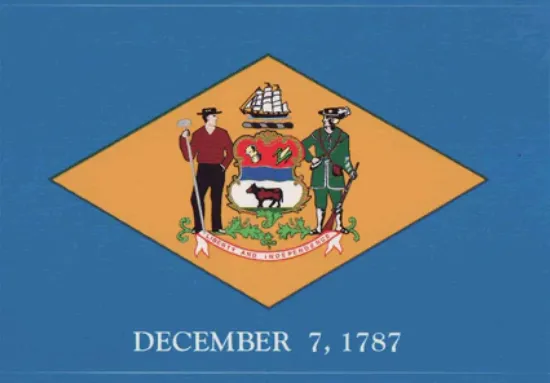
Delaware is the second smallest state in the country, but few states have had an outsized influence on American history, law, and commerce. It was the first to ratify the U.S. Constitution on December 7, 1787, unanimously, in just five days, setting the new nation in motion and earning a nickname it carries to this day.
Despite its size, Delaware is home to more than 1.9 million registered businesses, including the majority of Fortune 500 companies and most of the major U.S. banks. These businesses exist in Delaware on paper, drawn by a legal system and court of chancery that is the gold standard for corporate governance, even if their actual operations are thousands of miles away. Franchise fees from these incorporations fund a significant share of the state's budget.
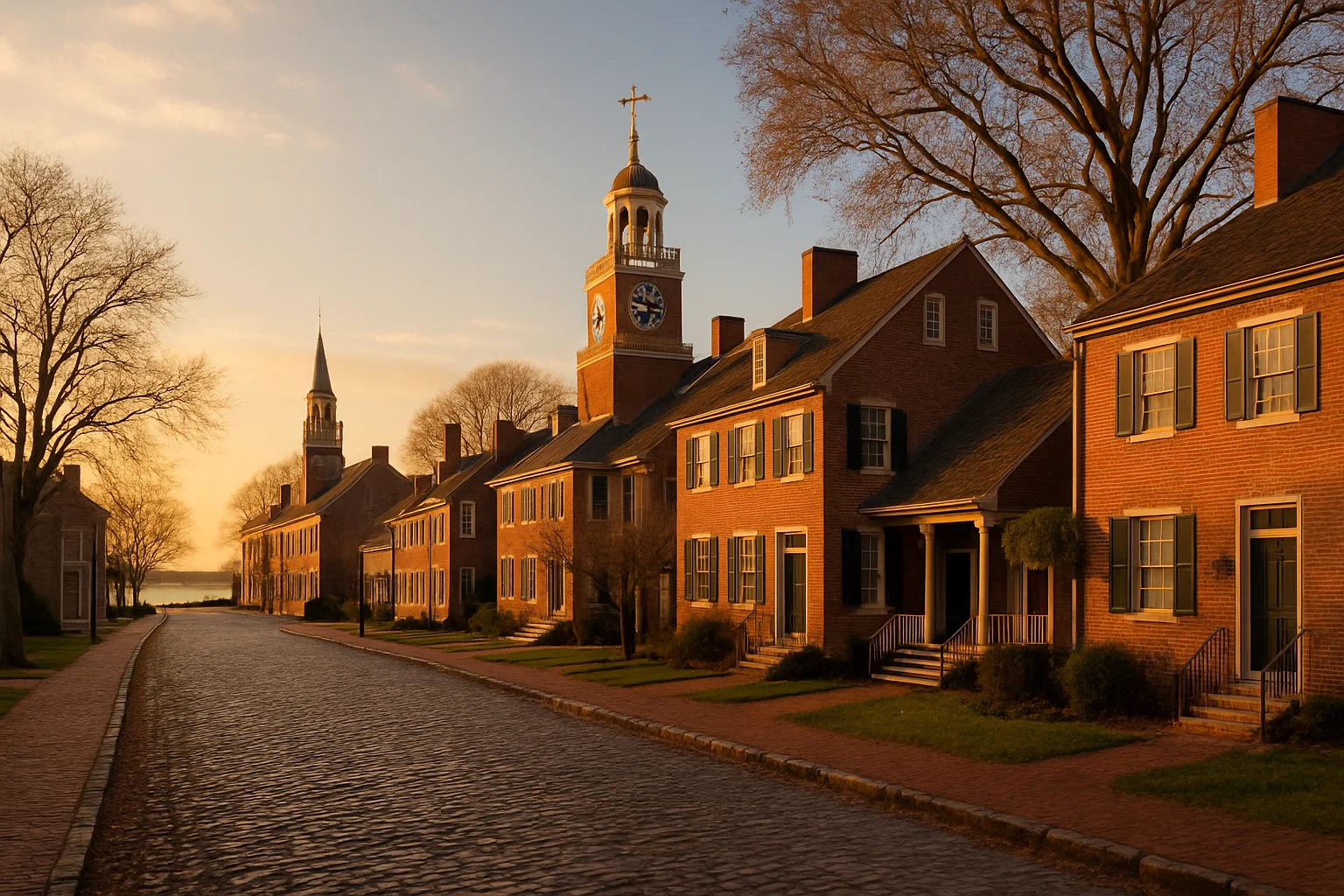
On the ground, Delaware is a study in contrasts: the dense, corporate corridors of Wilmington in the north; the agricultural quiet of Dover and central Kent County; and the sunny resort beaches of Sussex County's "Slower Lower" south. Each region has its own economy, culture, and identity, remarkably distinct for a state you can cross in under two hours.
Geography, Three Counties, Four Faces
Delaware has just three counties, the fewest of any state, yet each feels like a different world.
The northernmost tip of the state is Delaware's economic and cultural engine. Wilmington, the largest city, is a hub of banking, legal, and corporate services, home to major financial institutions and the headquarters of numerous Fortune 500 companies. The Brandywine Valley weaves through the area, lined with DuPont estates, Winterthur Museum, and Longwood Gardens. The University of Delaware anchors the college town of Newark just to the west.
New Castle County holds about 60 percent of Delaware's people and most of its wealth, and it feels like an extension of the Philadelphia suburbs, with Interstate 95 running straight through downtown Wilmington. The city's economy shifted from DuPont chemicals to banking and corporate law after the 1980s: its office towers now house the trustees and registered agents for millions of companies incorporated in the state.
The Brandywine Valley was the du Pont family's private landscape for a century, and their gunpowder mills, mansions, and gardens are now public: Hagley Museum on the original mill site, Winterthur's 175-room country house of American decorative arts, and Nemours' French-style chateau and children's hospital. The Brandywine also has an art tradition, the illustrator Howard Pyle's school and three generations of Wyeth painters worked here.
Newark, to the west, is home to the University of Delaware, the state's flagship and largest employer, whose research park on a former Chrysler assembly plant now hosts biotech and battery labs. Delaware City, on the river, holds one of the last large oil refineries in the Northeast.
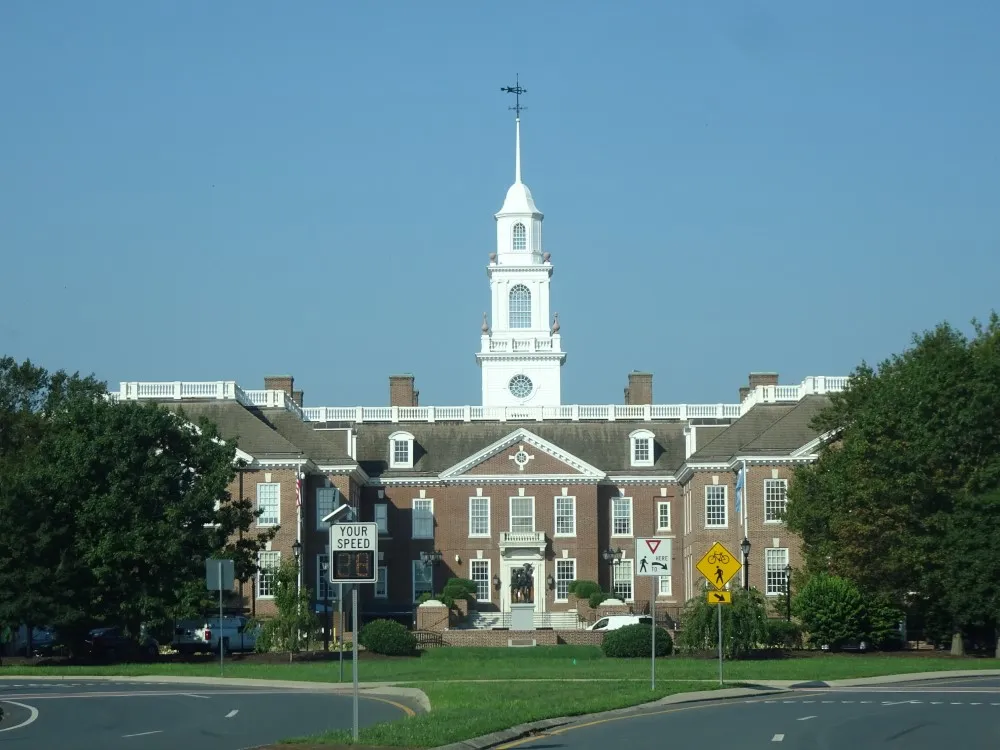
Dover, the state capital, sits in flat Kent County along the St. Jones River. Legislative Hall, Delaware's colonial-era capitol building, anchors a compact downtown surrounded by farms. Dover Air Force Base, one of the nation's largest military airlift facilities, dominates the local economy and is home to the Air Mobility Command Museum. The surrounding county is deeply agricultural, soybeans, corn, and chicken farming define the landscape.
Kent County is the transition zone between the industrial north and the rural south, and Dover, with about 39,000 people, is one of the smallest state capitals in the country. Legislative Hall dates only to 1933; the Old State House on The Green, completed in 1791, served as the capitol before that, and Delaware's ratifying convention met a block away in 1787.
Dover Air Force Base is the largest aerial port in the Defense Department and home to the military's only stateside mortuary, where the remains of American service members killed overseas are received; the 'dignified transfer' ceremonies on the flight line are a recurring national image. The base is Kent County's largest employer.
Around Dover the land is flat farm country, corn, soybeans, and chicken houses, and it hosts Delaware State University, a historically Black land-grant university, and Dover Motor Speedway, the concrete NASCAR oval known as 'the Monster Mile.' Amish and Mennonite families have farmed the western edge of the county since about 1915.
Sussex County, affectionately called 'Slower Lower' by Delawareans, is a world apart from the north. Rehoboth Beach, Dewey Beach, Bethany Beach, and Lewes draw millions of visitors each summer from the mid-Atlantic region. The area has boomed as a vacation destination and retirement community. Inland Sussex is also one of the largest chicken-producing regions in the country, anchored by Perdue Farms.
Sussex covers more than half the state's land but has long had less than a third of its people, and that is changing fast as retirees from the Washington and Baltimore suburbs pour into golf communities around Rehoboth and Lewes, making Sussex one of the fastest-growing counties in the mid-Atlantic and splitting its politics between a booming coast and a conservative farm interior.
Rehoboth Beach has been a summer capital for federal Washington for more than a century and, since the 1980s, a well-known LGBTQ resort town; President Biden owns a house near there. Lewes, at the mouth of Delaware Bay, calls itself 'the First Town in the First State,' settled by the Dutch in 1631 as a whaling station that local Lenape wiped out within a year.
Inland Sussex is chicken country: the county raises more broiler chickens than any other in the United States, and the industry, its feed mills, hatcheries, and processing plants, has drawn Guatemalan and Haitian immigrant workers to towns like Georgetown and Seaford. The nitrogen in all that poultry litter has been a long-running water-quality problem in the Inland Bays.
Delaware's entire eastern border is defined by the Delaware River and Delaware Bay, making the state's relationship with water central to its identity and economy. The Port of Wilmington handles millions of tons of cargo annually and is the largest fresh-fruit port in the nation. The bay is a critical stopover for migratory shorebirds, particularly at Bombay Hook National Wildlife Refuge, and supports commercial fishing and recreational boating.
The Delaware River is one of the busiest shipping channels in the country, feeding the refineries and terminals of Philadelphia, Camden, and Delaware. The Port of Wilmington, at the mouth of the Christina River, is the top North American port for bananas and other fresh fruit and for imported juice concentrate, and a 2018 lease to a Gulf terminal operator brought money to expand it.
Delaware Bay is a globally important stopover on the Atlantic Flyway. Each May, horseshoe crabs, living fossils older than the dinosaurs, crawl ashore by the hundreds of thousands to spawn, and migrating red knots fatten on their eggs for the flight to the Arctic. Horseshoe-crab blood is also used to test drugs and vaccines for contamination, which has put more pressure on the population.
The shoreline is low and sinking, and Delaware is one of the most vulnerable states in the country to sea-level rise: coastal marshes are drowning, and bayside towns have begun buying out and relocating flooded homes. The Chesapeake and Delaware Canal, cut across the top of the state in 1829 and now a sea-level ship channel, is run by the Army Corps of Engineers.

Economy
Delaware's economy is built on legal and financial infrastructure rather than natural resources, making it one of the most unusual and resilient state economies in the nation.
Delaware's General Corporation Law, enacted in 1899 and refined ever since, is the most business-friendly corporate statute in the United States. Delaware's Court of Chancery, a specialized business court with no jury and expert judges, provides fast, predictable rulings on corporate disputes. This legal infrastructure has made Delaware the incorporation capital of the world, generating enormous tax revenue from franchise fees despite the state's tiny size.
About two-thirds of the Fortune 500 and more than a million other entities are incorporated in Delaware, most with no office or employee in the state, just a registered agent's address. One building in downtown Wilmington, 1209 North Orange Street, is the legal home of roughly 300,000 companies, and franchise taxes and fees on all these entities provide close to a third of Delaware's state revenue.
The Court of Chancery, which dates to 1792 and has no juries, hears the country's most consequential corporate cases, shareholder suits, merger fights, disputes over board conduct, and its judges are chosen for corporate-law expertise. Its rulings, and those of the Delaware Supreme Court, effectively set the governance rules for most large American companies.
The system draws steady criticism. Because Delaware's law is management-friendly and its lawmaking is heavily shaped by the corporate bar, some scholars call it a 'race to the bottom'; others call it a race to the top for predictability. In 2024, after a Chancery judge voided Elon Musk's multibillion-dollar Tesla pay package, several companies reincorporated in Texas or Nevada, and Delaware's legislature moved to loosen parts of the law to keep them.
The Financial Center Development Act of 1981 eliminated Delaware's usury laws, allowing banks to charge any interest rate. Major banks, including JPMorgan Chase, Bank of America, Capital One, and Citibank, moved their credit card operations to Wilmington almost overnight. Delaware is now one of the largest banking centers in the country by assets, despite its small population.
The 1981 law was crafted with the help of J.P. Morgan and other banks, and it did two things: it let Delaware-chartered banks charge any interest rate, and it invited out-of-state banks to open subsidiaries in the state. For a while, 'your credit card is issued by a bank in Delaware' was true for tens of millions of Americans.
A 1978 Supreme Court decision, Marquette National Bank v. First of Omaha, had already ruled that a bank could export its home state's interest rate to borrowers anywhere; Delaware and South Dakota simply competed to be the home state with the friendliest rules. The result was the effective end of state usury caps on credit cards nationwide.
Banking and financial services still employ tens of thousands of people in Delaware and remain one of its largest private sectors, alongside a trust and wealth-management business that grew up around the state's flexible trust laws, which allow 'perpetual' dynasty trusts that never pay estate tax.
E.I. du Pont de Nemours, founded in Delaware in 1802 as a gunpowder manufacturer, became one of the world's largest chemical companies. DuPont invented nylon, Teflon, Kevlar, Lycra, and dozens of materials that changed everyday life. Though DuPont has restructured significantly, a robust life sciences and chemical manufacturing cluster remains centered in Wilmington.
DuPont was Delaware for most of two centuries: it employed a large share of Wilmington and shaped the state's politics, philanthropy, and museums. It ran the world's biggest explosives trust until an antitrust breakup in 1912, then reinvented itself as a materials-science company, inventing nylon in 1935, Teflon in 1938, and Kevlar in 1965.
The DuPont of today barely exists in Delaware. It merged with Dow in 2017 and split three ways in 2019, and the pieces, chemicals, agriculture, specialty materials, are headquartered elsewhere or much smaller. The Experimental Station, DuPont's research campus outside Wilmington, is now a multi-tenant science park.
DuPont also left a legacy of pollution: the company and its spinoff Chemours are defendants in thousands of lawsuits over PFAS 'forever chemicals,' including contamination around a West Virginia plant, and the companies agreed in 2021 to a $4 billion framework for future PFAS claims.
Sussex County is among the most productive poultry-farming regions in the United States. Perdue Farms, headquartered in Salisbury, Maryland (just across the border), has deep roots in Delaware agriculture. Soybeans, corn, and grain round out the state's agricultural economy. Delaware's Delmarva Peninsula farming operations feed millions of Americans.
Delaware is the birthplace of the modern broiler-chicken industry. In 1923 a Sussex County farmer named Cecile Steele accidentally received 500 chicks instead of 50 and raised them for meat rather than eggs; within a decade the Delmarva Peninsula was raising millions of broilers, and the vertically integrated model, a company owning the birds and feed and contracting with farmers to raise them, was invented here.
Poultry is still Delaware's biggest agricultural sector by far, worth more than all its crops combined, and the state raises the birds mostly to feed itself and the Northeast. The corn and soybeans that fill the rest of the state largely become chicken feed.
The industry's environmental footprint is large for such a small state. Manure from hundreds of millions of birds a year carries more nitrogen and phosphorus than the land can absorb, and runoff has impaired the Inland Bays and parts of the Chesapeake watershed; Delaware has spent decades on nutrient-management rules, cover crops, and manure-relocation programs.
Delaware's beaches draw over 8 million visitors annually, many from Washington D.C., Baltimore, and Philadelphia. Rehoboth Beach, just over two hours from D.C., has earned the nickname 'the Nation's Summer Capital' for its popularity with federal workers and politicians. Tourism generates over $3 billion for the state's economy each year, with no sales tax making Delaware a shopping destination year-round.
The beaches draw from a huge population base within a two- to three-hour drive, and Delaware has no sales tax, which makes the Rehoboth outlet malls and coastal downtowns a shopping destination as much as a beach one. Summer roughly triples Sussex County's population and generates most of the state's roughly $3.5 billion in annual visitor spending.
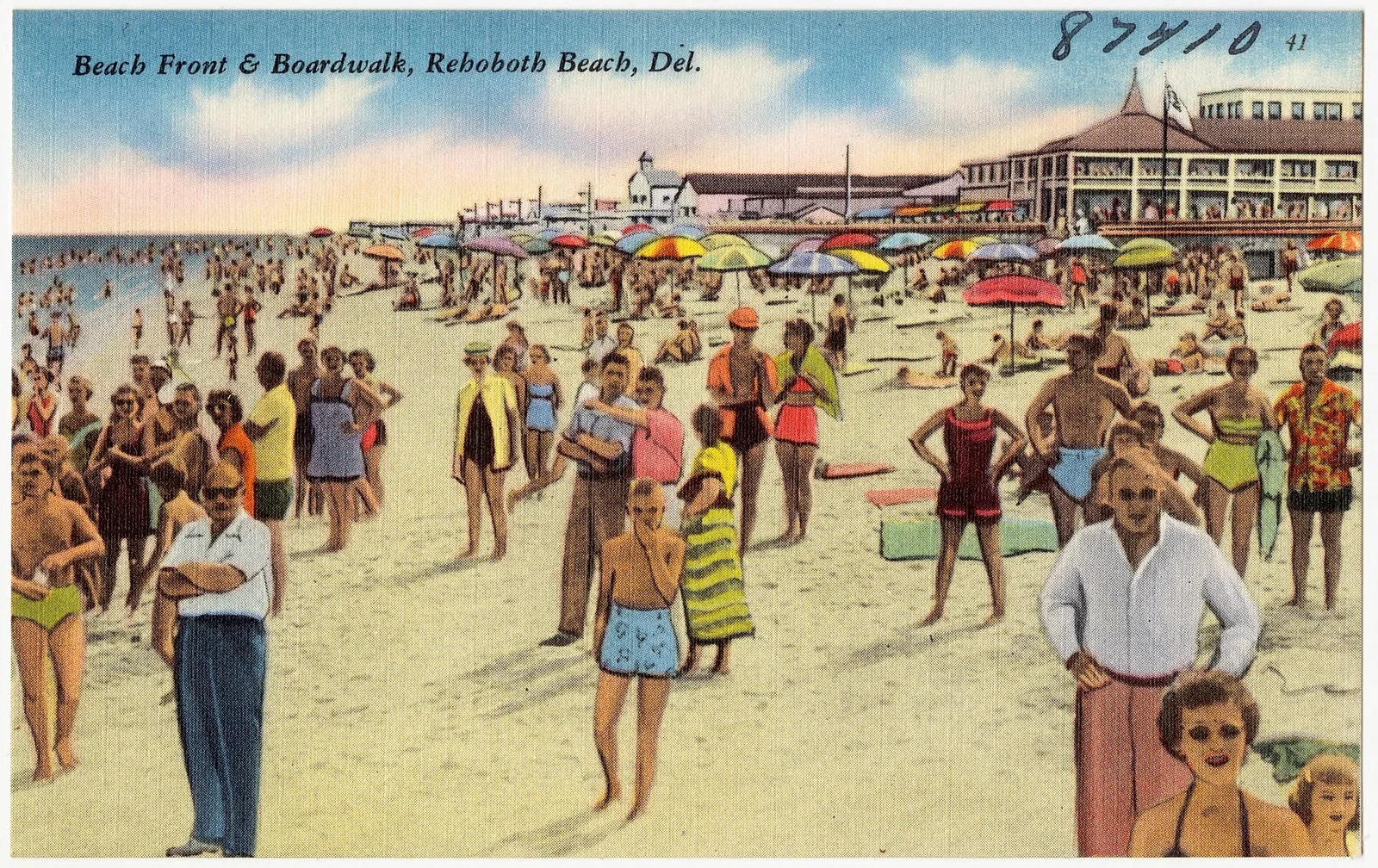
Rehoboth's boardwalk, built after an 1873 Methodist camp meeting founded the town, anchors a classic mid-Atlantic beach resort, and a chain of quieter towns, Dewey, Bethany and South Bethany, and Fenwick Island, runs south to the Maryland line. Cape Henlopen State Park, where the bay meets the ocean, was a coastal-defense fort in both world wars.
The beach economy is squeezed on two sides: seasonal service workers, many on foreign J-1 visas, cannot afford to live near the coast, and the barrier beaches need constant, expensive sand replenishment as storms and rising seas erode them. Inland, Delaware's tax-free status and its trust and incorporation industries mean tourism is important but not the state's economic core.
How Delaware's State Government Works
Delaware operates a three-branch state government. The General Assembly consists of a 21-member Senate and a 41-member House of Representatives, among the smallest legislatures in the country, reflecting the state's size. The governor serves four-year terms and is limited to two consecutive terms.
Delaware's most distinctive governmental feature is its Court of Chancery, a specialized equity court with no jury that handles business and corporate disputes. Judges known as "chancellors" are among the most sophisticated corporate law jurists in the world. Because most major U.S. corporations are incorporated in Delaware, the Court of Chancery effectively sets national corporate law through its rulings.
Delaware has trended Democratic in recent decades and holds one of the nation's most consistent Democratic voting records at the federal level. The state's small size and single at-large House seat give it an unusual political structure, every Delaware voter effectively chooses the same representative to the House.
Governor of Delaware
Current Governor
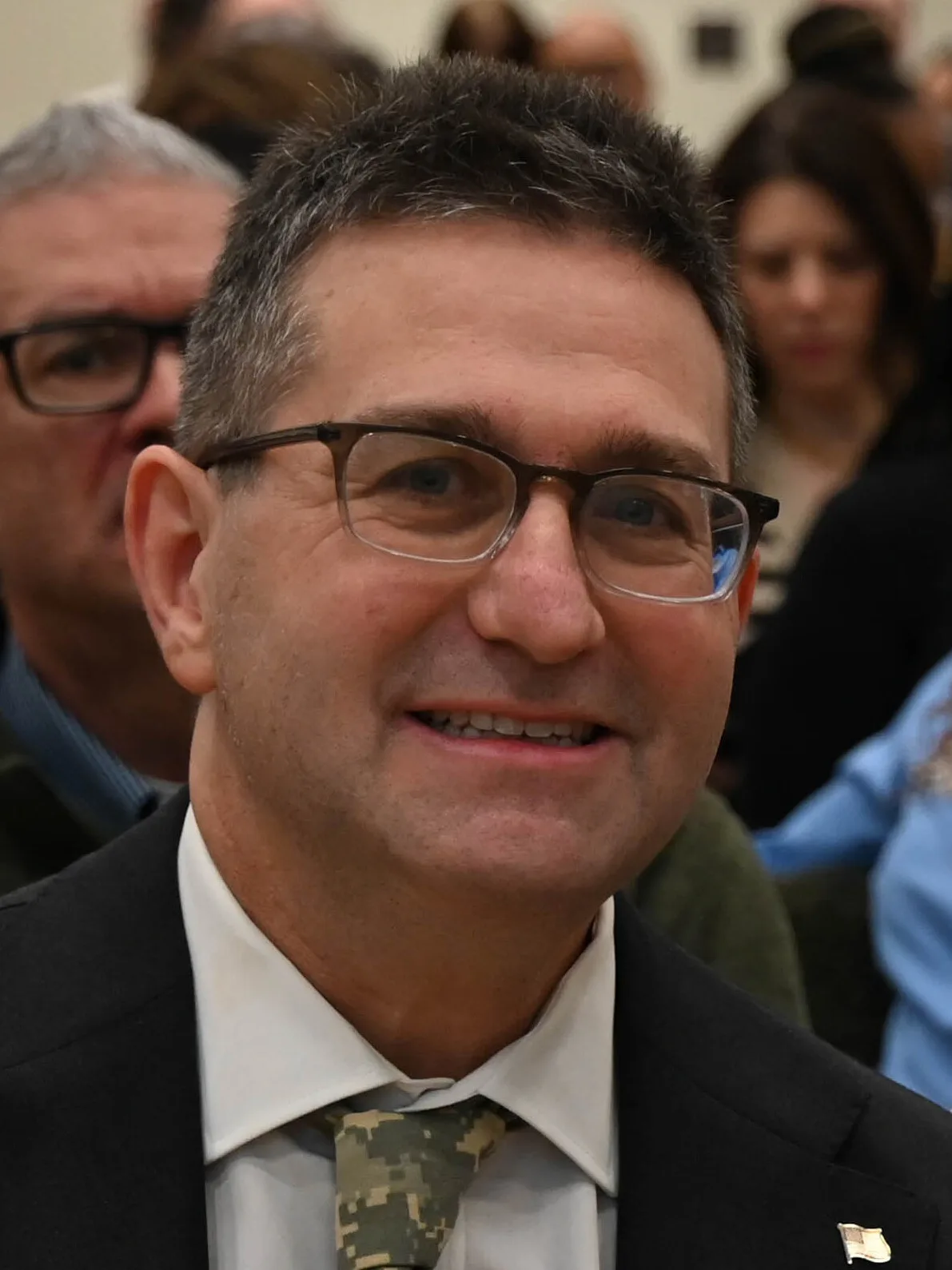
Matt Meyer
- Party
- Democrat
- In Office Since
- January 2025
- Elected
- 2024
- Term Ends
- January 2029
- Prior Role
- New Castle County Executive (2017-2025)
Matt Meyer is the 75th Governor of Delaware. A former New Castle County Executive, he won the 2024 gubernatorial election to succeed term-limited Governor John Carney. Meyer has focused on economic development, affordable housing, and strengthening Delaware's public education system.
Other Current State Officials
Attorney General
Kathy Jennings
In office since January 2019. Former chief deputy attorney general with a focus on criminal justice reform and consumer protection.
State Treasurer
Colleen Davis
In office since January 2019. Focuses on financial literacy, college savings programs, and unclaimed property administration.
The Delaware General Assembly
Delaware State Senate
- Seats: 21 members
- Terms: 4-year terms
The upper chamber. With just 21 senators, Delaware has one of the smallest state senates in the country. Senators serve staggered 4-year terms, with roughly half the chamber on the ballot every two years.
Delaware House of Representatives
- Seats: 41 members
- Terms: 2-year terms
The lower chamber. With 41 members, Delaware's House is also among the smallest lower chambers in the country, a reflection of the state's small geographic size and population of under 1 million.
Delaware's U.S. Senators
U.S. Senator
Chris Coons
Won a 2010 special election to fill the Senate seat vacated when Joe Biden became Vice President. Previously served as New Castle County Executive. Known for bipartisan work on foreign policy, climate, and international development. A close ally and friend of President Biden throughout Biden's political career.
U.S. Senator
Lisa Blunt Rochester
Served as Delaware's at-large U.S. Representative from 2017 to 2025, the first Black person and first woman to represent Delaware in Congress. Won the 2024 Senate race to succeed retiring Senator Tom Carper. Focuses on health care, workforce development, and voting rights.
Delaware Through the Years
From early settlement to the present day. Tap any era to read more.
Swedish and Finnish colonists under the New Sweden Company landed at the mouth of the Christina River in 1638, establishing Fort Christina, one of the first European permanent settlements in the Delaware Valley. The colony introduced the log cabin to North America, a building technique that spread across the frontier. Sweden controlled the region for less than two decades before the Dutch took over in 1655.
New Sweden was small, never more than a few hundred colonists, and it strung a handful of forts up the Delaware from the site of Wilmington toward modern Philadelphia. It was governed for a time by Johan Printz, a roughly 400-pound former army officer the Lenape called 'Big Belly,' and it survived by trading cloth and metal goods for furs.
The Dutch tolerated the Swedes as a buffer against the English until 1655, when Peter Stuyvesant sailed down from New Amsterdam with seven ships and took New Sweden without a fight. Nine years later the English took the whole region from the Dutch, and in 1682 the Delaware colony was handed to William Penn as the 'Three Lower Counties' of Pennsylvania.
Delaware and Pennsylvania shared a governor, but Delaware got its own assembly in 1704 and declared itself a separate state in June 1776, weeks before the Declaration. The Swedish imprint survives in place names, in Holy Trinity (Old Swedes) Church in Wilmington, built in 1698 and still holding services, and in the log cabin, which historians credit New Sweden with introducing to the English colonies.
On December 7, 1787, Delaware became the first state to ratify the United States Constitution, unanimously, 30 to 0. The vote in Dover took just five days. Delaware's early ratification provided crucial momentum for the new nation and earned it the permanent nickname 'The First State.' December 7 is still celebrated as Delaware Day, a state holiday.
Delaware raced to be first on purpose. As the smallest state, it had fought hardest at the Philadelphia convention for equal representation in the Senate, and its delegates, led by John Dickinson, saw the finished Constitution as protecting small states. Ratifying first, and unanimously, was a statement that a small state's future lay with a strong Union.
The ratifying convention met at the Golden Fleece Tavern in Dover and finished in five days with no recorded opposition. Delaware also became the first state to move its capital, from New Castle to more central Dover, in 1777, and among the first to seat a congressional delegation under the new government in 1789.
The 'First State' nickname was informal for two centuries and was made official by the legislature only in 2002, after a schoolchildren's campaign pointed out that Delaware had no official nickname. Delaware Day has been a state holiday since 1933.
Éleuthère Irénée du Pont de Nemours, a French immigrant and trained chemist, opened a black powder mill on the Brandywine Creek near Wilmington in 1802. The company, E.I. du Pont de Nemours, supplied gunpowder to the U.S. military during the War of 1812 and the Civil War, and grew over two centuries into one of the world's largest chemical companies, eventually inventing nylon, Teflon, and Kevlar.
The du Ponts had fled the French Revolution, and E.I. du Pont had trained in the French royal gunpowder administration under the chemist Antoine Lavoisier. He chose the Brandywine because its fast fall of water could power the mills and its granite banks could be built to channel explosions away from workers, though dozens still died in blasts over the years.
Government contracts made the company: it supplied most of the Army's powder in the War of 1812, the Mexican War, and above all the Civil War, when it ran day and night. By 1900 DuPont controlled the American explosives industry so completely that the government broke it up under the Sherman Act in 1912, spinning off Hercules and Atlas.
The breakup forced DuPont to diversify, and in the 20th century its central research lab turned out nylon, neoprene, Teflon, Mylar, Lycra, Tyvek, and Kevlar. DuPont also helped build the atomic bomb, operating the plutonium reactors at Hanford, Washington, during the Manhattan Project for a fee of one dollar over cost.
Delaware was a slave state that remained in the Union during the Civil War, one of only four 'border states' to do so. Delaware's loyalty was never certain; the state legislature voted against abolition even after the war ended.
Delaware did not ratify the 13th, 14th, or 15th Amendments until the 20th century. This complicated history reflects the tensions of a small state straddling the cultural divide between North and South.
Delaware was a slave state only barely: by 1860 fewer than 1,800 people were enslaved there, and more than 90 percent of its Black residents were already free. Still, its legislature rejected a compensated-emancipation plan Lincoln personally lobbied for in 1861-62, and it did not free its remaining enslaved people until the 13th Amendment forced the issue in December 1865.
Fort Delaware, on Pea Patch Island in the Delaware River, held as many as 12,500 Confederate prisoners of war at once in 1863, and more than 2,400 died there of disease. After the war Delaware imposed poll taxes and other restrictions that kept most Black men from voting for decades, and it did not formally ratify the 14th and 15th Amendments until 1901.
Delaware enacted its landmark General Corporation Law in 1899, creating the most flexible and business-friendly corporate statute in the United States. The law attracted corporations away from New Jersey and New York with lower fees and greater management flexibility. Over the next century, Delaware refined its business court system and corporate law to become the unquestioned home of American corporate governance, a distinction it holds to this day.
The 1899 law was largely a copy of New Jersey's, which had pioneered the 'liberal' incorporation charter, and Delaware wrote it to lure business away. When New Jersey tightened its own corporate rules under Governor Woodrow Wilson in 1913, companies stampeded to Delaware, and it has been the leader ever since.
Delaware's advantage is less the statute than the institution around it: a Court of Chancery with more than two centuries of published corporate decisions, judges appointed for expertise rather than elected, a legislature that updates the law almost yearly on the state bar's advice, and a bar and registered-agent industry with a direct stake in keeping the system attractive.
The downside is a real policy question. Because directors and managers pick where to incorporate, critics since the 1970s have argued Delaware competes by favoring insiders over shareholders; defenders say its predictability lowers the cost of capital for the whole economy. The 2024 fight over Elon Musk's Tesla pay, and the companies that threatened to leave afterward, reopened the debate.
In 1981, Governor Pierre 'Pete' du Pont signed the Financial Center Development Act, eliminating interest rate caps that restricted what banks could charge. Within months, major banks relocated their credit card operations to Wilmington. The move transformed Delaware's economy, brought thousands of high-paying jobs, and turned a small state into a banking powerhouse, all without a single large city or major financial exchange.
The context was a national crisis: inflation in 1980 had pushed the cost of money above the rates many states let banks charge, so credit-card lending was losing money. A 1978 Supreme Court ruling let a bank export its home state's rate nationwide, and Delaware, tiny and nimble, passed a law removing rate caps and rolling out a welcome mat for out-of-state banks.
The banks came within months. Chase Manhattan built a campus in the Wilmington suburbs, MBNA grew from a spinoff into one of the largest credit-card issuers in the world and Delaware's biggest private employer before Bank of America bought it in 2005, and by the 1990s a large share of American credit cards were issued out of Delaware ZIP codes.
The boom made Wilmington a white-collar banking town and helped offset the slow decline of DuPont, but it also tied Delaware's fortunes to a volatile industry. The 2008 financial crisis and later consolidation cost thousands of Delaware banking jobs, and the state has since leaned harder on incorporation, trusts, and, more recently, data centers.
Delaware's Defining Moments in American History
These are the events that didn't just shape Delaware, they changed the nation.
Delaware's unanimous, rapid ratification of the Constitution on December 7, 1787 was more than symbolic, it broke the dam. With the first state on board, other states had a model to follow.
Delaware's decision to ratify quickly and without conditions demonstrated that the Constitution was viable, giving Federalists the momentum they needed to push ratification through the larger, more contentious states like Virginia and New York.
Delaware had the most at stake in a strong Union of any state its size. Its whole strategy at the 1787 convention had been to win equal representation in the Senate, and its delegates were instructed to walk out if they lost that fight. Getting it, they ratified first and unanimously to lock in the bargain before larger states could reconsider.
Five states ratified quickly and with little dissent, Delaware, Pennsylvania, New Jersey, Georgia, and Connecticut; the real fights came in Massachusetts, Virginia, and New York, where the Federalist Papers were aimed and where the promise of a Bill of Rights ultimately tipped the balance. Delaware's speed gave that campaign its opening momentum.
Delaware's corporate dominance is not an accident, it's the result of deliberate, sustained legal innovation over more than a century. The Delaware Court of Chancery, established in the 18th century, evolved into the nation's preeminent business court.
Delaware's legislature continuously updates its corporate law in response to business needs, advised by the state bar. Over 65% of Fortune 500 companies, more than 1.9 million businesses total, and countless LLCs and investment funds call Delaware home, though most have no physical presence there at all.
The grip is self-reinforcing. Lawyers everywhere are trained on Delaware case law, so they advise clients to incorporate there; the more companies incorporate there, the more the Court of Chancery has to rule on and the deeper its precedent grows; and the fees fund a state government with every incentive to protect the franchise.
That dominance is not guaranteed. In 2024 a Chancery judge struck down Elon Musk's $50-billion-plus Tesla pay package as unfair to shareholders; Musk publicly attacked Delaware, moved Tesla's and SpaceX's incorporation to Texas and Nevada, and other companies followed. Delaware's legislature responded in 2025 by amending its corporate law to give management more protection.
Joseph R. Biden Jr. represented Delaware in the U.S. Senate from 1973 to 2009, 36 years, making him one of the longest-serving senators in state history. He served as the 47th Vice President under Barack Obama from 2009 to 2017, and was elected the 46th President of the United States in 2020.
Biden's roots in Scranton, Pennsylvania and Wilmington, Delaware defined his working-class political identity and made tiny Delaware one of the most politically visible states in the country during his presidency.
Biden was elected to the Senate in 1972 at age 29, before he was old enough to serve, and was sworn in at the hospital bedside of his sons after a car crash killed his first wife and infant daughter weeks after the election. He commuted home to Wilmington by Amtrak nearly every night for 36 years, a habit that became part of his political brand as 'Amtrak Joe.'
As a senator he chaired the Judiciary Committee, running the Robert Bork and Clarence Thomas confirmation hearings and writing the 1994 crime bill, and later chaired Foreign Relations. His presidency, from 2021 to 2025, put a state of about a million people at the center of national attention, and his Wilmington and Rehoboth homes became working parts of the federal government.
Notable Delawareans
Joe Biden
46th President of the United States, represented Delaware in the U.S. Senate for 36 years
Caesar Rodney
Colonial statesman who rode through the night to cast Delaware's deciding vote for independence
Annie Jump Cannon
Astronomer who classified over 350,000 stars, born in Dover
Henry du Pont
Industrialist who transformed Delaware into a chemical manufacturing center
Howard Pyle
Father of American illustration and author of illustrated Robin Hood classics, born in Wilmington
Ryan Phillippe
Actor known for Cruel Intentions and I Know What You Did Last Summer, born in New Castle
State Symbols & Quick Facts
| Nickname | "The First State" |
| Capital | Dover |
| Largest City | Wilmington |
| Statehood | December 7, 1787 (1st state) |
| Population | ~1.1 million (2025 est.) |
| Area | 2,489 sq mi, 2nd smallest state |
| Motto | Liberty and Independence |
| State Bird | Delaware Blue Hen Chicken |
| State Flower | Peach Blossom |
| State Tree | American Holly |
| State Animal | Gray Fox |
| State Fish | Weakfish |
| State Song | "Our Delaware" |
| Time Zone | Eastern Time (UTC−5 / UTC−4) |
| Borders | Pennsylvania (N), New Jersey (E, across Delaware River/Bay), Maryland (S & W) |
Did You Know?
Delaware has no sales tax, making it a popular shopping destination for residents of neighboring Pennsylvania, Maryland, and New Jersey, who drive across the border to avoid paying sales tax on major purchases.
Over 1.9 million businesses, including roughly 70% of Fortune 500 companies, are legally incorporated in Delaware, even though most have no employees or offices there. Corporate franchise fees fund a significant portion of the state budget.
Delaware is so small that it takes less than two hours to drive its entire north-to-south length. The state has just three counties, New Castle, Kent, and Sussex, the fewest of any state.
The log cabin, an iconic symbol of American frontier life, was introduced to North America by Swedish and Finnish settlers who founded Fort Christina in Delaware in 1638. The building technique spread west as settlers moved inland.
In November 2024, Delaware elected Sarah McBride to its at-large U.S. House seat, making her the first openly transgender person ever elected to the United States Congress.
Quick Facts and Common Questions
Short answers to the questions people most often ask about Delaware: its abbreviation, why it is the First State, its capital, and its place in Congress.
Delaware's two-letter postal abbreviation is DE. The U.S. Census Bureau places it in the South region, in the South Atlantic division, and about 990,000 people lived there in the 2020 census.
On December 7, 1787, Delaware became the first state to ratify the U.S. Constitution, and its delegates did so unanimously. That made it the 1st state in the Union, and "The First State" is its official nickname.
The state takes its name from the Delaware River and Delaware Bay, which the English named for Thomas West, 3rd Baron De La Warr, an early governor of the Virginia colony. English colonists also used the name for the Lenape people who lived along the river.
From 1682 Delaware's three counties, New Castle, Kent, and Sussex, were governed by William Penn's proprietors as the "Lower Counties" of Pennsylvania, though they had their own assembly from 1704. On June 15, 1776, the assembly voted to separate from both Great Britain and Pennsylvania, a date Delawareans still mark as Separation Day.
Dover has been the capital since 1777, when the government moved there from New Castle, which was closer to the Delaware River and more exposed to British warships. Wilmington is the state's largest city.
Delaware borders Maryland to the south and west and Pennsylvania to the north. New Jersey lies across the Delaware River and Delaware Bay to the east, and the state's southeast faces the Atlantic Ocean.
Delaware's motto is "Liberty and Independence." Besides "The First State," it is also called the Diamond State and the Blue Hen State. Its state bird is the Delaware Blue Hen chicken, its flower is the peach blossom, and its tree is the American holly.
Based on the 2020 census, Delaware has 1 seat in the U.S. House of Representatives, elected statewide, which gives it 3 votes in the Electoral College, the minimum for any state.
Delaware's General Corporation Law and its Court of Chancery, a business court that decides cases with judges rather than juries, have made it the most popular state for incorporation. According to the Delaware Division of Corporations, a majority of Fortune 500 companies are incorporated there.
Cape Henlopen State Park
Where the Delaware Bay Meets the Atlantic, 5,000 Acres of Dunes, Shore, and History
About Cape Henlopen State Park
Cape Henlopen State Park occupies the sandy hook where Delaware Bay meets the Atlantic, near Lewes, its 5,193 acres taking in ocean and bay beaches, salt marsh, freshwater ponds, a loblolly pine maritime forest, and the migrating Great Dune, one of the tallest dunes on the mid-Atlantic coast.
The land carries an unusually old claim to public use: in 1682 William Penn set the cape aside as a 'commons' for the people of Lewes and Sussex County, which Delaware cites as one of the first tracts of public land in America.
The first European settlement in Delaware stood at the cape's edge, the Dutch whaling and farming colony of Zwaanendael, founded at present-day Lewes in 1631 and destroyed by the Lenape the next year. The Swedish ship Kalmar Nyckel passed the cape in 1638 on its way up the bay to found Fort Christina at what is now Wilmington.
In 1941 the federal government built Fort Miles across the cape to guard the shipping approaches to Wilmington and Philadelphia; after the war the land passed to Delaware, and it opened as a state park in 1964. It is now the most visited park in the state system.
- Designation
- Delaware State Park
- Location
- Lewes, Sussex County, Delaware
- Established
- 1964
- Annual Visitors
- ~1.5 million
Cape Henlopen's Natural and Historic Zones
The park's Atlantic-facing shore runs more than a mile along its southern end, with open-ocean surf for swimming, surfing, and surf fishing, plus a four-wheel-drive surf-fishing zone out toward the point.
Around the cape the coast bends into Delaware Bay, where the water is calmer, warmer, and nearly waveless, so a visitor can move from ocean to bay conditions within a single park.
The cape is a classic spit, built of sand carried north by the Atlantic's longshore current and dropped where the coast turns into the bay; it has grown measurably northward over the past century.
The very tip, known as the Point, is closed from March to October each year for nesting shorebirds and for seals that haul out on the bar.
The Great Dune rises about 80 feet above the sea, generally called the highest dune on the Atlantic coast between Cape Cod and Cape Hatteras, with a view over both the ocean and the bay from the top.
The dune field is 'live,' pushed inland a few feet a year by the prevailing southwest and northwest winds rather than pinned in place by vegetation.
As the sand advances it buries the pine forest behind it and, decades later, uncovers the bleached trunks, leaving a 'ghost forest' of dead trees standing in open sand.
Because the dunes are moving, the park routes its trails and boardwalks around the active faces rather than over them and asks visitors to stay off.
Sheltered behind the dunes, a maritime forest of loblolly pine, American holly, and scrub oak grows on old dune ridges, its canopy sheared flat by salt wind on the seaward side.
Gordons Pond and other fresh and brackish ponds draw wintering ducks, wading birds, and shorebirds, and a dike trail runs along Gordons Pond toward Rehoboth Beach.
The Junction and Breakwater Trail, a rail-trail on a 19th-century railroad bed, links the park through the forest to Rehoboth for cyclists and walkers.
The mix of beach, dune, forest, marsh, and pond in a compact area is why the cape supports far more species than its size would suggest.
Fort Miles, begun in 1941 and named for Lieutenant General Nelson A. Miles, anchored the Harbor Defenses of the Delaware against surface raiders and U-boats.
Its heaviest guns were 16-inch cannon drawn from battleship production, set in Batteries Smith and 519 and able to throw a 2,000-pound shell more than 20 miles.
Eleven concrete fire-control towers were built along the Delaware coast, several of them in the park, disguised to look like civilian water towers; visitors can still climb Tower 7.
The restored Battery 519 houses the Fort Miles Museum, and volunteers have mounted a 16-inch battleship gun barrel outside it.
Indigenous Connections
Lenape (Delaware) People
The Lenape, or Lenni-Lenape, lived along Delaware Bay for thousands of years, and the cape and the mouth of what is now Lewes Creek were seasonal camps where they fished, gathered shellfish, and hunted waterfowl.
It was Lenape people who destroyed the Dutch Zwaanendael colony in 1632 after a dispute over a defaced Dutch coat of arms; within decades Dutch, Swedish, and English claims and disease pushed most Lenape bands out of the lower bay.
By the mid-1700s many Lenape had moved to the Susquehanna and Ohio valleys, and over the next century they were forced on to Indiana, Kansas, and finally Indian Territory, while smaller groups settled in Ontario and Wisconsin.
The Delaware Tribe of Indians and the Delaware Nation are based in Oklahoma and the Stockbridge-Munsee Community in Wisconsin; Delaware also state-recognizes the Lenape Indian Tribe of Delaware and the Nanticoke Indian Tribe. The name Delaware itself comes from the Lenape homeland along the river and bay.
Things to Do at Cape Henlopen
Great Dune Climb
A short sand path climbs the Great Dune from the main park road to a crest near 80 feet, one of the highest points on the Delaware coast.
The loose sand makes it a genuine workout, and the exposed top is windy in almost any weather.
From the summit the view takes in the Atlantic surf, the bay, the Harbor of Refuge lighthouse offshore, and the Cape May-Lewes ferry crossing.
The park asks climbers to keep to the marked route and off the vegetated slopes and active dune faces, which erode fast under foot traffic.
Fort Miles History Tour
The tour centers on Battery 519, a restored gun emplacement that now holds the Fort Miles Museum, with a 16-inch battleship gun barrel mounted outside.
Visitors can also walk among the concrete gun batteries, ammunition magazines, and barracks foundations scattered through the pines.
Several fire-control towers are open for climbing, including Tower 7 near the bathhouse, from which soldiers once scanned the sea for German submarines.
The Fort Miles Historical Association runs guided tours and living-history weekends, and the site interprets the May 1945 surrender of the U-boat U-858 off the Delaware coast.
Birding and Wildlife Watching
The cape is one of the premier bird sites on the mid-Atlantic, funneling migrants down the coast in spring and fall through its stack of different habitats.
The Cape Henlopen Hawk Watch counts thousands of raptors each autumn, and the same weeks bring waves of monarch butterflies and songbirds.
In May the bay beaches fill with spawning horseshoe crabs and the shorebirds, red knots among them, that fatten on the eggs.
Winter brings sea ducks, gannets, and snow buntings offshore and along the beach, and the ponds hold wintering waterfowl, so there is something for birders year-round.
Conservation Challenges
Coastal Erosion and Sea Level Rise
The cape is a moving landform: sand strips off the ocean side, travels around the point, and builds the spit northward, so the shoreline is never fixed.
Sea level at Lewes has risen more than a foot over the past century, among the faster rates on the U.S. coast because the land is also slowly sinking, and storm surges now reach farther inland.
Erosion repeatedly undermines the bathhouse, parking, and roads near the ocean beach, and the state has moved facilities landward and rebuilt dunes after major storms.
Delaware runs one of the longest beach-profile monitoring programs in the country here and uses it to decide where to armor, where to nourish with pumped sand, and where to let the shore retreat.
Horseshoe Crab Population
Delaware Bay holds the largest spawning population of Atlantic horseshoe crabs in the world, and the Cape Henlopen beaches are part of the core spawning ground.
The crabs' eggs are the main food that lets red knots and other shorebirds nearly double their weight during a stopover on a migration that runs from Tierra del Fuego to the Arctic; the red knot was listed as threatened in 2014.
Horseshoe crabs are also bled for a compound, LAL, used worldwide to test drugs and vaccines for bacterial contamination, on top of a long history of harvest for eel and conch bait.
After steep declines the Atlantic States Marine Fisheries Commission and Delaware sharply cut the harvest, barring the taking of females from the bay in most years, and numbers have stabilized without fully recovering.
Beach Nesting Birds
Piping plovers, least terns, and American oystercatchers nest directly on the open sand at the cape, where their eggs are nearly invisible and easily crushed underfoot.
The park closes the Point and other stretches of beach from March into the fall and posts monitors and string fencing around active nests.
Piping plovers were nearly gone from Delaware; a few pairs now fledge chicks at Cape Henlopen most years under this protection.
Loose dogs, off-road vehicles, and ordinary foot traffic are the main threats, and the seasonal closures are a recurring point of friction with summer beachgoers.
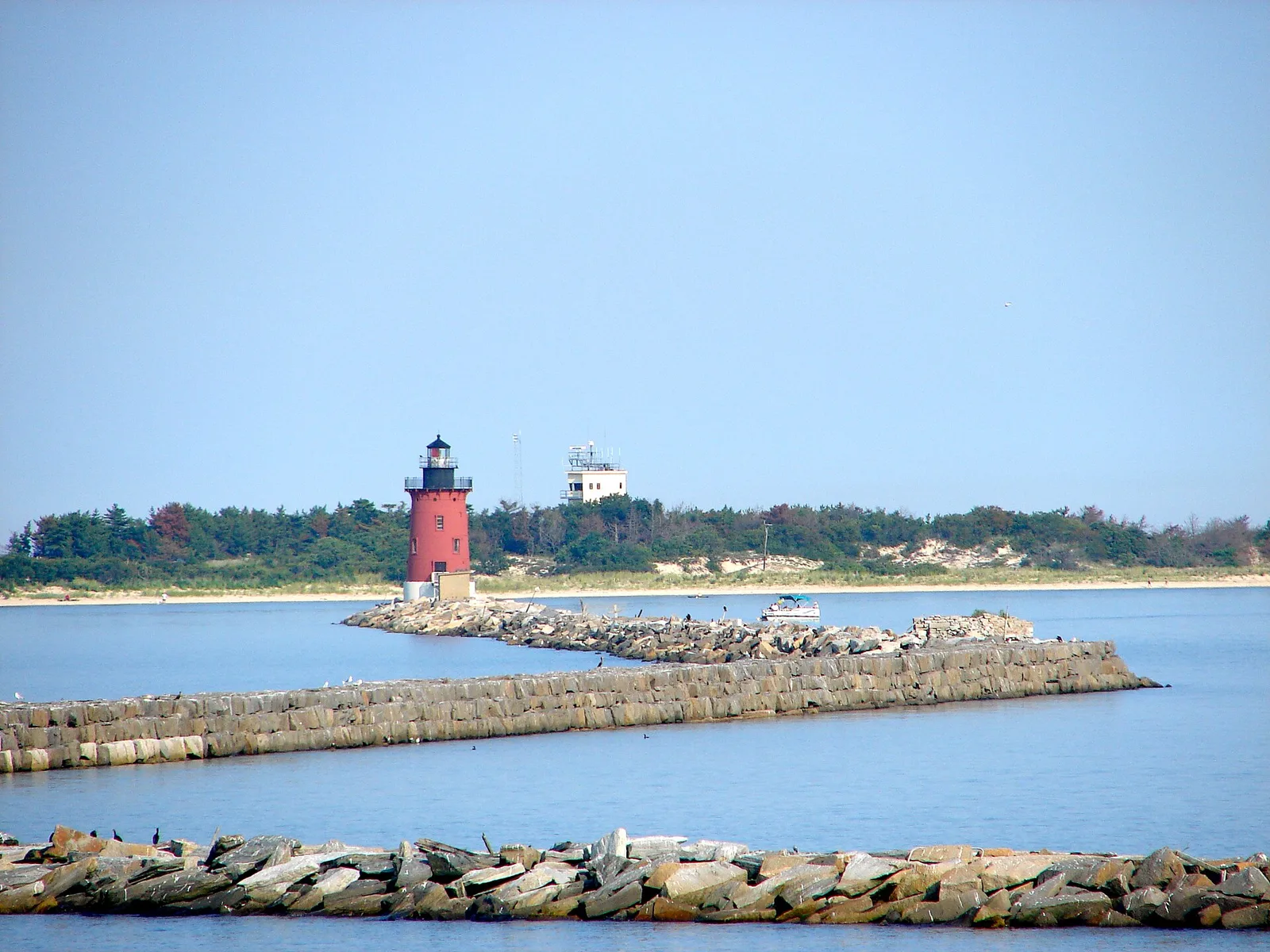
The Delaware coast near Cape Henlopen, where bay and ocean meet
At a Glance
Did You Know?
Every May, millions of horseshoe crabs crawl onto Delaware Bay beaches at Cape Henlopen to spawn, turning the shoreline a living bronze. This annual event draws hundreds of thousands of migratory shorebirds who feast on the eggs before continuing to their Arctic breeding grounds.
The WWII fire control towers at Cape Henlopen were designed to look like civilian water towers to fool German spies and reconnaissance aircraft observing the coast. Several still stand and can be climbed today.
The first European settlement in Delaware was built beside Cape Henlopen: the Dutch colony of Zwaanendael, founded at present-day Lewes in 1631. It lasted barely a year before a dispute with the Lenape ended in the killing of all its roughly 30 settlers.
The walking dunes at Cape Henlopen move inland at a rate of several feet per year, driven by prevailing winds. Over time, they have buried and later uncovered trees, leaving the ghostly skeletons of dead trees emerging from the dune surface.
Plan Your Visit
Location
Lewes, Sussex County, Delaware
Designation
Delaware State Park
Best Time to Visit
May for horseshoe crab spawning; summer for beaches; fall for hawk migration
Admission
$8 per vehicle (Delaware residents $4); seasonal variations apply