How Things Get Named After Presidents
A president's face on a coin, a name on an aircraft carrier, a memorial on the National Mall. Each one follows a different rule, and a different part of the government decides.
No Single Office Hands Out the Honor
There is no federal Office of Naming. Congress, a handful of agencies, the states, and private groups each control a different kind of honor, and each has its own rules.
1
State named for a president: Washington
31
Counties and parishes named Washington
25 years
Wait after death before a memorial in the capital can be authorized
1866
Year Congress barred living people from paper money
The Constitution says nothing about naming things for people. It gives Congress the power to coin money, to govern federal property, and to make the rules for the armed forces, and almost every naming rule grows out of one of those three powers.
In practice the decision depends on what is being named. Congress decides coin designs and most federal building names by passing a law. The Secretary of the Treasury picks the portraits on paper money. The Secretary of the Navy names warships. A small federal board names mountains and rivers. The President signs or vetoes the naming laws Congress passes and can direct the agencies that report to him.
Everything else belongs to someone other than the federal government. State legislatures name state highways and counties. City councils name streets. School boards name schools. Airport authorities name most airports. A company can name a product for a president without asking anyone, which is how the Lincoln automobile got its name in 1917.
The result is uneven. A president can be on a coin within months of dying, as John F. Kennedy was, yet must wait 25 years for a memorial in Washington, D.C. Abraham Lincoln has a memorial, a cent, a five-dollar bill, an aircraft carrier, and a state capital. Several presidents have almost nothing in the capital at all.
The most common route is a bill. Any member of Congress can introduce one that says a building 'shall be known and designated as' someone's name. It moves like any other bill, as explained in how a bill becomes law: a committee, a vote in the House, a vote in the Senate, and the President's signature.
Which committee handles it depends on the property. Federal office buildings and courthouses go to the House Transportation and Infrastructure Committee and the Senate Environment and Public Works Committee. Post offices go to the House Oversight Committee and the Senate Homeland Security and Governmental Affairs Committee. Parks and memorials go to the natural resources committees, and veterans' hospitals to the veterans' affairs committees.
Naming bills are among the most common laws Congress passes, because they rarely draw opposition. The Congressional Research Service has tracked post office namings for years and found that in some Congresses they made up about one of every five laws enacted. By House committee custom, a post office bill moves only when every House member from that state has signed on as a cosponsor.
A law is also the strongest kind of name. The Ronald Reagan Building in Washington was named by a 1995 law, and Washington National Airport became Ronald Reagan Washington National Airport under a law signed on February 6, 1998, Reagan's 87th birthday. A name set by law can only be changed by another law, a point a federal court enforced in 2026 in the Kennedy Center case described on this page.
Congress has handed some naming decisions to agencies. Under 40 U.S.C. 3102, the Administrator of General Services 'may name or otherwise designate any building under the custody and control of the General Services Administration.' That covers thousands of federal office buildings, although in practice the agency usually waits for Congress.
The Secretary of the Treasury chooses the designs of paper money under 31 U.S.C. 5114, and the Secretary of the Navy has named Navy ships since a law of March 3, 1819. Both officials sit in the President's Cabinet, so a president can influence those choices directly.
Natural features belong to the U.S. Board on Geographic Names, created by President Benjamin Harrison in 1890 and set in law in 1947. It decides the official federal name of every mountain, river, lake, and valley. Its policy is that a feature can be named for a person only if that person has been dead at least five years and had a direct tie to the place or made an outstanding contribution to it.
Stamps belong to the Postal Service, which takes advice from its Citizens' Stamp Advisory Committee, set up in 1957. Veterans' facilities are the reverse case: under 38 U.S.C. 531, a Department of Veterans Affairs hospital or clinic can be named for a person only when a law says so.
Most things named for presidents were never touched by the federal government. Counties are created and named by state legislatures, which is why there are 31 counties and parishes named Washington. Streets, parks, and bridges are usually named by a city council or county board, the bodies described on our local and county government page.
Schools are named by elected school boards. Lincoln, Washington, Jefferson, Roosevelt, and Kennedy are among the most common school names in the country. Because boards answer to local voters, school names are also the ones most often debated and changed.
Private groups have named some of the best-known namesakes. The Lincoln Highway, the first road planned to cross the country, was laid out in 1913 by a private association of auto and tire makers, not by any government. The Washington Monument was begun in 1848 by a private society that ran out of money, and Congress did not take the project over until 1876.
Private money also builds presidential libraries and most memorials. The usual pattern is that Congress authorizes a memorial or accepts a library, and a foundation raises the money to build it.
For a federal building, courthouse, or post office, the path runs through your representative or senator, because nearly all of those names are set by law. Write to the member whose district includes the building, explain the person's tie to the community, and ask for a naming bill. Our guide to contacting your elected officials explains how to reach them. Support from local officials, veterans' groups, or the person's family makes a bill far more likely to move.
For a mountain, lake, or other natural feature, anyone may file a proposal with the U.S. Board on Geographic Names using its Domestic Geographic Name Proposal form. The board asks the state's own naming authority, local governments, and any affected tribes for their views. The person must have been dead for at least five years, and the board will not consider a name while a bill on the same feature is pending in Congress.
For a stamp, the Citizens' Stamp Advisory Committee accepts suggestions from the public by mail, usually three or more years before the proposed issue date. For a Navy ship, citizens and veterans' groups write to the Secretary of the Navy, who receives name suggestions all the time. For a coin, only Congress can act, so the request again goes to a member.
For a street, school, park, or county building, go to the local body that owns it. Most city councils and school boards have a written naming policy, and many require a petition, a public hearing, or a waiting period after the person's death.
A president has real naming power over the agencies he directs. One week after John F. Kennedy was killed, President Lyndon Johnson signed Executive Order 11129, renaming NASA's launch center in Florida the John F. Kennedy Space Center. Our page on executive orders explains how that tool works.
A president can also order an agency to use its own authority. On January 20, 2025, President Donald Trump signed Executive Order 14172, directing the Interior Department to restore the name Mount McKinley to the Alaska peak that had been officially called Denali since 2015. The department changed the federal names database within days.
What a president cannot do alone is change a name that Congress set by law, or spend money Congress has not provided. In 2026 a federal judge ruled that the Kennedy Center's board could not add President Trump's name to the building, because a 1964 law fixed its name.
Presidents have also declined honors. Many refused to allow things to be named for them while in office, on the view that the honor should come from others and come later. That custom was a habit, not a law, and it has not always been followed.
Presidents on Coins, Bills, and Stamps
No president appeared on a circulating American coin until 1909. The rules for coins, paper money, and stamps are three separate sets, and the oldest of them was written to stop a living official from putting himself on the money.
The Constitution gives Congress the power 'to coin Money,' and Congress has kept close control of coin designs ever since. In 1792 the Senate proposed putting the sitting president's head on the first coins. The House refused, arguing that it copied the kings of Europe, and the Coinage Act of 1792 called for 'an impression emblematic of liberty' instead. For more than a century American coins showed Liberty, eagles, and Native American figures, never a real person.
That changed in 1909, when the Lincoln cent was issued for the 100th anniversary of his birth. George Washington followed on the quarter in 1932, Thomas Jefferson on the nickel in 1938, and Franklin D. Roosevelt on the dime in January 1946, a choice tied to his founding of the March of Dimes. The story of American money as a whole is on our page about the history of the dollar.
Kennedy's coin was the fastest. Congress passed a law on December 30, 1963, five weeks after his assassination, putting him on the half dollar, and the first coins were released in March 1964. Dwight Eisenhower appeared on the dollar coin from 1971 to 1978.
Today the designs are written into 31 U.S.C. 5112, and a design generally cannot be changed more often than once every 25 years without a new law. That is why changing who appears on a coin takes an act of Congress.
The Presidential $1 Coin Act of 2005 created a series honoring every president in the order they served, four a year, beginning with Washington in 2007. The series ended in 2016 with Ronald Reagan, and a separate 2020 law added a coin for George H. W. Bush after his death.
The act wrote the waiting rule into the law itself. No coin in the series may bear 'the image of a living former or current President, or of any deceased former President during the 2-year period following the date of the death of that President.' That is why Jimmy Carter, who was alive throughout the series, was skipped.
The coins never caught on in everyday use, because the dollar bill stayed in circulation. In 2011 the Treasury stopped making them for general circulation, and later issues were struck only for collectors.
The series is still the clearest statement of what Congress has thought the rule should be: presidents are honored on coins after they die, not while they live.
Paper money works differently. Under 31 U.S.C. 5114, the Secretary of the Treasury selects the designs, and Congress has set only a few limits. The bills themselves are Federal Reserve notes, issued by the central bank described on our Federal Reserve page and printed by the Bureau of Engraving and Printing.
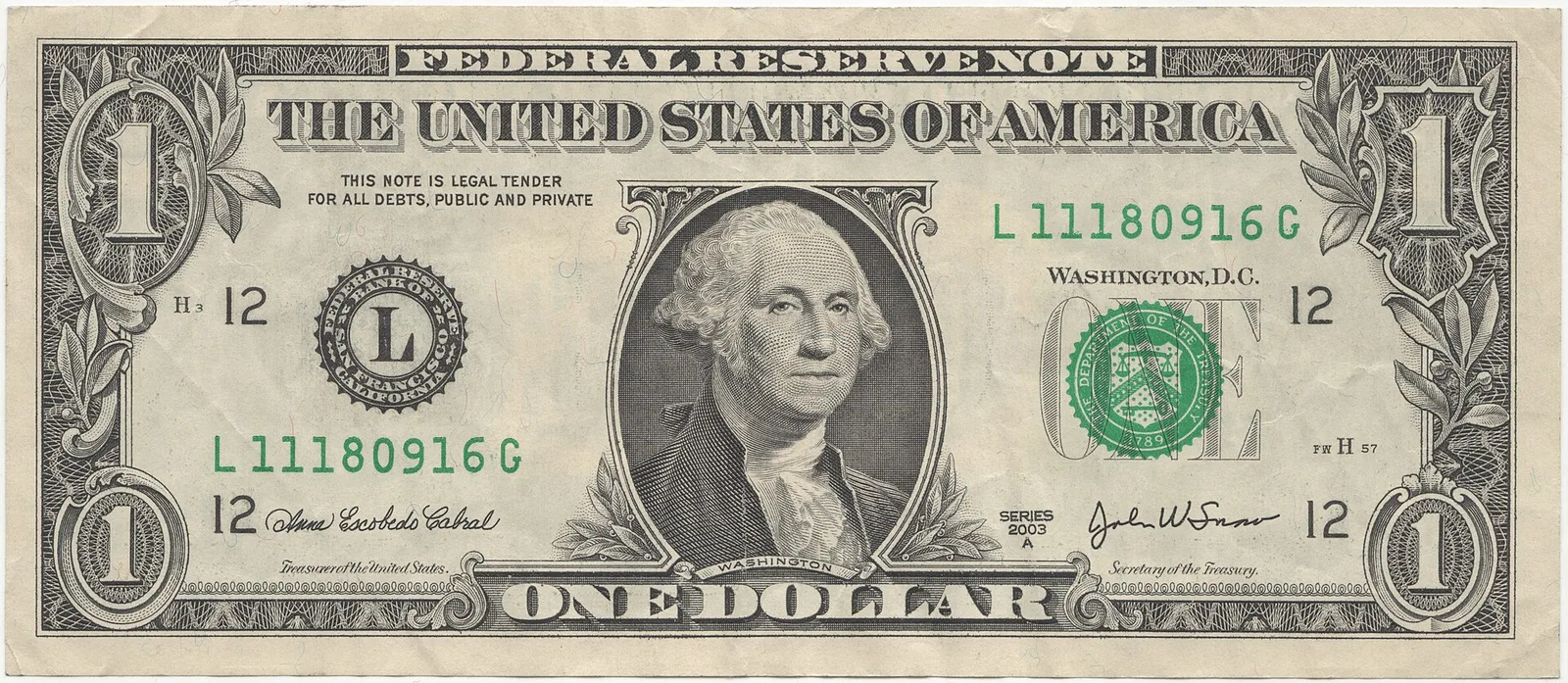
The most important limit reads: 'Only the portrait of a deceased individual may appear on United States currency and securities.' It dates to 1866. Spencer Clark, the official who ran the Treasury's currency printing, had put his own portrait on a five-cent note, and an angry Congress banned living people from the nation's money that April.
The portraits on today's bills were chosen by a Treasury committee for the smaller notes introduced in 1928 and 1929: Washington on the $1, Jefferson on the $2, Lincoln on the $5, Andrew Jackson on the $20, and Ulysses S. Grant on the $50. Alexander Hamilton on the $10 and Benjamin Franklin on the $100 were never presidents.
Larger bills once carried William McKinley ($500), Grover Cleveland ($1,000), James Madison ($5,000), and Woodrow Wilson ($100,000, used only between Federal Reserve banks). They were last printed in 1945 and withdrawn from circulation starting in 1969.
The ban on living people covers paper money and securities. Coin law is a patchwork: the presidential dollar series bars living presidents, but other coin programs are silent or say something different, and that gap has been used twice.
In 1926 Congress authorized a half dollar for the 150th anniversary of the Declaration of Independence. It showed George Washington and the sitting president, Calvin Coolidge, side by side. Coolidge became the first president to appear on a United States coin while alive, and for a century he was the only one.
In 2026 the Mint struck a $1 coin with President Donald Trump's portrait for the nation's 250th anniversary. The Treasury Department announced production on July 15, 2026, and sales opened on September 2, with 250,000 coins made at the Philadelphia Mint. The department said a 2020 law allowing anniversary designs gave it the authority, and it pointed to the Coolidge coin as a precedent.
Several experts in coin law disagreed, telling NPR that the coin conflicted with the long-standing rule against living presidents on dollar coins. No court had ruled on the question as of November 2026. A separate bill in Congress, the Golden Age Act of 2025, would put President Trump on the $100 bill. It would have to change the 1866 rule to do so, and it has not left committee.
The first United States postage stamps, issued in 1847, showed Benjamin Franklin on the five-cent and George Washington on the ten-cent. Washington has appeared on more American stamps than anyone else.
Stamp subjects are chosen by the Postmaster General on the advice of the Citizens' Stamp Advisory Committee, a panel of private citizens created in 1957. The committee reviews tens of thousands of suggestions from the public each year.
Its published rules bar living people from stamps. A person other than a president can be honored no sooner than three years after death. Former presidents get a special rule: each is honored with a memorial stamp on the first birthday after his death.
These are Postal Service policies, not statutes, so the Postal Service can change them without Congress. In 2011 it announced that it would consider living subjects for the first time, and it later returned to honoring only people who have died.
From Post Offices to a Whole State
Buildings and airports are usually named by law. Roads, counties, and cities are named by states. One state, one federal district, and four state capitals carry presidents' names.
Many of the big federal headquarters carry presidents' names, each put there by a law or a formal agency action. The Commerce Department works in the Herbert C. Hoover Building, named in 1981 for the president who had been Commerce Secretary when it was planned.
The Ronald Reagan Building and International Trade Center was named by a 1995 law while it was still under construction. The old State, War, and Navy Building beside the White House became the Dwight D. Eisenhower Executive Office Building under a 1999 law. The State Department's headquarters was named the Harry S Truman Building in 2000.
The Education Department's headquarters became the Lyndon Baines Johnson Department of Education Building in 2007, honoring the former teacher who signed the first big federal school aid law. The Environmental Protection Agency's headquarters was named the William Jefferson Clinton Federal Building by a law passed in 2012. The CIA's campus in Virginia has been the George Bush Center for Intelligence since 1999, named for the only president who had led the agency.
Congress has named its own buildings too. The three Library of Congress buildings honor Thomas Jefferson, John Adams, and James Madison, and one House of Representatives office building has been named for Gerald Ford, who served in the House for 25 years, since 1990.
Congress created a National Cultural Center in 1958. Two months after President Kennedy was assassinated, a law signed on January 23, 1964, renamed the unfinished project the John F. Kennedy Center for the Performing Arts and made it the nation's official memorial to him. It opened in 1971.
On December 18, 2025, the center's board, which the President had reshaped earlier that year, voted to call it the Trump-Kennedy Center, and his name went up on the building's exterior. The White House said the vote was unanimous, which a Democratic member of the board disputed.
Representative Joyce Beatty of Ohio, a member of the board by law, sued. On May 29, 2026, a federal district judge ruled that the 1964 law set the name and that the board had no power to change it, and he ordered the new name removed from the building and its website. The federal appeals court in Washington declined on July 8, 2026, to put that order on hold.
The board then voted to add the President's name in a different form, and on September 15, 2026, the judge ruled that this too violated his order, writing that memorials at the center need Congress's approval. The government's appeal was still pending as of November 2026. The case is the clearest recent example of the basic rule: a name written into a statute can be changed only by another statute.
Most airports are owned by cities, counties, or regional authorities, so most presidential airport names are local decisions. New York City renamed Idlewild Airport for John F. Kennedy on December 24, 1963, one month after his death. Houston's city council named its main airport for George H. W. Bush in 1997, while he was living. Little Rock's airport commission named its airport for Bill and Hillary Clinton in 2012.
Washington National Airport is the exception, because the federal government owns it and leases it to a regional authority. Congress renamed it for Ronald Reagan in 1998 over the objection of some local officials, who argued that the region should have decided.
States can act as well. A Florida law signed on March 30, 2026, renamed Palm Beach International Airport the Donald J. Trump International Airport, effective July 1, 2026. The county commission approved the needed licensing agreement by a 4 to 3 vote, and in July the Federal Aviation Administration changed the airport's code from PBI to DJT.
Washington's other major airport, Dulles, is named for a Secretary of State, John Foster Dulles, not a president. Bills to rename it for President Trump were introduced in the House in 2024 and after, and none has passed.
The best-known presidential road name is the interstate system itself. A law signed on October 15, 1990, named it the Dwight D. Eisenhower System of Interstate and Defense Highways, honoring the president who signed the 1956 act that built it. The blue signs with five stars that mark it appear along interstates across the country.
Individual highways are named by states, even when federal money built them. State legislatures have named stretches of road for nearly every modern president, such as the Ronald Reagan Freeway in California and the Lincoln Tunnel between New York and New Jersey, which a two-state port authority named in 1937.
The Lincoln Highway came first. Planned in 1913 by a private association led by Indianapolis businessman Carl Fisher, it ran about 3,400 miles from Times Square in New York to San Francisco, years before the federal government numbered its highways. The Jefferson Highway, from Winnipeg to New Orleans, followed in 1915.
City streets belong to cities. Washington is one of the most common street names in the United States, and many cities named their first downtown streets for the early presidents, a pattern still visible in Chicago, where Washington, Madison, Monroe, Adams, and Jackson streets run side by side.
Hoover Dam shows how a name can become a political fight. Interior Secretary Ray Lyman Wilbur announced the name in 1930, while Herbert Hoover was president. After Hoover lost the 1932 election, the new Interior Secretary, Harold Ickes, ordered the dam called Boulder Dam. Congress settled it with a law signed on April 30, 1947, restoring the name Hoover Dam on the Nevada and Arizona border.
National parks and their names come from Congress. Theodore Roosevelt National Park in North Dakota began as a memorial park in 1947 and became a national park in 1978. The reservoir behind Grand Coulee Dam is Franklin D. Roosevelt Lake.
NASA's two best-known centers are named for presidents: the Kennedy Space Center, by President Johnson's 1963 order, and the Lyndon B. Johnson Space Center in Houston, by a law passed in February 1973, weeks after Johnson died. Our page on NASA and the space program covers both.
Army posts have changed names twice in recent years. In October 2023, on the recommendation of a commission Congress created, Fort Gordon in Georgia became Fort Eisenhower. In June 2025 the Army restored the name Fort Gordon, this time honoring Master Sergeant Gary Gordon, a Medal of Honor recipient, so the post bore a president's name for less than two years.
Only one state is named for a president. When Congress created a new territory north of the Columbia River in 1853, settlers had asked for the name Columbia. A Kentucky congressman, Richard Stanton, proposed honoring George Washington instead, and the name stuck when Washington became a state in 1889.
The federal capital was named for Washington in 1791, while he was president, by the three commissioners he had appointed to plan it. He kept calling it 'the Federal City.' The history of Washington, D.C., is on its own page.
Four state capitals are named for presidents: Jackson, Mississippi (1821); Jefferson City, Missouri (1821); Madison, Wisconsin (1836); and Lincoln, Nebraska (1867). Jackson was named for Andrew Jackson as a general, eight years before he became president. Liberia's capital, Monrovia, was named for James Monroe in 1824.
Washington is the most common county name in the country, with 30 counties and one Louisiana parish. Jefferson, Jackson, Lincoln, and Madison each name about two dozen more, though a few of those honor other people with the same last name. New Hampshire's Presidential Range includes Mounts Washington, Adams, Jefferson, Madison, and Monroe.
North America's highest mountain shows how long a naming dispute can last. A gold prospector named it Mount McKinley in 1896 for William McKinley, then a candidate for president, who never visited Alaska. Congress made the name official in 1917 when it created the national park around the peak.
The Koyukon Athabascan name for the mountain is Denali, 'the high one.' Alaska's own naming board adopted Denali in 1975 and asked the federal board to do the same. For 40 years members of Congress from Ohio, McKinley's home state, blocked the request by keeping a bill on the subject pending, since the federal board will not act while Congress is considering a name.
In August 2015 Interior Secretary Sally Jewell used a 1947 law that lets the secretary act when the board does not, and made Denali the official name. Congress had already renamed the surrounding park Denali National Park and Preserve in 1980.
On January 20, 2025, President Trump ordered the name Mount McKinley restored, and the Interior Department updated federal records within days. The park is still named Denali, because that name is set by law, and the State of Alaska still uses Denali for the mountain. A bill to make Denali the federal name again was introduced in the Senate in February 2025.
Carriers, Submarines, and a Call Sign
The Navy has named ships for presidents since its first frigates. Aircraft and tanks are a different story: almost none are named for a president as president.
The Secretary of the Navy names the Navy's ships, acting under the President's direction. The authority goes back to a law of March 3, 1819, which also set the first conventions: the largest ships for states, frigates for rivers, and sloops for cities. The Navy today is part of the Department of War, still legally the Department of Defense.
The current statute, 10 U.S.C. 8662, says very little. No two Navy vessels may have the same name at the same time, and the Secretary may rename a vessel the Navy has bought. Everything else is tradition, guided by the Naval History and Heritage Command, which keeps lists of suitable names.
The traditions bend. Attack submarines were once named for fish, then cities, then states. Until Congress repealed the rule in the defense law for fiscal year 2024, federal law said battleships were to be named for states.
Congress cannot easily force a name, but it can lean on the Secretary. It often passes 'sense of Congress' provisions urging a specific name, and it did so before the carrier Gerald R. Ford was named. Citizens, veterans' groups, and members of Congress also send the Secretary suggestions directly.
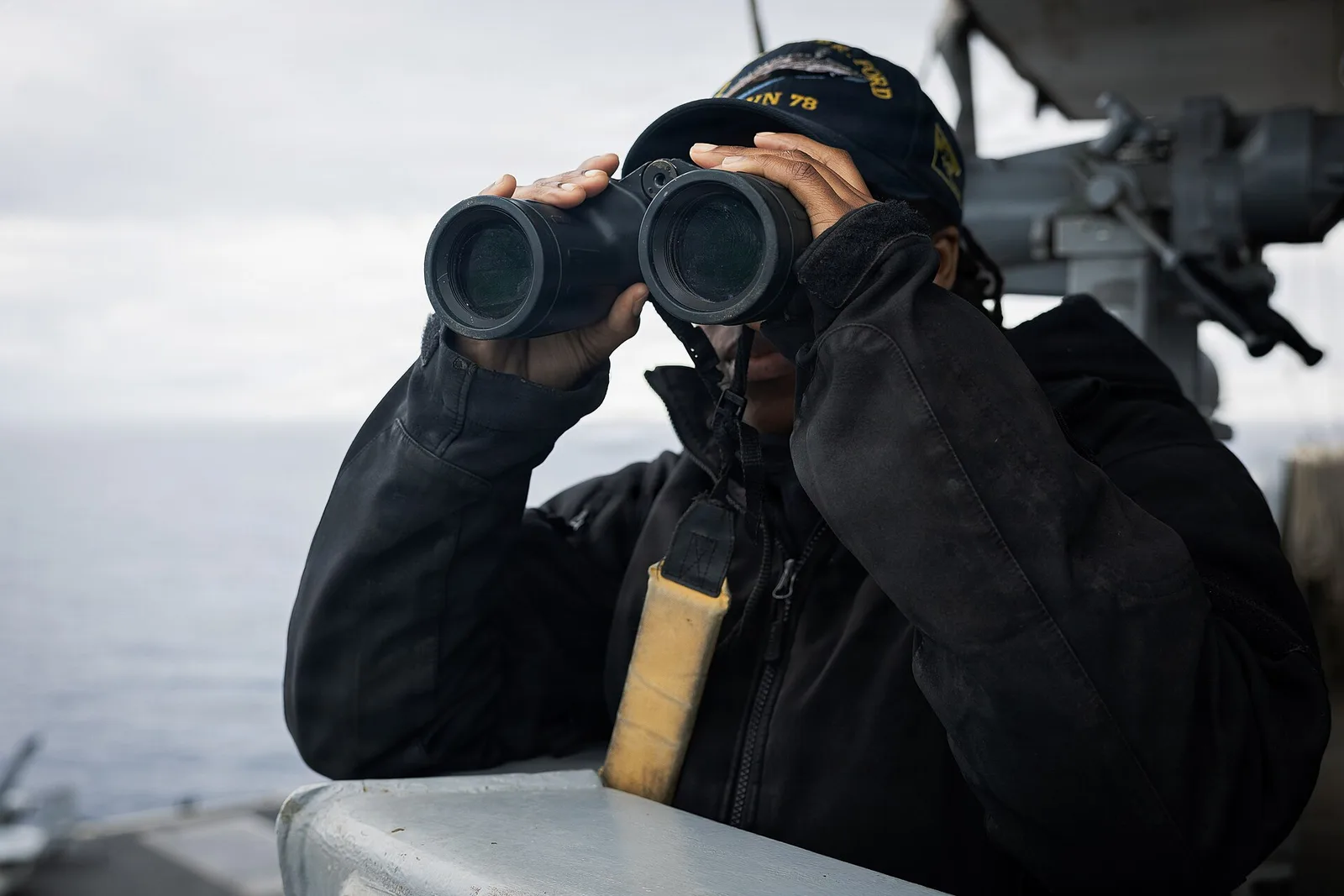
Aircraft carriers have become the ships most often named for presidents. The Congressional Research Service counts 12 of the Navy's 17 most recently named carriers as honoring former presidents.
The practice began in 1945, when President Truman approved renaming a new carrier Franklin D. Roosevelt weeks after Roosevelt's death. John F. Kennedy followed in 1968. The nuclear-powered carriers that came next include Dwight D. Eisenhower, Theodore Roosevelt, Abraham Lincoln, George Washington, Harry S. Truman, Ronald Reagan, and George H. W. Bush.
The newest class is named for Gerald R. Ford, a Navy veteran of World War II, and its second ship is a new John F. Kennedy. On January 13, 2025, the Navy announced that two future carriers, CVN-82 and CVN-83, will be named William J. Clinton and George W. Bush. The fleet they will join is described on our armed forces page.
Carriers have also been named for living presidents. Ronald Reagan's carrier was christened in 2001, three years before he died, and George H. W. Bush attended the commissioning of his own in 2009. The Navy has no rule requiring that a namesake be dead.
The first American ballistic missile submarines, built from 1959 to 1967 and known as the '41 for Freedom,' were named for famous Americans. The lead boat was George Washington, and others carried the names of Jefferson, Madison, Monroe, Jackson, Lincoln, Theodore Roosevelt, and Wilson.
The attack submarine Jimmy Carter, named in 1998 and commissioned in 2005, honors the only president who qualified in submarines. Carter served in the Navy's early nuclear submarine program before entering politics, and he was alive to see the boat join the fleet.
The destroyer Lyndon B. Johnson, the third ship of the Zumwalt class, was named in 2012. Johnson served as a naval officer during World War II.
The tradition is as old as the Navy. One of the six original frigates authorized in 1794 was named USS President, and ships named Washington have served in nearly every era, from a Revolutionary War frigate to today's carrier.
In December 2025 President Trump announced a planned class of large surface warships to be called the Trump class, with the first ship to be named USS Defiant. Navy officials have described the design as being at a very early stage, and the first ship is not expected to enter service before the mid-2030s.
Navy ship classes take the name of their first ship, so a class named for a person whose first ship carries a different name is unusual. Reporting on the announcement described it as the first time a class of Navy ships had been named for a sitting president.
Because ship naming rests with the Secretary of the Navy and not with a statute, the name needed no vote in Congress. Congress controls the money. The version of the fiscal year 2027 defense bill that the House passed would block work on the first ship until the Navy shows that its main weapon systems are mature enough.
As of November 2026 no ship of the class had been ordered. Whether the class is built, and under what name, depends on future budgets and on later Secretaries of the Navy, who can change a name before a ship is commissioned.
The military gives aircraft types popular names such as Eagle, Raptor, or Globemaster, and it does not name them for people. Army helicopters are the exception to the pattern, named for Native American tribes and leaders, such as Apache, Black Hawk, and Chinook, under an Army regulation dating to 1969.
'Air Force One' is not the name of an airplane. It is the radio call sign of any Air Force aircraft carrying the President, adopted after a 1953 incident in which President Eisenhower's plane and a commercial flight used the same flight number. 'Marine One' works the same way for helicopters.
Earlier presidents did name their planes, though not for themselves. Franklin Roosevelt's transport was nicknamed the Sacred Cow. Harry Truman's was the Independence, for his Missouri hometown. Eisenhower's planes were Columbine II and Columbine III, for the state flower of Colorado, his wife Mamie's home state.
Presidents' names reach aviation mostly through airports, and through the aircraft carriers that launch planes at sea.
American tanks have been named for generals since World War II, a habit that started with the British Army, which gave names to the American tanks it received. The M3 medium tank became the Grant in British service, and the M4 became the Sherman.
So Ulysses S. Grant has had a tank named for him, but as the general who won the Civil War, not as the 18th president. The same is true of other soldier-presidents: Army posts and equipment honor Washington, Jackson, Taylor, and Eisenhower for their military service.
Later tanks kept the pattern: the Pershing, the Patton, the Abrams, and the Bradley fighting vehicle are all named for Army generals. No tank, truck, or armored vehicle has been named for a president on account of his presidency.
The best-known presidential vehicle name is private. Henry Leland founded the Lincoln Motor Company in 1917 and named it for the president he had voted for in 1864. Ford bought the company in 1922, and Lincoln limousines later carried presidents from Franklin Roosevelt to George H. W. Bush.
Memorials, Mount Rushmore, and Presidential Libraries
A memorial in the nation's capital needs an act of Congress, private money, and a 25-year wait. Mount Rushmore's four faces were chosen by its sculptor, not by any vote.
Since 1986, memorials on federal land in Washington, D.C., and its surroundings have been governed by the Commemorative Works Act, now 40 U.S.C. 8901 to 8910. Its first rule is that a memorial may be built only when 'specifically authorized by law.' No agency, and no president, can approve one alone.
Its second rule is the wait. A memorial to a person may not be authorized until 25 years after that person's death. A memorial to a war must wait 10 years after the war ends. Congress wrote the delay so that honors would reflect history's judgment and not the feelings of the moment.
After Congress authorizes a memorial, the sponsoring group usually has seven years to choose a site and design, win approval from the National Capital Planning Commission, the Commission of Fine Arts, and the Interior Secretary or the General Services Administration, and raise the money. Federal funds normally do not pay for construction, and sponsors must also give an amount equal to 10 percent of the building cost for future upkeep.
A 2003 amendment closed the center of the National Mall to new memorials, calling it 'a substantially completed work of civic art.' The act also explains the gaps: a memorial to John Adams and his family was authorized in 2001 and still has not been built.
Congress voted for a monument to George Washington in 1783, while he was alive, and then did nothing for half a century. A private group, the Washington National Monument Society, formed in 1833 and began raising money a dollar at a time.
The cornerstone was laid on July 4, 1848. Construction stopped in 1854 at about 150 feet when the money ran out, and the stump stood unfinished through the Civil War.
Congress took over on August 2, 1876, the nation's centennial year, and the Army Corps of Engineers finished the job. The capstone was set on December 6, 1884, the monument was dedicated on February 21, 1885, and it opened to the public in 1888. At 555 feet it was then the tallest structure in the world.
The change in the color of the stone about a third of the way up still marks where the private effort ended and the government's began.
Congress chartered a Lincoln monument association in 1867, two years after his assassination, but it could not agree on a design or raise the money. The memorial that exists dates from a law signed on February 9, 1911, which created the Lincoln Memorial Commission and authorized $2 million.
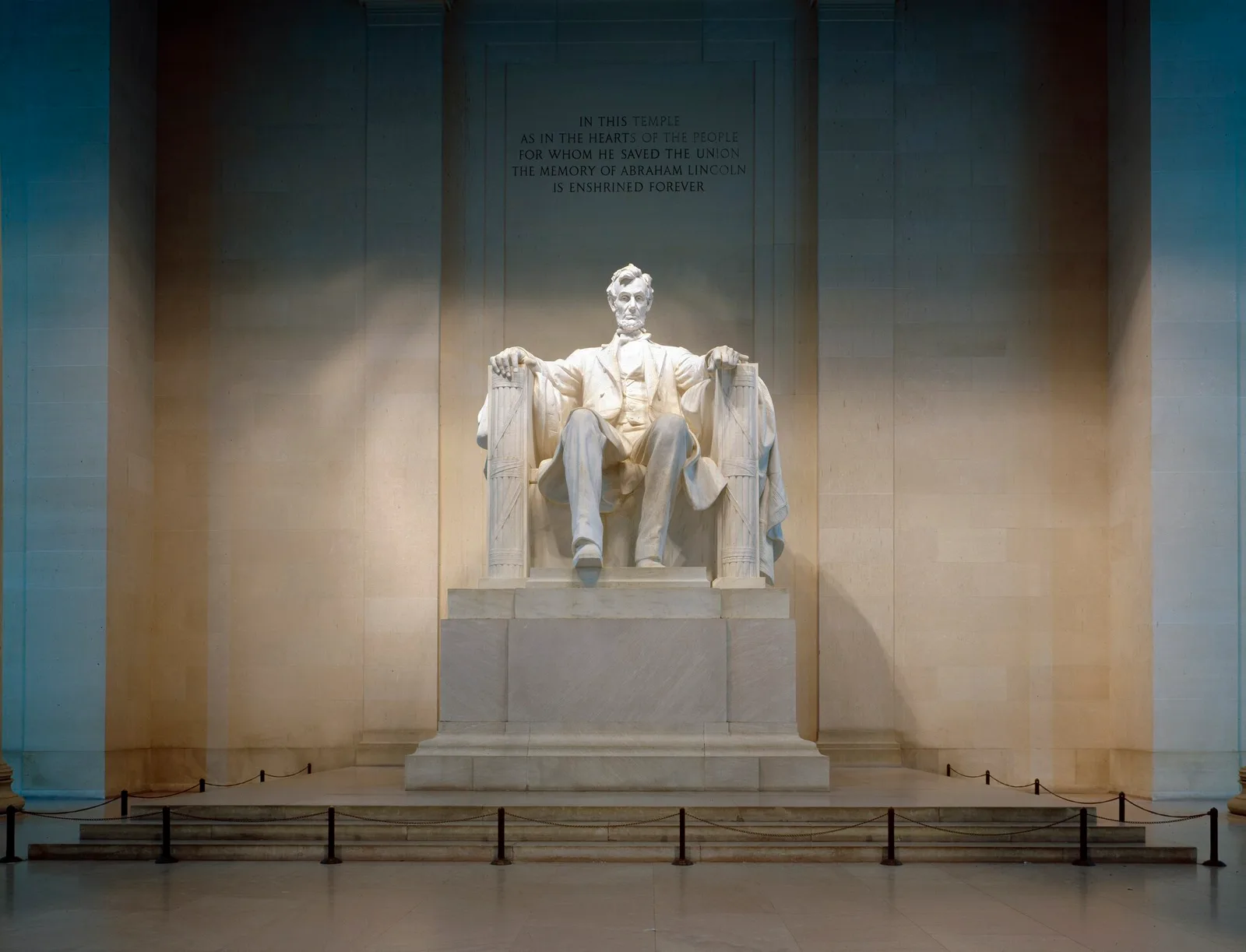
Architect Henry Bacon designed a Greek temple with 36 columns, one for each state in the Union when Lincoln died. Daniel Chester French designed the seated statue, carved from 28 blocks of Georgia marble. Workers broke ground on February 12, 1914, Lincoln's birthday.
The memorial was dedicated on May 30, 1922. Former president William Howard Taft, then Chief Justice and chairman of the commission, presented it to President Warren Harding. Lincoln's only surviving son, Robert Todd Lincoln, was in the audience, and the Black guests were seated in a separate section. The memorial later became a stage for the civil rights movement.
Lincoln's memorial took 57 years from his death to its dedication. The length of that delay is one reason Congress later wrote a waiting period into the law.
Congress created the Thomas Jefferson Memorial Commission in 1934. President Franklin Roosevelt laid the cornerstone in 1939 and dedicated the memorial on April 13, 1943, the 200th anniversary of Jefferson's birth. Because of wartime metal shortages, the statue inside was plaster until the bronze was installed in 1947.
Roosevelt himself asked for almost nothing. He told Justice Felix Frankfurter that he wanted only a block of stone the size of his desk, placed outside the National Archives, and one was put there in 1965. Congress had already created a memorial commission in 1955, and the much larger Franklin Delano Roosevelt Memorial on the Tidal Basin was dedicated on May 2, 1997.
The Theodore Roosevelt memorial is an island. A private association bought the wooded island in the Potomac River in 1931 and gave it to the government the next year, and the memorial there was dedicated in 1967. Dwight Eisenhower's memorial, designed by Frank Gehry, was authorized in 1999 and dedicated on September 17, 2020.
Ulysses S. Grant's tomb in New York City, dedicated in 1897, was paid for by about 90,000 private donors and is the largest mausoleum in North America. The National Park Service has run it since 1959.
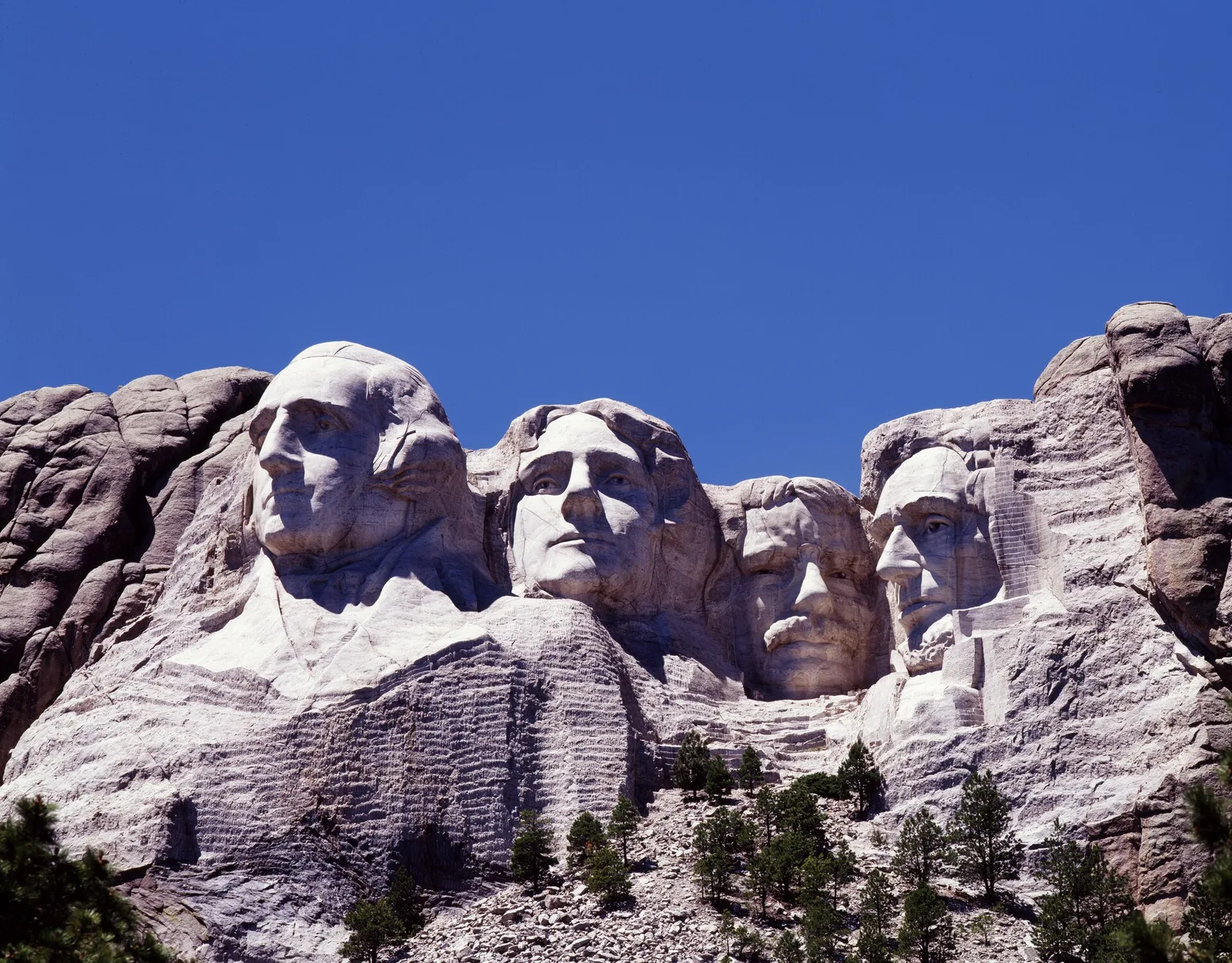
Mount Rushmore began as a tourism idea. In 1923 Doane Robinson, the state historian of South Dakota, proposed carving giant figures of Western heroes such as Lewis and Clark, Red Cloud, and Buffalo Bill into granite spires in the Black Hills to draw visitors.
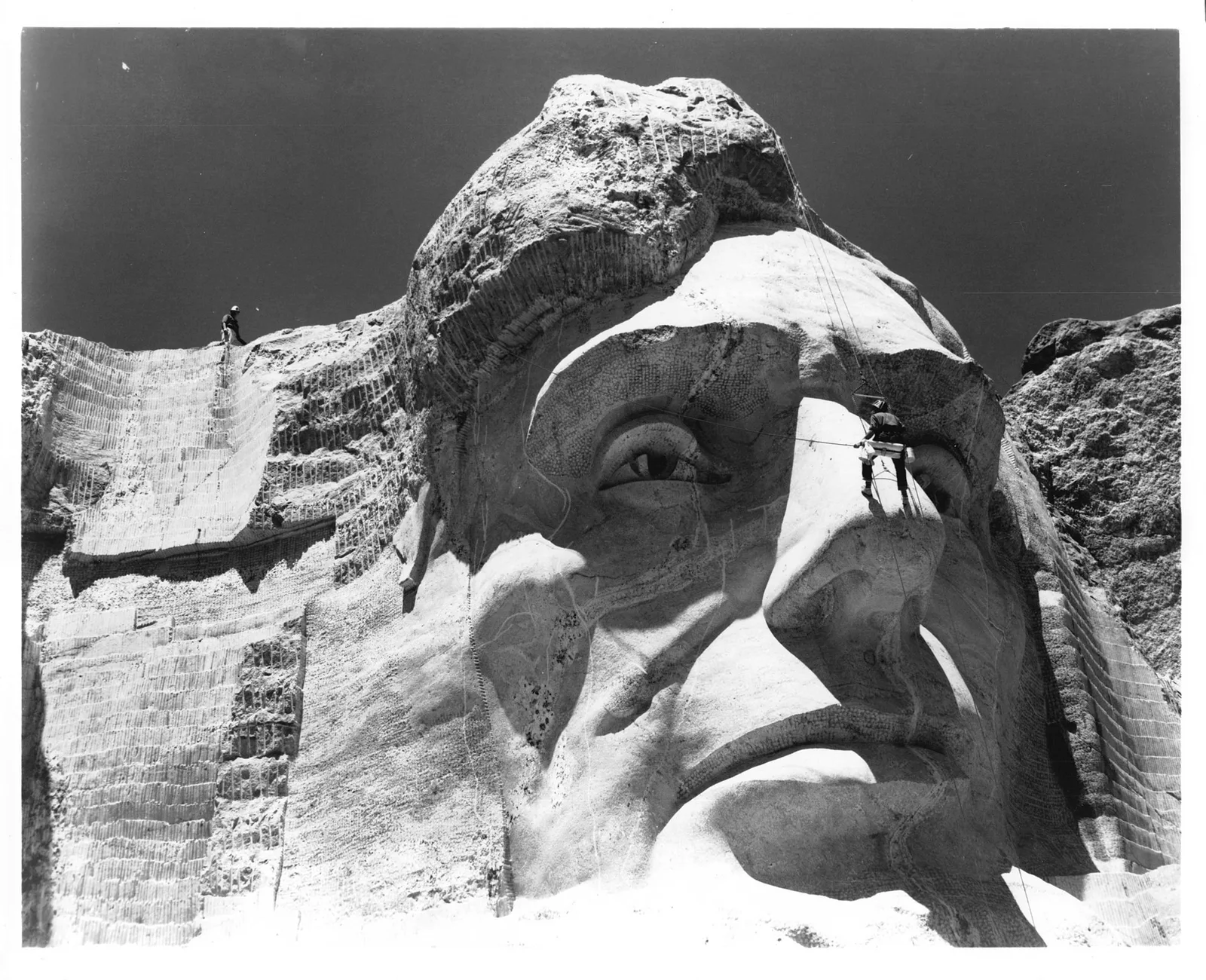
The sculptor he recruited, Gutzon Borglum, changed the plan. Borglum wanted a subject of national, not regional, meaning, and he chose both the mountain and the men. No commission or vote selected them. He picked four presidents to stand for four parts of the nation's story.
In Borglum's scheme, George Washington stood for the birth of the country and Thomas Jefferson for its growth, through the Declaration of Independence and the Louisiana Purchase. Abraham Lincoln stood for its preservation through the Civil War. Theodore Roosevelt, who had died only in 1919 and had been Borglum's friend, stood for its development, including the Panama Canal and the conservation of public land. Roosevelt was the most disputed choice at the time.
Congress authorized the carving on federal forest land in March 1925, and South Dakota created an association to run it. President Calvin Coolidge, spending the summer in the Black Hills, dedicated the project on August 10, 1927, and in 1929 Congress created a federal commission and promised to match private donations.
Carving ran from October 4, 1927, to October 31, 1941. Nearly 400 workers removed about 450,000 tons of rock, most of it with dynamite, and none of them died on the job. The total cost was $989,992, most of it federal money in the end.
The faces were dedicated one at a time: Washington on July 4, 1930, Jefferson in 1936 with President Franklin Roosevelt present, Lincoln in 1937, and Theodore Roosevelt in 1939. Jefferson was first carved on the other side of Washington. The rock there proved too cracked, so the half-finished face was blasted away and started again.
Borglum planned figures down to the waist and a Hall of Records behind the heads. He died in March 1941, the money ran out, and his son Lincoln Borglum stopped work that October with the faces alone. The mountain itself stands on land the 1868 Treaty of Fort Laramie had reserved for the Lakota, who call it the Six Grandfathers, a history covered on our Native American history page. In 1980 the Supreme Court ruled that the Black Hills had been taken without fair payment.
People have tried to add faces. A 1937 bill would have added Susan B. Anthony, and Congress responded by limiting the money to the four heads already begun. A House bill introduced on January 28, 2025, would direct that President Trump be carved on the mountain. It has not moved, and the National Park Service has long said there is no sound rock left to carve.
An 1864 law invited every state to send two statues of its notable citizens to the U.S. Capitol, a collection now spread through the building and known as the National Statuary Hall Collection. Each state chooses its own subjects and may replace them, and the statue must show a person who has died. The Senate and House share the building where they stand.
Several states chose presidents: Virginia sent Washington, Tennessee sent Andrew Jackson, Ohio sent James Garfield, Kansas sent Dwight Eisenhower, Michigan sent Gerald Ford, California sent Ronald Reagan, and Missouri added Harry Truman in 2022.
Statues elsewhere follow whoever owns the ground. A city park statue is the city's decision, a statehouse statue the legislature's. That is why statues of presidents have gone up and come down at different times in different places.
A proposed National Garden of American Heroes, first ordered by President Trump in 2020, cancelled by President Biden in 2021, and revived by executive order in January 2025, would add about 250 statues of Americans, presidents among them. Congress provided $40 million for it in the 2025 budget law, and reporting in the spring of 2026 found the project far behind schedule, with no approved design or site plan.
Before 1939 a president's papers were his private property, and many collections were scattered, sold, or burned. Franklin Roosevelt changed that by giving his papers to the government and building a library on his family's land in Hyde Park, New York, with private money. It opened in 1941.
The Presidential Libraries Act of 1955 made his plan the standard: a president's supporters raise private money and build the library, then give it to the government, and the National Archives runs it. A 1986 law added a requirement that each foundation also hand over an endowment to help pay for upkeep, and later laws raised it to 60 percent of the building's cost.
The Presidential Records Act of 1978 settled who owns the papers. Starting with the term that began on January 20, 1981, a president's official records belong to the public and pass to the National Archives the moment he leaves office. The Archives operates library museums for presidents from Herbert Hoover through George W. Bush.
The newest centers break the mold. The Obama Presidential Center in Chicago, dedicated on June 18, 2026, is owned and run by a private foundation, with the Archives keeping the records elsewhere. President Trump's library is planned for a site in downtown Miami that is the subject of a lawsuit, and President Biden chose Delaware for his in September 2025.
The Long Argument Over Honoring the Living
Americans have argued since 1792 about whether a living president should be on the money or the map. The dates below trace the rule and its exceptions.
The Senate's version of the first coinage bill called for each coin to carry the head of the president then in office. The House struck it out. Members argued that a ruler's face on the money was a mark of monarchy, and the final Coinage Act of 1792 required an emblem of Liberty.
President Washington signed the act without objection. The choice set a pattern that lasted 117 years, until the Lincoln cent of 1909 put a president, long dead, on a circulating coin.
Spencer Clark, superintendent of the Treasury's National Currency Bureau, placed his own portrait on a five-cent paper note. Congress had expected to see the explorer William Clark.
On April 7, 1866, Congress banned the portrait of any living person on the nation's currency and securities. The rule survives today in 31 U.S.C. 5114, which allows only 'the portrait of a deceased individual.'
For the 150th anniversary of independence, Congress authorized a commemorative half dollar. The design paired George Washington with President Calvin Coolidge, making Coolidge the first president on a United States coin in his own lifetime.
The coin sold poorly, and more than 850,000 of the roughly one million struck were melted. Because the 1866 ban covered paper currency and securities, not coins, it did not apply.
Herbert Hoover's Interior Secretary named the great Colorado River dam for his boss in 1930, while Hoover was president. Hoover's successor's Interior Secretary ordered it called Boulder Dam in 1933.
Congress ended the back and forth with a law signed by President Truman on April 30, 1947, restoring the name Hoover Dam. The episode became the standard warning about naming public works for officials still in power.
In the weeks after John F. Kennedy's assassination, his name went on New York's main airport, NASA's Florida launch center, the half dollar, and the national cultural center in Washington. President Johnson's order also renamed Cape Canaveral itself Cape Kennedy.
Floridians objected to losing a name that dated to Spanish explorers in the 1500s. The Florida Legislature restored Cape Canaveral in 1973, and the federal names board followed that October. The space center kept Kennedy's name.
The Commemorative Works Act, signed on November 14, 1986, required an act of Congress for every memorial on federal land in the capital and barred memorials to any person until 25 years after death.
The wait applies to memorials in and around Washington, D.C. It does not cover buildings, ships, coins, or anything outside the capital area, which is why living presidents can still be honored in those ways.
Congress renamed Washington National Airport for Ronald Reagan in February 1998, while he was living. The regional authority that runs the airport and some local governments objected that they had not been asked.
A private campaign called the Ronald Reagan Legacy Project had set a goal of naming something for Reagan in every county in the country. The airport law, signed by President Clinton on Reagan's 87th birthday, was its best-known success.
After Alaska had asked for 40 years, the Interior Secretary made Denali the official federal name of North America's highest peak in August 2015.
On January 20, 2025, President Trump ordered the name Mount McKinley restored, and the Interior Department carried out the order within days. The surrounding national park, named by a 1980 law, is still Denali.
A commission created by Congress recommended new names for nine Army posts that honored Confederate officers. Fort Gordon in Georgia became Fort Eisenhower in October 2023.
During 2025 the Army restored the earlier names, attaching each to a different soldier with the same last name. In June, Fort Eisenhower became Fort Gordon again, now for Master Sergeant Gary Gordon.
During President Trump's second term his name or portrait was placed on, or proposed for, an unusual number of federal things at once: the Kennedy Center, the headquarters of the U.S. Institute of Peace, a planned class of Navy battleships, a $1 coin for the 250th anniversary, the 2026 national parks pass, and a Florida airport renamed by state law. Bills in the House would add Mount Rushmore, the $100 bill, and Dulles Airport.
Supporters called the honors fitting for a president they credit with major achievements, and noted that carriers and airports had been named for living presidents before. Critics said honors for a sitting president by officials who report to him break a long custom, and that some of them break the law.
The courts have drawn one clear line so far. In the Kennedy Center case, a federal judge ruled in May and again in September 2026 that a name Congress set by law cannot be changed by a board. That appeal, a separate case over the Institute of Peace building, and a lawsuit over the parks pass were all pending as of November 2026. The coin has been sold but not tested in court, and the bills in Congress have not advanced.
Common Questions About Naming Things After Presidents
Congress decides coin designs by law, and the Secretary of the Treasury chooses the portraits on paper money. Federal law allows only the portrait of a deceased person on paper currency, a rule that dates to 1866.
The law that created the presidential dollar coin series bars living presidents, and paper money may show only people who have died. Calvin Coolidge appeared on a commemorative half dollar in 1926, and a $1 coin showing President Trump was issued in 2026 under a law on anniversary designs. Experts dispute whether that coin was lawful, and no court had ruled as of November 2026.
Usually by an act of Congress. A member introduces a bill naming the building, a committee reviews it, both chambers pass it, and the President signs it. The General Services Administration can also name buildings it controls, and veterans' facilities can be named for a person only by law.
The sculptor, Gutzon Borglum, chose them. He picked Washington for the nation's birth, Jefferson for its growth, Lincoln for its preservation, and Theodore Roosevelt for its development. No commission or public vote made the choice.
Under the Commemorative Works Act of 1986, Congress may not authorize a memorial to a person on federal land in the capital until 25 years after that person's death. The memorial then needs a specific law, an approved site and design, and private money.
Yes. For federal buildings and post offices, ask your representative or senator to introduce a naming bill. For mountains and rivers, anyone can file a proposal with the U.S. Board on Geographic Names. For stamps, write to the Citizens' Stamp Advisory Committee. For streets and schools, go to your city council or school board.
Sources & Further Reading
- 31 U.S.C. 5114: Engraving and printing currency (deceased persons only)
- 31 U.S.C. 5112: Denominations, specifications, and design of coins
- 40 U.S.C. 3102: Naming or designating buildings (General Services Administration)
- 40 U.S.C. 8903: Commemorative Works Act, conditions for memorials
- 38 U.S.C. 531: Naming of Department of Veterans Affairs property
- 10 U.S.C. 8662: Naming of Navy vessels
- Congressional Research Service: Navy Ship Names, Background for Congress (RS22478)
- Naval History and Heritage Command: Ship Naming in the United States Navy
- U.S. Board on Geographic Names: Principles, Policies, and Procedures
- U.S. Mint: History of U.S. Circulating Coins
- Bureau of Engraving and Printing: U.S. Currency
- U.S. Postal Service: Citizens' Stamp Advisory Committee, stamp subject selection criteria
- National Park Service: Mount Rushmore National Memorial, History and Culture
- National Park Service: Lincoln Memorial, History and Culture
- National Archives: Presidential Libraries, laws and regulations
- Architect of the Capitol: About the National Statuary Hall Collection
- NPR: Trump $1 coins hit the market (July 17, 2026)
- PBS NewsHour: Judges deny request to return Trump's name to Kennedy Center pending an appeal (July 2026)
Statutes are cited from the United States Code. Coin and currency history follows the U.S. Mint, the Bureau of Engraving and Printing, and the Congressional Research Service. Ship naming follows the Naval History and Heritage Command and the Congressional Research Service report Navy Ship Names. Memorial histories follow the National Park Service. Events of 2025 and 2026 come from court rulings and news reports from NPR, PBS NewsHour, the Associated Press, and others, and their status is current as of November 2026.