
The Filibuster
One senator. No time limit. The power to stop the entire United States Senate in its tracks. Here's what it is, where it came from, why it exists, and why it's one of the most debated rules in American politics.
What Is a Filibuster?
A filibuster is when a senator keeps talking, for as long as they want, to delay or block a vote on a bill. In the Senate, there's no rule that says you have to stop speaking. As long as a senator has the floor and keeps talking, the vote can't happen.
In theory, a senator could talk forever. In practice, they might speak for hours, days, or just threaten to, which in the modern Senate is usually enough to block a vote without anyone having to say a single word on the floor.
One senator alone can do this. The moment a bill or nomination comes up, any single member can decline to give "unanimous consent" to proceed, and the chamber's leaders then need 60 votes to move forward over that objection. Because the threat is so cheap to make, majority leaders often simply do not schedule bills they know cannot reach 60, so many filibusters never appear in the record at all.
The Key Principle Behind It
The filibuster is built on a simple Senate tradition: every senator has the right to be heard. And if a senator insists on being heard indefinitely, well, the Senate has to wait. It's the minority's most powerful tool to slow down or stop the majority.
Here's the thing most people don't know: the filibuster is not in the Constitution. It's not a law. It's a Senate rule, and one that evolved almost by accident over more than 200 years.
Where Does the Word Come From?
The word "filibuster" comes from the Dutch word vrijbuiter, meaning pirate or freebooter. It traveled through Spanish as filibustero before landing in English.
In the 1800s, "filibuster" was used to describe American mercenaries who ran unauthorized military expeditions into Latin American countries to try to seize territory. They were essentially pirates on land, operating outside the rules, causing chaos, and blocking legitimate authority.
The most notorious of these adventurers was William Walker, a Tennessee doctor and lawyer who led private armies into Mexico and then Nicaragua, briefly installing himself as Nicaragua's president in 1856 and 1857 before being driven out and, in 1860, executed by a Honduran firing squad. Newspapers of the era routinely called Walker and his followers "filibusters."
By the 1850s, Congress was itself consumed by fights over slavery in the western territories, and members watching a colleague seize the floor to derail a bill reached for the same word. The transfer of meaning, from freebooters hijacking a country to senators hijacking a debate, was complete by the time of the Kansas-Nebraska Act debates of 1854.
The word was applied to obstructionist senators in the 1850s because their behavior felt like the same thing, operating outside the normal rules of order, hijacking the process, and blocking legitimate business from moving forward. The name stuck. A senator talking endlessly to block a vote was, in spirit, a political pirate.
How the Filibuster Came to Be
The filibuster wasn't invented, it evolved. In 1789, the first Senate had a rule allowing any member to call for a vote to cut off debate, called the "previous question" motion. In 1806, Vice President Aaron Burr suggested the Senate clean up its rulebook and eliminate what he called redundant rules. The previous question motion was one of them, he thought it was rarely used and unnecessary.
The Senate deleted it. Nobody thought much of it at the time. But that deletion accidentally created a loophole: now there was no mechanism to force a vote if a senator just kept talking. The filibuster was born not by design, but by an oversight.
For decades, filibusters were rare. Actually talking indefinitely was physically grueling, and senators mostly used the threat as a last resort. It wasn't until the debate over slavery, civil rights, and later 20th-century legislation that the filibuster became a regular political weapon.
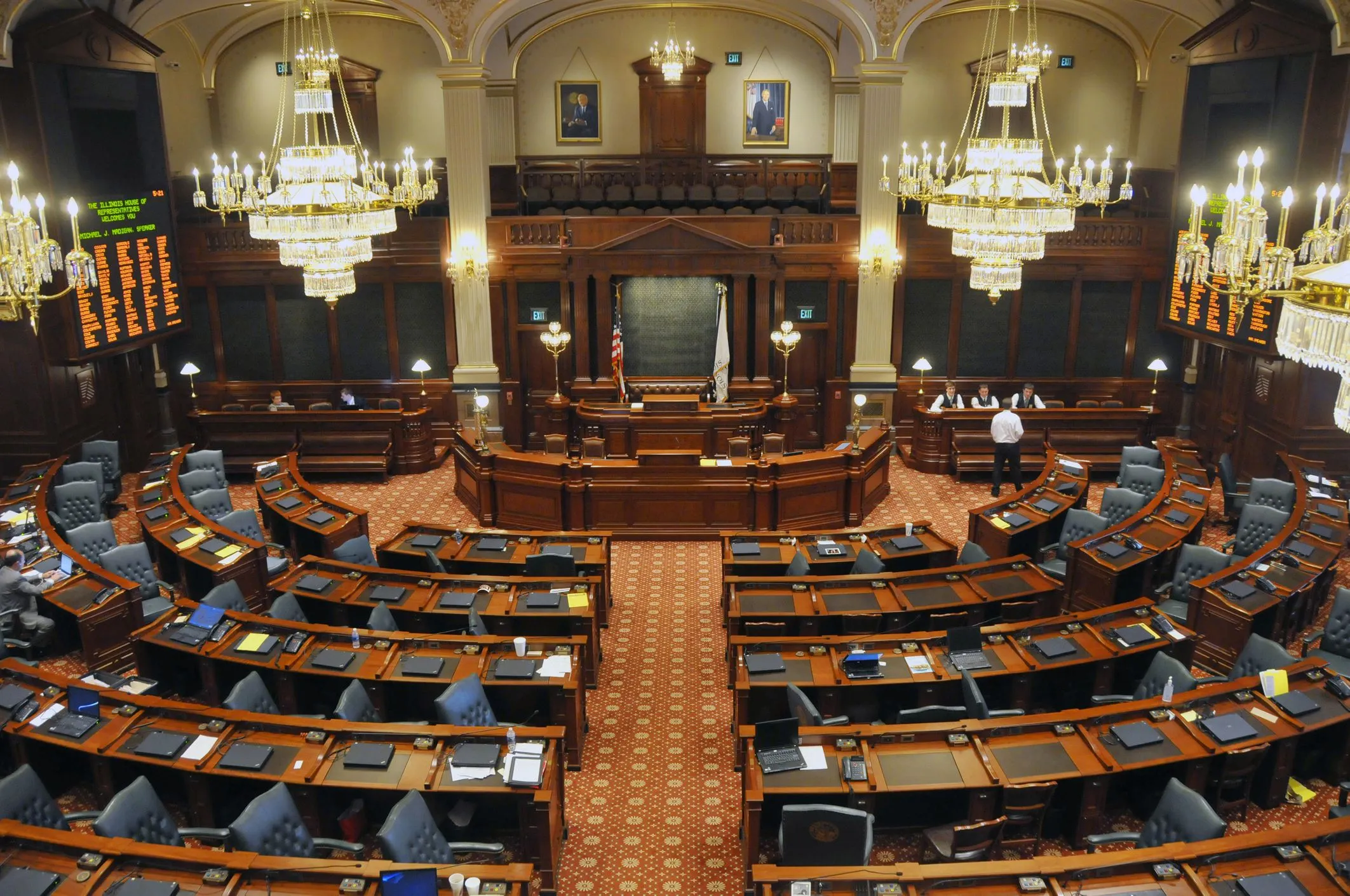
The Senate floor, where filibusters have shaped American history (Public Domain)
The accidental creation
Senate deletes the 'previous question' rule, unknowingly removing the only mechanism to force a vote against a senator's wishes.
First recorded Senate filibuster
Senators use extended debate to block the expungement of a Senate censure of President Andrew Jackson.
Cloture rule created (Rule XXII)
After a group of senators talked a critical WWI shipping bill to death, President Wilson called them 'a little group of willful men.' The Senate finally created a mechanism to end debate, cloture, requiring a two-thirds vote.
Strom Thurmond's record
24 hours and 18 minutes against the Civil Rights Act, the longest individual filibuster ever. The bill passed anyway. (Sen. Cory Booker's 25-hour, 5-minute speech in 2025 is now the longest Senate floor speech, but it was not a filibuster of a bill.)
The longest filibuster in Senate history
Southern senators filibustered the Civil Rights Act of 1964 for 60 working days, the longest filibuster in Senate history. Cloture was finally invoked for the first time on a civil rights bill.
Cloture lowered to 60 votes
The threshold to end debate was reduced from two-thirds (67 votes) to three-fifths (60 votes), where it remains today.
The filibuster becomes a threat, not a performance
The Senate shifts to a 'two-track' system where filibustered bills are simply set aside while other business continues. Senators no longer have to actually talk, they just file paperwork. Filibuster use explodes.
Why Does It Exist? What's Its Purpose?
The filibuster exists because the Senate was designed to be different from the House. The House moves fast, strict time limits, majority rule, the Speaker controls everything. The Senate was meant to be the deliberative body, slower, more careful, a place where the minority could still be heard even when outnumbered.
The filibuster is the ultimate expression of that philosophy. It says: the majority can't just steamroll the minority. If you want to pass something big, you have to build a broader coalition. You have to compromise. You have to earn 60 votes, not just 51.
The Constitution names only a handful of Senate actions that require a supermajority: ratifying a treaty, convicting an impeached official, overriding a presidential veto, proposing a constitutional amendment, and expelling a member, each needing two-thirds. Ordinary legislation was meant to pass by simple majority, with the Vice President breaking a tie. The filibuster effectively adds a sixth supermajority requirement that the framers never wrote down.
Both sides claim the founders. Defenders point to James Madison, who wrote in Federalist No. 62 that the Senate should guard against "the impulse of sudden and violent passions" and "factious leaders." Critics point to Madison and Alexander Hamilton warning in Federalist Nos. 22 and 58 against requiring "more than a majority" for ordinary business, arguing it would let a stubborn minority "control the opinion of a majority."
Protecting the Minority
When one party controls the Senate by a slim margin, the filibuster gives the other party real power to slow things down, demand negotiations, and prevent extreme legislation from passing on a party-line vote.
Forcing Compromise
Because 60 votes are needed, majority-party senators often have to reach across the aisle and bring some opposition senators on board. This tends to produce more moderate, broadly supported legislation.
Amplifying the Minority Voice
A filibuster forces the Senate to keep talking about an issue. It keeps a bill in the public eye, gives opponents time to mobilize, and ensures that majority-party leaders can't simply bury opposition without a fight.
The Founders' Vision
While the founders didn't specifically design the filibuster, it fits naturally with their broader intentions for the Senate. They created the Senate specifically to be a moderating force on the more democratic, more volatile House. The idea of requiring supermajority support for major legislation, ensuring broad consensus rather than bare majorities, reflects exactly what the Senate was meant to be: a cooling saucer, not a rubber stamp.
How It Actually Works Today
The filibuster you picture, a senator standing at the podium for hours, refusing to yield, still technically exists. But it's rarely how things work anymore. The modern filibuster looks very different.
The shift happened gradually. In 1970, Majority Leader Mike Mansfield and Robert Byrd, then Secretary of the Democratic Conference, introduced a "two-track" system that let the Senate set a filibustered bill aside and move on to other business, rather than grinding the whole chamber to a halt. This removed the main cost of filibustering, the tedium and public spectacle of an around-the-clock session, and made obstruction almost free.
The result was an explosion in use. In the 1960s the Senate averaged fewer than one cloture vote per year; by the 2010s and 2020s it was routinely taking well over 100 cloture votes per two-year Congress. Political scientists now describe the modern Senate as one in which 60 votes, not 51, is the effective threshold for nearly all significant legislation.
The Old Way: Talking Filibuster
A senator physically holds the floor by speaking. They can't sit down, leave, or stop talking without losing the floor. They have to stay on their feet, stay in the chamber, and keep going. It's physically exhausting, senators have been known to wear adult diapers during marathon speeches.
The version you see in movies. Rare today.
The New Way: Threat Filibuster
A senator (or group) simply signals they intend to filibuster. Under the modern two-track system, the bill gets set aside. The Majority Leader knows they can't get 60 votes to move forward, so they don't even bring it to the floor. The bill dies without a single word being spoken.
How most modern filibusters work. No drama, no speeches.
How You Stop a Filibuster: Cloture
The only way to force a vote when a filibuster is happening, or threatened, is a procedure called cloture. To invoke cloture, you need 60 senators to vote yes. If you get 60, debate is limited to 30 more hours and then the vote must happen. If you can't get 60, the filibuster wins and the bill is effectively dead.
Cloture was not always set at 60. When the Senate first adopted a debate-ending rule in 1917, it required two-thirds of senators present, which usually meant 64 to 67 votes. In 1975 the Senate lowered the bar to three-fifths of the full membership, 60 of 100, for legislation and nominations, while keeping the two-thirds requirement for changing the Senate's own rules. That rules-change carve-out is exactly why the "nuclear option" described below is procedurally tricky.
The Math That Matters
In practice, the 60-vote cloture threshold is often the hardest number to hit. It means the majority party almost always needs some votes from the other side, unless their party holds a 60-seat supermajority, which is extremely rare.
The Nuclear Option: Changing the Rules
The Senate can change its own rules by a simple majority vote, including the rules about the filibuster. The dramatic move of eliminating or curtailing the filibuster by a simple majority vote has been called the "nuclear option", because of the political fallout it tends to create.
The maneuver is called "nuclear" because it works by having the presiding officer make a ruling that a simple majority then upholds on appeal, effectively rewriting a Senate rule by 51 votes even though the rules themselves say a change needs 67. Once one party establishes that a bare majority can reinterpret the rules, the other party can do the same, which is why senators of both parties have long treated it as a weapon of last resort.
The phrase is usually credited to Republican Senator Trent Lott, who used it around 2003 when Republicans considered curbing Democratic filibusters of President George W. Bush's judicial nominees. A bipartisan "Gang of 14" defused that standoff in 2005 with an informal deal to filibuster nominees only in "extraordinary circumstances," postponing the confrontation until 2013.
What changed: Eliminated the filibuster for most presidential nominees, cabinet members, ambassadors, and federal judges below the Supreme Court. Required only 51 votes to confirm.
Why: Republicans had used filibusters to block a record number of Obama nominees. Democrats argued the practice had become purely obstructionist.
What changed: Extended the nuclear option to Supreme Court nominations. Neil Gorsuch became the first Supreme Court justice confirmed without the 60-vote threshold.
Why: Democrats filibustered Gorsuch's nomination. Republicans changed the rules rather than withdraw the nomination. All future Supreme Court nominees now need only 51 votes.
The Warning Both Parties Ignored: When Democrats went nuclear in 2013, Republicans warned it would come back to haunt them. When Republicans extended it in 2017, Democrats said the same thing. Both warnings proved correct. The filibuster for legislation, regular bills, still exists as of 2026, but its future is constantly debated.
Famous Filibusters in History
Click any card to read the full story.
The longest individual filibuster in Senate history (Sen. Cory Booker's 25-hour speech in 2025 ran longer, but it was not aimed at blocking a bill). Thurmond, then a Democrat from South Carolina, held the floor for 24 hours and 18 minutes against the Civil Rights Act of 1957, a bill that created a federal Civil Rights Commission and a Civil Rights Division in the Justice Department. He prepared by taking steam baths beforehand to dehydrate his body so it would absorb fluids rather than force a bathroom break, and an aide stood ready with a bucket in the cloakroom just off the floor.
He filled the hours by reading aloud the election laws of all 48 states, the Declaration of Independence, the Bill of Rights, and George Washington's Farewell Address. Other Southern senators, who had agreed among themselves not to mount a full filibuster because they judged the already-weakened bill not worth the political cost, were reportedly annoyed that Thurmond's solo stand made them look passive by comparison.
The bill passed the Senate 60 to 15 later that day and was signed by President Eisenhower on September 9, 1957, the first federal civil rights legislation since Reconstruction. Its enforcement provisions had been stripped down in negotiation, and it produced only modest immediate gains in Black voter registration, but it established the machinery that the stronger civil rights laws of 1964 and 1965 later built on.
Thurmond had run for president as a segregationist Dixiecrat in 1948 and left the Democratic Party for the Republicans in 1964. Late in his life it emerged that he had fathered a daughter, Essie Mae Washington-Williams, with a Black woman who worked for his family; she revealed the relationship publicly after his death in 2003 at age 100.
On March 6 and 7, 2013, Senator Rand Paul, a Kentucky Republican, held the Senate floor for 12 hours and 52 minutes to delay the vote confirming John Brennan as CIA director. His stated demand was a straight answer to a narrow question: could the president order a lethal drone strike against a U.S. citizen on American soil who was not engaged in combat?
Attorney General Eric Holder had written that such a strike was conceivable in an 'extraordinary circumstance' like a repeat of the September 11 or Pearl Harbor attacks, an answer Paul found alarmingly open-ended. The talking filibuster, a rarity by 2013, drew live cable coverage and a viral hashtag, and roughly a dozen other senators, mostly Republicans but including Democrat Ron Wyden, came to the floor to help Paul carry the time.
Paul yielded after Holder sent a one-sentence follow-up letter the next morning stating that the president does not have the authority to use a weaponized drone to kill an American 'not engaged in combat' on U.S. soil. Brennan was confirmed 63 to 34 a few hours later.
The episode is often cited as a revival of the standing filibuster as a tool of political theater and message-sending rather than a serious attempt to block a nomination, and it briefly united libertarian-leaning Republicans and civil-liberties Democrats around shared concerns about executive war powers.
Senator Ted Cruz of Texas held the Senate floor for 21 hours and 19 minutes beginning September 24, 2013, urging colleagues to strip funding for the Affordable Care Act from a must-pass government spending bill. Because the majority leader had already scheduled the next procedural vote, Cruz's speech could not actually delay anything, so it was, strictly speaking, an extended floor speech rather than a true filibuster.
During the speech Cruz read Dr. Seuss's 'Green Eggs and Ham' aloud, calling it a bedtime story for his daughters watching at home, and drew comparisons between the health law and 1930s appeasement that some colleagues called inflammatory. Senior Republicans including Minority Leader Mitch McConnell and John McCain publicly distanced themselves from the tactic.
Days later the federal government shut down for 16 days, from October 1 to 17, 2013, after the House and Senate could not agree on a funding bill (the 21-day shutdown of 1995-96 had lasted longer). The standoff ended with no changes to the health law, and polls afterward showed the Republican Party's approval falling to record lows.
Cruz's speech raised his profile among conservative activists and is widely seen as a launching point for his 2016 presidential campaign, in which he finished second to Donald Trump for the Republican nomination. The shutdown it helped precipitate is frequently cited in later budget fights as a cautionary example.
Senator Alfonse D'Amato, a New York Republican, spoke for 23 hours and 30 minutes on October 17-18, 1986, against a defense spending measure that cut funding for the Fairchild Republic T-46 jet trainer, built on Long Island, New York. It was the second-longest individual filibuster in Senate history at the time.
D'Amato staged a second, often-confused filibuster in October 1992, holding the floor for about 15 hours over a provision affecting a Smith Corona typewriter plant in Cortland, New York, and singing 'South of the Border' along the way. The two performances reinforced his nickname 'Senator Pothole,' earned for a relentless focus on constituent-level concerns, a label he embraced.
Neither marathon saved the jobs he was defending: the T-46 program was canceled, and Smith Corona soon moved its typewriter production out of Cortland. The episodes are frequently cited by filibuster critics as an example of the tool being used for a narrow local interest rather than a question of national principle.
D'Amato served three Senate terms before losing to Charles Schumer in 1998, then became a lobbyist. His 1986 marathon remains a stock reference in Senate histories for how far a determined member can push the chamber's tolerance for unlimited debate.
The Big Debate: Should the Filibuster Exist?
The filibuster is one of the most debated rules in American government. Smart, reasonable people disagree strongly about whether it does more good or harm. Here are the strongest arguments on both sides, presented fairly.
The Case FOR the Filibuster
Protects the minority
Without it, a party with 51 seats could pass anything it wants, including laws that 49% of the Senate (and a large share of the country) strongly opposes. The filibuster ensures major changes require broader support.
Slows down bad ideas
Legislation passed in the heat of a political moment often looks worse in hindsight. The filibuster forces a pause, creating time for second thoughts, public debate, and more careful review.
Encourages bipartisanship
When you need 60 votes, you have to talk to the other side. This pressure to negotiate and compromise has produced some of the most durable legislation in American history, laws with support broad enough to survive changes in power.
Prevents whiplash
Without the filibuster, major laws could be passed and repealed every time power shifted. The 60-vote threshold creates stability, laws passed with that kind of support are much harder to undo.
The Case AGAINST the Filibuster
It causes gridlock
When nearly everything needs 60 votes, it becomes almost impossible to pass meaningful legislation even with clear majority support. The result is a Senate that debates endlessly but rarely acts, even on widely popular issues.
It's undemocratic
The United States is built on majority rule. The filibuster lets a minority of 41 senators, who may represent far less than half the population, block the will of a clear majority. That inverts basic democratic principles.
It was used to block civil rights
The filibuster's most infamous use was by Southern senators who used it for decades to block civil rights legislation. From anti-lynching bills in the 1920s to the Civil Rights Act of 1964, the filibuster was the primary weapon against racial equality.
The threat has replaced the act
Today senators don't even have to talk, they just threaten to filibuster and the bill dies. The original idea of extended debate forcing a real public conversation has been replaced by a silent, invisible veto that requires no accountability.
Where things stand: As of 2026, the legislative filibuster, the 60-vote threshold for regular bills, is still in place. Both parties have used it heavily when in the minority and threatened to abolish it when in the majority. The debate about its future is ongoing, and the answer often depends on which party is asking the question at any given moment.
Quick Facts
Where to Find It
Did You Know?
You used to need to keep talking
Before the modern 'threat filibuster,' senators had to physically hold the floor. They couldn't sit down, leave the chamber, or stop talking. Today a senator can block a bill without ever setting foot on the Senate floor.
Green Eggs and Ham was read on the Senate floor
During his 21-hour speech in 2013, Senator Ted Cruz read the Dr. Seuss classic to his daughters who were watching at home. It became one of the most memorable moments in recent Senate history, for better or worse.
The House has no filibuster
The House of Representatives has strict debate time limits controlled by the Rules Committee. A House member cannot hold the floor indefinitely. The filibuster is purely a Senate phenomenon.
Some things are already filibuster-proof
Budget reconciliation bills, used for major tax and spending legislation, are protected from filibusters by law. They only need 51 votes. This is why major budget bills often move through the reconciliation process.