
What the First Amendment Protects
The First Amendment protects five distinct rights in a single sentence. The assembly and petition clauses, the last two, read: "the right of the people peaceably to assemble, and to petition the Government for a redress of grievances." Together they protect two related but distinct things: the right to gather with other people, and the right to bring complaints directly to the government.
Of the five First Amendment rights, the assembly clause receives the least attention from legal scholars but may be the most visibly exercised by ordinary citizens. Marches, demonstrations, rallies, sit-ins, strikes, boycotts, candlelight vigils, and town halls are all exercises of the assembly right. The Founders, who had themselves organized colonial assemblies to challenge British authority, understood this right as one of the most fundamental tools citizens have for holding government accountable.
The key word in the clause is "peaceably." The right to assemble is protected. The right to assemble violently is not. Everything else in the legal framework for assembly, permit requirements, time and place restrictions, dispersal orders, is built around that single constitutional word.

Assembly, Association, and Petition
Right to Assemble
The textual right: gathering physically with other people in a public place. This covers marches, demonstrations, rallies, picket lines, sit-ins, and any other collective physical presence in public space. The government cannot prohibit these gatherings based on their message, though it can regulate the time, place, and manner in content-neutral ways.
Freedom of Association
Not explicitly in the text, but recognized by the Supreme Court as implied by the First Amendment. Freedom of association protects the right to join groups, form organizations, and participate in collective activity, including political parties, labor unions, religious organizations, civic groups, and advocacy organizations. The government cannot punish you for your memberships or compel you to disclose them in ways that would expose you to retaliation.
Right to Petition
The textual right to bring grievances directly to the government. This includes formal petitions, lobbying, letters to elected officials, lawsuits against the government, and any other direct communication with government seeking a remedy. The petition clause has been held to protect lobbying, litigation, and formal petitioning as forms of constitutionally protected activity. It is one of the foundations of the American lobbying system.
What the Right Does Not Cover
Violent assembly
An assembly that involves or imminently threatens violence loses First Amendment protection. Riots are not protected. However, a peaceful assembly does not lose protection because a small number of participants engage in violence, absent evidence the organizers authorized or ratified it.
Assembly on private property without permission
The First Amendment restricts government, not private property owners. You have no constitutional right to demonstrate on someone else's private property, even property that is open to the public like a shopping mall, unless a state constitution provides broader protection.
Blocking traffic or access to buildings
Obstructing roadways, blocking building entrances, or physically preventing people from going about their business is not protected by the assembly clause. These are the most common grounds on which protest arrests are made, and the charges are often constitutionally valid.
Trespassing as protest
Civil disobedience involving intentional trespass on government or private property is not constitutionally protected, even when undertaken for political purposes. Protesters who engage in trespass accept the legal consequences as part of their political strategy.
What is clearly protected
Peaceful marches and demonstrations on public streets and sidewalks, gatherings in public parks and plazas, picketing on public rights-of-way, sitting or standing in public spaces, marching past government buildings, and any combination of speech and physical presence in public spaces.

Assembly as the Engine of American Change
More than any other First Amendment right, the right to assemble has been the direct instrument of political and social transformation in America. The abolitionist movement, the labor movement, the suffrage movement, the civil rights movement, and the anti-war movement all achieved their gains largely through mass assembly. These movements faced violence, suppression, imprisonment, and death. The right to assemble that exists today was defended by people who paid for it with those costs.
The history below traces that arc from its roots in English common law through the largest protest movement in American history in 2020.
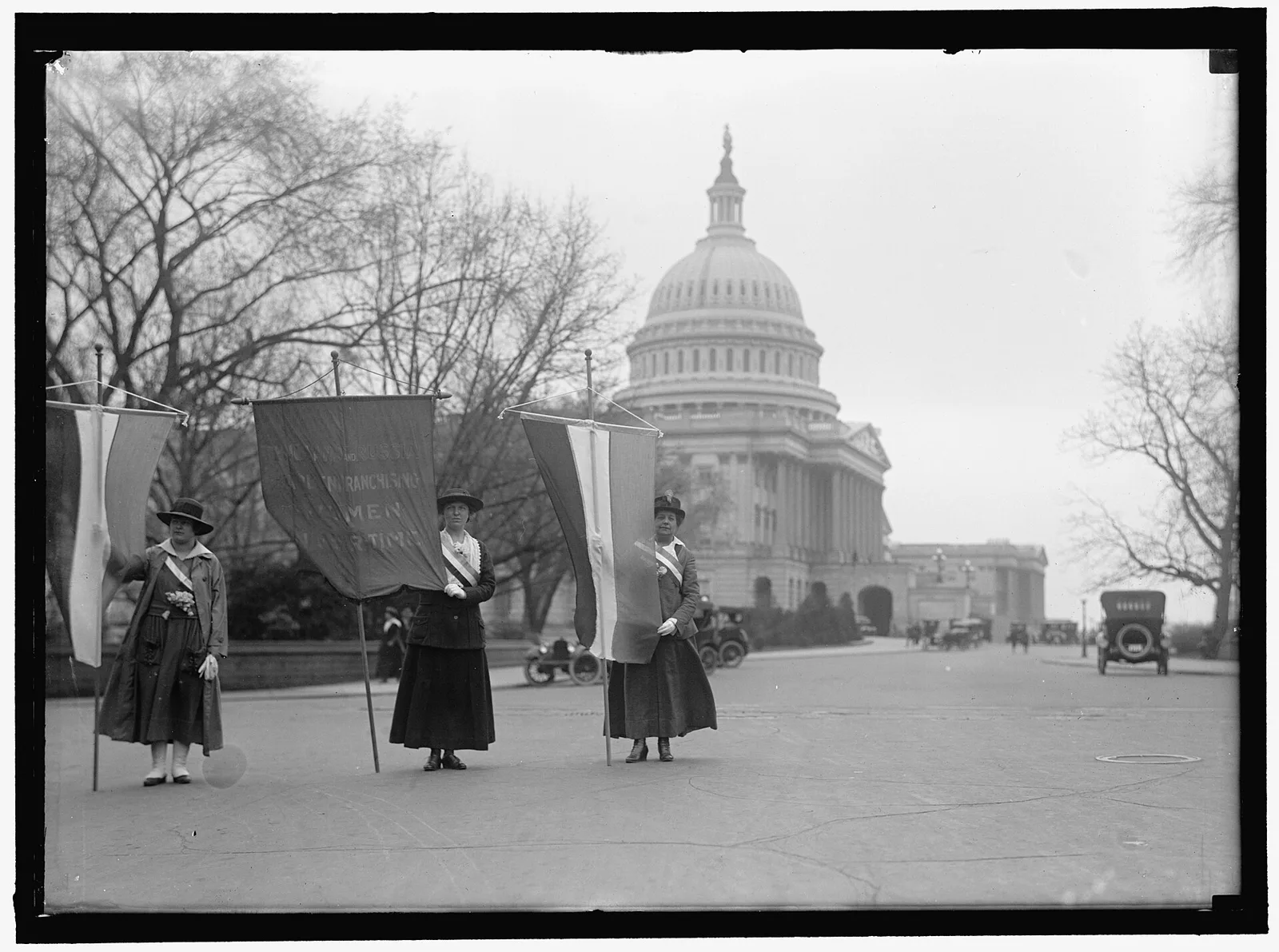
Assembly Rights Through the Years
From the Magna Carta to the George Floyd protests, the key moments in the history of the right to assemble.
The Magna Carta established the principle that the king was bound by law and that subjects had the right to seek redress for grievances. Clause 61 created a council of barons empowered to compel the king to correct violations of the charter. While not a modern right to assemble, it planted the legal seed that citizens could collectively demand accountability from their government, a concept that traveled from English common law into the American colonies.
Only a small number of the Magna Carta's original 63 clauses remain part of English law today, but its core idea, that the sovereign is bound by the same law as everyone else, shaped the English common-law tradition the U.S. Supreme Court drew on in Marbury v. Madison (1803), where Chief Justice Marshall relied on Blackstone's principle that every legal right must have a remedy.
The 1215 charter was annulled by Pope Innocent III within weeks and reissued in revised form in 1216, 1217, and 1225; the 1225 version is the one that entered English statute law. Its guarantee that 'to no one will we sell, to no one deny or delay right or justice' became an ancestor of due-process protections.
The 17th-century jurist Sir Edward Coke revived Magna Carta as a charter of liberties against the Crown, and colonists cited it in disputes with royal governors. Its phrase 'law of the land' reappears in the Fifth and Fourteenth Amendments as 'due process of law.'
The English Bill of Rights explicitly protected the right of subjects to petition the king, declaring it 'the right of subjects to petition the King, and all commitments and prosecutions for such petitioning are illegal.' This document was well known to the American Founders and directly influenced the First Amendment's petition clause. The right to petition was understood to include the right to gather signatures, which implied a right to assemble for that purpose.
The document followed the 1688 Glorious Revolution, in which Parliament forced King James II from the throne. Several of its other provisions, including protection from excessive bail and cruel punishment, were carried nearly word for word into the American Bill of Rights roughly a century later.
The petition right had been sharpened by the 1688 'Case of the Seven Bishops,' in which Anglican bishops were prosecuted for seditious libel merely for petitioning James II against his religious policy; their acquittal helped trigger the Glorious Revolution.
American colonists petitioned the Crown and Parliament repeatedly before independence, including the Continental Congress's 1775 'Olive Branch Petition' to George III. When such petitions were ignored or answered with force, the Declaration of Independence listed that refusal, 'our repeated Petitions have been answered only by repeated injury,' among its grievances.
Delegates from nine colonies met in New York to protest the Stamp Act, one of the first instances of inter-colonial collective political action. The right of colonists to assemble and petition Parliament for redress of grievances was central to their argument. When Parliament dismissed the petitions, the assemblies became the organizational backbone of resistance, demonstrating that the right to gather was inseparable from the right to be heard.
The Congress produced a formal Declaration of Rights and Grievances, one of the first documents asserting that colonists were entitled to the same rights as English subjects at home, including taxation only by their own elected representatives.
Nine of the colonies sent delegates; Virginia, North Carolina, Georgia, and New Hampshire were absent, mostly because royal governors blocked their assemblies from choosing representatives. The Congress met for about two and a half weeks in October 1765 in New York's City Hall.
Combined with merchant non-importation agreements and Sons of Liberty crowd action, the pressure led Parliament to repeal the Stamp Act in 1766, though it simultaneously passed the Declaratory Act asserting its authority to legislate for the colonies 'in all cases whatsoever.'
A crowd gathered outside the Boston Custom House to confront British soldiers, ending in soldiers firing into the crowd and killing five colonists. The episode became a cause celebre for colonial resistance. The Crown's characterization of the assembly as a riotous mob and the colonists' characterization of it as lawful protest previewed the core tension in assembly law that persists today: who decides when a gathering crosses from protected assembly to punishable riot?
Paul Revere's widely circulated engraving of the event exaggerated the soldiers' aggression and became powerful political propaganda. In an irony often overlooked, John Adams successfully defended the accused soldiers in court, and most were acquitted or convicted only of lesser charges.
The confrontation began when a lone sentry was pelted with snowballs and ice; a squad under Captain Thomas Preston came to his aid, the crowd pressed in, and after being struck, soldiers fired without a clear order. Crispus Attucks, a dockworker of African and Native American descent, was among the five killed.
Samuel Adams organized annual commemorations and used the event to argue that a standing army in a civilian town was itself a threat to liberty. John Adams's defense of the soldiers, and the acquittal of most of them, was cited for generations as evidence the colonists insisted on the rule of law even in a charged atmosphere.
The First Amendment was ratified on December 15, 1791. It protects five rights in a single sentence: religion, speech, press, assembly, and petition. The assembly and petition clauses read: 'the right of the people peaceably to assemble, and to petition the Government for a redress of grievances.' The word 'peaceably' is the only internal limitation. As with the other clauses, the amendment originally applied only to the federal government. The Supreme Court applied it to state governments in 1937.
James Madison's early drafts proposed the freedoms later grouped into the First Amendment as separate provisions. The final combined wording was the product of extensive negotiation in the first Congress and among the states during the ratification debates that followed.
The Anti-Federalists had demanded a bill of rights as the price of ratification, and several states submitted proposed amendments mentioning assembly and petition. Madison drew on these in the amendments he introduced in June 1789; the House approved 17, which the Senate trimmed to 12, of which 10 were ratified.
The assembly and petition clauses drew little debate; Representative Theodore Sedgwick of Massachusetts dismissed protecting assembly as trivial, 'as if a man could not walk from one end of his house to the other without a bill of rights.' The Supreme Court incorporated the assembly clause against the states in De Jonge v. Oregon (1937).
Abolitionist meetings and conventions in the 1830s and 1840s were met with violent mobs, often organized or tolerated by local authorities who viewed anti-slavery assembly as a threat to public order. In 1835, a pro-slavery mob broke up an anti-slavery meeting in Boston. In 1837, abolitionist editor Elijah Lovejoy was killed by a mob in Alton, Illinois, while defending his printing press. The violence against abolitionist assemblies illustrated how dependent the right to assemble was on government willingness to protect it.
Congress itself restricted the right to petition during this period: from 1836 to 1844, a series of 'gag rules' automatically tabled any anti-slavery petition without debate. Former President John Quincy Adams, then serving in the House, fought for years to have the rule repealed.
The 1835 Boston riot saw a mob drag William Lloyd Garrison through the streets with a rope; the mayor jailed him overnight ostensibly for his own protection. Similar mob violence struck abolitionist meetings in New York, Philadelphia, Cincinnati, and Utica in the mid-1830s.
The House gag rule, made a standing rule in 1840, tabled abolitionist petitions, some signed by tens of thousands, without reading or referral. Adams's eight-year fight ended in December 1844 when the House rescinded the rule 108 to 80, a victory abolitionists cast as vindicating the petition clause itself.
The Great Railroad Strike of 1877, the first major national labor strike in American history, involved massive worker assemblies across multiple states. State militias and federal troops were deployed to break up gatherings and end the strike. The episode established a pattern that would recur for decades: labor organizing through assembly was legally ambiguous, practically dangerous, and dependent on the political sympathies of the government in power.
The strike began in West Virginia after railroad workers faced a second wage cut within a year and spread to at least 14 states. Roughly 100 people were killed nationwide before it ended, making it one of the deadliest labor conflicts in American history to that point.
It began July 16, 1877 in Martinsburg, West Virginia, after the Baltimore and Ohio Railroad cut wages 10 percent during a deep depression, and spread along the rail network to Baltimore, Pittsburgh, Chicago, and St. Louis, where a general strike briefly shut the city.
President Hayes sent federal troops to several cities, the first large peacetime use of the Army against strikers. In Pittsburgh, militia fire killed about 20 people and enraged crowds burned dozens of buildings and hundreds of rail cars. States responded by building armories and expanding the National Guard for labor unrest, and courts increasingly issued injunctions treating strike gatherings as unlawful.
Jacob Coxey led a march of unemployed workers to Washington D.C. to demand government relief, one of the first large-scale protest marches on the nation's capital. When Coxey and his followers attempted to present their petition on the Capitol steps, they were arrested for walking on the grass. Coxey argued his march was the literal exercise of the First Amendment right to petition the government. The arrests illustrated how the right to petition could be technically honored while the actual act of assembling to petition was suppressed.
Fewer than 500 marchers actually completed the journey to Washington, far short of the tens of thousands Coxey had hoped to recruit. The march nonetheless established a template later echoed by the 1932 Bonus Army veterans' march and civil rights marches of the 1960s.
Coxey, an Ohio businessman, wanted Congress to fund road building and local public works with $500 million in paper currency to employ the jobless of the 1893 depression. The march left Massillon, Ohio on Easter Sunday amid heavy newspaper coverage as smaller 'industrial armies' set out from other cities, some commandeering trains.
On May 1, 1894, Coxey and two others were arrested on the Capitol grounds under an 1882 law barring banners and walking on the lawns; they served 20 days. Coxey finally read his address from the Capitol steps in 1944, on the 50th anniversary, after Congress lifted the ban for the occasion.
The Supreme Court unanimously held that the First Amendment right of assembly applied to state governments through the 14th Amendment. Dirk de Jonge had been convicted under an Oregon criminal syndicalism law for participating in a Communist Party meeting. The Court held that the right to assemble peacefully for lawful discussion cannot be made a crime. This decision brought state governments under First Amendment assembly protections for the first time.
The ruling reversed a conviction that carried a prison sentence of up to seven years, a punishment imposed even though prosecutors conceded at trial that de Jonge himself had not personally advocated any unlawful action at the meeting he helped organize.
Oregon's 1933 statute made it a felony to organize any assembly that taught or advocated 'crime, sabotage, or unlawful acts of force or violence' for political change. The meeting de Jonge helped run was a lawful protest of jail conditions and a maritime strike; the state's theory was that Communist Party sponsorship alone tainted it.
Chief Justice Hughes wrote that guilt must rest on a defendant's own conduct, not the character of the sponsoring group. The decision is usually paired with Herndon v. Lowry (1937), decided weeks later, which struck a Georgia insurrection statute used against a Black Communist organizer.
On August 28, 1963, approximately 250,000 people gathered at the Lincoln Memorial in Washington D.C. for the March on Washington for Jobs and Freedom, the largest demonstration in American history to that point. Dr. Martin Luther King Jr. delivered his 'I Have a Dream' speech. The march was organized with the cooperation of the Kennedy administration and demonstrated the potential of peaceful mass assembly to shape national political consciousness and legislation. The Civil Rights Act of 1964 followed the next year.
The march was organized in just over two months by a coalition led by labor leader A. Philip Randolph and organizer Bayard Rustin. Despite widespread fears of violence beforehand, only a small number of arrests were recorded that day, none connected to the marchers themselves.
The idea dated to Randolph's threatened 1941 march, cancelled when Franklin Roosevelt barred discrimination in defense industries. The 1963 march's ten demands included passage of the pending civil rights bill, a $2 federal minimum wage, and desegregation of all public schools.
The Kennedy administration, initially opposed, worked with organizers on logistics once the march was inevitable, and the Army had 19,000 troops on standby. John Lewis, then 23, was pressed to soften a speech criticizing the administration's bill as 'too little, too late.'
On March 7, 1965, known as Bloody Sunday, voting rights marchers attempting to cross the Edmund Pettus Bridge in Selma, Alabama were beaten by state troopers with clubs and tear gas. The attack on a peaceful assembly was broadcast nationally. Two days later, a federal judge issued an order protecting the marchers' right to assemble and march. The episode became a defining moment in both the civil rights movement and the legal history of assembly rights, demonstrating that governmental violence against peaceful assembly could itself become politically unsustainable.
A third, successful march proceeded under federal protection from March 21 to 25, 1965, growing to roughly 25,000 participants by the time it reached the Alabama State Capitol in Montgomery. Congress passed the Voting Rights Act five months later.
The first march got about six blocks before roughly 150 officers attacked some 600 marchers; more than 50 were hospitalized, and images ran on national television that evening, interrupting a broadcast of Judgment at Nuremberg. A second, symbolic 'turnaround' march followed on March 9.
Federal District Judge Frank M. Johnson Jr. issued an order on March 17 protecting the march, writing that the right to march peaceably 'should be commensurate with the enormity of the wrongs being protested.' President Johnson federalized the Alabama National Guard to protect the third march.
On May 4, 1970, Ohio National Guard soldiers opened fire on student protesters at Kent State University, killing four students and wounding nine. The students had been protesting the U.S. invasion of Cambodia. The killings prompted a nationwide student strike involving over 4 million students and closure of hundreds of campuses. Kent State galvanized public opposition to the Vietnam War and intensified debate about the government's authority to suppress campus assemblies.
Subsequent federal investigations found the shootings unjustified, though no guardsman was ever criminally convicted. In 1979, the state of Ohio and the guardsmen involved reached a financial settlement with the victims' families that included a statement expressing regret over the events.
The protests followed President Nixon's April 30 announcement of the Cambodia incursion. The campus ROTC building had been burned May 2, and the Guardsmen fired 61 to 67 rounds in 13 seconds; the four students killed were roughly 265 to 390 feet away; among the nine wounded, the closest was about 71 feet away and the farthest about 750 feet.
The President's Commission on Campus Unrest called the shootings 'unnecessary, unwarranted, and inexcusable.' Eleven days after Kent State, police killed two students at Jackson State College in Mississippi, an event that drew far less national attention.
Approximately 800,000 to 1 million Black men gathered on the National Mall in Washington D.C. on October 16, 1995, organized by Nation of Islam leader Louis Farrakhan. The march was one of the largest gatherings in American history and demonstrated the continued power of mass assembly as a form of civic and political expression. It also renewed debate about permit requirements, crowd estimates, and the logistical framework the National Park Service uses to manage large assemblies on federal land.
The dispute over the crowd's true size, march organizers rejected the Park Service's official estimate as too low, pushed the Park Service to largely stop issuing official crowd counts for Mall demonstrations afterward, leaving independent researchers to develop their own aerial-photography-based estimates for later events.
Organizers called it a day of 'atonement and reconciliation' and asked participants to register to vote. Speakers included Rosa Parks, Jesse Jackson, and Maya Angelou; the NAACP's national leadership kept its distance because of Farrakhan's record of antisemitic statements.
The Park Service's initial estimate of about 400,000 drew a threat of a lawsuit; a Boston University team using aerial photos later put the crowd at about 837,000, plus or minus 20 percent. The controversy is often cited as the reason Congress in 1996 barred the Park Service from spending funds on official crowd counts for Mall events.
The day after President Trump's inauguration, an estimated 3 to 5 million people gathered across the United States and in cities worldwide for the Women's March, the largest single-day protest in American history. The Washington D.C. march alone drew between 470,000 and 680,000 participants, more than had attended the inauguration the previous day. The marches required no permit confrontations, proceeded peacefully, and demonstrated the continued power of the right to assemble as a political tool.
Independent crowd scientists later used aerial photography and Washington Metro ridership data to estimate turnout, concluding the D.C. march was among the largest single demonstrations ever recorded in the city, surpassing estimated attendance at the 1963 March on Washington.
Organizers pulled permits for the main Washington event at short notice after the November election, and sister marches were held in more than 400 U.S. cities and on all seven continents, including a small gathering of scientists in Antarctica. The Washington event had no arrests.
Crowd scientists Marcel Altenburg and Keith Still estimated the Washington crowd at roughly 470,000 to 500,000 using time-lapse photography, and researchers compiling local reports put nationwide participation between about 3.3 and 5.2 million.
Following the death of George Floyd on May 25, 2020, protests erupted in all 50 states and more than 60 countries, representing what may be the largest protest movement in American history by total participation. The protests raised simultaneous legal questions about assembly during a pandemic (many states had gathering restrictions), the use of force to disperse protesters, the use of tear gas and rubber bullets against peaceful assemblies, the arrest of journalists, and the distinction between peaceful protest and property destruction. Courts across the country issued emergency orders limiting police use of crowd control weapons.
Polling conducted in the weeks afterward estimated that somewhere between 15 million and 26 million people took part in demonstrations across the United States, a range researchers described as making it the broadest protest movement in the country's history by total number of participants.
Demonstrations occurred in more than 2,000 U.S. cities and towns, many in small and rural places that had never seen a protest. Most were peaceful; a minority involved property damage, looting, or clashes with police, and about two dozen deaths were linked to the unrest nationally. President Trump considered but did not invoke the Insurrection Act.
Federal judges in Portland, Denver, Seattle, and other cities issued temporary restraining orders limiting police use of tear gas, pepper balls, and rubber bullets against non-violent crowds and against clearly identified journalists and medics. A later Interior Department inspector general report said the June 1 clearing of Lafayette Square had been planned to install fencing, not in response to the protest.
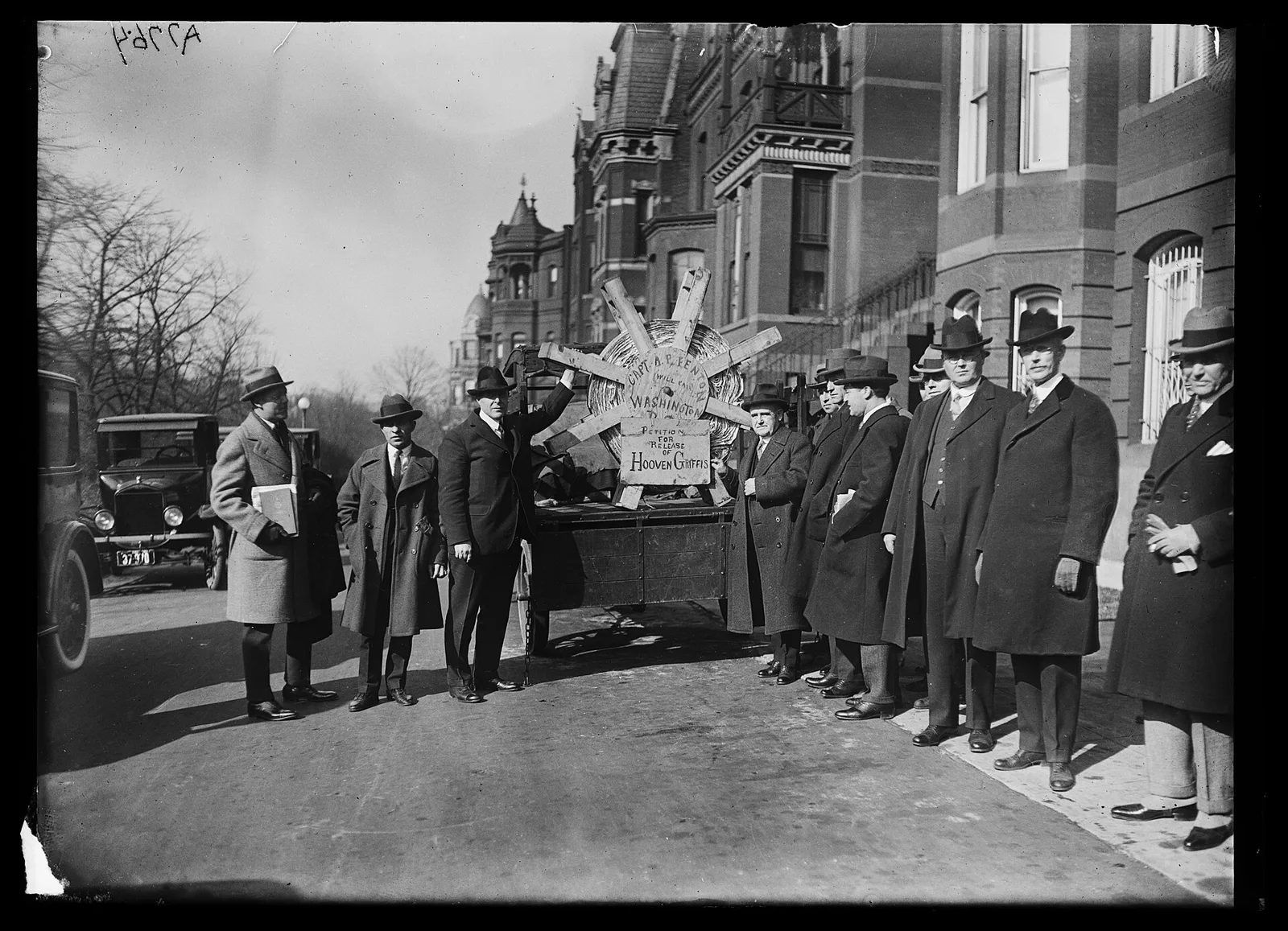
The Cases That Defined Assembly Rights
Assembly rights have been shaped by cases involving everyone from Communist Party organizers to neo-Nazis, civil rights marchers to military funeral picketers. The common thread is that courts have consistently protected assembly regardless of the popularity or acceptability of the message, while allowing the government to regulate the time, place, and manner of gatherings.
The cases below cover the major doctrinal developments, from the application of assembly rights to state governments in 1937 through the most recent significant decisions on association and donor disclosure.
Landmark Supreme Court Decisions
The Supreme Court unanimously applied the First Amendment right of assembly to state governments through the 14th Amendment. Dirk de Jonge had been convicted under Oregon's criminal syndicalism law for helping lead a peaceful Communist Party meeting. Chief Justice Hughes held that the right to assemble peaceably for lawful discussion cannot be made a crime. The decision established that the right to assemble is as fundamental as freedom of speech and press.
The decision reversed a conviction carrying a possible seven-year prison sentence, even though prosecutors had conceded at trial that de Jonge personally advocated no unlawful action at the meeting in question.
The 8-0 opinion rested on the 14th Amendment's Due Process Clause, holding assembly 'equally fundamental' with speech and press. Hughes wrote that the remedy for abuse of assembly 'is not to be found in the denial or suppression' of the right, but in prosecuting individuals for unlawful acts.
De Jonge is regularly cited alongside Hague v. CIO (1939) as the pair of decisions that made the assembly right enforceable against states and cities, effectively ending the criminal-syndicalism prosecutions of the 1920s and 1930s used against labor and left-wing organizers.
The Supreme Court struck down a Jersey City ordinance that required permits for public meetings and gave the mayor broad discretion to deny them. The case established the public forum doctrine: streets and parks have historically been held in trust for public use for the purpose of assembly and debate. The government may regulate the time, place, and manner of speech and assembly in public forums but cannot ban assembly altogether or grant officials unchecked discretion to deny permits.
Jersey City Mayor Frank Hague, well known for once declaring "I am the law," had used the ordinance for years to block labor organizers from renting halls or holding meetings anywhere in the city.
There was no majority opinion; Justice Roberts's influential plurality wrote that streets and parks have 'immemorially been held in trust for the use of the public' for assembly and discussing public questions, though that use may be regulated 'in the interest of all.'
The Court later organized public property into three tiers: traditional public forums (streets, parks, sidewalks), designated public forums the government opens for expressive use, and nonpublic forums with only reasonable, viewpoint-neutral rules. Permit schemes for public forums must use narrow, objective standards, a principle reaffirmed in Forsyth County v. Nationalist Movement (1992).
The Supreme Court reversed the convictions of 187 Black students who had marched to the South Carolina State House to protest segregation and were arrested for breach of the peace when they refused to disperse. The Court held that the state had criminalized the exercise of constitutionally protected rights of free speech, free assembly, and freedom to petition for redress of grievances. The peaceful nature of the demonstration was central to the decision.
The students had sung patriotic and religious songs and made no threats of violence; they were arrested only because police feared that onlookers gathering nearby might eventually turn disorderly, an early version of the heckler's-veto problem addressed more directly in later cases.
The 8-1 decision, written by Justice Stewart, reversed convictions under a common-law breach-of-the-peace charge so broad it could punish demonstrators for arousing 'the anger of the public' by nonviolent means; the Court said the state had made criminal 'the peaceful expression of unpopular views.'
Edwards was the first major sit-in and demonstration case the Court decided, and it set the template for reversing hundreds of civil rights protest convictions over the next decade on the ground that vague breach-of-peace and trespass laws were being used to punish protected assembly.
The Supreme Court unanimously reversed the disorderly conduct convictions of comedian Dick Gregory and others who had led a peaceful march to Mayor Daley's house protesting school segregation. The marchers were peaceful; hostile onlookers were not. The Court held that convicting peaceful demonstrators for the reaction of a hostile audience effectively punished the marchers for the crowd's response, which violated the First Amendment.
Chief Justice Warren's opinion emphasized that the marchers had a police escort and followed every lawful instruction given to them, meaning their arrest was triggered solely by the unruly reaction of bystanders along the route, not by anything the marchers themselves did.
Gregory and roughly 85 marchers walked five miles from downtown to the neighborhood around Mayor Daley's home; a crowd of over 1,000 onlookers gathered, some throwing eggs and rocks. Police, unable to control the bystanders, ordered the marchers to leave and arrested them when they refused.
Warren's short opinion reversed on the narrow ground that the marchers' conduct was 'a peaceful and orderly exercise' of First Amendment rights. Justice Black's concurrence urged Chicago to write a narrow ordinance regulating residential picketing, which the Court later upheld in Frisby v. Schultz (1988).
Federal courts (Collin v. Smith, 1978) struck down ordinances passed by Skokie, Illinois, a village with a large Jewish population and Holocaust survivors, that were designed to prevent a neo-Nazi march. The courts held, and the Illinois Supreme Court separately lifted an injunction against displaying the swastika, that the right to assemble and march cannot be conditioned on the acceptability of the message, no matter how offensive. The American Civil Liberties Union represented the neo-Nazis in a decision that became one of the most debated in First Amendment history, testing whether assembly rights protect deeply abhorrent speech.
The case never reached the U.S. Supreme Court on the merits, and the neo-Nazi group never actually marched in Skokie itself, choosing to hold a rally in Chicago instead once the legal fight over the village's ordinances was won.
Skokie, then about 40,000 residents including several thousand Holocaust survivors, passed ordinances requiring a $350,000 insurance bond, banning military-style uniforms, and prohibiting distribution of materials inciting racial hatred. Courts struck all three as unconstitutional prior restraints and viewpoint discrimination.
The U.S. Supreme Court, in a related order, required prompt appellate review of an injunction against the march. The ACLU's representation cost it an estimated 15 percent of its membership, and the group ultimately rallied in Chicago's Marquette Park instead.
The Supreme Court unanimously ruled that the NAACP could not be held liable for the economic losses caused by a civil rights boycott of white-owned businesses in Port Gibson, Mississippi. Even though some violence had occurred on the fringes of the boycott, the Court held that the nonviolent elements of the boycott were constitutionally protected assembly and association. The state could not hold the entire organization liable for the acts of a few individuals absent evidence that the organization authorized or ratified the violence.
The boycott had begun in 1966 and lasted for years, eventually leading a Mississippi state court to enter a judgment of more than a million dollars against the NAACP, a judgment the Supreme Court unanimously wiped out.
Justice Stevens's opinion held that 'the right of the States to regulate economic activity could not justify a complete prohibition against a nonviolent, politically motivated boycott,' and that liability for protected activity requires proof the group had unlawful goals and the individual specifically intended to further them.
Charles Evers's fiery speeches, which mentioned consequences for boycott-breakers, were held protected because no violence imminently followed, an application of the Brandenburg incitement standard to a mass-organizing context.
The Supreme Court unanimously ruled that private parade organizers cannot be compelled by a state anti-discrimination law to include groups whose message they reject. The Boston Veterans Council, which organized the St. Patrick's Day parade, had excluded an Irish-American gay group. The Court held that the parade itself was expressive activity and that compelling the organizers to include a group with a different message violated their First Amendment rights. The decision established that private expressive associations, not just individuals, have assembly and speech rights.
The case reached the Supreme Court after the Massachusetts Supreme Judicial Court had ordered the parade organizers to include the gay, lesbian, and bisexual group under the state's public accommodations law, a ruling the U.S. Supreme Court unanimously reversed as unconstitutional compelled speech.
The South Boston Allied War Veterans Council had organized Boston's parade since 1947 under a city authorization. Massachusetts courts ordered it to admit the group after finding the parade lacked a discernible message.
Justice Souter's unanimous opinion held that a parade is 'a form of expression, not just motion,' and that requiring private organizers to carry a group whose participation would be seen as their own message is unconstitutional compelled speech. The Council could not bar gay individuals from marching with other units, only a group marching under its own banner.
The Supreme Court ruled 5-4 that the Boy Scouts could dismiss an openly gay scoutmaster despite a New Jersey anti-discrimination law. The Court held that the Boy Scouts, as an expressive association, had the right to exclude members whose presence would impair the organization's ability to express its values. The decision extended expressive association rights to private membership organizations, allowing them to exclude members whose presence would interfere with the group's message.
James Dale, the scoutmaster at the center of the case, had been an Eagle Scout and assistant troop leader for years before his membership was revoked after a newspaper identified him as co-president of a college gay and lesbian student organization.
New Jersey's supreme court had ordered the Scouts to reinstate Dale under the state public-accommodations law. Chief Justice Rehnquist's 5-4 opinion held the Scouts expressed a view that homosexual conduct is inconsistent with the Scout Oath and Law, and that forcing Dale's inclusion would 'significantly affect' their ability to express it.
Justice Stevens's dissent argued the Scouts had no clear, consistent anti-gay message and that the majority would let any organization evade civil rights law by asserting a belief. The Boy Scouts admitted openly gay youth in 2013, gay adult leaders in 2015, and transgender boys in 2017, and became Scouting America in 2025.
The Supreme Court ruled 8-1 that the Westboro Baptist Church had a First Amendment right to picket near military funerals, even with signs bearing deeply offensive messages. Albert Snyder's son Matthew had been killed in Iraq, and Westboro members picketed the funeral with signs celebrating his death. The Court held that speech on matters of public concern, even when hurtful and offensive, is at the heart of First Amendment protection. The church had complied with police directions and stayed on public land.
Justice Samuel Alito was the lone dissenter, arguing the case involved a targeted personal attack on a grieving family rather than commentary on a public issue; Snyder had originally won an $11 million jury verdict against Westboro that was later thrown out on appeal.
Westboro Baptist Church of Topeka, Kansas has picketed thousands of events, asserting that combat deaths are God's punishment for U.S. tolerance of homosexuality. At Matthew Snyder's 2006 funeral the picketers stood on public land about 1,000 feet away, complied with police, and were not seen or heard by the family during the service.
Chief Justice Roberts wrote that the Nation had chosen to protect 'even hurtful speech on public issues to ensure that we do not stifle public debate.' Many states responded with laws setting buffer zones and quiet periods around funerals, several of which courts have upheld as content-neutral time, place, and manner rules.
The Supreme Court struck down California's requirement that charities disclose their major donors to the state attorney general, ruling 6-3 that it burdened the freedom of association by exposing donors to potential harassment and retaliation. The decision applied the principle established in NAACP v. Alabama (1958), that compelled disclosure of group membership can chill the right to associate, to the modern context of nonprofit donor disclosure.
The 1958 precedent it relied on arose after Alabama tried to force the NAACP to hand over its full membership list during the civil rights era, a demand the Court found would expose ordinary members to harassment and retaliation simply for belonging.
California required charities soliciting in the state to file an unredacted federal Schedule B listing donors who gave $5,000 or more, though the state rarely used it and had accidentally posted some filings publicly. Chief Justice Roberts applied 'exacting scrutiny' and held the blanket collection was not narrowly tailored.
The three liberal justices dissented, warning the ruling would make it harder to defend campaign-finance disclosure laws, which serve an informational interest the majority did not directly address.
What the Government Can and Cannot Do
The right to assemble is not absolute, and no serious legal scholar argues that it is. The government has legitimate interests in traffic safety, noise control, emergency access, and public order that require some regulation of large gatherings. The constitutional question is not whether the government can regulate assembly at all, but how much and in what ways.
The governing principle is that the government may regulate the time, place, and manner of assembly, but not its content or its existence. A city can require a permit for a parade. It cannot deny the permit because it dislikes the parade's message. A park can close at midnight. The government cannot close it only on nights when a particular group plans to gather. The sections below explain how that principle works in practice.
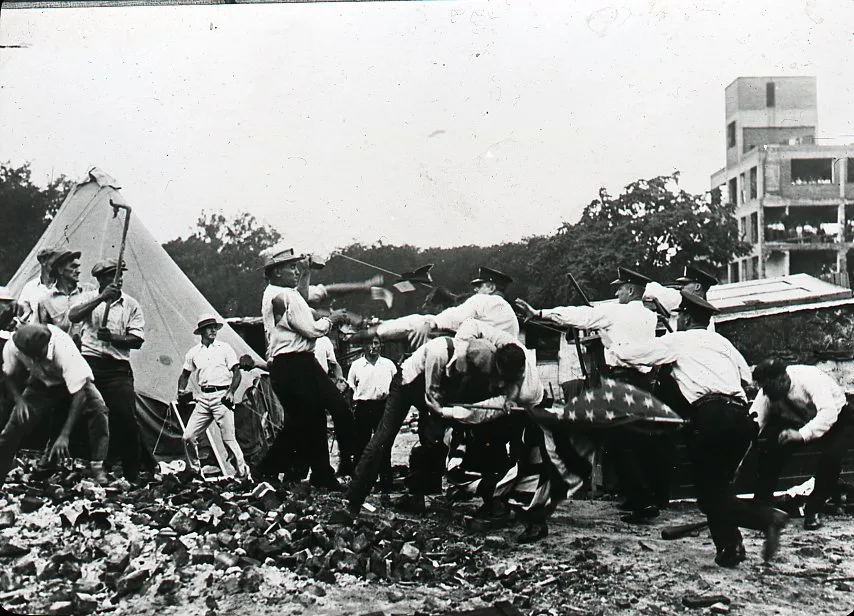
Permissible Limits on Assembly
The constitutional framework for what governments may and may not do to regulate assemblies.
The most established category of permissible assembly regulation is time, place, and manner restrictions. These are content-neutral rules that apply to all assemblies regardless of their message. Examples include: prohibiting protests between midnight and 6 a.m. in residential areas, requiring sound permits for amplified music above a certain decibel level, and designating specific areas for demonstrations near government buildings. To be constitutional, such restrictions must be content-neutral (not targeting a particular message), narrowly tailored to serve a significant government interest, and leave open alternative channels for communication. A city cannot ban all protests near City Hall, but it can limit the hours, decibel levels, and traffic impact.
Courts apply a specific three-part test to these restrictions, requiring they be content-neutral, narrowly tailored to a significant government interest, and leave open ample alternative channels of communication, a standard the Supreme Court fully articulated in Clark v. Community for Creative Non-Violence (1984).
In Clark the Court upheld a National Park Service rule barring sleeping in Lafayette Park and on the Mall, applied against demonstrators who wanted to sleep in a symbolic 'tent city' about homelessness, holding the anti-camping rule content-neutral and leaving other ways to convey the message.
The 'narrowly tailored' prong does not require the least restrictive means, only that the rule not burden substantially more speech than necessary (Ward v. Rock Against Racism, 1989, upholding a city sound-engineer requirement in Central Park). A rule applied based on a message's content is treated as content-based and faces strict scrutiny.
Most cities and counties require permits for demonstrations above a certain size, demonstrations that block traffic, or demonstrations in parks that need coordination. Permit requirements are generally constitutional if they serve genuine administrative purposes like traffic management and emergency response planning, have clear and objective criteria that do not allow officials to discriminate based on message, provide a prompt decision-making process with an appeal route, and charge fees only to cover actual administrative costs, not as a barrier. What is not permitted: a permit system that gives an official unchecked discretion to approve some groups while denying others, or that imposes fees so high they function as a barrier to assembly.
Many cities set a specific size threshold, commonly somewhere between 25 and 50 or more participants, below which no permit is required at all, reflecting the general legal understanding that small, spontaneous gatherings are core First Amendment activity that cannot practically require advance government approval.
The Court struck a parade-permit fee that a county set based on the anticipated cost of policing hostility to the marchers' message (Forsyth County v. Nationalist Movement, 1992), because tying the fee to expected controversy made it content-based. Permit fees are generally allowed only to recover routine administrative costs.
Because prompt access matters, courts require permit schemes to guarantee a decision within a short, defined period and an expedited route to court review, treating open-ended delay as a prior restraint. Spontaneous responses to breaking news have led several cities to add same-day or no-advance-notice provisions for smaller crowds.
The word 'peaceably' in the assembly clause is the only textual limit the Constitution places on the right. An assembly that involves or imminently threatens violence loses First Amendment protection. However, courts have been careful to distinguish: a predominantly peaceful assembly does not lose constitutional protection because some individuals on its fringes engage in violence. The organization or speaker must have authorized, directed, or ratified the violence to lose protection. The hostile reaction of onlookers to a peaceful assembly does not make the assembly unpeaceful. Under the heckler's veto doctrine, the government cannot suppress a peaceful assembly simply because a hostile crowd threatens to react violently. The proper response is to protect the assembly, not shut it down.
The Supreme Court's 1969 decision in Brandenburg v. Ohio set the modern legal standard for when speech tied to potential violence loses protection, requiring that it be directed at inciting imminent lawless action and be likely to actually produce it, not merely advocate violence as an abstract idea.
Brandenburg replaced older 'clear and present danger' and 'bad tendency' tests: abstract advocacy of force or lawbreaking, even by a Klan speaker as in Brandenburg itself, is protected, while advocacy 'directed to inciting or producing imminent lawless action' and 'likely' to do so is not.
The companion principle is the heckler's veto rule: in Terminiello v. Chicago (1949) and later cases, the Court held a speaker or assembly cannot be silenced because a hostile audience threatens disorder; the government's duty is to control the crowd. Applying that when officers face an imminent riot with limited resources remains one of the hardest problems in assembly law.
Free speech zones, designated protest areas, or First Amendment zones are areas set aside near events, government buildings, or major gatherings where protesters are required to demonstrate. They became particularly controversial during presidential campaigns and conventions in the 2000s, where protesters were sometimes placed in fenced enclosures blocks away from the event, out of sight and earshot of those they wished to reach. Courts have generally allowed designated protest areas when they are reasonably sized, are in a location where the message can be communicated, and when the restriction is narrowly tailored. Courts have struck down zones that were so remote or restrictive that they effectively silenced the assembly rather than regulating its time, place, and manner.
The practice drew especially heavy scrutiny after protesters at the 2004 Democratic and Republican National Conventions sued over being confined to fenced pens far from the events, with several federal courts later finding some of those specific zones unconstitutionally restrictive.
Courts weigh whether a zone still lets the message reach its intended audience, upholding modest security perimeters around courthouses, party conventions, and international summits but striking zones that place protesters out of sight and sound of their target.
The Secret Service's 2000s practice of moving demonstrators, but not supporters, away from presidential appearances led to litigation; in Wood v. Moss (2014) the Court granted the agents qualified immunity on the facts without endorsing viewpoint-based crowd placement. Campus 'free speech zones' have also been repeatedly enjoined or repealed under state campus-free-expression laws.
All states have laws defining unlawful assembly and riot. Generally, an assembly becomes unlawful when it poses an imminent threat of violence or property destruction. Police may issue a dispersal order once an assembly is declared unlawful, and failure to disperse after a lawful order is typically a misdemeanor. However, constitutional challenges arise at multiple points: Was the assembly actually violent, or was it labeled unlawful on a pretext? Was the dispersal order audible and intelligible to the crowd? Was adequate time given to disperse? Were people arrested while attempting to comply? Courts have found constitutional violations when police declared assemblies unlawful based on isolated incidents rather than the character of the crowd as a whole, or when dispersal orders were used as a mechanism to clear peaceful protesters.
Federal courts have repeatedly required that a dispersal order be clearly audible to the entire crowd and provide a genuine, reasonable chance to leave before mass arrests are legally justified, and have found civil rights violations in cases where police blocked exit routes, a tactic sometimes called kettling, before ordering a crowd to disperse.
State statutes typically define 'unlawful assembly' as three or more people gathered to commit an unlawful act or a lawful act 'in a violent, boisterous, or tumultuous manner,' and 'riot' as such a group actually using force. Because these definitions are broad, courts scrutinize whether officials applied them to a genuinely violent crowd.
In cases arising from the 2020 protests and earlier mass demonstrations, federal courts found Fourth and First Amendment violations where police gave no audible order, allowed inadequate time, or kettled a crowd and then arrested everyone for failing to leave. Some cities have paid multimillion-dollar settlements for such mass arrests.
A court injunction is a judicial order requiring or prohibiting specific conduct. In assembly cases, injunctions have been used to limit demonstrations by groups engaged in ongoing illegal activity, to set buffer zones around abortion clinics (upheld in some forms and struck down in others), and historically to break labor strikes. The Supreme Court has been skeptical of broad injunctions against assemblies, treating them as prior restraints similar to those in press freedom cases. However, narrowly tailored injunctions addressing specific ongoing illegal conduct, rather than assembly generally, have been upheld. The key question is whether the injunction targets illegal conduct or protected assembly.
In Madsen v. Women's Health Center (1994), the Supreme Court upheld a fixed buffer zone around a clinic entrance while striking down a broader zone restricting protest activity on private property nearby, illustrating just how narrowly tailored an injunction must be to survive constitutional review.
Later abortion-clinic cases refined the line: Schenck v. Pro-Choice Network (1997) upheld fixed buffer zones but struck 'floating' 15-foot bubbles around individuals, and McCullen v. Coakley (2014) unanimously struck a Massachusetts 35-foot fixed zone on public sidewalks as burdening more speech than necessary.
The Norris-LaGuardia Act of 1932 had earlier sharply limited federal courts' power to issue injunctions in labor disputes, after decades in which such injunctions were the standard tool for breaking strikes and dispersing picket lines.
Kettling and Mass Arrests
Kettling is a police crowd control tactic that involves surrounding a group of protesters and preventing them from leaving a designated area, sometimes for hours, before making mass arrests. Courts have produced conflicting decisions on whether kettling without individualized suspicion violates the Fourth Amendment, the First Amendment, or both.
During the 2020 George Floyd protests, police in several cities made thousands of arrests in single evenings, many involving people who were present but not personally engaged in any illegal activity. Courts subsequently dismissed many of these charges. Several jurisdictions reached civil settlements compensating people arrested while exercising their right to assemble peacefully.
Where the Arguments Are Live
The right to assemble has never been free of controversy. Every generation produces new contexts that test the boundaries of the right and generate genuine legal and political disagreement. The debates below involve real constitutional arguments on both sides, not obvious right answers.
Several of these debates are actively being litigated in courts right now. The legal landscape in some areas, particularly around surveillance, masking, and armed assembly, has not yet settled.
Active Controversies
Protect the Original Assembly
- +The heckler's veto doctrine holds that the government cannot suppress a peaceful assembly simply because others react with violence. Allowing hostile crowds to shut down protected speech by threatening violence gives anyone willing to use threats a veto over others' First Amendment rights.
- +Permitting the heckler's veto creates perverse incentives: those who oppose a message need only threaten enough violence and the government will do their work for them by suppressing the assembly.
- +The Constitution requires the government to protect assemblies from violent disruption, not facilitate disruption by withdrawing protection or arresting the peaceful party.
- +Courts have consistently held that police must protect lawful assemblies from hostile counter-demonstrators, not use counterprotester hostility as grounds to shut down the original assembly.
Public Safety Can Justify Limits
- +When violence is genuinely imminent, requiring police to hold a perimeter between two opposing groups places officers in an impossible situation and may not be feasible given available resources.
- +The practical assessment of whether violence is imminent requires real-time judgment by officers on the ground. Courts reviewing decisions after the fact may not appreciate the actual threat environment.
- +Some assemblies are organized precisely to provoke maximum counterprotest and conflict, using the heckler's veto doctrine as a shield while deliberately escalating tensions.
- +Local governments bear real costs for policing large opposing demonstrations. Charging the costs to organizers or requiring insurance has been proposed but raises its own First Amendment concerns.
Context
The heckler's veto doctrine is well established in law but remains difficult to apply in practice. The 2017 Charlottesville Unite the Right rally, in which city officials canceled the permitted rally amid anticipated violence and a court ordered it reinstated, followed by deadly violence, illustrates how legally clear principles can produce devastating real-world outcomes. The legal framework does not resolve the practical and political difficulties of policing assemblies involving groups committed to confrontation.
Masks Are Protected
- +Anonymous assembly is protected by the First Amendment. The Supreme Court has held that anonymity is a component of free expression, and protesters who fear employer retaliation, doxxing, or targeted harassment have legitimate reasons to conceal their identities.
- +Several states have anti-mask laws originally passed to counter the KKK that courts have found unconstitutional as applied to political protesters. The right to anonymous participation in protest is part of the right to assemble.
- +In an era of facial recognition technology and commercial surveillance, the chilling effect of being photographed and identified at a political demonstration is qualitatively greater than it was when anti-mask laws were first enacted.
- +Requiring unmasking as a condition of assembly effectively forces participants to choose between their safety and their constitutional rights.
Mask Bans Are Permissible
- +Masks complicate accountability when violence occurs. Participants who commit crimes during a protest can evade identification if masked, creating a practical obstacle to law enforcement.
- +Several states have passed anti-mask laws specifically addressing protest contexts, and courts have been divided on their constitutionality. Some have upheld them as applied to violent or unlawful assemblies.
- +Witness identification of individuals who commit specific acts of violence or property destruction is impaired when participants are masked, which can effectively immunize criminal conduct.
- +Public health mask mandates during COVID-19 demonstrated that mask requirements and prohibitions both raise complex First Amendment questions depending on context.
Context
Anti-mask laws exist in several states, some dating to anti-KKK statutes and others passed more recently. Their constitutionality in the protest context is unsettled and varies by jurisdiction. Facial recognition technology has transformed the practical stakes of this debate significantly in the last decade.
Private Property Owners Can Exclude
- +The First Amendment restricts government, not private actors. A shopping mall, private university, or corporate plaza is private property, and the owner's right to exclude is part of their own constitutional property rights.
- +Requiring private property owners to host protests they object to would itself raise constitutional concerns by compelling them to provide a platform for speech they may disagree with.
- +The Supreme Court held in Lloyd Corp. v. Tanner (1972) that a shopping mall could exclude protesters distributing leaflets, rejecting the argument that a privately owned public space becomes a public forum.
- +Property owners who open their spaces for some expressive activity do not forfeit the right to exclude other expressive activity they find objectionable.
Some Private Spaces Are Functionally Public
- +As traditional public spaces like town squares have been replaced by privately owned spaces like malls, corporate campuses, and business improvement districts, the public forum doctrine increasingly protects assembly only in spaces where few people gather.
- +Several state constitutions, including California's, provide broader assembly rights than the federal First Amendment and have been interpreted to require some private spaces open to the public to allow protest activity.
- +The functional equivalent of a public forum should receive First Amendment protection regardless of who holds the legal title. A company town, as the Supreme Court recognized in Marsh v. Alabama (1946), cannot suppress speech simply because it owns the property.
- +The concentration of modern public life in privately owned digital and physical spaces means that strict adherence to the government-only limitation on the First Amendment significantly erodes the practical scope of assembly rights.
Context
This debate has intensified with the rise of social media platforms as the dominant public square and with the development of large privately owned urban spaces. Courts have generally upheld private property owners' rights to exclude protesters, while some state courts have found broader protections under state constitutions.
Armed Assembly Has Constitutional Roots
- +The Second Amendment protects the right to bear arms, and the First Amendment protects the right to assemble. Some argue these rights combine to protect the right to assemble while armed.
- +Several states have constitutional provisions specifically protecting the right to assemble in arms for collective defense, reflecting historical traditions of militia musters and collective self-defense.
- +The presence of armed private citizens at protests has sometimes deterred violent counter-demonstrators, and some in affected communities have argued it provided protection where police did not.
- +Blanket bans on armed assembly may sweep too broadly, criminalizing peaceful presence at a public event by someone exercising their Second Amendment rights.
Armed Assembly Can Be Restricted
- +The presence of armed groups at political demonstrations has a documented chilling effect on unarmed protesters, who may feel intimidated into silence or non-participation.
- +Many states have laws prohibiting parading with arms or the formation of private military organizations, which courts have generally upheld. These laws predate the current debate and have historical roots in preventing private armies from substituting for legitimate government force.
- +The line between a legally armed individual and an unlawfully threatening militia is genuinely difficult to draw in real time, creating significant challenges for law enforcement.
- +At several events, including Charlottesville in 2017 and the Michigan State Capitol in 2020, armed groups intimidated elected officials and demonstrators, raising questions about whether armed assembly near government functions is compatible with democratic governance.
Context
Armed assembly is one of the most legally unsettled areas of assembly law. State laws on the subject vary enormously. Several states have laws against parading with arms or forming private militias that are rarely enforced. The intersection of the First and Second Amendments in this context has not been definitively addressed by the Supreme Court.
Law Enforcement Needs to Monitor Assemblies
- +Police have legitimate law enforcement interests in monitoring large assemblies where violence or criminal activity may occur. Identifying participants in advance can allow authorities to deploy adequate resources and respond quickly to incidents.
- +Video and photographic documentation of protests has been used to identify and prosecute individuals who committed crimes during otherwise peaceful demonstrations.
- +Modern surveillance technology allows law enforcement to monitor large crowds more efficiently than traditional uniformed presence, potentially reducing confrontational police-protester dynamics.
- +Intelligence gathering at political assemblies has historically identified genuine threats, including individuals planning violence who used protest cover.
Surveillance Chills the Right to Assemble
- +Pervasive surveillance of political assemblies has a documented chilling effect. Research consistently shows that people participate less in protests when they believe they are being photographed and identified.
- +The FBI's COINTELPRO program, which ran from 1956 to 1971, used surveillance of civil rights, anti-war, and political assemblies as a tool for harassment, blackmail, and disruption of legal political activity. The program's abuses led to significant congressional restrictions on domestic intelligence gathering.
- +Facial recognition technology deployed at protests can create permanent records of political participation that may be used against individuals in future contexts they cannot anticipate.
- +Undercover infiltration of political organizations, as documented in multiple cities, goes beyond surveillance and involves the government inserting agents into protected associational activity.
Context
The legal framework governing surveillance of political assemblies is a patchwork of constitutional doctrine, statutory law, and department policies that vary significantly across jurisdictions. The Church Committee reforms of the 1970s imposed some limits on federal surveillance of domestic political activity, but the rise of digital surveillance has outpaced the legal framework significantly.
Did You Know?
The March on Washington in 1963 was the largest demonstration in American history at the time, with approximately 250,000 participants. The 2017 Women's March, with an estimated 3 to 5 million participants nationwide, surpassed it as the largest single-day protest in U.S. history.
Coxey's Army marched to Washington in 1894 to demand government jobs for the unemployed. When leader Jacob Coxey arrived to deliver his petition at the Capitol, he was arrested for walking on the grass.
The ACLU represented the neo-Nazis seeking to march through Skokie, Illinois in 1977, a community with many Holocaust survivors. The organization lost approximately 30,000 members over the decision but held firm on the principle that unpopular speech requires the most protection.
The word 'peaceably' in the First Amendment is the only internal textual limitation on the right to assemble. Every other right in the First Amendment is stated without limitation, and courts have supplied the limits through interpretation.
COINTELPRO, the FBI's counterintelligence program active from 1956 to 1971, secretly targeted the civil rights movement, anti-war organizations, and other political groups through surveillance, infiltration, and deliberate disruption of legal assembly and association.
The public forum doctrine, which protects the right to assemble in streets and parks, was established in 1939 in a case involving labor organizers in Jersey City, New Jersey, whose mayor had banned public meetings he opposed.
De Jonge v. Oregon (1937), which applied the First Amendment right of assembly to state governments, involved a Communist Party meeting at which the organizer had not advocated any illegal activity. He was convicted simply for participating in the meeting.
The United States is one of very few democracies that does not require permits for small, spontaneous assemblies. Many European democracies require advance notice for any public demonstration regardless of size.
Sources & Further Reading
- National Archives, The Bill of Rights
- Library of Congress, Civil Rights History Project
- National Constitution Center, First Amendment
- Oyez, Snyder v. Phelps (2011)
- Oyez, Americans for Prosperity Foundation v. Bonta (2021)
- U.S. Courts, Cox v. New Hampshire (First Amendment classroom activity)
This page describes the First Amendment's assembly and petition clauses and documented historical and legal examples of how they have been applied. It takes no position on any current political dispute. Case examples are sourced to primary historical documents and Supreme Court opinions via Oyez.