The King, the Council, and the Guards That Took 800 Years
Going from a kingdom to a representative democracy is like bolting the safety guards, one at a time, onto the blades of a chopping machine.
Imagine the same shop floor, the same powerful machine, and the same dangerous blades, but with no guards at all.
The shop starts with one owner: the king. There is no council and no rulebook on the wall. The king holds the switch, and whatever he wants cut gets cut: a new tax, a farm, a man who spoke out of turn (absolute monarchy). Nobody votes. Nobody appeals. The king’s word is the law.
The foremen push back first.
In 1215, after years of heavy taxes and lost wars, they corner the king in a meadow and make him sign a promise: even the owner follows the rules of the floor. No free man can be locked up or stripped of his land except by the law (Magna Carta).
Ah, the king signs it, and within months he gets it thrown out. But the paper doesn’t go away. His son’s advisers bring it back, and so does the next king, until it’s part of the shop.
That’s the first guard. It doesn’t cover everyone, and it doesn’t stop every abuse. But for the first time, the king is under the rules instead of above them.
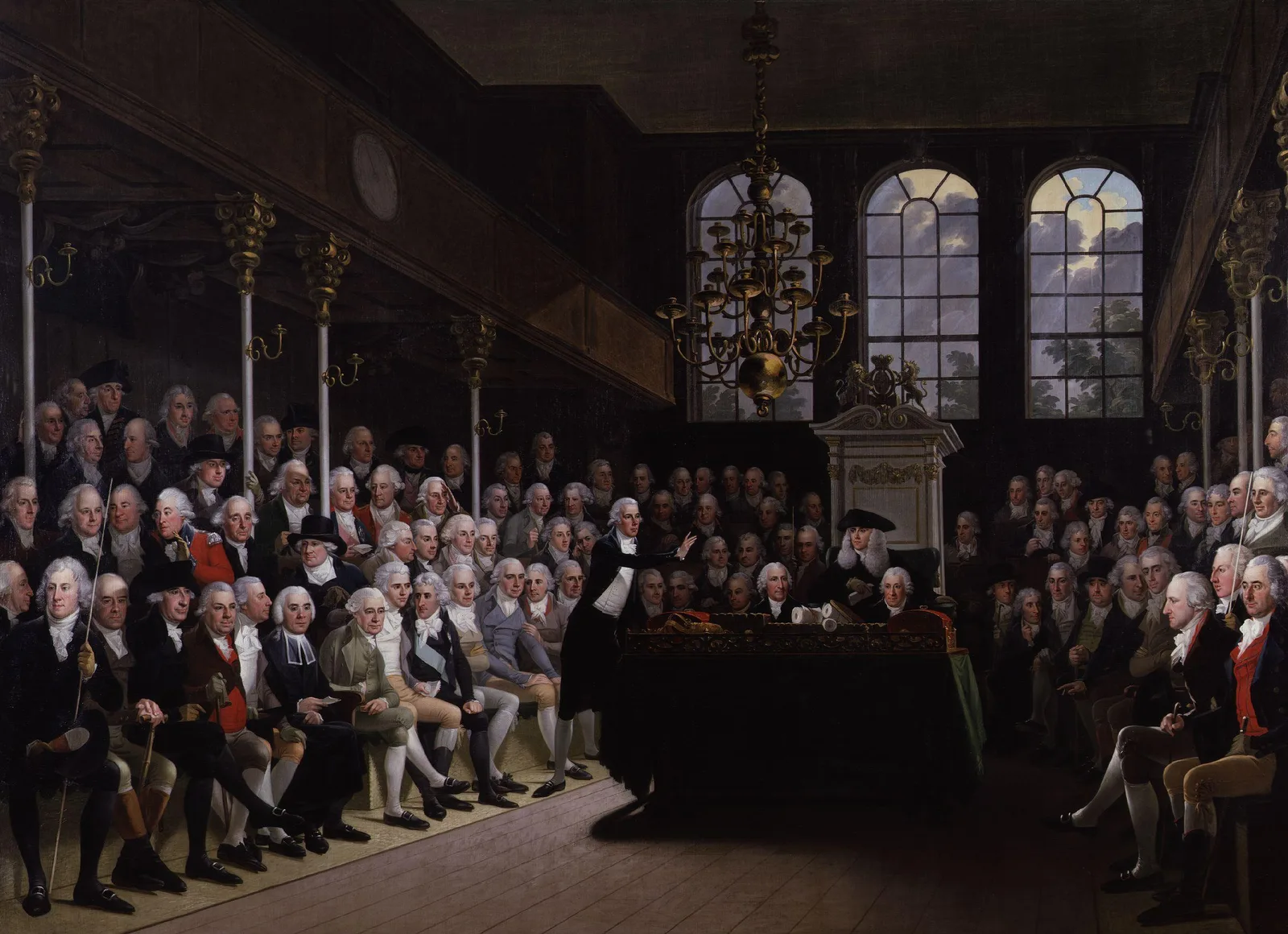
The next guard is a council. The king keeps running short of money, and the foremen won’t pay new taxes unless a council of the realm agrees, with knights and townspeople sitting beside the lords (Parliament). For centuries, kings call it when they need money and send it home when they don’t.
The council learns a simple lesson: if the king wants money, he has to listen first.
Then a king tries to run the shop without the council. He collects taxes on his own and goes eleven years without calling it. The shop splits in two. It ends in civil war, and the king is put on trial and executed (1649).
It’s a terrible way to settle an argument, and eleven years later the shop brings back a king. But the question has been asked out loud: does the owner answer to the rules, or do the rules answer to the owner?
In 1688, the council answers it. It invites a new king and queen to take the crown, on one condition: they bolt on a whole list of guards first. No taxes and no army in peacetime without the council’s consent. Free elections. Free speech in the council chamber. The crown now sits below the laws the council writes (the Bill of Rights, 1689).
Bit by bit, the switch moves. The last time a monarch refused to sign a law the council had passed was 1708. Ministers start answering to the council instead of the crown, and the head minister (the prime minister) is whoever can win the council’s votes.
But the council is still chosen by a few. In 1830, only a small share of men can vote. The workers who run the machine every day have no say in who writes the rules.
So they push for the next guards: more voters (1832, 1867, 1884), the secret ballot (1872), every man and many women (1918), and women on equal terms (1928). Each guard is the right to a voice in who runs the floor.
None of these guards arrives easily. Each one is argued over for years, and each one is opposed by someone who benefits from the old way. Nearly every one goes on over the objections of a king, a lord, or a council that liked things as they were.
Nobody ever unbolted the crown. The king still sits at the head of the shop. His face is on the money, and every law still goes out with his signature. Once a year he opens the council by reading a speech, written for him by ministers he no longer chooses.
And the blade? The blade is power itself, and it’s still spinning. It just answers to the council now, and the council answers to the voters.
It took eight hundred years, one guard at a time, and nearly every guard went on over a king’s objections.
But no written constitution stands above the council. The guards are held on by habit, and by laws the council itself can change. Guards that took centuries to bolt on could come off in a single vote.