
About Arkansas
The name Arkansas comes from the Quapaw people, a Siouan-speaking nation who lived at the confluence of the Arkansas and Mississippi rivers. French explorers encountered other indigenous peoples who referred to the Quapaw as "Akansea" or "Acansa," meaning "downstream place" or "people of the south wind." French traders and settlers adopted the name for the river and the territory, spelling it "Arkansas" and pronouncing the final "s" silently in the French style. When Arkansas became a state in 1836, the French pronunciation was retained, which is why "Arkansas" and "Kansas" are spelled similarly but pronounced so differently.
Arkansas is a state of striking natural diversity, from the forested Ozark and Ouachita Mountains to the fertile Mississippi Delta.
Once known primarily for agriculture, the state has grown into a modern economy powered by major corporations like Walmart and Tyson Foods, while maintaining its reputation for natural beauty and outdoor recreation.
Geography, Four Main Regions
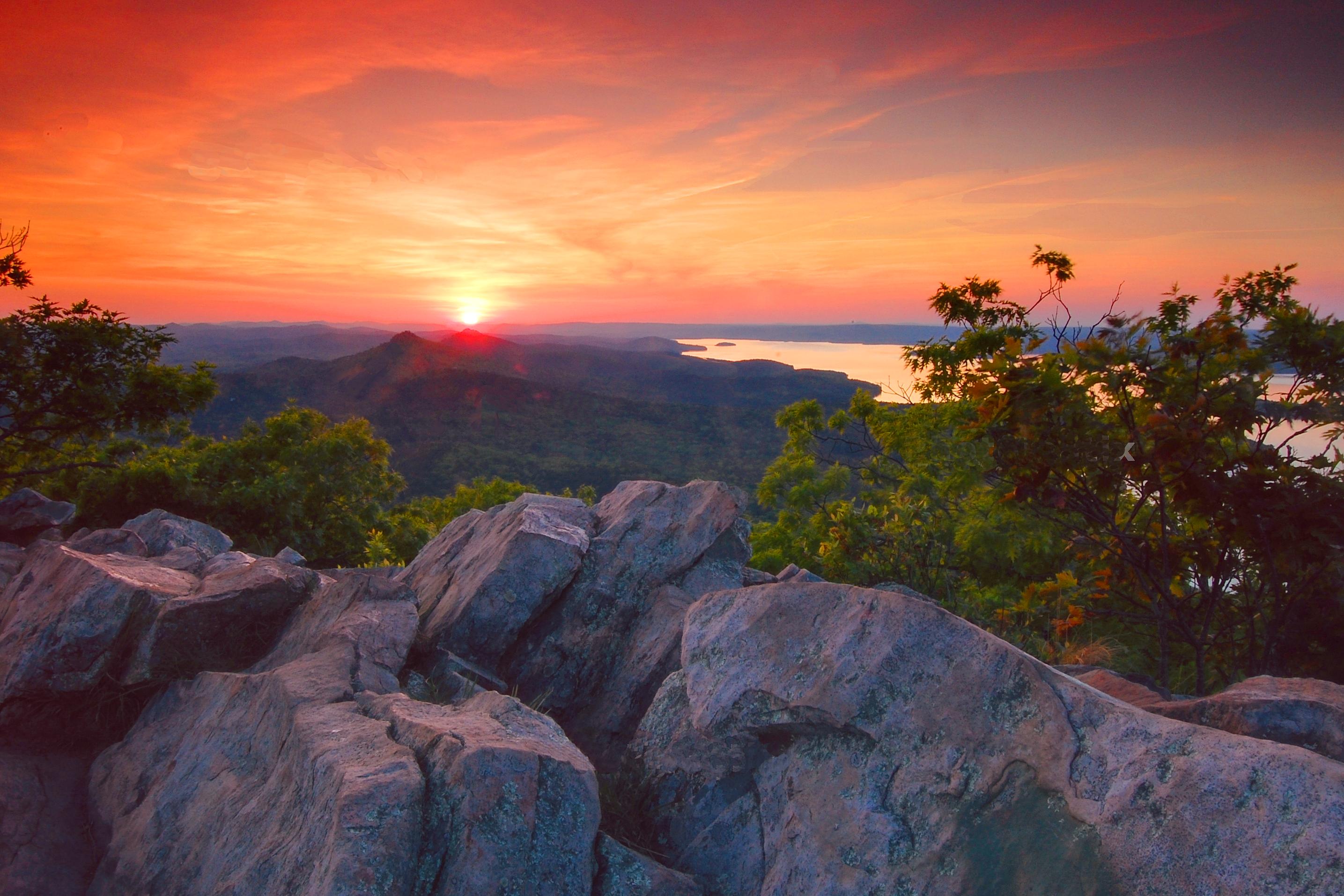
Arkansas features a rich variety of landscapes across its four main geographic regions.
Rugged, forested highlands with clear rivers, waterfalls, and scenic drives. Home to Fayetteville, Bentonville (Walmart HQ), and popular tourist destinations like Eureka Springs.
Eureka Springs' entire downtown is listed on the National Register of Historic Places, its Victorian-era buildings built into the hillside without a single straight street, since the town grew up around dozens of natural springs once believed to have healing properties.
Northwest Arkansas is the fastest-growing part of the state and one of the fastest-growing regions in the country, its population past 575,000 as Walmart, Tyson Foods, and J.B. Hunt Transport, all Fortune 500 companies headquartered within about 30 miles of one another, pull in workers and suppliers. The Crystal Bridges Museum of American Art, funded by Walmart heir Alice Walton and opened in Bentonville in 2011, holds one of the country's most important American art collections.
The Ozarks are a dissected plateau rather than true folded mountains, carved by the Buffalo, White, and Kings rivers into steep hollows and bluffs. The Buffalo National River, protected in 1972 as the country's first national river, runs 135 miles without a dam. The region's isolation preserved a distinct hill culture, and the University of Arkansas at Fayetteville, the state's flagship, anchors its other economy.
The central corridor following the Arkansas River. Includes Little Rock, the state capital, and Fort Smith. This region serves as the economic and political heart of the state.
Little Rock takes its name from 'la petite roche,' a small rock outcropping on the riverbank that French explorers used as a navigation landmark, while Fort Smith began in 1817 as a frontier military post later famous for Judge Isaac Parker's federal court, which had jurisdiction over Indian Territory.
The valley separates the Ozark and Ouachita highlands and contains Arkansas's highest point, Mount Magazine at 2,753 feet, along with the flat-topped Petit Jean and Nebo mountains. The river itself was made navigable to Tulsa by the McClellan-Kerr Arkansas River Navigation System, a roughly $1.2 billion chain of locks and dams completed in 1971 and one of the largest civil-works projects the Army Corps of Engineers has ever built.
Little Rock's Central High School was the site of the 1957 desegregation crisis, and downtown holds the Clinton Presidential Library, opened in 2004. Fort Smith, on the Oklahoma line, was the seat of Judge Isaac Parker's federal court from 1875 to 1896; Parker sentenced 160 people to hang, earned the name the 'Hanging Judge,' and the courthouse is now a national historic site.
Heavily forested mountains known for hot springs, lakes, and outdoor recreation. Hot Springs National Park is the crown jewel of this region.
Congress set aside the springs as a federal reservation in 1832, four decades before Yellowstone became the first official national park in 1872, making the site one of the oldest pieces of federally protected land in the country.
The Ouachitas are unusual for running east to west rather than north to south like most American ranges, folded that way when the continents collided to form Pangaea. They hold the only diamond mine in the United States open to the public, Crater of Diamonds State Park near Murfreesboro, where visitors keep whatever they find; the 40-carat 'Uncle Sam,' the largest diamond ever found in North America, came out of it in 1924.
Hot Springs, the town that grew up around the federal reservation, became a resort and, in the early 20th century, an open gambling town run by organized crime, where Al Capone and other figures wintered. It is also Bill Clinton's boyhood home. Timber is the region's economic mainstay, with large tracts held by paper companies, and Lake Ouachita and Lake Hamilton draw boaters and retirees.
Flat, fertile Delta farmland, the state's agricultural powerhouse. Rich in cotton, rice, and soybean production.
This Delta farmland is part of the same Mississippi River floodplain that extends into Mississippi and Louisiana, and after the Civil War it became a center of sharecropping, a labor system that kept many formerly enslaved families and poor farmers tied to the land they worked.
The Delta's deep topsoil made it Arkansas's richest farmland and, before the Civil War, the center of its cotton-and-slavery economy; some Delta counties were majority enslaved in 1860. After emancipation the same land became the heart of sharecropping and, in 1919, the site of the Elaine massacre, in which white mobs and troops killed an estimated 100 to 240 Black sharecroppers who had organized a union.
The Delta has lost population for a century as farming mechanized, and many of its towns have half the people they had in 1950. It gave American music the blues, at Helena, whose 'King Biscuit Time' radio show has aired since 1941, and it gave Johnny Cash, who grew up in the New Deal farm colony of Dyess. The 1927 Mississippi flood inundated much of eastern Arkansas and pushed the federal government into large-scale flood control.
Economy
Arkansas has a diverse economy anchored by agriculture, retail, manufacturing, and tourism.
Arkansas is one of the top rice-producing states and a national leader in poultry production (Tyson Foods is headquartered here).
Arkansas produces nearly half of all the rice grown in the United States, most of it in the eastern Delta counties, where flooded rice paddies have replaced much of the historic cotton acreage over the past century.
Tyson Foods, based in Springdale, is the largest meat company in the world, and Arkansas leads or nearly leads the nation in broiler-chicken production; poultry and eggs are the state's top farm product by value. The industry drove heavy immigration to northwest Arkansas, which now has one of the largest Marshallese communities outside the Marshall Islands, drawn by poultry-plant work.
Beyond rice and poultry, Arkansas is a major producer of soybeans, cotton, and hardwood timber, and it raises most of the country's farmed baitfish. Row-crop farming in the Delta leans heavily on irrigation from the shrinking Mississippi River Valley alluvial aquifer, one of the most heavily pumped groundwater sources in the country, which the state is trying to relieve with surface-water projects.
Walmart is headquartered in Bentonville and has an enormous impact on the state's economy.
Because Walmart requires major suppliers to maintain a local presence, hundreds of companies operate satellite offices in Bentonville solely to manage their relationship with the retailer, a phenomenon sometimes called 'Vendorville.'
Arkansas is home to roughly half a dozen Fortune 500 companies despite being the 33rd-largest state, an unusual concentration: Walmart, Tyson Foods, and J.B. Hunt Transport in the northwest, and Dillard's, Murphy USA, and Windstream in Little Rock and El Dorado. Walmart's annual revenue, now around $680 billion, is larger than the entire economy of most countries.
The pull of Walmart's headquarters has turned Bentonville from a courthouse town of a few thousand into a small city with a modern-art museum, a regional airport, and offices for hundreds of consumer-goods companies. The retailer's grip on suppliers, and its historic role in shifting American manufacturing to lower-cost countries, has made it a lasting subject of debate about the costs and benefits of retail scale.
The state has a diverse manufacturing base, including steel, machinery, and transportation equipment.
Saline County was once the leading source of bauxite, the ore used to make aluminum, in the United States, with mining operations that ramped up dramatically during World War II to supply the aircraft industry.
Arkansas's manufacturing is anchored by steel: Nucor and the former Big River Steel, now U.S. Steel, run large electric-arc mills near Osceola in the Delta, and Mississippi County produces more steel than any county in the United States, much of it feeding the auto and appliance industries. Lockheed Martin builds combat vehicles and HIMARS rocket launchers at a plant near Camden.
The town of Bauxite is named for the ore that made Saline County the country's leading aluminum-ore source from the early 1900s through the 1980s, until cheaper imports ended domestic mining. Food manufacturing tied to the poultry and rice industries remains one of the state's largest factory sectors.
Ozark Mountains, Hot Springs National Park, Buffalo National River, and Crystal Bridges Museum are major attractions.
Established in 1972, the Buffalo National River was the first river in the country to receive the National River designation, protecting nearly 135 miles of free-flowing water from damming or development.
Crystal Bridges in Bentonville, free to enter, has become the state's marquee attraction, with more than 600,000 visitors a year and a Frank Lloyd Wright house moved onto its grounds. Northwest Arkansas has also built one of the most extensive mountain-bike trail networks in the country, again with Walton-family money, and has hosted a UCI cyclocross World Cup.
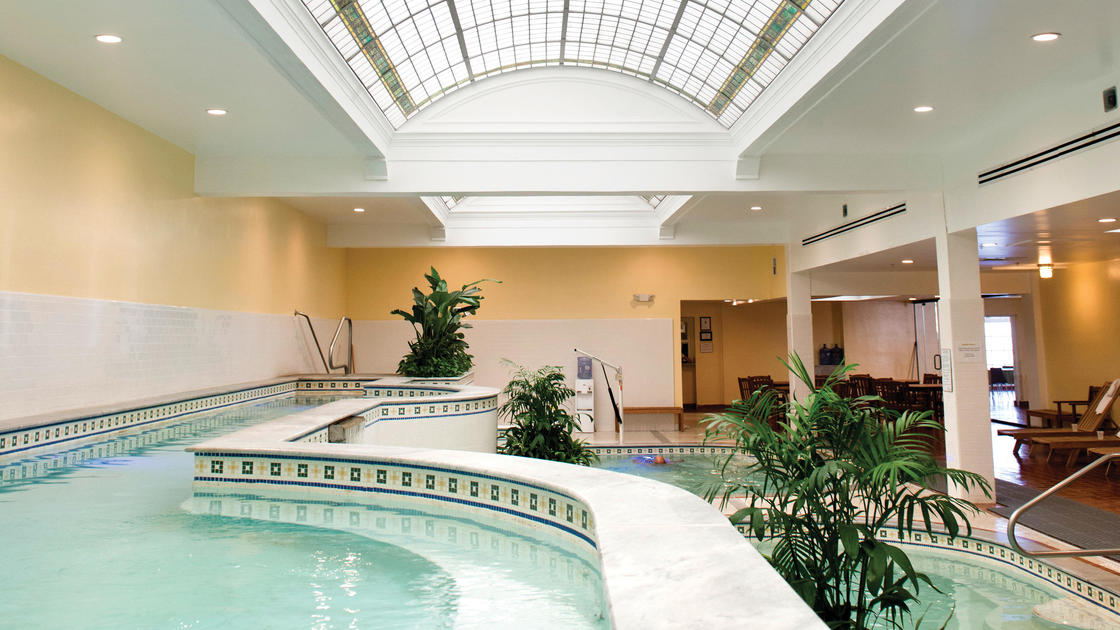
The older tourism economy runs on water and scenery: Hot Springs National Park's historic Bathhouse Row, float trips on the Buffalo, the trout tailwaters below Bull Shoals and Norfork dams, and the flooded-timber duck hunting around Stuttgart, which bills itself as the 'Duck Hunting Capital of the World.' The Ozark Folk Center at Mountain View preserves traditional crafts and music.
How Arkansas's State Government Works
Arkansas has a three-branch system similar to the federal government: executive (Governor), legislative (bicameral), and judicial.
The state has leaned strongly Republican in recent decades at both state and federal levels.
Governor of Arkansas
Current Governor
Sarah Huckabee Sanders

- Party
- Republican
- In Office Since
- January 10, 2023
- Elected
- 2022
- Term Ends
- January 2027
- Born
- August 13, 1982, Hope, Arkansas
- Prior Role
- White House Press Secretary (2017-2019)
Sarah Huckabee Sanders is the 47th Governor of Arkansas and the first woman elected to the position. She previously served as White House Press Secretary under President Donald Trump.
Other Current State Officials
Lieutenant Governor
Leslie Rutledge
In office since 2023.
The Arkansas General Assembly
Arkansas State Senate
- Seats: 35 members
- Terms: 4-year terms
The upper chamber. Arkansas senators serve staggered 4-year terms, with roughly half the chamber up for election every two years.
Arkansas House of Representatives
- Seats: 100 members
- Terms: 2-year terms
The lower chamber. All 100 House seats are on the ballot every two years. The House is the more directly responsive chamber to voters.
Arkansas's U.S. Senators
U.S. Senator
John Boozman
Former Congressman and eye doctor. Known for his work on agriculture and veterans' issues.
U.S. Senator
Tom Cotton
U.S. Army veteran who served in Iraq and Afghanistan. Known as one of the most conservative voices in the Senate.
Arkansas Through the Years
From early settlement to the present day. Tap any era to read more.
Home to the Quapaw, Osage, and Caddo peoples for thousands of years before European arrival.
The Quapaw signed a treaty in 1824 ceding their remaining Arkansas lands to the United States, and by the 1830s they had been forced to relocate to Indian Territory in present-day Oklahoma, a removal that took place in the same era as the Cherokee Trail of Tears.
The state's name comes from the Quapaw, whom the French called 'Arkansea' or 'Akansa,' a Kansa word meaning roughly 'people of the south wind'; the pronunciation 'AR-kan-saw' was fixed by an act of the state legislature in 1881. The Osage claimed most of northern and western Arkansas as hunting territory and were feared by neighboring nations.
In the 1810s and 1820s the United States also settled several thousand Cherokee in the Arkansas River Valley, west of white settlement, before pushing them on to Oklahoma. By the time Arkansas became a state in 1836, treaties had extinguished all Native land title within its borders; the Quapaw, Osage, Cherokee, and Caddo are all now headquartered in Oklahoma, and Arkansas has no reservations.
Arkansas becomes U.S. territory as part of the massive Louisiana Purchase from France.
The Louisiana Purchase added roughly 828,000 square miles to the United States for about $15 million, doubling the nation's size overnight. Arkansas was initially organized under the Missouri Territory before Congress created a separate Arkansas Territory in 1819.
The reference marker from which the entire Louisiana Purchase was surveyed was set in 1815 in a swamp in eastern Arkansas and is preserved today as Louisiana Purchase State Park. Arkansas Post, a French trading post founded on the lower Arkansas River in 1686, was the region's first European settlement and briefly the territorial capital.
The Arkansas Territory of 1819 originally reached west into present-day Oklahoma, but Congress moved the line east twice to make room for Indian Territory, settling the current border in 1828. Territorial politics were dominated by a small web of related families known as 'the Family' or 'the Dynasty,' who controlled land, banking, and office for decades.
Arkansas is admitted to the Union as the 25th state.
Arkansas's original 1836 constitution was drafted and the state government first convened at the Old State House in Little Rock, which still stands today as the oldest surviving state capitol building west of the Mississippi River.
Arkansas entered as a slave state, paired with the free state of Michigan under the balance-keeping practice that followed the Missouri Compromise; the two were admitted about seven months apart. Its constitution gave the vote to all white men and protected slavery, and the planter families of the Delta and the river valley held most of the power.
The young legislature was a rough place. In December 1837, Speaker John Wilson left the rostrum and stabbed Representative Joseph J. Anthony to death on the House floor during a debate over a bounty on wolf pelts. Wilson was expelled and tried, but a jury acquitted him on a claim of self-defense, and he later won election to the legislature again.
Arkansas secedes and joins the Confederacy. Major battles fought at Pea Ridge and Prairie Grove.
Despite seceding, Arkansas also supplied troops to the Union, including regiments of formerly enslaved men recruited from areas of the state occupied by federal forces, and thousands of white Arkansans served the Union as well, reflecting deep divisions within the state.
Arkansas seceded in May 1861 only after Fort Sumter and Lincoln's call for troops; a convention in February 1861 had voted against it. Union forces took the northern half of the state early, winning at Pea Ridge in March 1862 and capturing Little Rock in September 1863, after which Arkansas had rival Union and Confederate state governments at the same time.
The war was especially brutal here because so much of it was guerrilla fighting between neighbors. The failed 1864 Camden Expedition ended with a massacre of surrendering and wounded Black Union soldiers at Poison Spring. Arkansas abolished slavery in a new state constitution in March 1864, a year before the 13th Amendment.
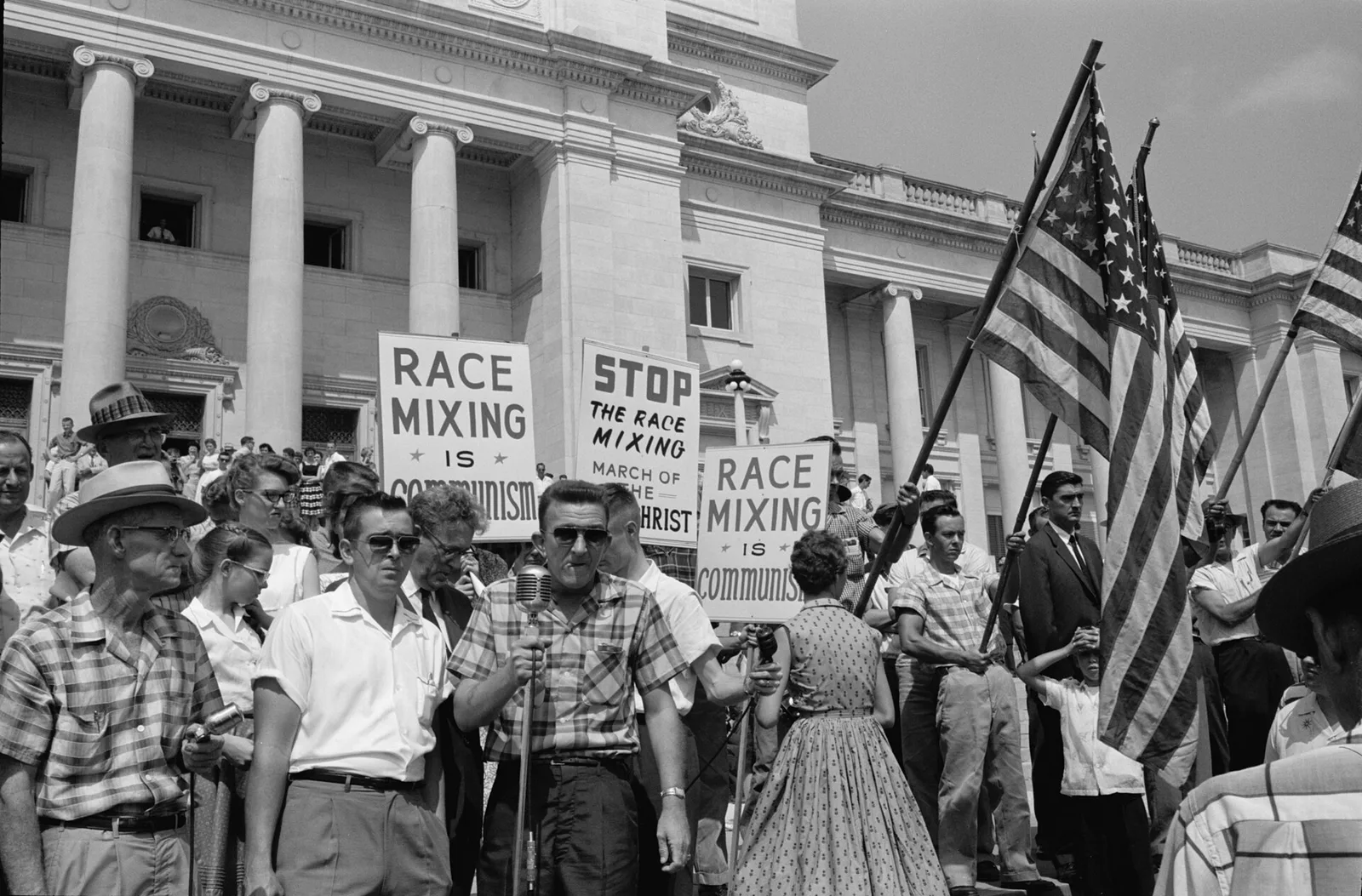
Nine Black students integrate Central High School in Little Rock under federal protection, a landmark moment in the Civil Rights Movement.
When Governor Orval Faubus called in the Arkansas National Guard to block the students from entering, President Eisenhower federalized the Guard and deployed the U.S. Army's 101st Airborne Division to escort the nine students inside, one of the first times since Reconstruction that federal troops were used to enforce desegregation.
Faubus was not a hardline segregationist by Arkansas standards but calculated that defiance would help him win a third term; it did, and he served six terms in all. Rather than integrate, Little Rock closed all four of its public high schools for the entire 1958-59 school year, the 'Lost Year,' locking out about 3,600 students of both races.
The nine students, escorted daily by 101st Airborne soldiers, endured a year of spitting, shoving, and slurs inside the school. Ernest Green became the first Black graduate of Central High in May 1958, with Martin Luther King Jr. in the audience. The nine received the Congressional Gold Medal in 1999, and the school is now a national historic site.
Sam Walton opens the first Walmart store in Rogers, Arkansas.
Sam Walton had already run a Ben Franklin variety store franchise in Bentonville for over a decade before opening the first Walmart in Rogers. By the time of Walton's death in 1992, the chain had grown into the largest retailer in the country, and it remains the largest private employer in the United States today.
Walton pioneered putting large discount stores in small towns that competitors ignored, then blanketing a region with distribution centers so trucks could resupply stores cheaply and often. The company went public in 1970, adopted barcode scanning early, and built a private satellite network in the 1980s to track inventory across thousands of stores in near real time.
Walmart passed Sears as the country's largest retailer around 1990 and has topped the Fortune 500 list of U.S. companies by revenue almost every year since 2002. It employs about 1.6 million people in the United States and roughly 2.1 million worldwide, and its buying power has been credited with holding down prices and blamed for pushing manufacturing offshore.
Arkansas's Defining Moments in American History
These are the events that didn't just shape Arkansas, they changed the nation.
The 1957 integration of Central High School became a defining national moment in the fight against school segregation.
One of the nine students, Elizabeth Eckford, arrived alone on the first day after not receiving word of a group meeting point, and a photograph of her walking calmly through a jeering mob became one of the most widely reproduced images of the entire civil rights era.
Faubus's use of the National Guard to block nine teenagers put a governor in open defiance of a federal court order. Eisenhower, reluctant to act, ultimately federalized the entire Arkansas Guard and sent 1,200 paratroopers of the 101st Airborne, the first use of federal troops to protect Black citizens in the South since Reconstruction.
In Cooper v. Aaron (1958), the Supreme Court, in an opinion signed individually by all nine justices, ruled that Arkansas officials could not defy Brown v. Board of Education and that state resistance could not be allowed to nullify constitutional rights. It remains one of the Court's strongest statements that its reading of the Constitution binds the states.
What began as a small store in Arkansas became the world's largest retailer, reshaping American business and the global supply chain.
Walmart became the largest company by revenue in the world for years running, and its scale forced sweeping changes across the entire retail industry, from company-wide barcode scanning to satellite-linked inventory systems that let stores restock in near real time.
Walmart's insistence that suppliers cut costs, and its early mastery of logistics, reshaped how consumer goods are made, priced, and moved worldwide; economists have credited it with measurably lowering U.S. inflation in the 1990s and 2000s, while critics say it accelerated the loss of American factory jobs.
The Walton family, Sam Walton's heirs, is the wealthiest family in the United States, with a fortune generally estimated well above $200 billion, and its foundation has poured billions into education policy and into the transformation of northwest Arkansas. Roughly one of every four dollars Americans spend on groceries passes through Walmart's registers, keeping it at the center of debates over wages, unions, and market power.
Notable Arkansans
Johnny Cash
Country music legend known as The Man in Black, born in Kingsland
Bill Clinton
42nd President of the United States, born in Hope
Hillary Clinton
First female presidential nominee of a major party and former Secretary of State, raised in Fayetteville
Maya Angelou
Poet, memoirist, and civil rights activist who spent formative years in Stamps
Sam Walton
Founder of Walmart, built the world's largest retail empire from Bentonville
Glen Campbell
Country and pop music star and session guitarist, born in Billstown
State Symbols & Quick Facts
| Nickname | "The Natural State" |
| Capital | Little Rock |
| Largest City | Little Rock |
| Statehood | June 15, 1836 (25th state) |
| Population | ~3.07 million (2025 est.) |
| Area | 53,179 sq mi, 29th largest state |
| Motto | Regnat Populus (The People Rule) |
| State Bird | Northern Mockingbird |
| State Flower | Apple Blossom |
| State Tree | Pine Tree |
| State Gem | Diamond |
| State Mineral | Bauxite |
| State Song | "Arkansas" |
| Time Zone | Central Time (UTC−6) |
| Borders | Missouri (N), Tennessee & Mississippi (E), Louisiana (S), Texas & Oklahoma (W) |
Did You Know?
Crater of Diamonds State Park near Murfreesboro is the only diamond-bearing site in the world open to the public, where visitors keep what they find.
Hot Springs was set aside as a federal reservation in 1832, forty years before Yellowstone became the first national park; it became a national park itself in 1921.
Arkansas is the nation's leading rice producer, growing nearly half of all U.S. rice.
The Buffalo River became America's first national river in 1972, one of the few major rivers in the lower 48 left without a dam.
Former President Bill Clinton was born in Hope, Arkansas.
Quick Facts and Common Questions
Short answers to the questions people most often ask about Arkansas: its abbreviation, how to say its name, its capital, and its place in Congress.
Arkansas's two-letter postal abbreviation is AR. The U.S. Census Bureau places it in the South region, in the West South Central division, and about 3.01 million people lived there in the 2020 census.
Arkansas became the 25th state on June 15, 1836. Its land was part of the Louisiana Purchase of 1803, and Congress created the Arkansas Territory in 1819. Arkansas was admitted as a slave state, and Michigan followed as a free state in 1837, keeping the balance in the Senate.
The name comes from the Quapaw people, who lived near the mouth of the Arkansas River. French explorers learned the name from Illinois-speaking guides and wrote it down in several spellings. In 1881 the state legislature passed a resolution declaring that the name is pronounced "AR-kan-saw," with the final "s" silent.
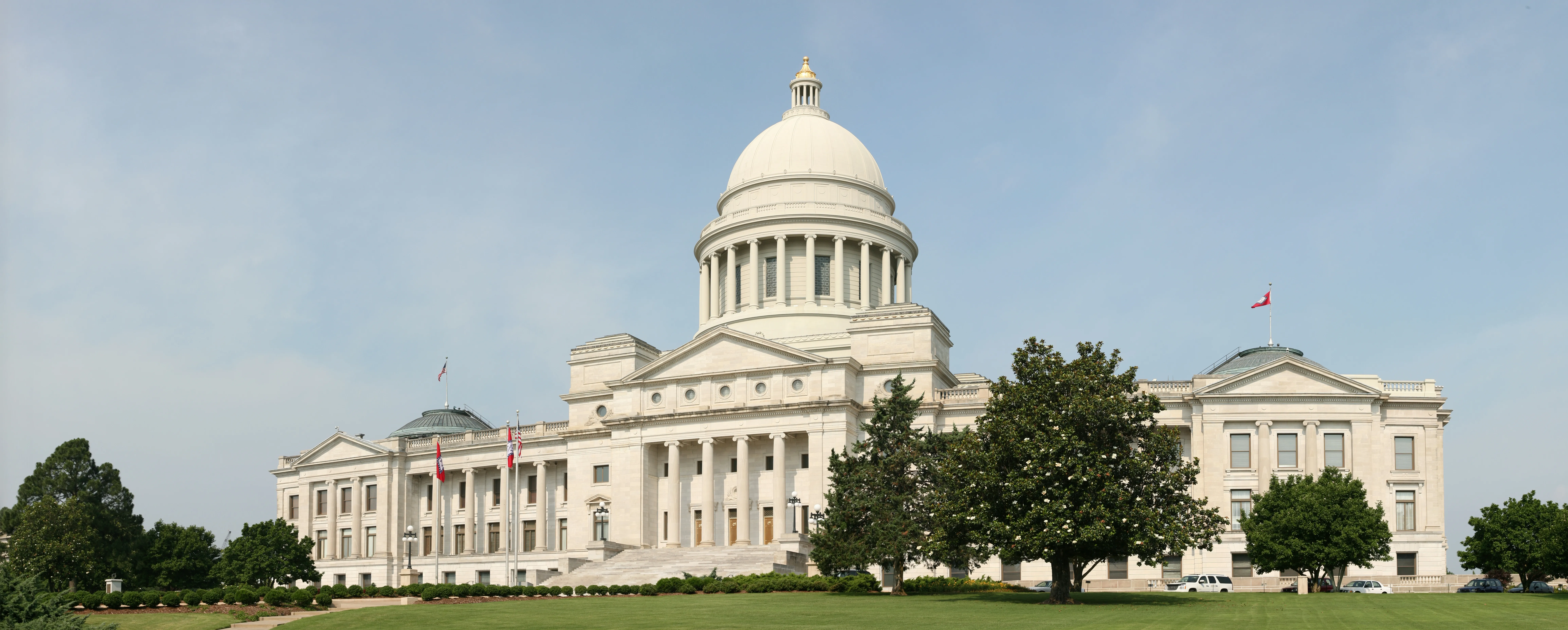
Little Rock has been the capital since 1821, when the territorial government moved there from Arkansas Post. During the Civil War, after Union troops captured Little Rock in September 1863, the Confederate state government moved to Washington, in southwest Arkansas, until the war ended. The current State Capitol was completed in 1915.
Arkansas borders six states: Missouri to the north, Tennessee and Mississippi to the east across the Mississippi River, Louisiana to the south, and Texas and Oklahoma to the west.
Arkansas is known as "The Natural State," a nickname adopted in 1995 for its forests, rivers, and mountains. Its motto is "Regnat Populus," Latin for "The People Rule." Its state bird is the northern mockingbird, its flower is the apple blossom, and its tree is the pine.
Based on the 2020 census, Arkansas has 4 seats in the U.S. House of Representatives, the same as before, which gives it 6 votes in the Electoral College.
In September 1957 nine Black students, later known as the Little Rock Nine, enrolled at Little Rock Central High School under a desegregation plan. Governor Orval Faubus used the Arkansas National Guard to keep them out, and President Dwight D. Eisenhower sent soldiers of the 101st Airborne Division to escort them into the school, a turning point in the civil rights movement. The school is now a National Historic Site.
Yes. Crater of Diamonds State Park near Murfreesboro is the only diamond-producing site in the world open to the public, and visitors may keep any diamonds they find. The largest diamond ever found in the United States, the 40-carat "Uncle Sam," was discovered there in 1924, before it became a state park.
Sources & Further Reading
- Census Regions and Divisions, U.S. Census Bureau
- 2020 Census Apportionment Results, U.S. Census Bureau
- Distribution of Electoral Votes, National Archives
- CALS Encyclopedia of Arkansas
- Arkansas Secretary of State
- Little Rock Central High School National Historic Site, National Park Service
- Crater of Diamonds State Park, Arkansas State Parks
Hot Springs National Park
America's Oldest National Reserve, Where Thermal Waters Meet History
About Hot Springs National Park
Hot Springs National Park is unlike any other unit in the system: it sits inside the city of Hot Springs, Arkansas, and protects 47 thermal springs that emerge along the base of Hot Springs Mountain at a steady 143 degrees Fahrenheit, together discharging roughly 700,000 gallons a day.
Congress set the land aside as the Hot Springs Reservation on April 20, 1832, the first time the federal government reserved land to protect a natural feature, four decades before Yellowstone. It became the 18th national park on March 4, 1921.
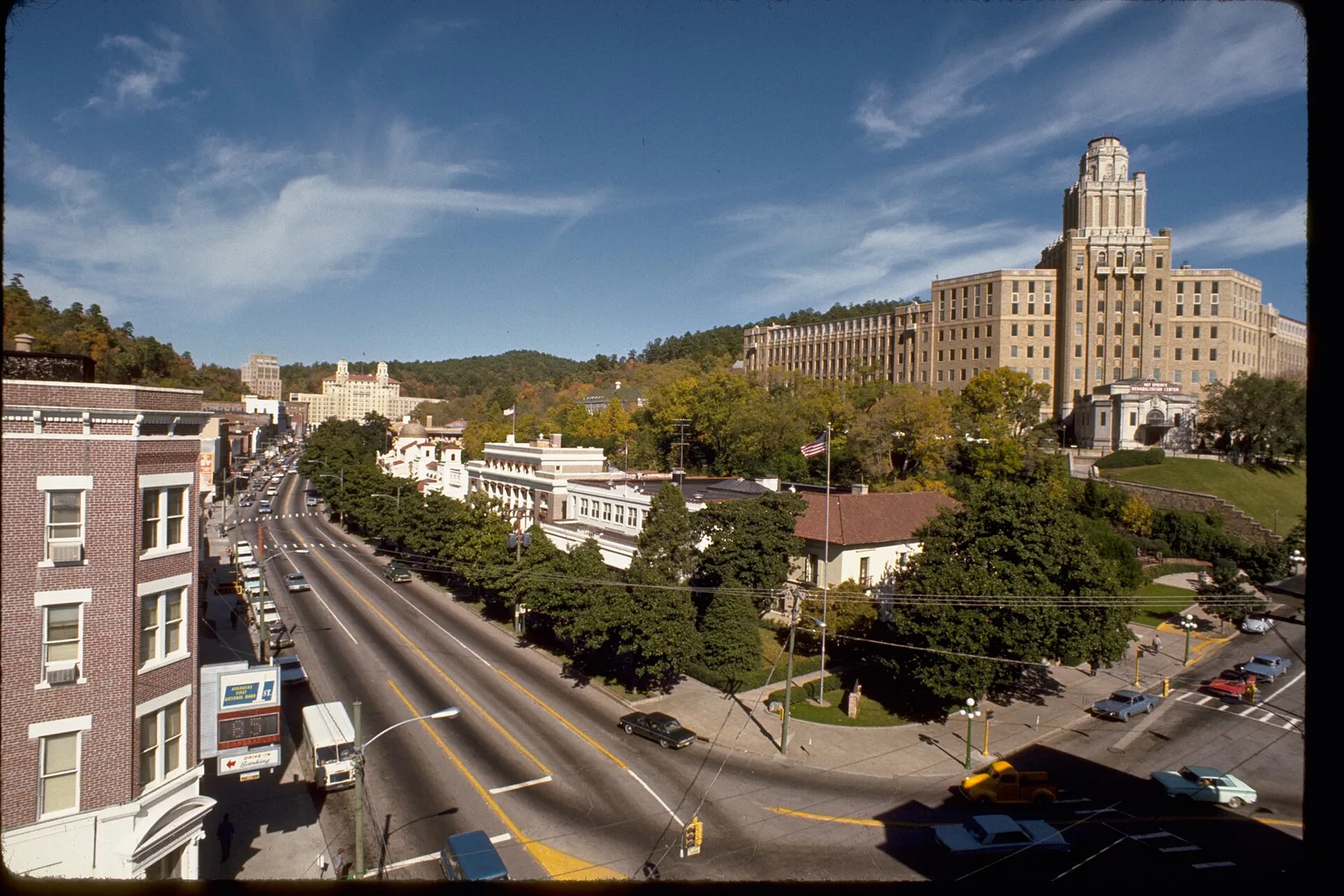
The springs' output was capped and piped in the late 1800s into a common collection system that feeds the bathhouses and the public jug fountains, so almost none runs freely down the mountain today. Grand bathhouses rose along Central Avenue between 1892 and 1923 and now form Bathhouse Row, a National Historic Landmark district.
The 1915 Fordyce Bathhouse is the park visitor center, the 1912 Buckstaff still gives traditional baths, and the others have been reused as a spa, an art center, a hotel, and Superior Bathhouse Brewery, the only brewery operating inside a United States national park, which brews with the thermal water. Behind the row, Hot Springs and North mountains hold about 26 miles of trail.
- Designation
- National Park
- Location
- Garland County, Hot Springs, Arkansas
- Established
- 1832 (reserve), 1921 (national park)
- Annual Visitors
- ~1.5 million
What Makes Hot Springs Unique
The water starts as rain falling on the ridges northeast of the park. It seeps down through fractured Paleozoic rock to depths of several thousand feet, is warmed by the Earth's normal geothermal gradient, and then rises quickly back to the surface along a fault at the foot of Hot Springs Mountain.
Radiocarbon dating by the U.S. Geological Survey shows the water spends about 4,400 years underground on the way down but only about a year making the trip back up, which is why it still reaches the surface hot.
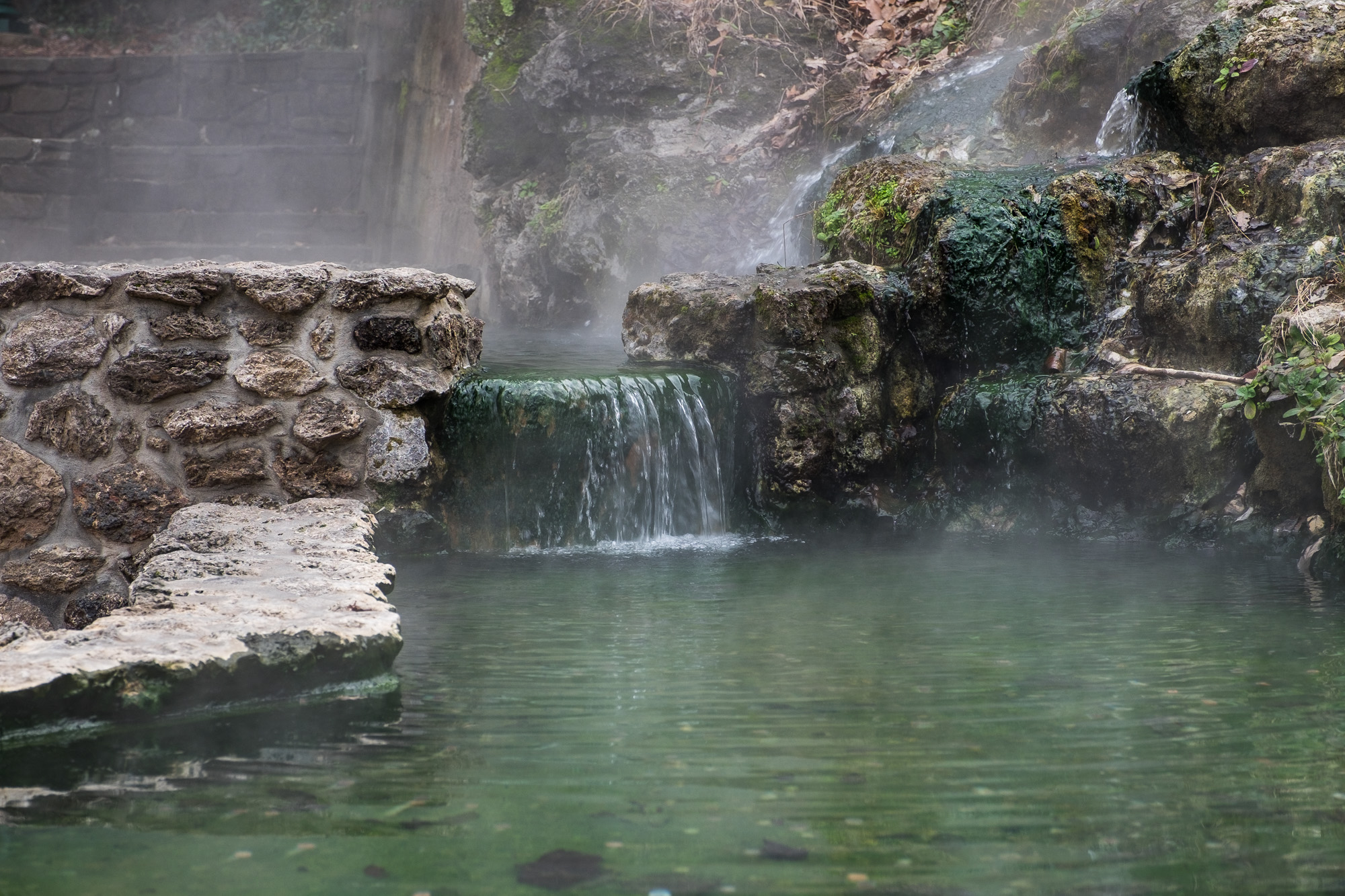
The springs are unusually pure, low in the sulfur and heavy minerals of most hot springs, and carry dissolved silica that precipitates as a spongy rock called tufa around the openings and pools.
Combined discharge averages roughly 700,000 gallons a day at about 143 degrees. The flow has declined over the decades as wells and development altered the recharge area, and the Park Service monitors it closely.
Eight bathhouses line Central Avenue, built between 1892 and 1923 as Hot Springs peaked as a resort for the wealthy and the ailing, in styles running from Spanish Colonial Revival to Italian Renaissance.
The row was named a National Historic Landmark in 1987 and is regarded as one of the finest intact collections of turn-of-the-century American spa architecture.
The government also ran a free bathhouse for people who could not pay, and reserved a share of spring water for it, so that in principle the 'water cure' was open to everyone.
Only two of the eight still bathe visitors, but the rest have been leased and reused: the Fordyce as the visitor center, the Ozark as an art center, the Hale as a hotel, the Quapaw as a modern spa, and the Superior as a brewery.
Behind the bathhouses, Hot Springs Mountain, North Mountain, West Mountain, and Sugarloaf Mountain hold about 26 miles of trail through pine and oak-hickory forest.
Many of the trails, and the stone-lined Grand Promenade that runs above the row, were laid out in the 1930s by the Civilian Conservation Corps.
The Ouachita Mountains here run east to west, one of the few ranges in North America to do so, the result of a continental collision that folded the rock roughly 300 million years ago.
The 216-foot Hot Springs Mountain Tower at the summit, run by a private concessioner, gives a view over the folded Ouachita ridges and the Diamond Lakes country to the west.
Display fountains and jug fountains around the park's edge let visitors see and touch the thermal water where it flows from the mountain.
The water is safe to drink, and residents and visitors fill jugs at fountains near the Arlington Hotel and along the Grand Promenade; the taste is faintly mineral, without the rotten-egg smell of a sulfur spring.
Two springs, one behind the Maurice Bathhouse and one on the Arlington lawn, are left uncapped and open so people can see a spring in its natural state, steaming on cool mornings.
The park keeps one cold-water fountain as well, fed by a separate cold spring and clearly signed, so visitors do not confuse it with the thermal water.
Indigenous Connections
Caddo Nation
Caddo peoples and their ancestors lived across southwest Arkansas for well over a thousand years, farming the river bottoms and quarrying novaculite, the hard stone of the Ouachitas, for tools and for trade across the Southeast.
The hot springs sat within a landscape used by many groups and known in later tradition as the 'Valley of the Vapors,' though the popular claim that it was formally neutral ground among tribes is not well documented.
The Caddo ceded their remaining Arkansas and Louisiana lands to the United States in 1835 and were pushed first into Texas and then, in 1859, to Indian Territory.
The Caddo Nation is now headquartered in Binger, Oklahoma, having been relocated during the 19th century. The Hot Springs area remains culturally significant to the Caddo people.
Quapaw Nation
The Quapaw, or Ogaxpa, held the lower Arkansas River valley when French explorers arrived in the late 1600s and gave the region and the river the name the French wrote as 'Akansa.'
Jean-Baptiste Bénard de la Harpe recorded the hot springs in 1721 from what Native guides told him, one of the earliest written accounts of the place.
In treaties of 1818 and 1824 the Quapaw gave up nearly all of their land, the Hot Springs area included, and were removed to Indian Territory, with a brief and disastrous forced stay on Caddo land in Louisiana in between.
The Quapaw Nation is now headquartered in Quapaw, Oklahoma. The tribe actively maintains cultural and historical connections to its Arkansas homeland.
Experiencing Hot Springs
Traditional Thermal Bath at Buckstaff
The Buckstaff, open since 1912, is the only bathhouse on the row still giving baths in its original fittings, and it has run continuously longer than any other.
The traditional sequence lasts about an hour and a half: a soak in a deep tub of about 100-degree thermal water with a loofah scrub, hot packs on sore joints, a sit in a vapor cabinet, and a needle shower.
The building keeps its separate men's and women's floors, marble partitions, and 1912 tubs and hydrotherapy equipment; it operates under a Park Service concession contract, one of two thermal-bath concessions in the park.
Staff tell bathers plainly that the water is genuinely hot and the full circuit is physically demanding, and they screen for heart conditions before admitting guests.
Fordyce Bathhouse Visitor Center Tour
The Fordyce, built in 1915 and the most lavish house on the row, reopened in 1989 as the park visitor center after decades standing vacant.
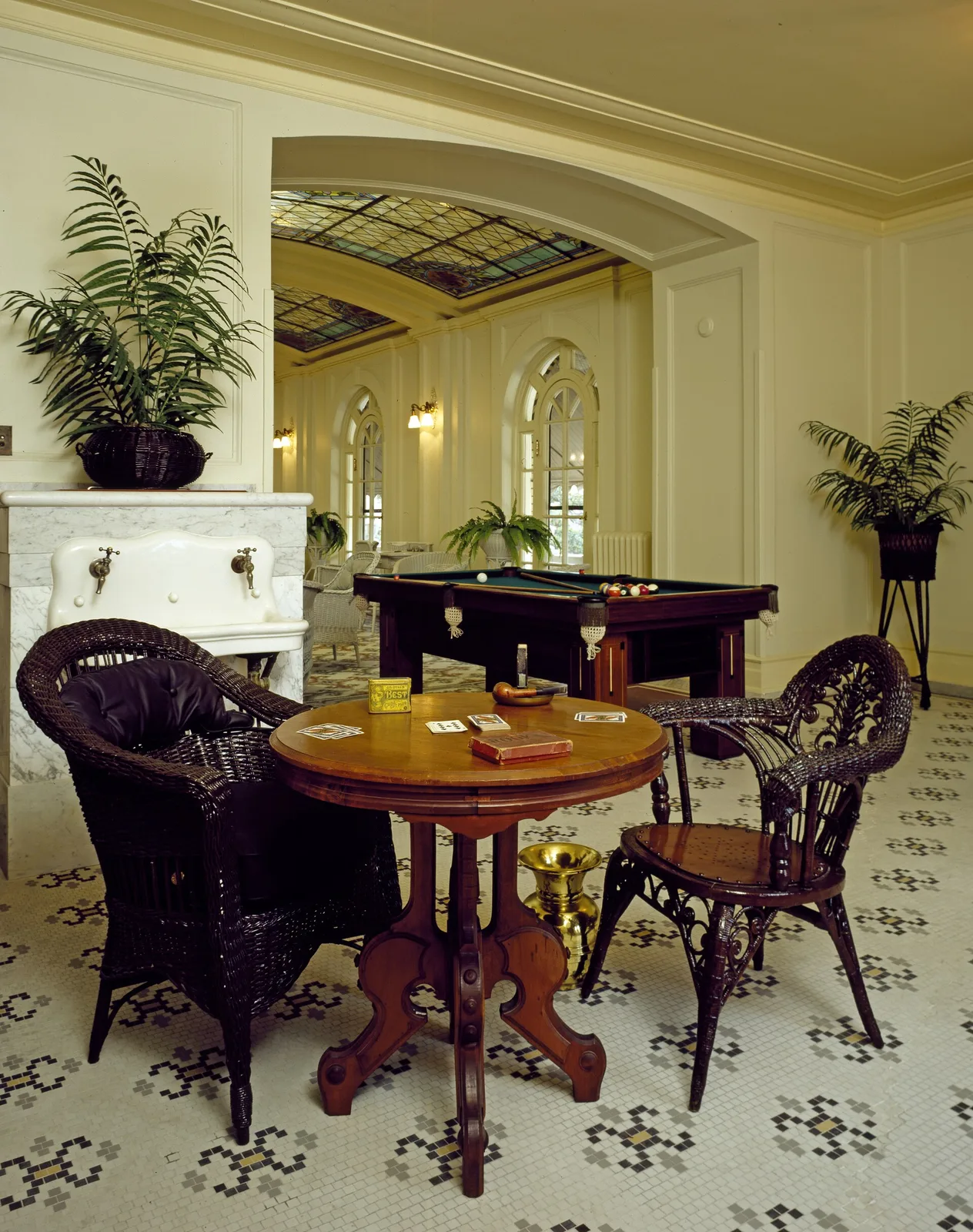
Self-guided tours cover three floors of restored rooms: the men's and women's bath halls, the marble-and-brass tub rooms, a gymnasium, a music room, and a stained-glass ceiling over the men's bath depicting a mermaid and Neptune's court.
A basement exhibit shows the Fordyce Spring itself, which the builders found during construction and enclosed under glass in the floor.
The house also had electric baths, mechanotherapy machines, and a beauty parlor, a picture of how far the water cure had turned into a full medical and leisure resort by the 1910s.
Hot Springs Mountain Trail
The loop and connector trails on Hot Springs Mountain climb through pine-oak forest to the summit and the observation tower, about 1.3 miles up from the Grand Promenade.
Much of the tread was cut by the Civilian Conservation Corps in the 1930s and is still edged with their dry-laid stone retaining walls.
The 216-foot steel tower, first raised in 1877 and rebuilt in 1906 and again in 1983, is run by a concessioner that charges for the elevator to the top deck.
From the deck the view takes in the folded ridges of the Ouachitas, the city directly below, and on clear days the Diamond Lakes reservoirs to the west.
Conservation Challenges
Spring Flow Preservation
The springs draw on a finite geothermal system, and combined flow has fallen measurably since the 1800s as wells, paving, and construction changed how much rain soaks into the recharge area northeast of the park.
Since the 1880s nearly all the water has been captured at the source and piped to a central reservoir, then sent on to the bathhouses and fountains, so almost none runs freely down the mountain any more.
The Park Service, working with the U.S. Geological Survey, tracks flow, temperature, and water chemistry to catch contamination or a drop in output early.
Federal law specifically protects the springs: the 1832 reservation and later acts bar drilling or development that could tap or divert the thermal water.
Historic Bathhouse Preservation
Keeping up eight large early-1900s buildings, some in use and some long empty, is a continuous drain on the park's budget.
The Park Service's answer has been adaptive reuse: leasing vacant bathhouses to private operators who restore and maintain them as a spa, a brewery, an art center, and a hotel.
The Superior reopened as a brewery in 2013 and the Hale as a boutique hotel in 2019, each after years shuttered.
Work anywhere in the landmark district must meet the Secretary of the Interior's historic preservation standards, which limits changes and raises costs but keeps the row intact.
Urban Interface Management
Hot Springs National Park is almost entirely inside a working city, its boundary running down the middle of Central Avenue in places.
That forces constant coordination with the city and private owners over traffic, drainage, lighting, and the appearance of buildings that face park land.
Stormwater from city streets and hillside neighborhoods drains toward the park and can carry pollutants toward the springs' recharge zone.
Wildfire on the forested mountains is a live concern because homes press right up against park woodland, so the Park Service does prescribed burning and brush clearing along the edge.
Natural thermal spring water at 143°F, emerging from deep within the Ouachita Mountains
At a Glance
Did You Know?
Hot Springs was set aside as a federal reserve in 1832, making it the oldest federally protected land in the United States, 40 years before Yellowstone became the first officially named national park.
Hot Springs was a major spring training destination for Major League Baseball teams in the late 19th and early 20th centuries. Babe Ruth trained here multiple times.
The thermal water takes approximately 4,400 years to travel from the surface, through the deep rock layers, and back up to the springs, meaning the water you see today fell as rain during the Bronze Age.
Hot Springs National Park is the only national park in the United States located almost entirely within a city, making it one of the most urban national parks in the NPS system.
Plan Your Visit
Location
Garland County, Hot Springs, Arkansas
Designation
National Park
Best Time to Visit
Year-round, spring and fall are most comfortable for hiking
Admission
Free park entry; Buckstaff baths charge separately