
Impeachment
Explained
What it is, how it works, who it's happened to, and why being impeached doesn't mean being removed from office.
What Is Impeachment?
Impeachment is the process the Constitution gives Congress to formally charge, and potentially remove, a president, vice president, or other federal official who has committed serious wrongdoing. Think of it as the government's built-in accountability system for its own leaders.
Here's the most important thing to understand right away: impeachment and removal are two completely separate things. Being impeached just means being formally charged. You can be impeached and stay in office. In fact, every president who has ever been impeached stayed in office, because impeachment is just step one of a much longer process.
Impeachment = Being Charged
The House of Representatives formally accuses an official of wrongdoing. Like being indicted by a grand jury, it starts the process but doesn't decide the outcome. The official stays in their job.
Removal = Being Convicted
The Senate holds a trial and votes to convict. Only if two-thirds of the Senate votes guilty is the person actually removed from office. This has never happened to a US president.
What the Constitution Says
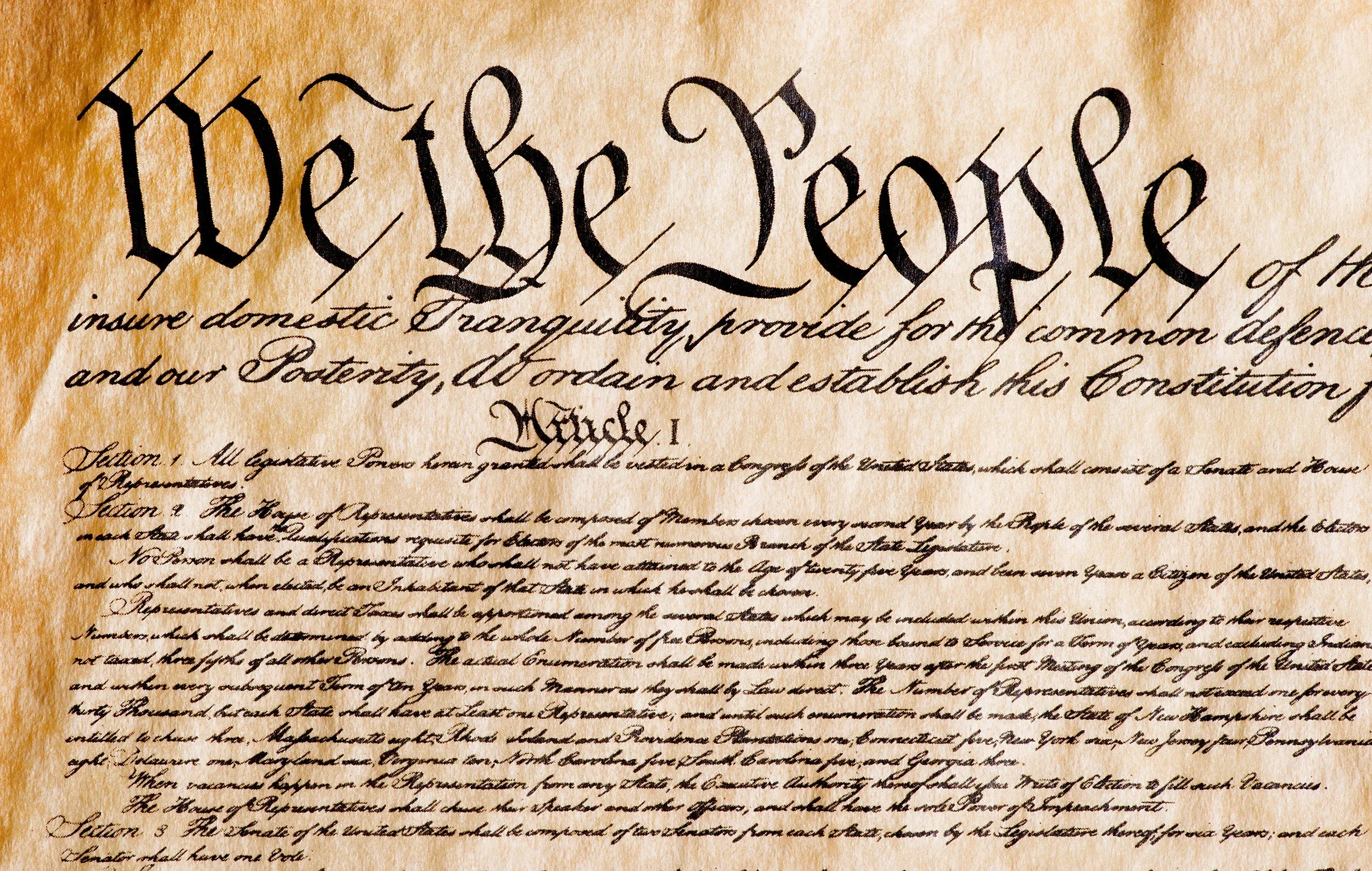
The Constitution, the source of impeachment power (Public Domain)
Impeachment is one of the Constitution's most important checks on power. It's the main way the legislative branch can hold the executive and judicial branches accountable. The founders included it specifically because they feared corrupt or tyrannical leaders, and wanted a way to remove them that didn't require a revolution.
The rules are spread across three different sections of the Constitution, each covering a different part of the process.
Article I, Section 2
"The House of Representatives... shall have the sole Power of Impeachment."
Article I, Section 3
"The Senate shall have the sole Power to try all Impeachments... And no Person shall be convicted without the Concurrence of two thirds of the Members present."
Article II, Section 4
"The President, Vice President and all civil Officers of the United States, shall be removed from Office on Impeachment for, and Conviction of, Treason, Bribery, or other high Crimes and Misdemeanors."
In short: Only the House can start impeachment. Only the Senate can hold the trial and convict. You need two-thirds of the Senate to remove someone. The grounds are treason, bribery, or "high crimes and misdemeanors", a deliberately vague phrase.
What Are "High Crimes and Misdemeanors"?
This is the big question, and the Constitution never answers it. "High crimes and misdemeanors" is one of the most debated phrases in American law. It doesn't mean what it sounds like. It doesn't necessarily mean felonies or criminal acts at all.
The phrase comes from British parliamentary law, where it meant serious abuses of power by public officials, things that violated the public trust, even if they weren't technically illegal. The founders borrowed it deliberately because they wanted flexibility.
The Famous Quote on This
"An impeachable offense is whatever a majority of the House of Representatives considers it to be at a given moment in history."
, Gerald Ford, 1970, then a House Minority Leader (before becoming President)
Ford's point was blunt but largely accurate, Congress decides what counts. In practice, impeachable conduct has included:
Who Can Be Impeached?
The Constitution says "the President, Vice President and all civil Officers of the United States." In practice that covers a wide range of federal officials:
The President
The most high-profile target. Three have been impeached. None removed.
The Vice President
Never been impeached. Spiro Agnew resigned before proceedings began in 1973.
Federal Judges
The most common target: 15 federal judges have been impeached, and eight were convicted and removed. Supreme Court Justice Samuel Chase, impeached in 1804, is the only justice ever impeached; the Senate acquitted him in 1805.
Cabinet Secretaries
Secretary of War William Belknap was impeached in 1876 for bribery. He resigned before the Senate trial, which continued anyway.
Senators and Representatives?
Technically no, members of Congress are NOT civil officers under the Constitution. They can be expelled by their own chamber instead.
Ambassadors & Others
Any presidentially appointed civil officer confirmed by the Senate falls under impeachment jurisdiction.
How the Process Works, Step by Step
Click any step to see the full details.
The process usually starts with an investigation, either by the House Judiciary Committee, a special committee formed for the purpose, or even a separate independent investigation. They gather evidence, interview witnesses, and build a record of potential wrongdoing.
Investigations can last months or years. The House can subpoena documents and compel witnesses to testify. The subject of the investigation, even the President, can respond through legal counsel. At this stage, nothing is official yet, the committee is just building its case.
The Constitution sets no fixed evidentiary standard for an impeachment inquiry, and the House has used different structures each time. In 1974 the Judiciary Committee ran the Nixon inquiry with its own staff and a bipartisan agreement on procedure. In 2019 the House Intelligence Committee took the lead on the first Trump inquiry and held public hearings before handing its findings to Judiciary. In 2019 the House also passed a resolution, H.Res. 660, formally authorizing the inquiry and setting rules for it after the White House argued that a floor vote was required.
Subpoena fights are common. During the first Trump inquiry the administration directed officials not to comply, and the House cited that refusal as the basis for its second article, obstruction of Congress. Courts have generally been slow to resolve such disputes; the litigation over former White House counsel Don McGahn's testimony ran for more than two years before it was settled.
The Government Accountability Office, agency inspectors general, and outside bodies such as the Mueller investigation can feed an inquiry, but only the House itself can convert a factual record into articles of impeachment. Gerald Ford, then House minority leader, argued in 1970 that "an impeachable offense is whatever a majority of the House of Representatives considers it to be," a much-quoted line that underscores how political rather than strictly legal the threshold is.
If the investigation finds enough evidence, the House Judiciary Committee holds formal hearings. They debate whether the evidence rises to the level of impeachable conduct and draft the specific charges, called articles of impeachment.
Each article of impeachment is a separate formal charge. One article might allege abuse of power. Another might allege obstruction of Congress. The committee votes on each article. The ones that pass move forward to the full House.
The 1974 Nixon inquiry produced the modern template. The Judiciary Committee approved three articles, obstruction of justice, abuse of power, and contempt of Congress, and rejected two others relating to the secret bombing of Cambodia and Nixon's personal taxes. That mix of adopted and rejected articles showed the committee drawing a line between conduct it viewed as impeachable and policy disputes it did not.
Committee markups of articles are partisan set pieces. The Clinton articles cleared the Judiciary Committee in December 1998 on near party-line votes, as did both sets of Trump articles in 2019 and 2021. Members offer amendments, the minority typically moves to strike or water down each article, and those motions almost always fail.
The committee issues a written report explaining the constitutional basis for each article and summarizing the evidence. The 1974 report's discussion of what counts as a "high crime or misdemeanor," drawing on English parliamentary practice and the Constitutional Convention debates, is still cited by both parties as an authoritative reference.
The full House of Representatives debates and votes on each article of impeachment. A simple majority, 218 out of 435, is all that's needed to pass an article. If even one article passes, the official is impeached.
Being impeached does NOT mean being removed from office. It means being formally charged, the equivalent of being indicted. The official stays in their position while the process continues. The House then appoints members called 'impeachment managers' who will prosecute the case in the Senate trial.
The threshold is a majority of members present and voting, so the exact number needed shifts with attendance, though in practice recent impeachment votes have drawn nearly the full House. Andrew Johnson was impeached 126 to 47 in 1868, Bill Clinton on two articles in 1998, Donald Trump on two articles in 2019 (230-197 and 229-198), and Trump again in 2021 by 232 to 197.
A separate House resolution names the managers and, since 1986, is usually combined with the vote to notify the Senate. The number has ranged widely: the House sent 13 managers for Clinton, 7 for the first Trump trial, and 9 for the second. Managers are traditionally drawn from the Judiciary Committee, though Speaker Nancy Pelosi in 2021 chose a slate led by Rep. Jamie Raskin, a former constitutional law professor.
Fifteen federal judges, one senator, two cabinet secretaries (War Secretary William Belknap in 1876 and Homeland Security Secretary Alejandro Mayorkas in 2024), and three presidents have been impeached by the House. The Senate dismissed the Mayorkas articles in April 2024 without a trial. Only the House can impeach; the Constitution gives it "the sole Power of Impeachment" in Article I, Section 2.
Once impeached, the case moves to the Senate for trial. The Senate acts as the jury. For presidential impeachments, the Chief Justice of the Supreme Court presides. The House managers act as prosecutors. The impeached official's legal team presents the defense.
Both sides present evidence and arguments. Senators can submit written questions. The Senate votes on whether to allow witnesses and additional evidence. The whole process can take days or weeks. Senators are under oath to act as impartial jurors, though in practice, votes tend to follow party lines.
The Chief Justice presides only when the sitting president is on trial, as Salmon Chase did for Johnson in 1868 and William Rehnquist for Clinton in 1999. For everyone else, the presiding officer is the vice president or the Senate president pro tempore. Because Donald Trump had already left office when his second trial began in February 2021, Chief Justice John Roberts declined to preside and Sen. Patrick Leahy, the president pro tempore, ran the trial instead.
The Senate adopts the trial rules by simple majority resolution at the start of each proceeding, setting the schedule, the length of opening arguments, and whether witnesses will be called. In 2021 the Senate briefly voted to allow witnesses, then reversed course after the parties agreed to enter a written statement into the record, and the trial concluded the same day.
The standing Rules of Procedure and Practice for impeachment trials date to 1868 and were last revised in 1986. They allow the Senate to appoint a committee to take evidence, a shortcut used in several judicial impeachments; the Supreme Court upheld that practice in Nixon v. United States (1993).
After the trial, the Senate votes on each article of impeachment. To convict and remove someone from office, two-thirds of senators present must vote guilty, that means 67 votes if all 100 senators are present. This is a very high bar on purpose.
If convicted, the person is immediately removed from office. The Senate can also hold a second vote to bar them from ever holding federal office again, this requires only a simple majority. If acquitted on all articles, the person remains in office as if nothing happened legally, though the political damage is usually significant.
The two-thirds requirement in Article I, Section 3 has never been met for a president. Johnson survived by a single vote in 1868 (35-19). Clinton's articles drew 45 and 50 guilty votes in 1999. Trump's first trial ended 48-52 and 47-53; his second ended 57-43, the closest any presidential trial has come, with seven Republicans joining every Democrat.
Only eight officials, all federal judges, have ever been convicted and removed. The most recent was Judge G. Thomas Porteous of Louisiana in 2010. In three of those cases the Senate took the follow-up vote to disqualify the person from future office, which it treats as requiring only a simple majority: West Humphreys in 1862, Robert Archbald in 1913, and Porteous, disqualified by a 94-2 vote on December 8, 2010.
Acquittal carries no double-jeopardy protection, because impeachment is not a criminal proceeding. The Constitution's Article I, Section 3 expressly states that a convicted or acquitted official "shall nevertheless be liable and subject to Indictment, Trial, Judgment and Punishment, according to Law" in the regular courts.
The Presidential Impeachments in History
Three presidents have been impeached. None have been convicted and removed. Here's what happened in each case, presented factually and without political commentary.
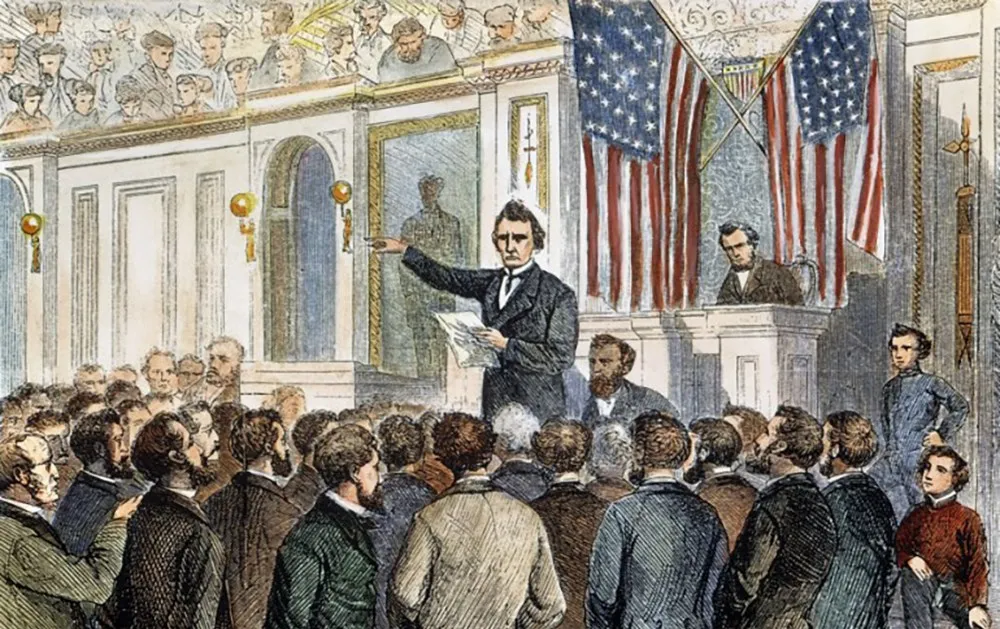
The impeachment trial of President Andrew Johnson in the Senate, 1868, the first presidential impeachment in US history (Public Domain)
Andrew Johnson
17th President, Impeached 1868
The Charge
Violated the Tenure of Office Act by firing Secretary of War Edwin Stanton without Senate approval
House Vote
Impeached, 126 to 47
Senate Vote
Acquitted, fell one vote short of the 2/3 needed to convict (35-19)
What Happened
Remained in office. Served out his term. The Tenure of Office Act was later repealed.
Context
Johnson clashed bitterly with the Republican-controlled Congress over Reconstruction policy after the Civil War. He vetoed the Civil Rights Act of 1866 and the bills extending the Freedmen's Bureau, and Congress overrode him repeatedly. Many historians consider the impeachment more political than legal, a fight over who would control the terms of readmitting the former Confederate states.
The Tenure of Office Act, passed over Johnson's veto in 1867, barred the president from removing certain officials without Senate consent. Johnson deliberately fired Stanton, a Lincoln holdover allied with the Radical Republicans, to test the law in court. The House impeached him three days later, adopting 11 articles, most of them variations on the Stanton dismissal.
The Senate trial ran from March to May 1868 with Chief Justice Salmon Chase presiding. On the decisive vote on the eleventh article, seven Republicans broke with their party to acquit, most famously Sen. Edmund Ross of Kansas, whose vote John F. Kennedy later profiled in "Profiles in Courage." The final tally, 35 to 19, was one short of the two-thirds needed.
The Supreme Court effectively vindicated Johnson's constitutional position decades later. In Myers v. United States (1926), the Court held that the president has the exclusive power to remove executive officers, and Congress had already repealed the Tenure of Office Act in 1887.
Bill Clinton
42nd President, Impeached 1998
The Charge
Perjury and obstruction of justice stemming from false statements about his relationship with White House intern Monica Lewinsky
House Vote
Impeached on 2 of 4 articles, perjury (228-206) and obstruction (221-212)
Senate Vote
Acquitted on both articles, neither reached the 2/3 threshold
What Happened
Remained in office. Finished his second term. Law license suspended for five years.
Context
The impeachment grew out of Independent Counsel Kenneth Starr's investigation, which began as an inquiry into the Whitewater real estate dealings and expanded to cover Clinton's testimony in a sexual harassment lawsuit filed by Paula Jones. Clinton had denied the relationship with Lewinsky under oath in a January 1998 deposition in that civil case.
Starr's report to the House in September 1998 laid out 11 possible grounds for impeachment. The Judiciary Committee approved four articles; the full House passed two, perjury before a grand jury and obstruction of justice, on near party-line votes in December 1998, making Clinton the second president ever impeached.
The five-week Senate trial in early 1999 featured videotaped depositions rather than live witnesses. The final votes were 45-55 on perjury and 50-50 on obstruction, both well short of 67. No Democrat voted to convict on either article; a handful of Republicans voted to acquit.
The consequences played out elsewhere. On his last full day in office in January 2001, Clinton agreed with the Independent Counsel to a five-year suspension of his Arkansas law license and a $25,000 fine, and acknowledged giving false testimony, in exchange for an end to any criminal prosecution. The independent counsel statute itself was allowed to lapse in 1999.
Donald Trump
45th President, Impeached 2019 (First)
The Charge
Abuse of power and obstruction of Congress related to withholding military aid from Ukraine while requesting a political investigation
House Vote
Impeached on both articles, abuse of power (230-197) and obstruction (229-198)
Senate Vote
Acquitted on both articles. One Republican crossed party lines on abuse of power.
What Happened
Remained in office. Lost the 2020 presidential election to Joe Biden.
Context
The first impeachment arose from a whistleblower complaint about a July 2019 phone call in which Trump asked Ukrainian President Volodymyr Zelensky to "do us a favor" and investigate Joe Biden and his son Hunter while roughly $391 million in congressionally approved military aid was on hold. It was the third presidential impeachment in US history.
The House Intelligence Committee ran the fact-finding phase and held two weeks of public hearings in November 2019, taking testimony from diplomats and National Security Council staff. The Judiciary Committee then drafted two articles: abuse of power and obstruction of Congress, the latter based on the White House's blanket refusal to provide documents or witnesses.
Speaker Nancy Pelosi held the articles for nearly a month before transmitting them, seeking assurances about trial procedure. The Senate trial began in January 2020; on a 51-49 vote the chamber declined to subpoena new witnesses or documents.
The February 5, 2020 verdict was 52-48 to acquit on abuse of power and 53-47 on obstruction. Sen. Mitt Romney of Utah voted guilty on the first article, becoming the first senator in history to vote to convict a president of his own party.
Donald Trump
45th President, Impeached 2021 (Second)
The Charge
Incitement of insurrection related to the January 6, 2021 attack on the US Capitol
House Vote
Impeached, 232 to 197, with 10 Republicans voting yes, the most bipartisan presidential impeachment in history
Senate Vote
Acquitted, 57 guilty, 43 not guilty. Majority voted to convict but fell short of 2/3.
What Happened
Remained out of office (term had already ended). Won the 2024 presidential election.
Context
The fastest impeachment in US history, the single article was introduced on January 11, 2021 and passed the House on January 13, one week after a mob stormed the Capitol during the counting of electoral votes. Ten House Republicans, including Conference Chair Liz Cheney, voted to impeach.
Because Trump's term ended on January 20, the Senate trial did not begin until February 9, raising the threshold question of whether the Senate can try a former official. The Senate voted 56-44 that the trial was constitutional, with scholars split; the House managers argued there is no "January exception" that lets a president act with impunity in his final weeks.
Chief Justice John Roberts declined to preside over a trial of someone no longer president, so Sen. Patrick Leahy, the Senate president pro tempore, took the chair. The trial lasted five days and relied heavily on Capitol security video.
The February 13, 2021 vote was 57 guilty to 43 not guilty, ten short of conviction but the most bipartisan verdict in any presidential impeachment: seven Republicans, Burr, Cassidy, Collins, Murkowski, Romney, Sasse, and Toomey, voted guilty. Minority Leader Mitch McConnell voted to acquit but then said Trump was "practically and morally responsible" for the attack. Because there was no conviction, the Senate never reached a vote on barring Trump from future office.
The One Who Resigned: Richard Nixon
Richard Nixon is often mentioned alongside impeachment, but he was never actually impeached. He is the only US president to have resigned from office.
The House Judiciary Committee had voted, in late July 1974, to recommend three articles of impeachment. Had he not resigned, the full House would have voted on those articles in August, and House and Senate leaders of both parties told Nixon the votes to impeach and convict were there. His resignation on August 9, 1974 ended the process before any floor vote, so the articles were never formally adopted by the House.
The turning point was the Supreme Court's unanimous 8-0 decision in United States v. Nixon on July 24, 1974, which rejected his claim of an absolute executive privilege and ordered him to surrender the Oval Office tape recordings. One tape, from June 23, 1972, captured Nixon approving a plan to have the CIA block the FBI's Watergate investigation, and became known as the "smoking gun." Its release on August 5 collapsed his remaining support among congressional Republicans.
The Watergate investigations produced dozens of convictions of Nixon aides and campaign officials, including former Attorney General John Mitchell, White House counsel John Dean, and advisers H.R. Haldeman and John Ehrlichman. A federal grand jury named Nixon himself an unindicted co-conspirator in March 1974. Congress responded to the scandal with a wave of reforms, among them the Ethics in Government Act of 1978, which created the independent counsel mechanism later used against President Clinton.
The Scandal
The Watergate scandal, a 1972 break-in at the Democratic National Committee headquarters that Nixon's administration tried to cover up. Investigations revealed a broad pattern of political espionage, sabotage, and illegal surveillance.
The Tapes
Nixon had recorded conversations in the Oval Office. When investigators subpoenaed them, Nixon refused and tried to have the special prosecutor fired. The Supreme Court unanimously ruled he had to hand over the tapes.
The Articles
The House Judiciary Committee approved three articles of impeachment: obstruction of justice, abuse of power, and contempt of Congress. A full House vote seemed certain to pass.
The Resignation
Before the full House could vote, Nixon was told by Republican leaders that he had lost enough support that the Senate would likely convict him. On August 9, 1974, he resigned, the only president in history to do so.
Gerald Ford's Pardon: When Nixon resigned, Vice President Gerald Ford was sworn in as president. One month later, Ford issued a full and unconditional pardon to Nixon for all crimes he "committed or may have committed" as president. The pardon was deeply controversial and likely cost Ford the 1976 election. Nixon was never charged with a crime.
What Happens If Someone Is Actually Convicted?
Since no president has ever been convicted, this is somewhat theoretical for the executive branch, but it has happened with federal judges. Here's what the Constitution and law say would follow a conviction:
Immediate Removal from Office
The convicted official is removed from their position the moment the Senate vote is certified. There is no appeal, no grace period, no delay. They leave immediately.
Optional: Disqualification from Future Office
The Senate can hold a second vote, requiring only a simple majority, to permanently bar the convicted person from ever holding federal office again. This is optional and separate from the conviction vote.
No Protection from Criminal Prosecution
The Constitution explicitly says impeachment conviction does not protect someone from criminal prosecution. After removal, they can still be indicted, tried, convicted, and imprisoned by regular courts for the same conduct.
Presidential Succession
If a president is removed, the Vice President immediately becomes president. The line of succession then continues as normal.
Quick Facts
Where to Find It
Did You Know?
The first impeachment wasn't a president
The first federal impeachment was in 1797, Senator William Blount of Tennessee, charged with conspiring to help Britain seize Spanish territory. The Senate expelled him before the trial concluded and then decided senators weren't 'civil officers' subject to impeachment.
A judge was impeached for being drunk on the bench
Federal Judge John Pickering was impeached and removed in 1804, partly for being intoxicated while presiding over cases. He was also reportedly mentally ill. It remains one of the more unusual cases in impeachment history.
Impeachment tickets were a thing
The 1868 Johnson impeachment trial was a massive public spectacle. The Senate issued tickets to attend the proceedings. Demand was so high that tickets were scalped and forged, and crowds lined up outside the Capitol for a chance to witness history.
It can happen after you leave office
The Senate debated this during Trump's second trial. The prevailing view among legal scholars is that impeachment CAN proceed after someone leaves office, to impose the punishment of barring them from future office, but the question remains constitutionally unsettled.