
The Urban-Rural Political Divide
Cities vote Democratic. Rural areas vote Republican. It feels like it has always been this way. It has not. Here is how the divide was actually built, decade by decade.
The Divide Is Younger Than You Think
The map of blue cities and red countryside feels permanent. It isn't. For most of American history, the primary divide was regional, not urban versus rural, and for a long stretch, rural America was the country's most radical political force, not its most conservative.
For most of American history, the primary political fault line was not city versus countryside. It was region. Before the Civil War, worldviews and party loyalty tracked North and South far more than density: a wealthy planter in rural South Carolina and an urban merchant in Charleston shared a political outlook shaped by slavery and states' rights, while their counterparts above the Mason-Dixon line shared a very different one. The urban-rural conflict that exists today has roots stretching back to the founding, but for well over a century it was regional and sectional identity, not population density, that decided how Americans voted.
Even within this regional divide, differences of urban and rural interest still appeared on specific issues, most clearly on tariffs: Northern urban manufacturing interests generally favored high tariffs to protect domestic industry, while many rural farmers, who paid more for manufactured goods as a result, favored lower tariffs, a tension that ran beneath the dominant North-South alignment for most of the 19th century.
The Constitution itself reflected an early rural-commercial tension. Small-farm interests worried that a strong central government would serve merchant and creditor interests concentrated in port cities such as Boston, New York, and Philadelphia, while Federalists like Alexander Hamilton built support around commerce, banking, and manufacturing. Thomas Jefferson's vision of a republic of independent yeoman farmers was in part a deliberate answer to that urban commercial model.
When the party system took shape in the 1790s, the Federalists drew disproportionately from New England towns and commercial centers, and the Jeffersonian Republicans from the rural South and West. That alignment did not last. By the Jacksonian era of the 1830s, both major parties, Democrats and Whigs, competed actively in cities and countryside alike, with the sharpest divisions running along sectional and economic lines rather than density.
Here is the fact that surprises most people: for a long stretch of American history, rural areas were the source of the country's most left-wing, anti-establishment politics, not its most conservative. In the late 1800s, small farmers crushed by falling crop prices, predatory railroad rates, and bank debt organized the Grange, then the Farmers' Alliance, then the People's Party, known as the Populists. Their 1892 Omaha Platform demanded a graduated income tax, government ownership of the railroads, the direct election of senators, and an expanded money supply to ease farmers' debts, radical demands at the time, aimed squarely at concentrated urban banking and corporate wealth. In 1896, Democratic nominee William Jennings Bryan, a rural Nebraskan, fused with the Populists and delivered his famous Cross of Gold speech attacking Eastern financial elites. Rural America was not the conservative bloc of its day. It was the insurgent one.
Bryan lost the 1896 election to Republican William McKinley, whose campaign, managed by Mark Hanna, drew heavily on funding and support from urban industrial and business interests, a party alignment that foreshadowed divisions that would later solidify. Political scientist V. O. Key later pointed to 1896 as one of the clearest examples of a "critical," or realigning, election in American political history.
The Populist surge was regionally concentrated in the cotton South and the wheat and corn belt of the Great Plains, where farmers were most exposed to volatile world commodity prices and to freight rates set by a handful of railroads. Populists elected governors, members of Congress, and state legislators across Kansas, Nebraska, the Dakotas, and parts of the South in the early 1890s before fusing with the Democrats in 1896.
Many Populist demands that seemed radical in 1892 became law within a generation: the federal income tax (the Sixteenth Amendment, 1913), the direct election of senators (the Seventeenth Amendment, 1913), a more elastic currency and central bank (the Federal Reserve Act, 1913), and later federal regulation of railroads and commodity markets. Historians often describe the Progressive Era and the New Deal as, in part, the eventual enactment of a rural protest agenda.
Political scientist Jonathan Rodden, author of Why Cities Lose, has documented something striking in county-level voting data: there was essentially no meaningful correlation between population density and Democratic voting in the early twentieth century, outside of a couple of Northeastern states. A dense city and a sparse farm county were about equally likely to vote either way. The pattern familiar today, cities voting heavily Democratic and rural counties voting heavily Republican, simply did not exist yet. It had to be built, and the building began with one specific event.
Rodden's research found that even in the handful of Northeastern states where a density-party correlation appeared earlier than elsewhere, it was driven less by density itself than by immigrant, often Catholic, populations clustering in cities and voting Democratic for ethnic and religious reasons largely unrelated to urban-versus-rural geography as such.
In 1896, one of the most geographically polarized elections before the modern era, the split ran East versus West and creditor versus debtor, not city versus farm. Bryan's agrarian coalition swept the rural South and Plains while McKinley carried the industrial Northeast and Midwest, including many farm counties in those regions that feared Bryan's inflationary silver policy.
Through the 1920s, Republicans dominated national politics by winning both prosperous cities and much of the rural North, while the Democratic base was the still largely rural, still overwhelmingly white "Solid South" left over from Reconstruction. The modern arrangement, in which the densest places and the sparsest places sit at opposite poles, is a product of the twentieth century's second half.

The Populist movement of the 1890s, rooted in rural farming communities, pushed for radical reforms including a graduated income tax and government ownership of railroads.
Where the Correlation Actually Begins
Political scientists who study county-level voting data point to one specific decade when density and party affiliation first became linked: the 1930s, and one specific cause: the Great Depression and the New Deal.
The Great Depression devastated both cities and farms, but it broke the existing political order entirely. Franklin Roosevelt's landslide victory over Herbert Hoover, and the enormous Democratic congressional majorities that came with it, opened the door to a fundamentally new coalition, one built around economic class rather than region.
Roosevelt won the 1932 election by a decisive 472 to 59 electoral vote margin, and Democrats gained roughly 100 seats in the House the same year, giving the party the kind of commanding congressional majority needed to pass the sweeping legislative agenda that followed.
Hoover had carried 40 states in 1928; four years later he won six. The collapse was nationwide, but it was sharpest in the industrial cities and mining regions where unemployment ran highest, giving Democrats durable majorities in urban congressional districts they had rarely held before.
The 1932 Democratic platform still said relatively little about the specific programs to come. What Roosevelt offered was less a detailed plan than a promise of federal action, and the scale of his win, plus roughly two-to-one Democratic margins in both chambers of Congress, gave him room to improvise the New Deal over the following four years.
Roosevelt's New Deal programs, Social Security, the Wagner Act protecting union organizing, work relief programs administered through city political machines, spoke directly to the industrial working class concentrated in cities. Union membership tripled during the decade. The Congress of Industrial Organizations, newly formed and aggressively political, mobilized millions of factory workers, many of them recent immigrants, into a unified Democratic voting bloc for the first time in American history. This is the moment Jonathan Rodden identifies as the origin of the density-party correlation: it emerged specifically in the manufacturing states of the Northeast and Midwest during the New Deal, and nowhere else at first.
The Congress of Industrial Organizations formed in 1935 after breaking away from the more craft-focused American Federation of Labor, specifically to organize mass-production industries like steel and automobiles, sectors concentrated in and around major cities, reinforcing the geographic concentration of the new labor-based Democratic coalition.
The Wagner Act of 1935 guaranteed private-sector workers the right to organize and bargain collectively and created the National Labor Relations Board to enforce it. Union membership rose from roughly 3 million in 1933 to about 10 million by 1941, and organized labor became a core institutional pillar of the Democratic coalition for the next half century.
Work-relief agencies such as the Works Progress Administration and the Public Works Administration channeled federal money through state and city governments, which strengthened the big-city Democratic machines that handed out the jobs. The effect, Rodden argues, was to weld industrial-city voting to the Democratic Party in the Northeast and Great Lakes states first, decades before a similar density-party pattern appeared in the South or West.
It is a common misconception that rural America has always voted Republican. It has not. In 1932, large numbers of Plains-state farmers who typically voted Republican broke for Roosevelt, and New Deal programs, farm price supports, rural electrification through the Rural Electrification Administration, and small-bank protections under Glass-Steagall, kept many rural voters loyally Democratic for the next several decades. The New Deal coalition FDR built was not urban versus rural. It was a broad alliance of urban labor, rural farmers, Northern Black voters, and, uneasily, white Southern segregationists, all bound together by economic circumstance rather than geography.
Agricultural prices had already collapsed nearly a decade before the broader 1929 stock market crash, leaving many farmers in financial distress well before the wider Depression began, which helps explain why Plains-state farmers proved so receptive to Roosevelt's 1932 campaign even after voting Republican in most prior elections of the 20th century.
The Rural Electrification Administration, created in 1935, brought electric power to farms that private utilities had refused to serve; the share of American farms with electricity rose from about a tenth in the mid-1930s to roughly 80 percent by 1950 and more than 90 percent by the mid-1950s. Farm price supports under the Agricultural Adjustment Acts paid farmers to limit production and put a floor under crop prices.
These programs bought lasting rural loyalty. Many Plains and Upper Midwest farm counties that had voted Republican for decades stayed with Democrats through the 1940s, and rural Southern whites remained overwhelmingly Democratic until the civil rights realignment. The rural drift toward Republicans is a story that mostly begins after 1964, not before.
For roughly three decades, the New Deal coalition delivered Democrats the presidency in seven of nine elections and control of Congress for all but four years. It was an unstable alliance, Northern liberal reformers and Southern segregationist Democrats agreed on almost nothing except which party's name to run under, but it held. The tension inside that coalition, largely over race, was building toward a rupture that would eventually redraw the political map entirely.
The first visible crack came in 1948, when Southern delegates walked out of the Democratic National Convention over a civil rights platform plank and ran Senator Strom Thurmond as a breakaway States' Rights Democratic, or "Dixiecrat," candidate, who went on to carry four Southern states in that year's general election.
Harry Truman held the coalition together in 1948 despite defections on both flanks, the segregationist Dixiecrats on the right and Henry Wallace's Progressives on the left, by campaigning hard on New Deal economics and farm policy in the Midwest. Dwight Eisenhower's Republican wins in 1952 and 1956 owed more to his personal popularity and Cold War credentials than to any partisan realignment, and Democrats kept control of Congress for most of the decade.
Beneath the surface, suburbanization was beginning to reshape the map. The postwar housing boom, financed heavily by federally backed mortgages that were often unavailable in Black or urban neighborhoods, moved millions of white families out of central cities into new suburbs whose politics would prove more competitive, and eventually more Republican, than the cities they left.
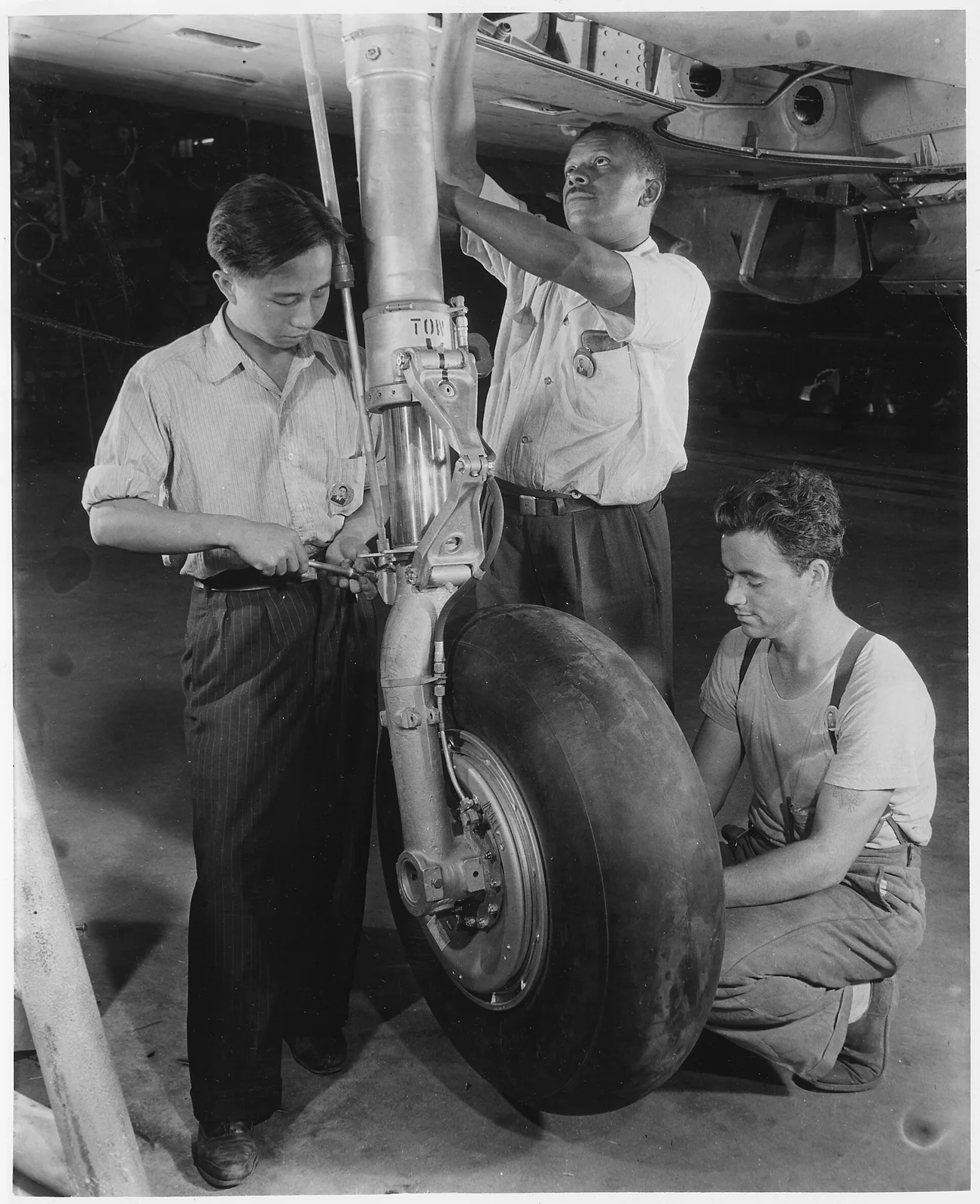
Urban factory workers, newly organized into industrial unions during the 1930s, formed the first electoral bloc where density reliably predicted Democratic voting.
How the Modern Map Was Drawn
Between the 1960s and the 2000s, four overlapping trends, the civil rights realignment, self-selected migration by lifestyle, a widening education gap, and possibly the psychology of density itself, transformed a loose New Deal coalition into the sharply sorted map recognizable today.
When President Lyndon Johnson signed the Civil Rights Act of 1964 and the Voting Rights Act of 1965, he reportedly told an aide he had just delivered the American South to the Republican Party for a generation. The prediction proved largely accurate. Over the following decades, white Southern Democrats, uncomfortable with their party's national embrace of civil rights, gradually shifted to the Republican Party, while Black voters, previously divided, became overwhelmingly Democratic. This was a slow, multi-decade process, not an overnight flip, but it fundamentally reorganized both parties' coalitions and set the stage for the divide that followed.
Strom Thurmond, the same senator who had run as a Dixiecrat in 1948, became the first prominent sitting Southern Democrat to formally switch to the Republican Party in 1964, a highly visible early sign of the realignment Johnson had predicted.
The realignment was gradual and generational. White Southerners kept electing conservative Democrats to state and local office well into the 1990s even as they voted Republican for president, and several Deep South legislatures did not flip to Republican control until the 2010s. Party switching among sitting officeholders, from Thurmond in 1964 to Senator Richard Shelby of Alabama in 1994, marked the visible milestones.
Black voters moved the other way and faster. Having split their votes between the parties in the 1950s, Black Americans gave Democrats roughly 90 percent or more of their presidential vote from 1964 onward, a level of party loyalty without parallel among any other large group in the American electorate.
In 2008, journalist Bill Bishop published The Big Sort, arguing that since the 1970s Americans have increasingly chosen where to live not just for jobs, but for compatible neighbors, lifestyle, and values. Bishop's research found that the share of Americans living in landslide counties, places where one party wins by 20 points or more, roughly doubled between the 1970s and the 2000s. People with liberal, cosmopolitan values gravitated toward dense, diverse cities; people with more traditional, communitarian values gravitated toward small towns and rural areas. Bishop argues this is rarely a conscious political choice, it is a choice about lifestyle and community that happens to correlate strongly with political identity. Not all researchers agree on how large this effect is: a Hoover Institution analysis using voter registration data found evidence of counties becoming less uniformly partisan over the same period, not more, a reminder that this remains a genuinely contested area of political science.
Bishop's original analysis found that the share of Americans living in landslide counties rose from about 26 percent in the 1976 presidential election to nearly 48 percent by the 2004 election, a near-doubling he argued reflected decades of self-selected relocation rather than a sudden shift tied to any single election.
Bishop's thesis has drawn sustained criticism. Analyses using precinct-level rather than county-level data, and studies of how individuals actually behave when they move, generally find that people rarely choose a home primarily for its politics, and that partisan sorting owes more to existing residents changing their party over time than to migration. Political scientists such as Samuel Abrams and Morris Fiorina have argued the "big sort" is overstated.
Even Bishop's critics accept the underlying pattern that landslide counties have become more common; they dispute the mechanism. Whether the sorting comes from who moves where, from partisan conversion in place, or from the changing economic fortunes of different kinds of places, is one of the more actively contested questions in the field.
In 1970, urban and rural counties had nearly identical rates of four-year college degree attainment, a gap of only about five percentage points. By 2020, that gap had widened enormously: roughly 35 percent of adults in urban counties held a four-year degree compared to about 21 percent in rural counties. Academic research published in Perspectives on Politics found that this educational divergence, not present at the start of the period, became one of the strongest predictors of the rural shift toward Republicans beginning around 2008. Education levels correlate strongly with a cluster of cultural attitudes, on immigration, on social change, on institutional trust, that increasingly track the urban-rural line as well.
The shift was sharpest among white voters specifically: white voters without a four-year degree, a group closely divided between the parties as recently as 2012, moved toward Republican candidates by wide margins in the elections that followed, while white college graduates moved in the opposite direction over the same years.
The gap compounds because college graduates are highly mobile and tend to move toward metro job markets, while non-graduates are more likely to stay near where they grew up. Each college-educated person who leaves a rural county raises that county's non-degree share and lowers the metro's, widening a divide that then feeds back into voting.
The diploma divide is not uniform nationwide; it is sharpest among white voters and in the industrial Midwest and Northeast. Political scientists debate how much of it reflects economic interest, how much reflects cultural values around identity and social change that correlate with schooling, and how much reflects the parties themselves sending different signals to the two groups after 2015.
A 2020 Washington University in St. Louis study using Gallup survey data from 2003 to 2018 found something political scientists still debate the meaning of: geography and population density appear to exert an independent socializing effect on political identity, separate from the personal characteristics of the people who live there. In other words, it is not simply that certain kinds of people move to cities and other kinds move to rural areas, though that sorting matters too. Living in a dense environment, surrounded by strangers, dependent on shared public infrastructure and services, may itself encourage more communal, collectivist political attitudes. Living in a sparse environment, more reliant on self, family, and close-knit community rather than public institutions, may encourage more individualist ones. This remains an active area of research, not a settled conclusion.
Critics of this line of research note an alternative explanation: cities also concentrate industries such as finance, technology, and media that disproportionately employ young, college-educated workers, a demographic that leans Democratic nationally regardless of where it lives, making it difficult to fully separate an effect of density itself from an effect of who dense cities' job markets tend to attract.
One way researchers try to separate the two effects is to follow the same people over time as they move. Studies that do this generally find that moving from a rural area to a city, or the reverse, produces only a small and slow shift in a person's stated politics, which suggests self-selection and pre-existing attitudes explain most of the observed gap, with any independent "density effect" being modest.
Others point out that even a modest causal effect of environment, multiplied across tens of millions of people and reinforced over decades, could still matter a great deal for aggregate outcomes. As with most questions in this area, the data are consistent with several stories, and reasonable researchers weigh them differently.
The Campaigns That Turned a Trend Into a Map
Social and economic forces built the raw material for the divide. But specific presidential campaigns, some deliberately, some simply by riding the currents of their moment, are what actually redrew the electoral map decade by decade. Here are the four elections political scientists point to most often.
After Democrats passed the Civil Rights Act of 1964 and the Voting Rights Act of 1965, Richard Nixon's campaign, guided by strategist Kevin Phillips, deliberately targeted white Southern Democrats who felt abandoned by their national party. Nixon used coded language, law and order, states' rights, opposition to forced busing, without explicit racial appeals, and secured the support of Senator Strom Thurmond, the former Dixiecrat who had switched to the Republican Party in 1964. Nixon won 43.4 percent of the vote in a three-way race in 1968, then won a landslide in 1972 that carried the vast majority of Southern states. The scholarly consensus, per a wide range of political historians, is that this strategy was a critical accelerant in the post-Civil-Rights-Act realignment of the parties, though historians still debate exactly how deliberately race-centered versus broadly suburban and cultural the strategy was in practice.
Republican Barry Goldwater had already carried five Deep South states in the 1964 election, the first time Republicans had won four of those states since Reconstruction (Eisenhower had carried Louisiana in 1956), largely because of his vote against the Civil Rights Act, a result Nixon's strategists studied closely when building their own approach four years later.
The 1968 race was three-way. George Wallace, running as an independent segregationist, carried five Deep South states and 46 electoral votes, splitting the anti-Democratic vote. Nixon's team read Wallace's support as voters available to a Republican who spoke to cultural grievance without overt racism, and much of it moved to Nixon by 1972.
Historians distinguish between the strategy's short-term racial appeals and its longer-term effect of tying the Republican brand to suburban and rural cultural conservatism nationwide. Phillips himself later argued the realignment was as much about a rising Sun Belt of suburbs and retirees as about race, though most scholars treat civil rights as the central catalyst.
Ronald Reagan's 1980 victory pulled a large bloc of working-class, traditionally Democratic voters, later nicknamed Reagan Democrats, into the Republican column, driven by economic frustration with the Carter-era economy and cultural discomfort with the direction of the national Democratic Party. Simultaneously, Jerry Falwell's Moral Majority, founded in 1979, organized millions of evangelical Christians, heavily concentrated in the South and rural Midwest, into an explicit voting bloc for Reagan; exit polling credited the Moral Majority with roughly two-thirds of the white evangelical vote. Political scientists Merle and Earl Black later wrote that the Reagan realignment of the 1980s was what made the Republican congressional breakthrough of the 1990s possible. In 1980, Reagan carried every Southern and border state except West Virginia, Maryland, and Carter's home state of Georgia.
The Moral Majority claimed a membership approaching 4 million by the early 1980s, though historians debate the precision of that figure. What is not disputed is that white evangelical voter turnout and Republican support both rose measurably between the 1976 and 1980 elections, a shift organizers credited directly to the group's mobilization efforts.
Reagan's 1980 win came amid double-digit inflation, a second oil shock, and the Iran hostage crisis, so economics did much of the work. But the same election marked the arrival of the "religious right" as an organized force: conservative Christian voters who had often been apolitical or Democratic began turning out for Republicans over abortion, school prayer, and the Equal Rights Amendment.
In 1984, Reagan carried 49 states, losing only Minnesota and the District of Columbia. That landslide masked a slower process underneath: the white South was still sending mostly Democrats to Congress, and the full congressional realignment would not arrive until the Republican sweep of 1994.
Barack Obama built a coalition that combined overwhelming support among urban voters, 72 percent in both 2008 and 2012, with genuine competitiveness in the suburbs, 53 and 51 percent respectively, and real rural support that no Democrat has matched since, 41 percent in 2008 and 38 percent in 2012. Obama's campaign, sometimes described by commentators as assembling a coalition of the ascendant, drew heavily on young voters, voters of color, and college-educated professionals concentrated in growing metropolitan areas. It was, notably, the last Democratic presidential coalition to remain seriously competitive in rural America, a fact that makes what followed in 2016 especially significant.
Obama's 2008 coalition delivered 365 electoral votes and his 2012 coalition delivered 332, comfortable margins political scientists partly attribute to the breadth of that coalition across urban, suburban, and rural areas alike, a breadth no Democratic nominee has matched in the elections since.
Obama's roughly four-in-ten showing in rural counties still beat what recent Democrats had managed and what any Democrat has managed since. He won states like Iowa, Indiana in 2008, and Ohio partly by holding down his margins of loss in small counties while running up the score in cities and inner suburbs.
The 2010 midterm, a large Republican wave, was an early warning that the coalition was geographically fragile: Democrats lost a swath of rural and small-town House districts that year and never won most of them back, even when Obama was re-elected in 2012.
Donald Trump's 2016 campaign produced a sharp break from the pattern of the previous two elections. Rural support for the Republican ticket jumped to roughly 59 percent in 2016, then 65 percent in 2020, then 69 percent in 2024, according to Pew Research Center analysis of validated voters, each cycle setting a new modern high. At the same time, a meaningful number of voters who had supported Obama in 2008 and 2012 switched to Trump, so consistently that political scientists coined the term Obama-Trump voters, roughly 13 percent of Trump's 2016 coalition had voted for Obama at least once. Trump's coalition drew disproportionately on white working-class and non-college-educated voters in areas hit hardest by manufacturing decline, while college-educated voters, including many previously reliable Republicans in suburbs, moved toward Democrats over the same period. By 2024, this trade had scrambled old assumptions further still: Trump made real gains with working-class Black and Hispanic voters in urban and periurban areas even as he consolidated rural America to a historic degree, evidence that the divide today is increasingly organized around education and economic class as much as, or more than, race or geography alone.
Individual counties illustrate the shift concretely: Trumbull County, Ohio, next to Youngstown, voted for Obama in 2008 and 2012 before voting for Trump in all three of his campaigns, and neighboring Mahoning County, which narrowly backed Hillary Clinton in 2016, flipped to Trump in 2020, a pattern researchers frequently cite as emblematic of the broader working-class realignment in former manufacturing regions.
The 2016 result turned on a relatively small number of votes in formerly Democratic-leaning industrial states, Pennsylvania, Michigan, and Wisconsin, where rural and small-city swings outweighed Democratic gains in the suburbs. Analysts widely credited the outcome to turnout and vote-switching in exactly the manufacturing-decline regions this page describes.
The trade continued through 2020 and 2024. Democrats consolidated their hold on large, well-educated suburbs, some of which had been reliably Republican a decade earlier, while Republicans pushed rural margins to modern highs. Political scientists increasingly describe the divide as running along education and class as much as geography.
Republican Share of the Rural Vote, Election by Election
Pew Research Center tracks this using validated voters. The trend line since Obama's competitive 2008 rural showing is one of the clearest data points in this entire story.
When the Economy Split, So Did the Politics
Manufacturing and farming, the twin economic pillars of rural life, shrank dramatically relative to the rest of the economy over the same fifty years the political divide widened. Correlation is not the whole explanation, but it is a large part of it.
Manufacturing accounted for roughly a fifth of the American economy when Ronald Reagan took office in 1981. Today it is closer to 10 percent of GDP. Agriculture, which made up about 8 percent of GDP in the years after World War II, is now under 1 percent, the result of decades of farm consolidation that replaced many small family farms with fewer, much larger operations requiring far less labor. These were the twin economic pillars of rural American life, and both collapsed relative to the rest of the economy over the same half-century that the political divide widened. This is not coincidence, but researchers caution it is not the whole story either.
U.S. manufacturing employment peaked at roughly 19.5 million jobs in 1979 and had fallen to around 12.7 million by the early 2020s, even as total manufacturing output continued rising over the same period, since automation allowed far fewer workers to produce more goods than in earlier decades.
The decline was concentrated in specific regions. The industrial Midwest, the Ohio Valley, and parts of the Southeast lost the bulk of the jobs, often when a single large plant, a steel mill, an auto line, a textile mill, closed and took a town's economic base with it. Economists studying the "China shock" of the 2000s found that local areas most exposed to import competition saw lasting drops in employment and wages and measurable shifts in their politics.
Farm consolidation followed a parallel path. The United States had about 6.8 million farms in 1935 and roughly 1.9 million by the 2020s, while the average farm size more than tripled. Fewer, larger operations meant fewer farm families, fewer farm-town businesses, and shrinking rural populations across much of the Plains and Midwest.
Starting in the 1990s, the fastest-growing and most profitable parts of the American economy, finance, technology, professional services, media, concentrated overwhelmingly in metropolitan areas, where dense networks of skilled workers, universities, and capital reinforce each other. Rural areas were left with the slower-growing sectors: agriculture, manufacturing, retail, energy extraction, typically offering lower wages and less economic dynamism. Political scientists writing in the Journal of the LPE Project describe this as a fundamental economic bifurcation: the party that had once championed industrial workers became, in an ironic twist, the party most associated with the winners of the new knowledge economy, while the party of low taxes and deregulation increasingly spoke for the places left behind by it.
Research from the Economic Innovation Group and the Brookings Institution has found that a small number of "superstar" metro areas, including the San Francisco Bay Area, Seattle, and Boston, captured a disproportionate share of new high-growth technology jobs created after 2010, concentrating economic dynamism further rather than spreading it evenly across the country.
The concentration is self-reinforcing. High-skill firms cluster where other high-skill firms and workers already are, because it lowers the cost of hiring and of switching jobs, an "agglomeration" effect economists have documented since the nineteenth century. Venture capital is even more concentrated than the jobs, with a large majority of U.S. venture funding going to a handful of metro areas for decades.
Federal research spending, elite universities, and immigration of skilled workers all tend to flow to the same large metros, compounding the advantage. Proposals to spread that activity, through "place-based" policy, rural broadband, or regional research-hub programs, have bipartisan support in principle but a mixed record in practice.
The 2008 financial crisis devastated both urban and rural economies, but the recovery was strikingly uneven. Metropolitan areas surpassed their pre-recession job totals by around 2013. Non-metropolitan areas still had fewer jobs in 2019 than they had in 2007, more than a decade later. Small-town banks disappeared in a wave of financial consolidation that drained locally oriented lending capital out of rural communities. Rural retail was hit by what analysts called a retail apocalypse as e-commerce, led by Amazon, undercut small-town main streets. Research tracking county-level voting found that rural areas experiencing this kind of sustained population loss and economic stagnation began shifting toward Republican candidates specifically during the 1990s and 2000s, ahead of the educational and cultural factors that intensified the trend after 2008.
More than 8,000 U.S. retail stores closed in 2017 alone, a year retailers and analysts widely labeled the peak of the "retail apocalypse," with small and mid-sized towns bearing a disproportionate share of the closures as national chains consolidated locations into larger metro markets.
Rural banking took a structural hit. The number of U.S. banks fell by roughly half between the mid-1990s and the mid-2010s through mergers, and many of the survivors were large regional or national banks with less appetite for small local business loans. Some rural counties ended up with no locally headquartered bank at all.
Population and economic decline tend to move together and reinforce each other: a shrinking tax base means fewer public services, which makes a place less attractive to families and employers, which shrinks it further. Researchers tracking this "left-behind places" dynamic find it predicts a rightward political shift even after controlling for education and demographics.
As economic opportunity concentrated in cities, younger, more educated rural residents increasingly left for urban areas to find work, a pattern demographers call rural outmigration. This has a compounding political effect: as the young and more highly educated leave, the people who remain skew older and less likely to hold a four-year degree, both of which correlate with more conservative voting patterns nationally. More than two-thirds of small rural counties lost population between 2010 and 2015 alone, while 97 of the 100 largest counties in the country grew. The places being emptied out and the places filling up were, increasingly, voting in opposite directions.
The median age in the most rural U.S. counties now runs several years older than in metropolitan counties, according to Census Bureau data, a gap driven substantially by this outmigration pattern. Demographers note the effect compounds over time, since an older population also has fewer children of its own to eventually replace the residents who left.
The pattern is often called "brain drain": rural high schools and community colleges educate young people who then leave for metro labor markets, so local investment in education effectively subsidizes the cities that receive the graduates. States such as Iowa and West Virginia, and much of the Great Plains, have lost college-educated young adults for decades.
A partial counter-trend appeared during and after the COVID-19 pandemic, when remote work let some higher-earning professionals move to smaller towns and rural counties. Whether that "Zoom town" migration is large or lasting enough to change the political geography is not yet clear.
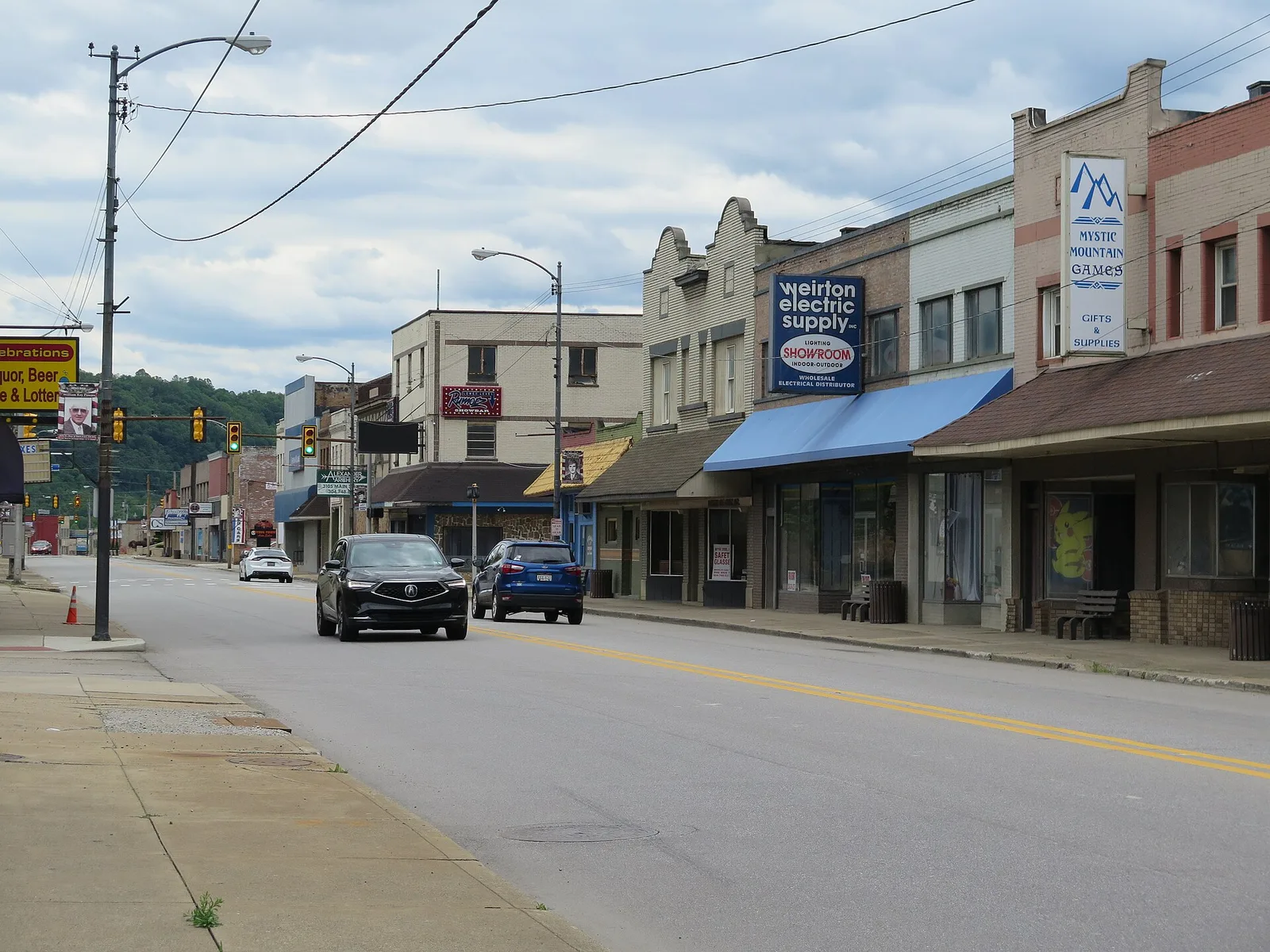
Non-metropolitan job totals still had not recovered to pre-2008 levels more than a decade after the Great Recession, even as metropolitan areas surpassed theirs by 2013.
What Political Scientists Still Argue About
There is no single settled explanation for the urban-rural divide, and any source that claims otherwise is oversimplifying real academic disagreement. Here are the leading, overlapping explanations researchers currently debate.
It would be dishonest to present this topic as settled. Political scientists actively debate which factor matters most, and the honest answer is that the divide is almost certainly the product of several overlapping forces reinforcing one another rather than any single cause. Economic geography, educational sorting, self-selected migration, and the psychological effects of density all show up as statistically significant in different studies using different data and different time periods. Anyone who tells you the divide is caused by exactly one thing is oversimplifying genuinely contested research.
Even a single factor like educational attainment does not predict the pattern uniformly across the country: the correlation between a county's non-college population share and its Republican vote share runs measurably stronger in the Midwest and parts of the Northeast than in large parts of the South and West, where race and religion remain independently powerful predictors of their own.
Studies also disagree because they measure different things over different periods. Research focused on 1976 to 2000 tends to emphasize economic geography and the decline of manufacturing; research focused on 2008 onward tends to emphasize education and cultural attitudes. Both can be right about their own windows.
The factors interact rather than simply adding up. Economic decline makes a place lose its young college graduates, which changes its education profile, which changes its media diet and cultural outlook, which changes its vote, which changes the kind of representation and investment it gets. Untangling cause from effect in a feedback loop like that is genuinely hard.
Because the U.S. Senate gives every state two seats regardless of population, and because the Electoral College adds a state's Senate seats to its House seats when allocating electoral votes, geographic concentration has a structural political consequence separate from simple nationwide vote totals. Jonathan Rodden's research on why cities lose demonstrates that Democratic votes, being densely clustered in cities, are less efficiently distributed across the geographic districts and states that translate votes into political power than Republican votes, which are spread more evenly across suburban, exurban, and rural areas. A party can win more total votes nationally and still hold less power in Congress or the Electoral College if its voters are concentrated rather than distributed. This is a structural feature of American political institutions, not a plot by either party, but it means the urban-rural divide has consequences for governance that go beyond who feels culturally at home where.
The disparity is stark in raw terms: Wyoming's roughly 580,000 residents and California's nearly 39 million residents each elect two U.S. Senators, meaning a Wyoming resident's Senate representation is worth dozens of times that of a Californian's, a structural imbalance the Constitution's own text makes essentially unamendable without the unanimous consent of every state under Article V.
The same clustering shows up in the House of Representatives. Because Democratic voters are packed into a smaller number of very lopsided urban districts, the party can win a national majority of House votes and still fall short of a majority of seats, a pattern documented in several elections since 2012. Some of this is deliberate districting, but Rodden's work argues much of it is simply where people live.
Reformers have proposed responses, from independent redistricting commissions to multi-member districts to changes in how electoral votes are allocated, but the Senate's equal-state representation is fixed by the Constitution and, under Article V, cannot be changed without the consent of every affected state. The structural tilt is therefore likely to persist regardless of which party it favors in a given decade.
Some researchers point to the relationship between density and diversity itself. Cities are, on average, far more racially, ethnically, religiously, and socially diverse than rural areas, and daily life in a diverse, anonymous, high-density environment tends to require and reinforce a certain baseline tolerance for difference simply to function. Rural communities, more homogeneous and built on tighter, longer-standing social networks, tend to organize social trust around shared community identity rather than institutional tolerance of strangers. Neither pattern is inherently better or worse; they are different, coherent ways of organizing social life that produce different political instincts, particularly on questions of immigration, religious pluralism, and social change.
Census Bureau data shows roughly one in five rural residents identify as a race or ethnicity other than non-Hispanic white, a notably smaller share than in large metropolitan areas, a demographic gap researchers say reinforces the differing daily experience of diversity between the two kinds of communities.
This line of argument is careful to avoid claiming rural communities are less tolerant as individuals; the point is structural. In a place where most people know each other and share a background, social order runs on personal reputation and community norms. In a place full of strangers, it runs on impersonal rules and institutions, and on a working assumption that difference is normal.
The relationship also runs the other way. People who value diversity and anonymity may choose cities, and people who value close community may choose small towns, so the correlation between density and social attitudes reflects both what places do to people and what kinds of people places attract.
Before the 1990s, local newspapers and network news dominated by relatively neutral, locally focused coverage meant that even people who disagreed politically shared a common set of facts and local concerns. The rise of cable news, talk radio, and eventually social media created ideologically sorted media ecosystems that Americans increasingly self-select into. Political scientists describe this as the nationalization of politics: even local elections for school board or county commissioner increasingly turn on national partisan identity rather than local issues, which accelerates the geographic sorting Bishop documented, since national identity is more portable across a move than local relationships are.
More than 2,000 local newspapers closed in the United States between 2005 and the early 2020s, according to research tracked by Northwestern University's Medill School, leaving many counties, especially rural ones, as "news deserts" with little local coverage to counterbalance the nationalized political content increasingly filling the gap.
The fragmentation is not symmetric. Studies of media diets find conservative audiences more concentrated in a small set of outlets, while liberal and moderate audiences spread across a wider range, though both sides increasingly consume news that confirms existing views. Social media algorithms, tuned to engagement, tend to amplify the most partisan content on all sides.
The loss of local news matters for the urban-rural divide specifically because local coverage was one of the few things that framed politics around shared place rather than national identity. As county newspapers close, a school-board or courthouse race is more likely to be fought over national party labels, which makes a person's politics travel with them when they move and reinforces geographic sorting.
It's worth stating plainly: cities are not uniformly liberal and rural areas are not uniformly conservative. Urban areas contain enormous internal variation, wealthy financial districts vote very differently from working-class immigrant neighborhoods a few miles away. Rural America is far from politically uniform either; it includes union-heavy former manufacturing towns, university towns, Native American reservations, and diverse farming communities with very different political histories. County-level and state-level data can obscure enormous ward-by-ward and neighborhood-by-neighborhood variation. The urban-rural divide describes a genuine statistical pattern at scale, not a rule that applies to every individual place or person.
College towns illustrate this clearly: Story County, Iowa, home to Iowa State University, and Athens County, Ohio, home to Ohio University, both reliably vote more Democratic than the overwhelmingly rural, agricultural counties surrounding them on every side, despite sharing the same low population density and rural classification.
Suburbs, where a growing share of Americans live, are the least monolithic of all and the most contested ground in modern elections. Inner-ring suburbs have trended Democratic, outer exurbs Republican, and the middle swings, so national outcomes increasingly hinge on places that fit neither the "urban" nor the "rural" label cleanly.
Race, region, and religion cut across density everywhere. Heavily Hispanic South Texas counties, majority-Black rural counties in the Deep South, Mormon-majority rural counties in Utah, and Native American reservation precincts all vote in ways that a simple density model does not predict, which is why researchers treat the urban-rural divide as one important factor among several rather than a master key.
Sources & Further Reading
- Pew Research Center, How Voting Patterns Changed in the 2024 Election
- Catalist, What Happened in 2024
- Wikipedia, Southern Strategy (scholarly consensus summary and citations)
- Jonathan Rodden, Why Cities Lose (Stanford Magazine summary)
- Washington University in St. Louis, Geography and Partisan Identity Study
- Cambridge University Press, Sequential Polarization: 1976-2020
- Bill Bishop, The Big Sort (Internet Archive)
- Hoover Institution, The Myth of the Big Sort
- LPE Project, The Political Economy of the Urban-Rural Divide
- HISTORY.com, William Jennings Bryan and the Populist Movement
- Bill of Rights Institute, The 1892 Populist Platform
This page draws on peer-reviewed political science research, including Jonathan Rodden's Why Cities Lose, Bill Bishop's The Big Sort, and studies published in Perspectives on Politics and by Washington University in St. Louis, alongside historical sources from the Library of Congress, HISTORY.com, and the Bill of Rights Institute. Election and voter coalition data are drawn from Pew Research Center's validated voter analyses and Catalist. Where researchers disagree, such as the Hoover Institution's critique of the Big Sort thesis or the exact weight of race versus broader suburban dynamics in the Southern Strategy, that disagreement is noted rather than resolved in favor of one side.