
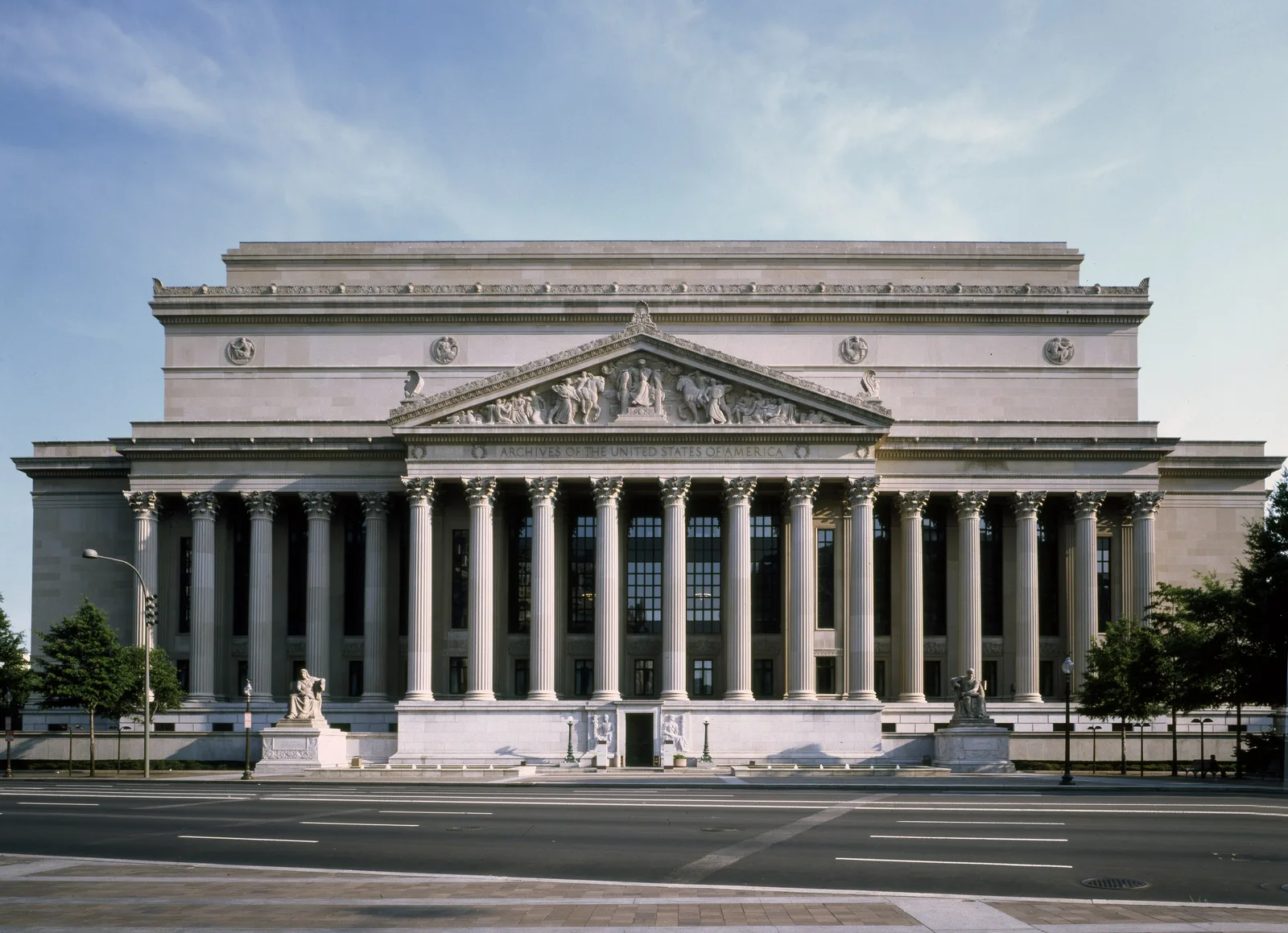
An 11-Year Fight Ends in a Law Signed Without a Ceremony
FOIA did not arrive as a presidential initiative. It began with a junior congressman's decade-long campaign against agency secrecy, passed over the reluctance of the president who signed it, and has been rewritten by Congress five more times since, almost always in response to a specific crisis or a court ruling that exposed a gap in the original text.
In 1955, second-term Democratic Representative John Moss of California was named chairman of a newly created House Government Operations subcommittee, the Special Subcommittee on Government Information, tasked with investigating executive branch secrecy. Moss had grown frustrated after the Eisenhower administration refused to release the reasons behind federal employee dismissals, and he spent the next decade holding hearings on agency stonewalling with almost no support from the press, the public, or the White House of either party.
Every one of the 27 federal agencies that testified before Moss's subcommittee opposed a general public-records law, and Moss himself later said he received no meaningful cooperation from the executive branch for most of his effort. The subcommittee's dogged, largely unglamorous work over more than a decade is why historians and open-government groups generally credit Moss, rather than any president, as FOIA's principal author.
The subcommittee held more than 170 days of hearings between 1955 and 1966 and produced dozens of reports documenting agencies' use of "housekeeping" statutes and the vague "good cause" standard of the 1946 Administrative Procedure Act to withhold almost anything. A young Republican, Donald Rumsfeld, co-sponsored the eventual bill.
The press was slow to engage; the American Society of Newspaper Editors and a few trade groups backed Moss, but major papers largely ignored the effort until the early 1960s. Moss served in the House until 1978, and a federal building in Sacramento is named for him.
The House passed Moss's bill 307-0 on June 20, 1966, and President Lyndon Johnson signed the Freedom of Information Act into law on July 4, 1966, while at his Texas ranch. Johnson had reservations about the bill, was reportedly persuaded to sign it only after aide Bill Moyers argued that a veto would be politically indefensible, and he held no public signing ceremony, a notable contrast to his practice on other major legislation of the era.
The Act took effect one year later, on July 4, 1967, giving federal agencies time to write implementing regulations. It established, for the first time in U.S. law, a general presumption that records held by federal executive agencies belong to the public and must be disclosed on request unless a specific statutory exemption applies, reversing the prior default under the 1946 Administrative Procedure Act, which had let agencies withhold records for almost any reason they chose.
The 1966 text was brief and, by later standards, weak: it set no deadlines, allowed high fees, and gave courts little guidance. Attorney General Ramsey Clark issued a memo urging broad compliance, but agencies treated the first year as a chance to write restrictive rules, and early requesters often waited months for a response or a refusal.
Johnson's signing statement, drafted by his staff, praised openness in principle while stressing the need to protect national security and internal debate, framing that agencies cited for years. The Act amended Section 3 of the Administrative Procedure Act and applied only to the executive branch, not Congress or the courts, a scope that has never changed.
In the wake of the Watergate scandal, Congress passed a package of amendments strengthening FOIA: setting the first firm response deadlines, letting federal courts review classified records in private (in camera) to check whether they were properly withheld, narrowing the law-enforcement exemption, and awarding attorney's fees to requesters who won in court. President Gerald Ford, newly in office after Richard Nixon's resignation, vetoed the bill on October 17, 1974, following advice from within his own administration, including from a young Justice Department lawyer named Antonin Scalia, that the changes went too far.
Congress overrode Ford's veto on November 21, 1974, by a vote of 371-31 in the House and 65-27 in the Senate, enacting the amendments as Public Law 93-502. It remains one of the few successful veto overrides of the modern era on a good-government issue, and the episode is widely seen as the moment FOIA gained real enforcement teeth beyond its largely symbolic 1966 text.
The amendments narrowed Exemption 7 so law-enforcement records were withholdable only if disclosure would cause a specific enumerated harm, required agencies to segregate and release non-exempt portions of documents, and cut the response deadline to 10 working days. They also let courts assess personal responsibility for arbitrary withholding.
Ford's veto memo, shaped by objections from the CIA, the Defense Department, and Justice Department lawyers including Antonin Scalia and Rex Lee, argued that in camera review of classified documents was unconstitutional and the deadlines unworkable. The override made the 1974 law the framework courts still apply.
As part of the Anti-Drug Abuse Act of 1986, Congress amended FOIA's law-enforcement exemption (Exemption 7) and, for the first time, created formal statutory fee categories, distinguishing commercial requesters, who pay full search, review, and duplication costs, from news media, educational, and scientific requesters, who pay only limited duplication fees, and from all other requesters, who fall in between.
The 1986 amendments also let certain law enforcement agencies, most notably the FBI, decline to even confirm that certain highly sensitive records exist for a narrow set of ongoing criminal or national security matters, an exclusion distinct from the nine standard exemptions and separate from the judicially created Glomar response covered in the Exemptions tab.
The 1986 changes replaced "investigatory records compiled for law enforcement purposes" with the broader "records or information compiled for law enforcement purposes," and lowered the threshold under several sub-parts from "would" to "could reasonably be expected to" cause harm, making law-enforcement withholding somewhat easier.
The three fee categories, commercial, media/educational/scientific, and "all other," remain in force under an OMB fee schedule. The three new "exclusions" for certain informant records and FBI foreign-intelligence and terrorism files let an agency respond as if the records simply do not exist, a step beyond a Glomar "neither confirm nor deny."
President Bill Clinton signed the Electronic Freedom of Information Act Amendments on October 2, 1996, requiring agencies to make frequently requested records available in electronic "reading rooms" and to provide records in the electronic format a requester asks for when the agency can readily do so. The amendments applied to records created on or after November 1, 1996, with agencies required to be in compliance by November 1, 1997.
The same law also extended the statutory response deadline from 10 working days, the limit set by the 1974 amendments (the original 1966 Act set no deadline), to 20 business days, a change Congress made specifically because the shorter deadline had proven unworkable in practice and was already being routinely missed government-wide.
The E-FOIA amendments defined "record" to include information in electronic form, required electronic searches, created online "reading rooms" for records expected to be requested again, and required agencies to report annually to the Attorney General on volume, backlogs, and fees, the data now compiled at FOIA.gov.
Compliance lagged; a 2001 GAO review found many agencies had not built usable electronic reading rooms years after the deadline. The move online accelerated after the 2007 and 2016 amendments and the 2018 launch of the central FOIA.gov request portal, which routes filings to any of roughly 100 agencies.
President George W. Bush signed the OPEN Government Act, formally the Openness Promotes Effectiveness in our National Government Act of 2007, on December 31, 2007. It required every agency to designate a Chief FOIA Officer and FOIA Public Liaisons to help resolve disputes, created tracking numbers for requests taking longer than 10 days, and expanded the statutory definition of a "representative of the news media" eligible for reduced fees to include freelance journalists and bloggers who intend to distribute their work to the public.
The 2007 Act also created the Office of Government Information Services (OGIS) within the National Archives, an independent ombudsman office that mediates disputes between requesters and agencies as a lower-cost alternative to administrative appeal or federal lawsuit, a role it continues to perform today.
The Act also barred agencies from restarting the 20-day clock when a request is misrouted internally, confirmed that requesters who obtain relief through litigation-induced voluntary disclosure can still recover fees, and required agencies to report their ten oldest pending requests each year.
OGIS, the ombudsman at the National Archives, has no power to order disclosure but mediates hundreds of disputes a year, reviews agency FOIA programs, and reports its findings to Congress, giving requesters a free, non-adversarial option between an internal appeal and a federal lawsuit.
President Barack Obama signed the FOIA Improvement Act of 2016 on June 30, 2016. The law wrote into statute, for the first time, a "foreseeable harm" standard: agencies may withhold information only if they reasonably foresee that disclosure would harm an interest an exemption protects, or if disclosure is otherwise prohibited by law, not merely because an exemption could technically apply.
The 2016 Act also placed a 25-year sunset on the Exemption 5 deliberative-process privilege, meaning agencies can no longer use that exemption to withhold internal deliberations once a record is a quarter-century old, required agencies to post records that have been requested three or more times in an online reading room, and created a Chief FOIA Officers Council to coordinate compliance government-wide, per the Justice Department's Office of Information Policy.
The "foreseeable harm" standard codified the Holder-era policy and requires agencies to identify the specific harm from releasing a given record, overriding the older practice of withholding whenever an exemption "could" apply. Courts have since cited it to order the release of material agencies had withheld reflexively under Exemption 5.
The Act also limited fees when agencies miss deadlines, required each agency to update its FOIA regulations, and directed creation of a consolidated online request portal, delivered as FOIA.gov in 2018. It was the first substantive FOIA legislation in nine years and passed both chambers unanimously.
Any Person, No Reason Required, but Not a Free-for-All
FOIA's core promise, that any person can ask a federal agency for its records without explaining why, is genuinely simple. Everything around that promise, who is covered, what it costs, how long it takes, and what happens when an agency says no, is a system of specific statutory rules that determines whether a request actually produces records or just disappears into a queue.
FOIA applies only to records held by federal executive branch agencies and independent regulatory agencies, roughly 100 departments and agencies government-wide. It does not apply to Congress, the federal courts, or state and local governments, each of which operates under its own separate access rules discussed in the Beyond FOIA tab. It also does not reach purely private companies or individuals, even when they do business with the federal government, unless a contractor is holding records on an agency's behalf.
The law's reach inside the executive branch has real limits as well. Courts have held in cases including Kissinger v. Reporters Committee for Freedom of the Press (1980) that units within the Executive Office of the President whose sole function is advising and assisting the President personally, such as the National Security Council staff in most contexts, fall outside FOIA's definition of an "agency," while components with substantial independent regulatory or spending authority generally remain covered.
FOIA defines "agency" to include executive departments, military departments, government corporations, government-controlled corporations, and independent regulatory agencies. Government contractors are not agencies, but records a contractor creates or holds for an agency, and that the agency controls, can be reachable through a request to the agency itself.
The White House Office, the National Security Council staff, and the Office of the Vice President are generally outside FOIA under Kissinger and later rulings, while the Office of Management and Budget, the U.S. Trade Representative, and the Council on Environmental Quality are covered because they exercise substantial independent authority.
Any person, a citizen, a permanent resident, a foreign national, a journalist, a corporation, or an advocacy group, can file a FOIA request, and the requester never has to explain why they want the records or what they plan to do with them. This is a deliberate design choice: because the law treats a released record as available to the requester and the general public alike, an agency cannot legally ask a requester to justify their interest before deciding whether to release non-exempt material.
The only significant exception is fee treatment, covered below, which does turn on who is asking and why they say they want the records, since commercial, media, educational, and general-public requesters are billed under different statutory fee schedules even though they have identical rights to the records themselves.
There is no citizenship or residency requirement; foreign governments are the main exception, barred by a 2002 amendment from filing requests with intelligence-community agencies. A requester may use a pseudonym or file through a lawyer or organization, and agencies may not demand identification except to verify identity when someone seeks records about themselves.
Because a FOIA release is treated as a release to the world, agencies sometimes post frequently requested records publicly so they do not have to process the same request repeatedly. The 2016 Act made this mandatory for any record requested three or more times.
A FOIA request has no required legal form. It must be in writing and must describe the records sought with "reasonable specificity," meaning enough detail, such as a date range, names, or a specific event, that an agency employee familiar with the files could locate them without an unreasonably broad search. A request that simply asks for "everything you have about X topic" with no other detail is far more likely to be delayed or challenged as improper than one naming specific offices, timeframes, or record types.
Since 2018, FOIA.gov has offered a government-wide portal that routes requests to the correct agency FOIA office, though many large agencies also maintain their own online submission systems. A request can also simply be mailed or emailed directly to an agency's designated FOIA office, whose contact information every covered agency is required to publish.
Practitioners recommend naming the specific office likely to hold the records, giving a date range, identifying document types (emails, memos, calendars, contracts), and citing any known case or file numbers. Agencies must conduct a search "reasonably calculated" to find responsive records but need not do research, answer questions, or create new records.
If a request is unclear or overbroad, the agency is supposed to contact the requester to narrow it rather than deny it, and the 20-day clock can pause once for that. Requesters can also ask for expedited processing by showing a compelling need, such as an urgent need to inform the public about alleged government activity, though agencies grant relatively few of these.
FOIA sets three statutory fee categories, established by the 1986 amendments. Commercial-use requesters pay the agency's full search, review, and duplication costs. Requesters who are news media, educational institutions, or noncommercial scientific institutions pay only duplication fees, and only after the first 100 pages. All other requesters, the default category covering most individuals, get the first two hours of search time and first 100 pages of duplication free, and pay standard rates beyond that.
Any requester, regardless of category, can separately ask for a full fee waiver if they can show that disclosure is likely to contribute significantly to public understanding of government operations and is not primarily in the requester's own commercial interest. In practice, many routine individual requests never generate a bill at all, because the underlying search and duplication costs fall under the free thresholds.
Search fees are billed at the salary rate of the employees doing the search; review fees, for deciding what to redact, may be charged only to commercial requesters. If an agency misses the deadline, the 2007 and 2016 laws generally bar it from charging search fees (and duplication fees for media and educational requesters), with exceptions for very large or unusual requests.
Fee-waiver requests are judged on whether the records concern government operations, are meaningfully informative, will reach a broad audience, and are not primarily commercial. Journalists and researchers frequently get waivers; a requester seeking their own file for a personal matter usually does not, but also usually owes nothing because the search falls under the free thresholds.
Agencies must respond within 20 business days of receiving a request, a deadline the 1996 Electronic FOIA Amendments extended from the 10 working days set in 1974 after the shorter window proved unworkable. Agencies can invoke a 10-business-day extension for "unusual circumstances," such as needing to search multiple field offices or consult another agency, and many large agencies also sort incoming requests into "simple" and "complex" processing tracks so straightforward requests aren't stuck behind a backlog of harder ones.
In practice, the statutory clock and the real-world wait are often very different things. Because the law provides no meaningful penalty for a missed deadline beyond letting the requester treat the delay as a constructive denial and appeal or sue, high-volume agencies with large backlogs routinely take many months, and sometimes years, to produce records for complex requests, a gap documented annually in agencies' own reports to the Justice Department.
The 20-day clock starts when the proper agency component receives the request and can be tolled once for a clarification and to resolve fee issues. "Unusual circumstances" allow a 10-day extension by letter; for very large requests an agency may negotiate a longer timeline or invoke "exceptional circumstances" in litigation to ask a court for more time.
Agencies' annual reports show wide variation: some components answer simple requests in days, while complex requests at agencies like the FBI, State Department, and CIA commonly take one to several years, with average processing times for complex requests at the busiest agencies measured in hundreds of days.
A requester who is denied records in whole or in part, whether because an agency claims an exemption applies, says no responsive records exist, or simply fails to respond within the statutory deadline, can file an administrative appeal directly with the agency, which the FOIA Improvement Act of 2016 requires agencies to allow requesters at least 90 days to file. Administrative appeals are decided by the agency itself and cost the requester nothing.
If the administrative appeal fails, or an agency again misses its own deadline, the requester can sue in federal district court, where, unusually for administrative law, the agency bears the burden of proving the withholding was lawful rather than the requester having to prove it was not. Requesters who substantially prevail in FOIA litigation can also recover reasonable attorney's fees, a provision added by the 1974 amendments specifically to make litigation viable for requesters without deep pockets.
An administrative appeal usually goes to the agency's general counsel, which must decide it within 20 business days (extendable by 10). If the agency stops responding entirely, the requester is deemed to have exhausted administrative remedies and may sue immediately.
In district court the case is usually resolved on cross-motions for summary judgment supported by a "Vaughn index," a document-by-document justification the agency must file for each withholding. The court reviews the withholdings de novo and can order release, but cannot impose fines; the main leverage for requesters is the fee-shifting provision and the risk of an adverse ruling.
Federal agencies received a record 1,199,699 FOIA requests government-wide in fiscal year 2023, the first time the annual total topped one million, according to the Justice Department's Office of Information Policy, which compiles every agency's mandatory annual report. Agencies processed 1,122,211 requests that same year, and the government-wide backlog of unresolved requests actually fell slightly, by nearly 3 percent, even as incoming volume kept climbing.
Request volume is heavily concentrated: agencies handling large numbers of individual case files, most notably the Department of Homeland Security's Citizenship and Immigration Services component, which processes requests from immigrants seeking their own records, account for a large share of the government-wide total on their own, meaning national FOIA statistics are shaped as much by immigration and benefits caseloads as by investigative journalism or public-interest research.
The FY2023 total of nearly 1.2 million requests was up from about 928,000 in 2022 and roughly 597,000 a decade earlier. The government-wide backlog has hovered around 200,000 to 300,000 pending requests in recent years, and a handful of agencies, DHS, the FBI, the State Department, hold most of it.
USCIS alone accounts for hundreds of thousands of requests a year, mostly noncitizens obtaining copies of their own immigration files for use in legal proceedings, and it has adopted a separate online system and records-access alternatives to reduce FOIA volume. National FOIA statistics therefore reflect immigration casework as much as journalism or research.
Nine Exemptions, One Extra Tool, and a Lot of Litigation
FOIA's presumption of disclosure is not absolute. Congress wrote nine specific exemptions into the statute, covering everything from classified national security information to oil well survey data, and courts have layered decades of interpretation on top of each one. Agencies can also, in narrow circumstances, refuse to say whether records exist at all.
Exemption 1 protects records that are properly classified under a presidential executive order to protect national defense or foreign policy, currently Executive Order 13526. An agency must show both that the information meets the substantive standard for classification and that it was, in fact, classified through the proper procedure, not simply that a classification stamp appears on the document.
Because federal judges generally lack independent access to the intelligence or diplomatic context behind a classification decision, courts have historically given agencies substantial deference on Exemption 1 claims, though the 1974 amendments gave judges the explicit authority to review disputed classified records privately (in camera) rather than simply accepting an agency's word, a power that did not exist under the original 1966 Act.
Executive Order 13526, issued by President Obama in 2009, sets the current classification rules, including the categories that may be classified (military plans, weapons, intelligence sources and methods, foreign relations) and a bar on classifying information to conceal wrongdoing or avoid embarrassment. Courts have allowed agencies to classify or re-classify information after a FOIA request if done in good faith.
Judges review Exemption 1 claims largely through agency declarations describing why release would harm national security, and they rarely order disclosure over a classification claim. The Interagency Security Classification Appeals Panel and the mandatory declassification review process offer separate, non-FOIA routes to challenge classification.
Exemption 2 covers records related solely to an agency's internal personnel rules and practices, things like employee parking policies or internal building-access procedures, not matters of genuine public interest. For decades, some agencies stretched this narrow exemption into a broad "High 2" theory covering any internal technical or security-sensitive information, even when it had nothing to do with personnel matters.
The Supreme Court ended that practice in Milner v. Department of the Navy (2011), an 8-1 decision holding that Exemption 2 covers only genuine human-resources and employee-relations records, not the explosives-storage maps and safety data the Navy had tried to withhold under the "High 2" theory. Agency citations of Exemption 2 fell sharply in the years after Milner, according to tracking by the Reporters Committee for Freedom of the Press.
Before Milner, the D.C. Circuit's "High 2" doctrine, from Crooker v. ATF (1981), had let agencies withhold internal records whose disclosure would risk circumvention of the law, a category far broader than personnel rules. Agencies used it for guidelines, security plans, and investigative manuals.
After Milner (2011), much of that material shifted to Exemption 7(E) for law-enforcement techniques or Exemption 1 for classified security information, so the total amount withheld did not necessarily fall even as Exemption 2 citations dropped sharply. Exemption 2 is now one of the least-invoked exemptions.
Exemption 3 incorporates withholding requirements Congress has written into other, separate federal statutes, letting those specific laws control instead of FOIA's general disclosure rule. Common examples include Internal Revenue Code provisions protecting individual tax return information, the Atomic Energy Act's restrictions on nuclear weapons design data, and statutes protecting the identities of certain intelligence sources.
To qualify under Exemption 3, the other statute must either leave an agency no discretion to disclose at all, or set specific, particular criteria for withholding, or specify particular types of records to withhold; a vague general reference to confidentiality in another law is not enough, a limit Congress added in 1976 after agencies had tried to use overly broad outside statutes to avoid FOIA's more specific standards.
There are well over 100 "Exemption 3 statutes" recognized by courts and catalogued by the Justice Department, including the National Security Act's protection of intelligence sources and methods, Rule 6(e) grand-jury secrecy, the Census Act, and provisions shielding air-safety and nuclear-security information. A 2009 amendment requires any statute enacted after that date to cite FOIA expressly to qualify.
Disputes often turn on whether the outside statute mandates withholding or merely permits it. The Supreme Court in CIA v. Sims (1985) read the National Security Act's "sources and methods" language broadly, while lower courts have rejected agency attempts to shoehorn general confidentiality clauses into Exemption 3.
Exemption 4 protects trade secrets and commercial or financial information that is privileged or confidential, covering things like proprietary formulas, detailed sales data, or contract pricing information a company submitted to a federal agency, often because the agency required the submission as a condition of doing business or receiving a benefit.
The legal test for what counts as "confidential" changed significantly in Food Marketing Institute v. Argus Leader Media (2019), a case that began when a South Dakota newspaper sought store-by-store SNAP (food stamp) redemption data from the Department of Agriculture. The Supreme Court, in a 6-3 decision, discarded the decades-old lower-court "substantial competitive harm" test and held that information is confidential under Exemption 4 whenever it is both customarily kept private by its owner and provided to the government under an assurance of privacy, a standard transparency advocates have argued makes it considerably easier for companies to shield commercial data from disclosure.
Before releasing information a business submitted, an agency must under Executive Order 12600 give the submitter notice and a chance to object, the "reverse FOIA" process; if the agency decides to release over the objection, the submitter can sue to block it under the Administrative Procedure Act.
After Argus Leader (2019), the key questions are whether the company customarily keeps the information private and whether the government gave an assurance, express or implied, of confidentiality. The Justice Department has advised that where an agency provided no such assurance, older "competitive harm" analysis may still be relevant, leaving the post-2019 standard somewhat unsettled in the lower courts.
Exemption 5 protects inter-agency and intra-agency memoranda that would not be available to a private party in ordinary civil litigation, primarily material covered by the deliberative-process privilege (candid draft recommendations and internal policy discussion before a final decision is made), the attorney-client privilege, and attorney work product. The rationale, first articulated by the Supreme Court in EPA v. Mink (1973), is that officials need room for frank internal debate before committing to a final position.
The 2016 FOIA Improvement Act placed real limits on this exemption for the first time, adding a 25-year sunset so the deliberative-process privilege specifically no longer applies to records once they are 25 years old or more, a change aimed directly at agencies that had used Exemption 5 to withhold decades-old internal drafts with no continuing sensitivity, according to the Justice Department's own summary of the 2016 Act.
The deliberative-process privilege protects "predecisional" and "deliberative" material, drafts, recommendations, and give-and-take, but not purely factual content that can be segregated, and not a policy that has been adopted and is being used as the agency's working law, lines the Supreme Court drew in Sears (1975) and Renegotiation Board v. Grumman (1975).
In U.S. Fish and Wildlife Service v. Sierra Club (2021) the Court held that draft biological opinions never finalized remained privileged, narrowing when a "draft" becomes a disclosable final document. The 2016 Act's 25-year sunset applies only to the deliberative-process privilege, not to attorney-client or work-product material within Exemption 5.
Exemption 6 protects personnel, medical, and "similar" files when disclosure would constitute a clearly unwarranted invasion of personal privacy, requiring agencies and courts to balance the individual's privacy interest against the public interest in disclosure, which FOIA case law defines narrowly as the extent to which disclosure would shed light on what the government itself is doing, not general public curiosity about a private individual.
The Supreme Court applied a closely related privacy standard in National Archives and Records Administration v. Favish (2004), a unanimous decision holding that the family of Vince Foster, a deputy White House counsel whose death was ruled a suicide, could invoke a recognized privacy interest to keep the government from releasing graphic death-scene photographs, and that a requester seeking to overcome a family's privacy objection needs evidence, not mere speculation, of government wrongdoing.
The Court held in Department of State v. Washington Post Co. (1982) that "similar files" is read broadly to mean any government record containing information that applies to a particular individual, so even a name and address can trigger the balancing test. The public-interest side of the balance counts only information that sheds light on government conduct.
In Department of State v. Ray (1991) and Reporters Committee (1989) the Court emphasized that the requester's identity and purpose are irrelevant to the balance, since any release is a release to all. Agencies routinely redact names, home addresses, and similar identifiers under Exemption 6 while releasing the substantive record.
Exemption 7 protects records or information compiled for law enforcement purposes, but only to the extent disclosure would cause one of six specific harms Congress listed: interfering with an active proceeding (7A), depriving someone of a fair trial (7B), constituting an unwarranted invasion of personal privacy (7C), disclosing a confidential source (7D), revealing sensitive law enforcement techniques (7E), or endangering someone's life or physical safety (7F).
Exemption 7(C), the privacy sub-part, has generated the most litigation. In Department of Justice v. Reporters Committee for Freedom of the Press (1989), the Supreme Court unanimously held that an individual's compiled FBI criminal history "rap sheet" is categorically exempt from disclosure, even when portions of the same information are technically available piecemeal from scattered local courthouses, because compiling scattered records into one accessible file itself creates a privacy interest, a concept the Court called protecting a person's "practical obscurity."
The threshold question is whether the record was "compiled for law enforcement purposes"; the Supreme Court in FBI v. Abramson (1982) held that information keeps that character even when later summarized in a non-law-enforcement document. Agencies with mixed missions must show a nexus to their enforcement functions.
7(A) is temporary and expires when the related proceeding ends, while 7(C) and 7(D) can be permanent. In NARA v. Favish (2004) the Court extended 7(C) privacy to a decedent's family, and in Nation Magazine (1995) the D.C. Circuit limited categorical withholding by requiring agencies to consider whether some information could be released without identifying individuals.
Exemption 8 protects records related to the examination, operation, or condition of banks, credit unions, and other financial institutions that federal regulators such as the Federal Reserve, the FDIC, and the Office of the Comptroller of the Currency oversee, covering things like confidential bank examination reports and supervisory ratings.
The rationale, largely undisputed compared to the other exemptions, is that banks and their regulators need to be able to discuss a bank's financial health candidly, including early warning signs of instability, without those candid assessments becoming public and potentially triggering the very bank run or loss of depositor confidence the supervisory process is trying to prevent.
Courts read Exemption 8 very broadly, protecting essentially all records that relate to bank supervision, on the view that Congress wanted no second-guessing of what counts as an "examination" record. It covers not just examination reports but also correspondence, memos, and data generated in the supervisory relationship.
The 2008 financial crisis produced litigation over how far Exemption 8 reaches: Bloomberg and Fox News won release of Federal Reserve emergency-lending records in 2011 after courts found the loan data was not shielded, but supervisory examination material generally remained protected. Dodd-Frank added its own confidentiality provisions layered on top of Exemption 8.
Exemption 9 is FOIA's narrowest and least-litigated exemption, protecting geological and geophysical information and data, including maps, concerning wells, primarily oil, gas, and other mineral exploration data that private companies submit to federal agencies. Congress added it to prevent competitors from using a FOIA request to obtain a rival firm's expensive, privately funded exploration data at no cost.
Because Exemption 4's protection for confidential commercial information already covers much of the same ground, Exemption 9 is invoked far less often than the other eight exemptions in agencies' annual FOIA reports to the Justice Department, and it has generated comparatively little appellate case law over FOIA's nearly six-decade history.
The exemption traces to the oil-and-gas leasing context: exploration firms spend heavily on seismic surveys and well logs, and a competitor could otherwise file a FOIA request to the Bureau of Ocean Energy Management or the Bureau of Land Management to obtain that data for free. It covers the raw geological and geophysical data and maps, not agency analyses of them.
Reported use is minimal, typically a handful of invocations per year government-wide, and there is almost no appellate case law interpreting it. Most disputes over energy-company data are litigated under Exemption 4 instead, where the confidentiality test and the reverse-FOIA process are better developed.
Beyond the nine numbered exemptions, agencies can sometimes lawfully refuse to say whether responsive records even exist, a technique known as a Glomar response. It takes its name from Phillippi v. CIA, a 1976 D.C. Circuit case in which journalist Harriet Ann Phillippi sought CIA records about the Hughes Glomar Explorer, a ship secretly used to try to recover a sunken Soviet submarine; the court held the CIA could refuse to confirm or deny the records existed at all, since simply admitting a record existed would itself reveal the classified connection between the CIA and the ship.
A Glomar response must still be justified under one of the standard exemptions, most often Exemption 1 for classified material or Exemption 7 for law enforcement records, and courts have pushed back when they conclude an agency is using it too broadly for information that is not genuinely sensitive; it remains, decades later, one of the most contested tools in national-security FOIA litigation.
A Glomar response can be defeated by "official acknowledgment": if the government has already officially and publicly confirmed the existence of the specific records, it cannot then refuse to confirm or deny them. Courts applied this in ACLU v. CIA (D.C. Cir. 2013), ordering the CIA to process a request about drone strikes after officials had publicly discussed the program.
Glomar is used most in requests about surveillance, watchlists, informants, and covert operations, and requesters increasingly challenge it by pointing to leaks, official statements, or prior releases. The related "no number, no list" response, refusing to say even how many responsive documents exist, is a further step courts scrutinize closely.
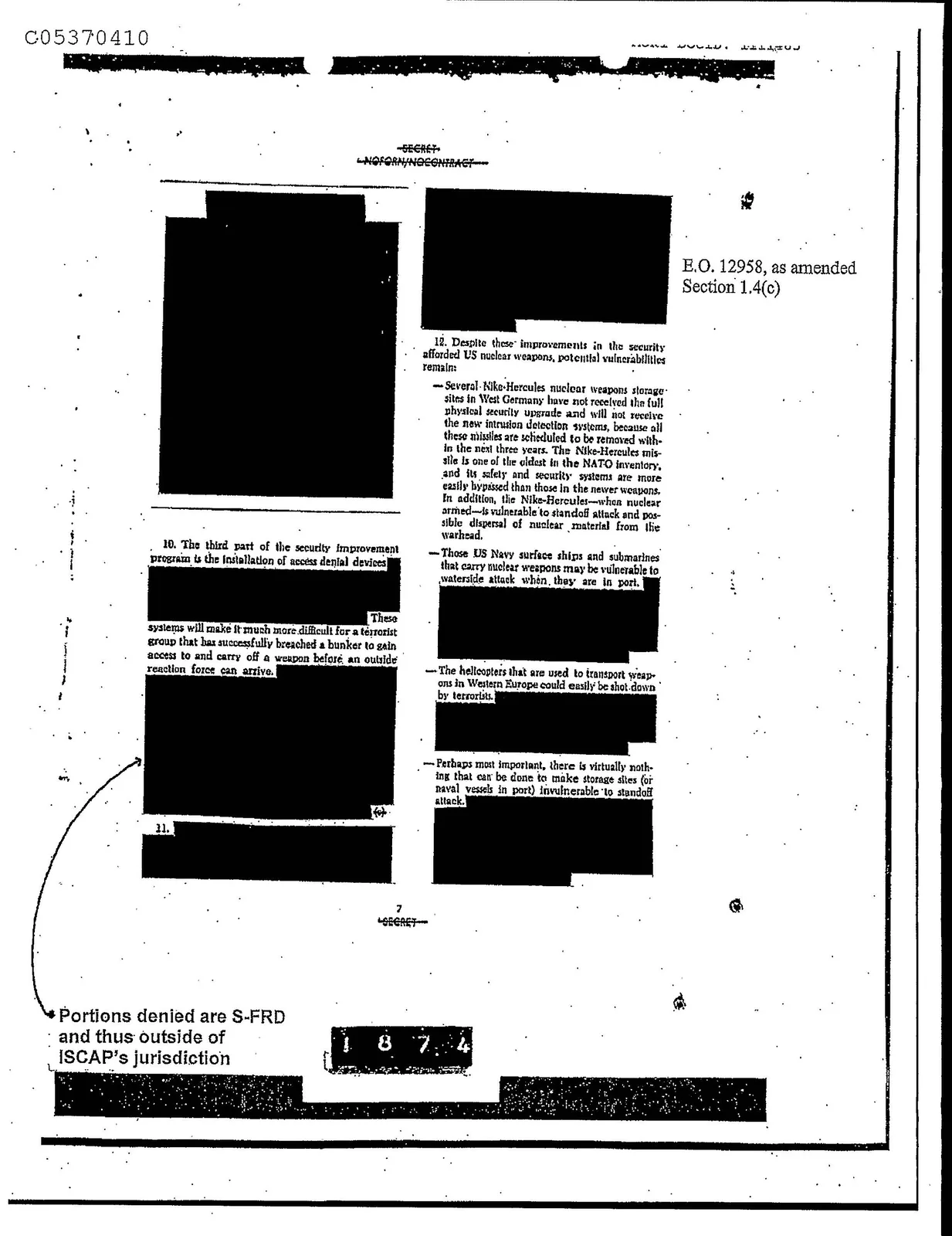
A real declassified CIA document released through the government's formal declassification review process, with exempt portions redacted rather than the entire record withheld, the outcome FOIA requires whenever only part of a document is exempt.
FOIA Is One Tool in a Larger Transparency System
FOIA gets most of the public attention, but it is only one piece of a broader legal framework Congress built, mostly in the 1970s, to open up how the federal government operates. Some of these tools govern meetings rather than records, some protect an individual's own information rather than granting public access to it, and some, like state public records laws, exist entirely outside federal law.
Where FOIA governs access to existing records, the Government in the Sunshine Act of 1976 governs access to the meetings themselves. It requires roughly 50 multi-member federal boards and commissions, bodies headed by two or more presidentially appointed members such as the Federal Communications Commission, the Securities and Exchange Commission, and the Federal Trade Commission, to hold their formal deliberative meetings in public and to give advance public notice of the time, place, and subject matter.
The Act includes its own set of exemptions closely mirroring several FOIA exemptions, letting a covered agency close a portion of a meeting to discuss, for example, active law enforcement matters or information that would meet FOIA's Exemption 4 standard for confidential commercial data, but it does not apply to single-administrator agencies such as the Environmental Protection Agency or the Department of Justice, which have no multi-member board whose meetings the law was designed to open.
A meeting is covered when enough members to take action deliberate on official business; agencies must vote publicly to close a meeting and keep a transcript or recording of closed portions, which can later be requested. The Act was passed in 1976 alongside amendments to the Federal Advisory Committee Act as part of a post-Watergate transparency wave.
Agencies have narrowed the Act's bite by conducting business through staff, written "notation voting," and one-on-one member briefings that fall below the quorum trigger, and a 1984 Supreme Court case (FCC v. ITT World Communications) held that informal international consultations were not "meetings." Reform proposals to broaden it have not passed.
Congress passed the Privacy Act of 1974 the same year it strengthened FOIA, and the two laws are often described as companion statutes. Where FOIA lets any person request agency records generally, the Privacy Act gives individuals a specific right to access and request correction of the records a federal agency keeps about them personally in a "system of records" retrievable by name or other personal identifier, and it separately restricts agencies from disclosing those personal records to third parties without the individual's consent.
The two laws can point in different directions on the same document: a citizen requesting their own file typically gets broader access under the Privacy Act than a stranger requesting the same file under FOIA would, since FOIA's Exemption 6 personal-privacy protection is specifically designed to prevent third parties from using FOIA to bypass the Privacy Act's stricter consent requirements.
The Privacy Act requires agencies to publish descriptions of their "systems of records" in the Federal Register, limits disclosures to twelve enumerated exceptions (including "routine uses" the agency has published), and allows civil suits for damages for willful violations. It applies to U.S. citizens and lawful permanent residents.
It has significant carve-outs: law-enforcement and intelligence systems can be exempted from the access and amendment provisions, and the "routine use" exception has been criticized as a loophole that lets agencies share personal data widely. Requesters seeking their own records commonly file under both FOIA and the Privacy Act so the agency applies whichever gives more access.
The Federal Advisory Committee Act (FACA), passed in 1972, requires most outside advisory committees that federal agencies establish, groups of non-government experts convened to give the government formal recommendations, to hold open meetings, publish advance notice, keep detailed minutes, and make those minutes and other committee records available to the public.
FACA was written specifically to stop agencies from using ostensibly independent advisory panels to develop policy positions behind closed doors while claiming the resulting recommendations came from a neutral outside body; it has been at the center of several high-profile disputes over the composition and transparency of task forces convened by different administrations to develop energy, health, and regulatory policy.
FACA requires a charter, a designated federal officer at every meeting, balanced membership, open meetings with Federal Register notice, and public availability of minutes and documents "made available to or prepared for" the committee. GSA administers the government-wide system, which includes on the order of 1,000 chartered committees.
Litigation has tested its limits: in Public Citizen v. Department of Justice (1989) the Supreme Court held the ABA's judicial-nominee evaluation panel was not a FACA committee, and Cheney v. U.S. District Court (2004) sent back a suit over the 2001 energy task force, holding that private participants do not automatically make a White House group a covered committee.
Congress passed the Presidential Records Act (PRA) in 1978, directly in response to the Nixon administration's attempt to treat its Watergate-era tapes and papers as Nixon's personal property. The PRA established that the official records of a president's time in office belong to the public, not the individual who held the office, and places them in the National Archives' custody once a president leaves.
The PRA and FOIA interact in an important, easily misunderstood way: presidential records are generally not subject to FOIA requests while a president remains in office, and even after a president leaves, the PRA lets outgoing presidents restrict public access to certain sensitive categories of their records for up to 12 years, after which most, though not all, become subject to ordinary FOIA processing through the National Archives.
Under the PRA the Archivist takes custody of a president's records when the term ends, and the former and incumbent presidents can each assert constitutional privileges to delay release. Access requests are processed under FOIA rules beginning five years after the president leaves, subject to up to six categories the departing president may restrict for up to 12 years.
The 2001 executive order that let former presidents and their families indefinitely block release was revoked in 2009. Disputes over the PRA's scope, including messaging-app records and its interaction with criminal law over classified documents, have recurred; the Act itself provides no criminal penalty and relies on the Archivist and the courts.
The Inspector General Act of 1978 created independent watchdog offices, now numbering more than 70 across the federal government, embedded within individual agencies but structurally independent of the agency head, tasked with auditing programs and investigating waste, fraud, and abuse. Inspectors General publish regular, often highly detailed public reports and must report serious problems directly to Congress, operating as an ongoing internal check that does not depend on any single outside requester filing a FOIA request.
Unlike FOIA, which is reactive and requester-driven, Inspector General offices proactively choose what to investigate and publish, giving them a distinct transparency role: FOIA lets the public pull specific records it already knows to ask for, while Inspectors General push out findings the public might never have known to request in the first place.
IGs are appointed by the president and Senate-confirmed at large agencies, or by the agency head at smaller ones, and can be removed only with 30 days' written notice to Congress explaining the reasons, a protection Congress strengthened in 2022. They have subpoena power for documents, their own investigative staff, and law-enforcement authority in many cases.
The Council of the Inspectors General on Integrity and Efficiency coordinates the community and runs oversight.gov, a public database of IG reports. IG findings frequently become the basis for later FOIA requests and news coverage, but the offices operate on their own initiative and referrals, not requester demand.
The Government Accountability Office (GAO), a nonpartisan agency that works for Congress rather than the executive branch, conducts its own independent audits and investigations of federal programs and regularly reports findings, including on FOIA administration itself, directly to Congress and the public. Because GAO works for the legislative branch, it operates entirely outside FOIA, which applies only to executive branch agencies.
GAO's recurring reports on FOIA backlogs, processing delays, and agency compliance function as a form of oversight-driven transparency distinct from FOIA litigation, since GAO can compel agency cooperation and access internal data through its own statutory audit authority in ways an ordinary FOIA requester cannot.
GAO, led by the Comptroller General on a 15-year term, audits programs, evaluates policy, issues legal opinions on federal spending, and maintains the "High Risk List" of programs vulnerable to waste and mismanagement. Its reports are public, and agencies must report back on whether they implemented GAO recommendations.
GAO can sue an agency to enforce its access to records, a power at issue when it challenged the Bush-era energy task force in Walker v. Cheney (2002, dismissed on standing grounds). Because it works for Congress, its own records are outside FOIA, though it voluntarily discloses most non-sensitive material.
FOIA applies only to the federal government; every state has its own, separate public records or "sunshine" law governing access to state and local government records, and these laws vary considerably in scope, exemptions, fees, and enforcement mechanisms. A record held by a city police department or a state agency is governed entirely by that state's law, not by FOIA, even when the underlying program involves federal funding.
Because there are 50 different state frameworks plus the federal law, a single investigative project spanning multiple states, or federal and state governments together, often requires filing under several legally distinct request regimes at once, each with its own deadlines, fee rules, and exemption categories, a practical complexity that state and national press-freedom and open-government organizations regularly work to help requesters navigate.
State laws vary in fundamental ways: some (Florida, Texas) have strong presumptions of openness and quick deadlines; others impose long response times, high fees, or broad exemptions for "working papers" and law-enforcement records. Enforcement ranges from an ombudsman (Connecticut, Texas) to lawsuits only, and a few states restrict requests to state residents, a limit the Supreme Court upheld in McBurney v. Young (2013).
Legislative and judicial records are often excluded from state open-records laws just as they are from FOIA, and many states also have open-meetings laws paralleling the federal Sunshine Act. National groups such as the Reporters Committee for Freedom of the Press and the National Freedom of Information Coalition publish state-by-state guides for requesters.
A Law Shaped as Much by Memos and Rulings as by Statute
FOIA's text has changed only six times since 1966, but its real-world meaning has shifted far more often than that, through Supreme Court decisions that redefine an exemption's scope and through Justice Department guidance memos that can swing agency-wide disclosure practice from one administration to the next without a single word of the statute changing.
A group of members of Congress sought nine documents prepared for President Nixon concerning an underground nuclear test, most of which were classified. The Supreme Court held that, under the FOIA text as it then existed, judges could not privately review classified records to second-guess an agency's classification decision, and had to accept an agency's classification claim largely at face value under Exemption 1.
The ruling was widely seen as giving agencies too much unchecked discretion, and it directly fed into the 1974 amendments, which added the explicit statutory authority for judges to review disputed records privately, a power Mink had held did not previously exist.
Representative Patsy Mink of Hawaii and 32 colleagues sought documents about the Cannikin underground nuclear test on Amchitka Island, Alaska. The 5-3 majority held that Exemption 1, as written in 1966, required only that a document be classified under an executive order, leaving no room for judges to inspect it or weigh whether classification was warranted.
Justices Douglas and Stewart wrote separately urging Congress to fix the statute, and it did within 18 months. The Court also held that Exemption 5 could shield the non-classified portions, foreshadowing later deliberative-process fights.
Journalist Harriet Ann Phillippi sued the CIA after it refused to confirm or deny holding records about the Hughes Glomar Explorer, a ship the agency had secretly used in an attempt to recover a sunken Soviet submarine. The D.C. Circuit held the CIA's refusal to confirm or deny the records' existence was itself a lawful response under FOIA, since acknowledging the records existed would reveal the classified CIA-ship connection.
The ruling created a durable legal tool, later named the "Glomar response" after the ship itself, that agencies still invoke today whenever the mere existence or nonexistence of a record would reveal exempt information, most often in national-security and surveillance-related requests.
Reporter Harriet Ann Phillippi had learned of Project Azorian, the CIA's use of Howard Hughes's Glomar Explorer to raise part of the sunken Soviet submarine K-129 from the Pacific floor in 1974, behind a cover story of deep-sea mining. When she asked for records of CIA efforts to persuade news outlets not to report the story, the CIA said it could "neither confirm nor deny" their existence.
The D.C. Circuit accepted that response in principle but sent the case back for the CIA to justify it with a public affidavit and, if needed, in camera review. The "Glomar response" has since been invoked thousands of times, and Project Azorian itself was largely declassified decades later.
CBS News and the Reporters Committee for Freedom of the Press sought an individual's FBI-compiled criminal history "rap sheet," arguing the underlying arrest records were already technically public through scattered local courthouses. The Supreme Court unanimously disagreed, holding that compiling scattered public records into one centralized, easily searchable FBI file creates its own privacy interest under Exemption 7(C), even when each individual piece of information was separately available elsewhere.
The decision introduced the concept of "practical obscurity," the idea that information difficult to piece together from scattered sources deserves more privacy protection than the same information compiled into one file, a principle that continues to shape how courts weigh privacy against disclosure for compiled personal records.
The request sought the rap sheet of Charles Medico, whose family company had allegedly won defense contracts through a corrupt congressman. Justice Stevens's unanimous opinion held that the "central purpose" of FOIA is to let citizens know "what their government is up to," and that a compiled criminal-history file reveals little about government conduct while gravely implicating personal privacy.
The "practical obscurity" idea, that scattered public records carry a privacy interest once aggregated, has been influential well beyond FOIA, cited in debates over mugshot websites, court-record databases, and data brokers. Critics say it lets the government withhold information that is, in fact, public.
Weeks after the September 11 attacks, Attorney General John Ashcroft issued a memo directing that the Justice Department would defend any agency's decision to withhold records under a FOIA exemption so long as the decision had a "sound legal basis," replacing a 1993 memo from Attorney General Janet Reno that had directed agencies to release records unless disclosure would cause foreseeable harm.
Critics, including several open-government and press organizations, argued the Ashcroft Memo shifted the government's default posture from lean toward disclosure to lean toward withholding, contributing to a documented rise in exemption invocations and processing delays across multiple agencies in the years that followed.
The October 12, 2001 memo told agencies that DOJ would defend a withholding whenever it rested on "a sound legal basis," and encouraged agencies to "carefully consider" institutional, commercial, and personal-privacy interests before releasing. It replaced Attorney General Reno's 1993 memo, which had set a "foreseeable harm" presumption toward disclosure.
Open-government groups and journalists' organizations linked the memo to rising backlogs, more frequent exemption claims, and slower releases in the years after 9/11, though agencies disputed a direct causal effect. The debate foreshadowed the 2009 reversal and the 2016 decision to write the standard into statute.
Allan Favish, who believed government investigations into the death of former deputy White House counsel Vince Foster were incomplete, sought the release of death-scene photographs under FOIA. The Foster family objected on privacy grounds. The Supreme Court ruled unanimously that surviving family members hold a protectable privacy interest under Exemption 7(C) in how a relative's death is portrayed, and that a requester challenging that privacy interest by alleging government misconduct must produce actual evidence of wrongdoing, not mere suspicion.
The decision extended personal-privacy protection under FOIA beyond the individual named in a record to that individual's surviving family, an expansion that has since been cited in other cases involving graphic death-related records.
Favish, a lawyer associated with skeptics of the official finding that Deputy White House Counsel Vince Foster died by suicide in 1993, had already obtained many investigative records and sought 10 remaining death-scene photographs; five separate official investigations had concluded the death was a suicide.
Justice Kennedy's unanimous opinion recognized a family privacy interest rooted in common-law traditions of protecting the dead and their survivors, and held that to overcome it a requester must show evidence that would warrant a reasonable person believing the government acted improperly. The photos stayed sealed.
On his first full day in office, President Obama issued a memorandum directing agencies to apply "a clear presumption" in favor of disclosure. Weeks later, on March 19, 2009, Attorney General Eric Holder formally rescinded the 2001 Ashcroft Memo and reinstated the Clinton-era Reno standard, directing the Justice Department to defend a withholding only where an agency reasonably foresees disclosure would cause harm, or where disclosure is otherwise prohibited by law, language Congress later wrote directly into the statute through the 2016 FOIA Improvement Act.
The episode illustrates a recurring pattern in FOIA's modern history: because much of the law's practical application rests on Justice Department guidance memos rather than statutory text, each new administration has been able to shift agency-wide disclosure practices significantly without any new legislation at all.
Obama's January 21, 2009 memo and Holder's March 19, 2009 guidance restored the "foreseeable harm" presumption, directed agencies to make "discretionary disclosures" of technically exempt but non-harmful information, and told DOJ to defend withholdings only on foreseeable-harm or legally-prohibited grounds.
Watchdog assessments of the Obama years were mixed: overall release rates and proactive posting rose, but backlogs at some agencies grew and the administration was criticized for aggressive use of Exemption 5. The 2016 Improvement Act's codification of foreseeable harm was meant to make the standard survive future administrations.
Puget Sound resident Glen Milner sought Navy data and maps showing how much explosive force could safely be stored at a naval installation near his home. The Navy withheld the records under Exemption 2, relying on a decades-old lower-court theory, known as "High 2," that let agencies use the personnel-rules exemption to withhold a wide range of internal technical and security information.
The Supreme Court rejected that theory 8-1, holding Exemption 2 covers only records genuinely related to internal human-resources and employee-relations matters. Citations of Exemption 2 by federal agencies dropped by roughly two-thirds in the years immediately following the decision, according to tracking by the Reporters Committee for Freedom of the Press, illustrating how directly a single Supreme Court ruling can reshape government-wide withholding practice.
Glen Milner sought "Explosive Safety Quantity Distance" maps and data for Naval Magazine Indian Island, showing blast ranges around munitions bunkers near Port Townsend, Washington. Justice Kagan's 8-1 opinion, one of her first majority opinions, read Exemption 2's text, "related solely to the internal personnel rules and practices of an agency," to mean human-resources matters and nothing more.
The Court acknowledged agencies had relied on "High 2" for 30 years but said the fix was for Congress, not judicial invention. Agencies shifted much of the material to Exemption 7(E) or classified it, and Congress did not amend Exemption 2 afterward, so its scope remains narrow.
South Dakota newspaper Argus Leader sought store-by-store SNAP (food stamp) redemption totals from the Department of Agriculture to report on how the benefits program affected local retailers. A grocers' trade association intervened to block release, arguing the sales data was confidential commercial information under Exemption 4.
The Supreme Court sided with the grocers 6-3, discarding the "substantial competitive harm" test lower courts had applied to Exemption 4 for more than 40 years and replacing it with a simpler standard: information is confidential if it is customarily kept private by the company that provided it and was submitted under an assurance of confidentiality. Transparency advocates have argued the new standard makes it considerably easier for companies to shield commercial data submitted to federal agencies, while business groups have defended it as a more faithful reading of the statute's actual text.
The Argus Leader of Sioux Falls sued in 2011 for annual SNAP redemption totals by store, to analyze the roughly $65 billion program's local impact. The USDA released store names and locations but withheld the dollar figures; the Food Marketing Institute, a grocers' group, intervened after the newspaper won in the lower courts.
Justice Gorsuch's majority rejected the 1974 D.C. Circuit "National Parks" test requiring proof of "substantial competitive harm," finding no basis for it in the word "confidential." Justice Breyer's partial dissent warned the new test could let businesses withhold data merely by keeping it private and calling it confidential.
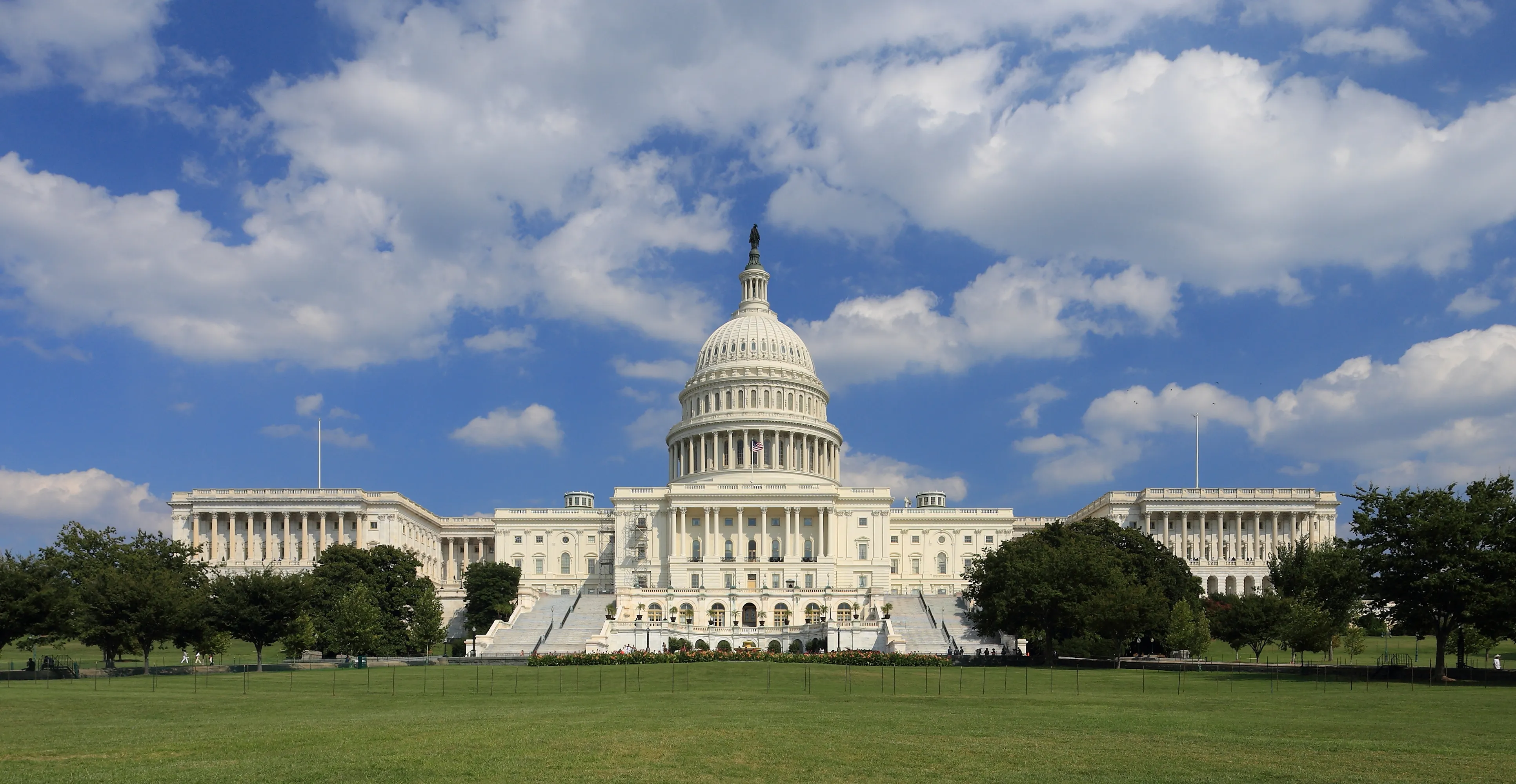
Congress overrode President Ford's veto of the 1974 FOIA amendments by a vote of 371-31 in the House and 65-27 in the Senate, one of the few successful veto overrides of the modern era on a good-government issue.
Ten Facts Worth Knowing
A quick-reference set of facts drawn from the sourced material throughout this page, useful for a fast read or a classroom discussion starter.
President Lyndon Johnson signed FOIA into law on July 4, 1966, but held no public signing ceremony and had reservations about the bill, reportedly needing convincing from aide Bill Moyers that a veto would be politically indefensible.
FOIA's principal author was not a president but a second-term California congressman, John Moss, who spent 11 years fighting agency secrecy after every one of the 27 federal agencies that testified before his subcommittee opposed a public-records law.
Congress overrode President Ford's veto of the landmark 1974 FOIA amendments by a vote of 371-31 in the House and 65-27 in the Senate, one of the few successful veto overrides of the modern era on a good-government issue.
The 1974 amendments gave agencies just 10 working days to respond (the original 1966 Act set no deadline). The 1996 Electronic FOIA Amendments extended that to the 20 business days still in effect today, after the shorter deadline proved unworkable in practice.
Federal agencies received a record 1,199,699 FOIA requests government-wide in fiscal year 2023, the first time the annual total topped one million, according to the Justice Department's Office of Information Policy.
A "Glomar response", refusing to even confirm or deny that records exist, takes its name from the Hughes Glomar Explorer, a ship the CIA secretly used to try to recover a sunken Soviet submarine.
In FOIA lawsuits, the federal agency bears the burden of proving a withholding was lawful, the reverse of how most administrative law disputes work, where the party challenging the government normally has to prove its case.
The Supreme Court's 2011 Milner v. Department of the Navy decision was so consequential that agency citations of FOIA's Exemption 2 fell by roughly two-thirds in the years immediately afterward.
The Presidential Records Act, passed in 1978 after the Nixon tapes dispute, lets outgoing presidents restrict access to some of their own records for up to 12 years even after leaving office.
FOIA has no jurisdiction over Congress, the federal courts, or any state or local government. Every state has its own, separate public records law with its own rules, fees, and exemptions.
Sources & Further Reading
- U.S. Department of Justice, Office of Information Policy, FOIA.gov
- U.S. Department of Justice, Agencies Processed Over One Million FOIA Requests in Fiscal Year 2023
- U.S. Department of Justice, OIP Summary of the FOIA Improvement Act of 2016
- U.S. Department of Justice, Electronic Freedom of Information Act Amendments of 1996
- National Archives, Office of Government Information Services (OGIS)
- National Archives, Freedom of Information Act (FOIA)
- National Security Archive (George Washington University), FOIA Legislative History
- National Security Archive, The FOIA and President Gerald Ford
- U.S. House of Representatives, History, Art & Archives: The Freedom of Information Act
- Supreme Court of the United States / Oyez, EPA v. Mink (1973)
- Supreme Court of the United States / Oyez, Department of Justice v. Reporters Committee for Freedom of the Press (1989)
- Supreme Court of the United States / Oyez, National Archives and Records Administration v. Favish (2004)
- Supreme Court of the United States / Oyez, Milner v. Department of the Navy (2011)
- Supreme Court of the United States / Oyez, Food Marketing Institute v. Argus Leader Media (2019)
- Reporters Committee for Freedom of the Press, Government Adapts to Loss of "High 2" Exemption
- Reporters Committee for Freedom of the Press, Holder's FOIA Memo Is a "Refreshing Change"
This page draws on the Justice Department's Office of Information Policy and its annual government-wide FOIA reporting, the National Archives' Office of Government Information Services and FOIA program pages, the National Security Archive's FOIA legislative history project, the U.S. House of Representatives' official history of the Act, and published Supreme Court opinions and Oyez case summaries. Request volume and backlog figures are from the Justice Department's fiscal year 2023 government-wide FOIA reporting, the most recent full-year data available at the time of writing.