Because democracy only works when we understand it
Searches are processed by Cloudflare Workers AI and are not stored.
Searches are processed by Cloudflare Workers AI and are not stored.
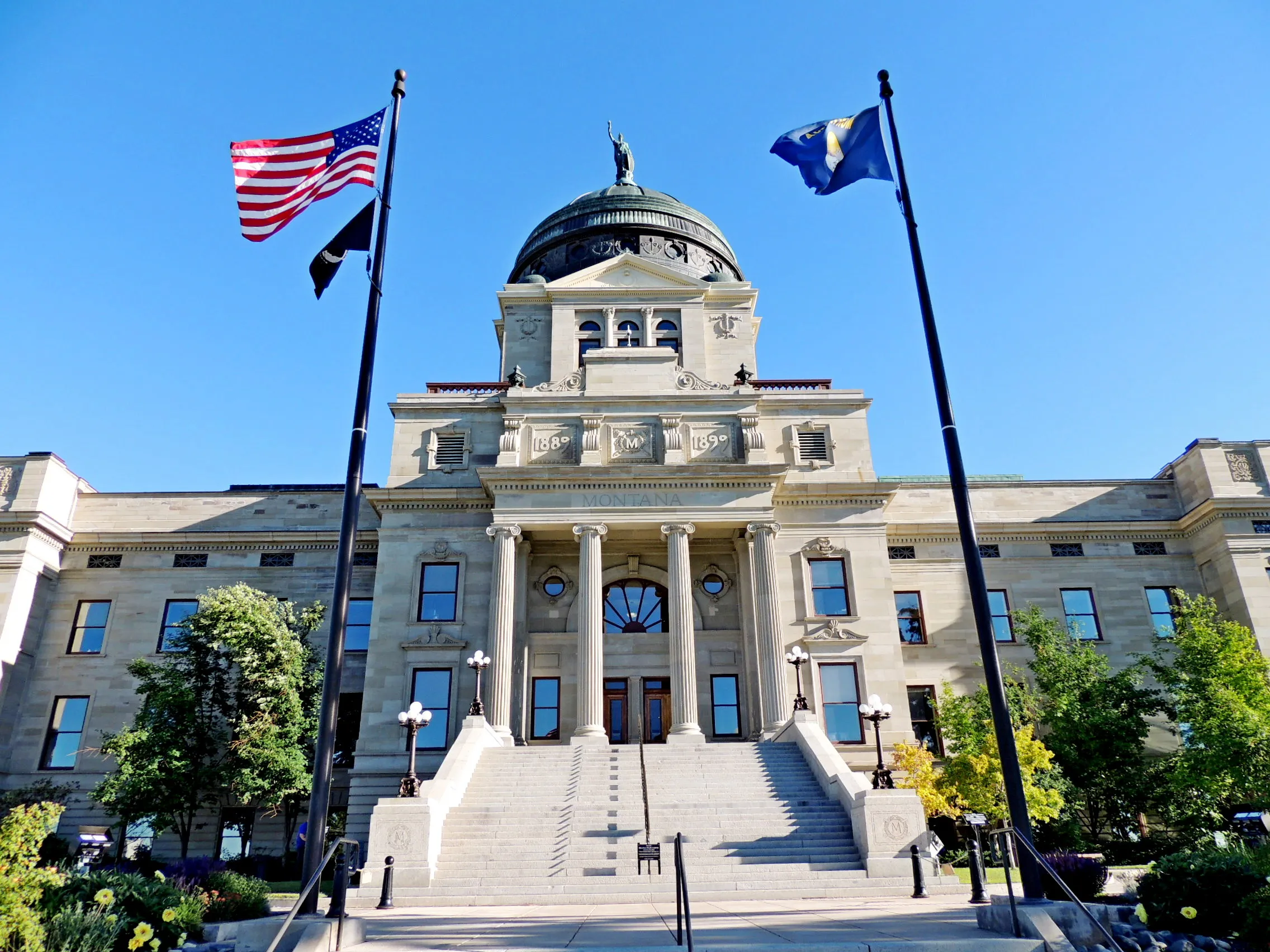
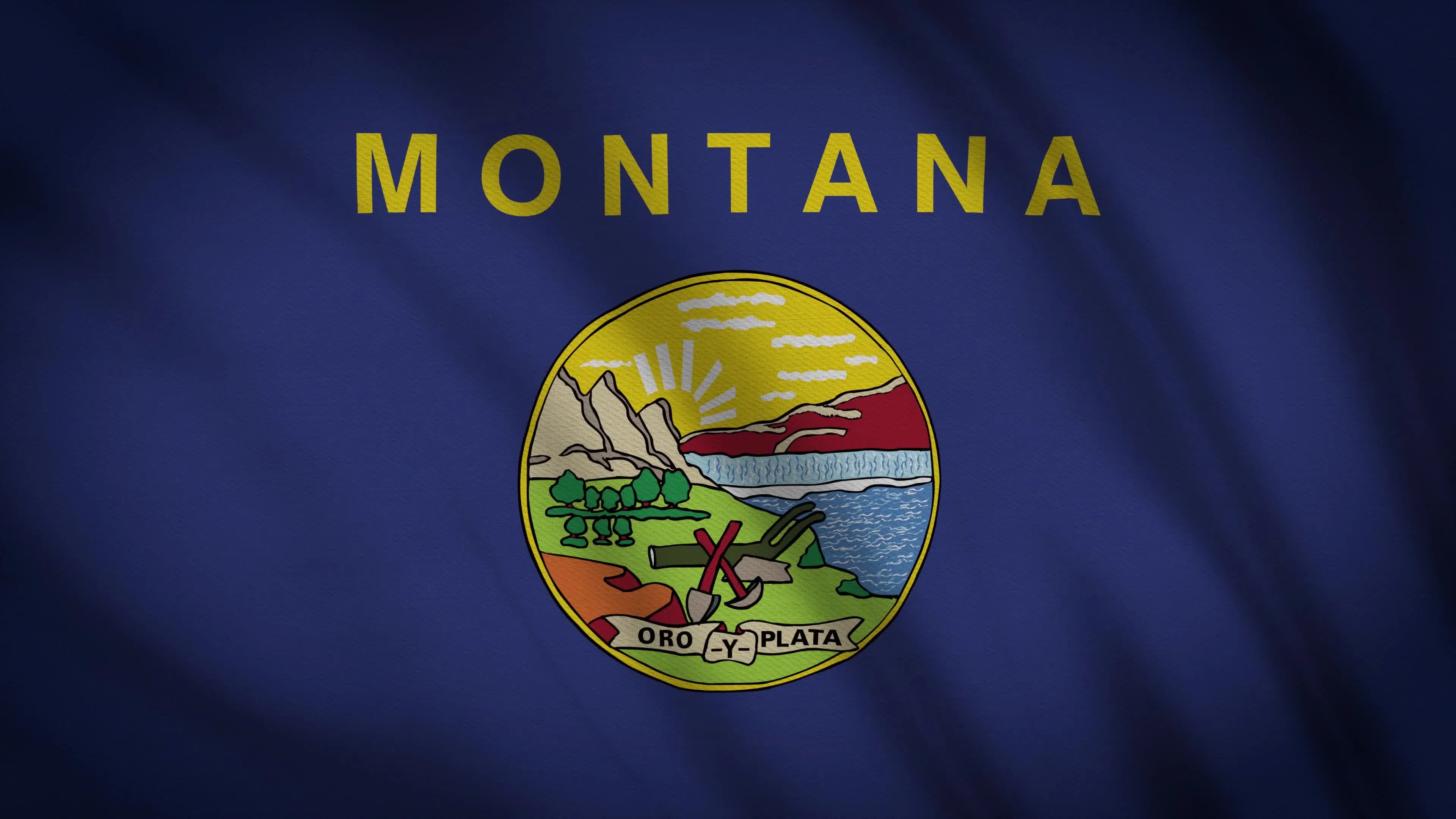
Montana
U.S. State41st State • November 8, 1889
Montana MT
"Big Sky Country"
The fourth-largest state in the nation and one of the least populated, a land of glaciers, grizzlies, copper kings, and an unbroken horizon that earns its nickname with every sunrise.
Montana state finances at a glance
State Debt - FY2024
$2.8 billion
Total state government debt outstanding at the close of fiscal 2024, including long-term bonds and short-term borrowing across state agencies and public universities.
Tax Revenue - FY2024
$4.7 billion
Total Montana state tax collections in fiscal 2024. Montana has no general sales tax, so collections are led by the individual income tax ($2.3B), followed by property and corporate income taxes.
Borrowing
Montana issues general obligation bonds backed by its full faith and credit and revenue bonds tied to specific programs such as water and coal-severance projects, sold to investors in the municipal market. The state's tax-supported debt is low. The state reported about $139 million in interest on its debt in fiscal 2024.
Source: U.S. Census Bureau, 2024 Annual Survey of State Government Finances.
1.1M
Population
41st
State (1889)
4th
Largest by Area
700+
Miles Glacier Trails
…
Last updated:
Montana's 2026 Midterm Election: Who and What Is on Your Ballot
Howdy, Montana. On Tuesday, November 3, 2026, you're choosing a U.S. senator for an open seat, your member of the U.S. House, Public Service Commission members, a Montana Supreme Court justice, your state legislators, and three statewide ballot issues.
This is a midterm election, halfway through the president's term, and nationally it decides who controls Congress for the next two years. Sen. Steve Daines withdrew from his re-election race minutes before the filing deadline, and Rep. Ryan Zinke isn't running again either.
Every household with an active voter should have gotten the state's Voter Information Pamphlet in the mail, with the official arguments for and against each ballot issue.
Key dates and how voting works are right below. Use the buttons above to open each race. Facts first; the decision is yours.
Checked against official sources on October 5, 2026
Key Dates
Key Dates
Regular registration deadline (after this, register in person at your county election office, through Election Day)
Monday, October 5
Absentee ballots go out about 25 days before the election
Early October
Election Day: polls open 7 a.m. to 8 p.m. (some small precincts open at noon); absentee ballots must arrive by 8 p.m.
Tuesday, November 3
How Voting Works in Montana
Register by October 5 by mail or at your county election office. After that, you can still register and vote in person at your county election office through Election Day.
Any voter can vote absentee; no reason needed, and many Montanans are on the permanent absentee list. Return your ballot to your county election office or a polling place by 8 p.m. on Election Day; a postmark isn't enough. Track it at votemt.gov.
On Election Day, polls are open 7 a.m. to 8 p.m. (some small precincts open at noon). Bring ID, such as a Montana driver's license or ID card, tribal ID, passport, or military ID; if you don't have one, other documents with your name and address may work.
Find your polling place and sample ballot at votemt.gov.
Governor Race
No governor's race in Montana this year. Gov. Greg Gianforte was re-elected in 2024, and Montana governors serve four-year terms, so the next race is in 2028.
Montana's next governor's election is in November 2028.
Ballot Measures
Three statewide ballot issues are on every Montana ballot, all put there by citizen petition. Each needs a simple majority.
Everything below comes from the Secretary of State's 2026 Voter Information Pamphlet, including the summaries of each side's official arguments, written by each issue's approval and rejection committees.
Montana has elected its judges on nonpartisan ballots since 1935, meaning judicial candidates appear without a party label. That rule is in state law, not the constitution, so the Legislature could change it.
CI-132 would add a new section to Article VII of the constitution: "Judicial elections shall remain nonpartisan." It does nothing else. It needs a simple majority.
A YES vote means
The Montana Constitution would require judicial elections to remain nonpartisan.
A NO vote means
No change to the Montana Constitution.
Reasons people vote yes (official pamphlet)
The approval committee, including two retired district judges and a retired sheriff, says judges should be elected on their record and qualifications, not party, and that everyday cases like child custody have no Republican or Democratic answer.
They point to a new law (House Bill 39) letting political parties give up to nearly $90,000 to judicial candidates, say nine retired Montana Supreme Court justices back the measure, and note nonpartisan elections began in 1935 to stop the Copper Kings from buying judges.
Reasons people vote no (official pamphlet)
The rejection committee calls it an anti-transparency measure that would permanently keep voters from knowing judicial candidates' party preferences.
They say it's largely funded by out-of-state interests, and that judges have political leanings voters are entitled to know about.
💵 Taxes and money: No tax change
It changes how judicial elections are labeled; no cost is attached.
Montanans can already propose laws and constitutional amendments by petition and veto laws by referendum. Before a petition can circulate, the attorney general reviews it for legal sufficiency and the secretary of state approves the petition form, and those reviews and the court challenges that follow can take months.
CI-133 would make initiative and referendum a fundamental right that government may burden only for a compelling reason and by the least restrictive means. Petitions and ballot statements would have to be approved within 90 days, and legal challenges to a measure's qualification resolved before ballots are finalized. It would require ample time to gather signatures, bar rejecting petitions or signatures over minor or technical issues, let voters withdraw their signatures, and bar using government resources to support or oppose a ballot issue. It takes effect on approval.
A YES vote means
The constitution would protect the right to propose and vote on ballot issues, with set deadlines and limits on government interference in the process.
A NO vote means
No change to the Montana Constitution.
Reasons people vote yes (official pamphlet)
The approval committee says it guarantees a fair, transparent, and timely process and stops government from using taxpayer money to sway votes.
They say ballot measures let Montanans of all political views protect hunting and fishing, public lands, and the minimum wage, and veto laws when government goes too far.
Reasons people vote no (official pamphlet)
The rejection committee, including state Sen. Wylie Galt, says the process isn't broken, as the many measures on the ballot show, and the wordy amendment is unnecessary.
They say it handcuffs the attorney general, secretary of state, and courts from screening out flawed or deceptive measures, making it easier for out-of-state money to buy laws.
💵 Taxes and money: No tax change
It changes how ballot issues are processed; no cost estimate appears in the pamphlet.
Under the U.S. Supreme Court's Citizens United ruling, corporations and other groups can spend unlimited amounts on independent political ads. I-194 takes a different route: corporations and similar entities exist under state law, so it would limit the powers Montana grants them.
It says artificial persons, including nonprofits, trusts, partnerships, corporations, trade associations, and unincorporated associations doing business in Montana, have no power to contribute anything of value to candidate elections or to support or oppose political parties or ballot issues. Violators would forfeit their privileges to do business in Montana until they give up the money and certify compliance.
It doesn't apply to news, commentary, or editorials, to individuals, to political committees, or to state and local governments. Individuals and groups could still spend through transparent political committees.
A YES vote means
Montana law would bar corporations and other entities from spending to influence candidate elections, parties, or ballot issues.
A NO vote means
No change to Montana law.
Reasons people vote yes (official pamphlet)
The approval committee, including former Gov. Marc Racicot and former Sen. Jon Tester, says it would end anonymous dark money in Montana elections, pointing to $162.7 million in outside spending in the 2024 Senate race.
They say every dollar would come from a real person, be disclosed, and follow contribution limits, and that Montana created corporations' powers and can change them.
Reasons people vote no (official pamphlet)
The rejection committee says it would unconstitutionally restrict the free speech of small businesses, churches, and community groups, while out-of-state PACs and wealthy individuals keep spending.
They say courts have struck down similar laws, citing First National Bank of Boston v. Bellotti and Citizens United, so it would waste taxpayer money in court.
💵 Taxes and money: No tax change
No cost estimate appears in the pamphlet. Opponents say the state would bear legal costs defending it in court.
Your ballot may also have county or city questions, like local levies. Check your sample ballot at votemt.gov.
Senate Races
Every state gets two U.S. senators. The Senate votes on federal laws, confirms judges and cabinet members, and approves treaties. Senators serve six-year terms.
This is an open seat: Steve Daines, in the Senate since 2015, withdrew minutes before the filing deadline and endorsed Kurt Alme. Montana's other senator, Tim Sheehy, isn't up until 2030.
Candidates come from published primary results and race pages. Your sample ballot at votemt.gov is the final word.
Positions are summarized from the candidates' own campaign websites, in neutral words and without attacks on opponents. Where a website listed no positions, the card says so.
U.S. Senator
Statewide, six-year term, open seat
Republican Kurt Alme, a former U.S. attorney, faces Democrat Alani Bankhead, a retired Air Force lieutenant colonel and federal agent, independent Seth Bodnar, the former University of Montana president, and Libertarian Kyle Austin, a pharmacist.
Kurt Alme
Republican
Occupation:
Attorney; former U.S. Attorney for Montana
Government experience:
U.S. Attorney for the District of Montana (2017 to 2020, 2025 to 2026)
What they say they stand for
Says he'll make life more affordable, keep communities safe, and protect the Montana way of life.
Points to his record balancing the state budget, cutting taxes for working families, and cracking down on crime.
Retired Air Force lieutenant colonel; former federal special agent
Government experience:
None in elected office
What they say they stand for
Supports universal health care, paid for by cutting paperwork and drug middlemen, and wants to protect Medicare and Medicaid payments to rural hospitals.
Wants a Montana paycheck to buy a Montana home, and property tax relief for seniors.
Points to her career building cases against child predators and wants to protect kids and survivors.
Former president, University of Montana; Army veteran
Government experience:
None in elected office
What they say they stand for
We summarize positions in depth for the Democratic and Republican nominees and incumbents. This candidate didn't answer the questionnaires we use, and Montana's pamphlet covers ballot issues, not candidates.
We summarize positions in depth for the Democratic and Republican nominees and incumbents. This candidate didn't answer the questionnaires we use, and Montana's pamphlet covers ballot issues, not candidates.
Montana has two seats, both held by Republicans. Montana's districts are drawn by an independent five-member commission. Here's how redistricting works. District 1 is open: Rep. Ryan Zinke isn't running again.
You vote only in the district where you live; your sample ballot shows which one.
Montana's 2 Districts and Who Holds Them Today
Republican
Each district is colored by the party of the member of Congress who holds it right now, not by who will win in November. Select a district to jump to its race. District lines: U.S. Census Bureau, 120th Congress.
Candidates come from published primary results and race pages. Your sample ballot at votemt.gov is the final word.
Positions are summarized from the candidates' own campaign websites, in neutral words and without attacks on opponents. Where a website listed no positions, the card says so.
District 1
Western Montana: Missoula, Bozeman, Butte, and Kalispell
An open seat: Ryan Zinke isn't running again. Republican Aaron Flint, a radio host and combat veteran, faces Democrat Sam Forstag, a smokejumper and union leader, Libertarian Nick Sheedy, and independent Kimberly Persico.
Aaron Flint
Republican
Occupation:
Radio host; combat veteran
Government experience:
None in elected office
What they say they stand for
Wants to ban Wall Street firms from buying single-family homes, and backs federally backed mortgages for first responders and teachers (the HELPER Act).
Wants the no tax on tips, overtime, and Social Security breaks made permanent.
Wants more jobs in the trades, logging, and manufacturing, and more domestic energy production.
Wants to cut taxes and regulations and make it easier to build homes and businesses.
We summarize positions in depth for the Democratic and Republican nominees and incumbents. This candidate didn't answer the questionnaires we use, and Montana's pamphlet covers ballot issues, not candidates.
Kimberly Persico
Independent
Occupation:
Not available
Government experience:
None in elected office
What they say they stand for
We summarize positions in depth for the Democratic and Republican nominees and incumbents. This candidate didn't answer the questionnaires we use, and Montana's pamphlet covers ballot issues, not candidates.
District 2
Eastern and central Montana: Billings, Great Falls, and Helena
Republican Troy Downing, in office since 2025, faces Democrat Brian Miller, a Helena attorney, Libertarian Patrick McCracken, and independent Michael Eisenhauer, a cardiologist.
Troy Downing
Incumbent
Republican
Occupation:
U.S. Representative; businessman; Air Force veteran
Government experience:
U.S. Representative (2025 to present); Montana State Auditor (2021 to 2025)
What they say they stand for
Says he advocates for stronger financial markets and more access to capital for rural small businesses on the Financial Services Committee.
Points to his record as state auditor protecting residents from fraud and lowering family costs.
The campaign website lists no issue positions we could read, and the candidate hasn't answered the questionnaires we use. See the website for where they stand.
We summarize positions in depth for the Democratic and Republican nominees and incumbents. This candidate didn't answer the questionnaires we use, and Montana's pamphlet covers ballot issues, not candidates.
Michael Eisenhauer
Independent
Occupation:
Cardiologist
Government experience:
None in elected office
What they say they stand for
We summarize positions in depth for the Democratic and Republican nominees and incumbents. This candidate didn't answer the questionnaires we use, and Montana's pamphlet covers ballot issues, not candidates.