Because democracy only works when we understand it
Searches are processed by Cloudflare Workers AI and are not stored.
Searches are processed by Cloudflare Workers AI and are not stored.
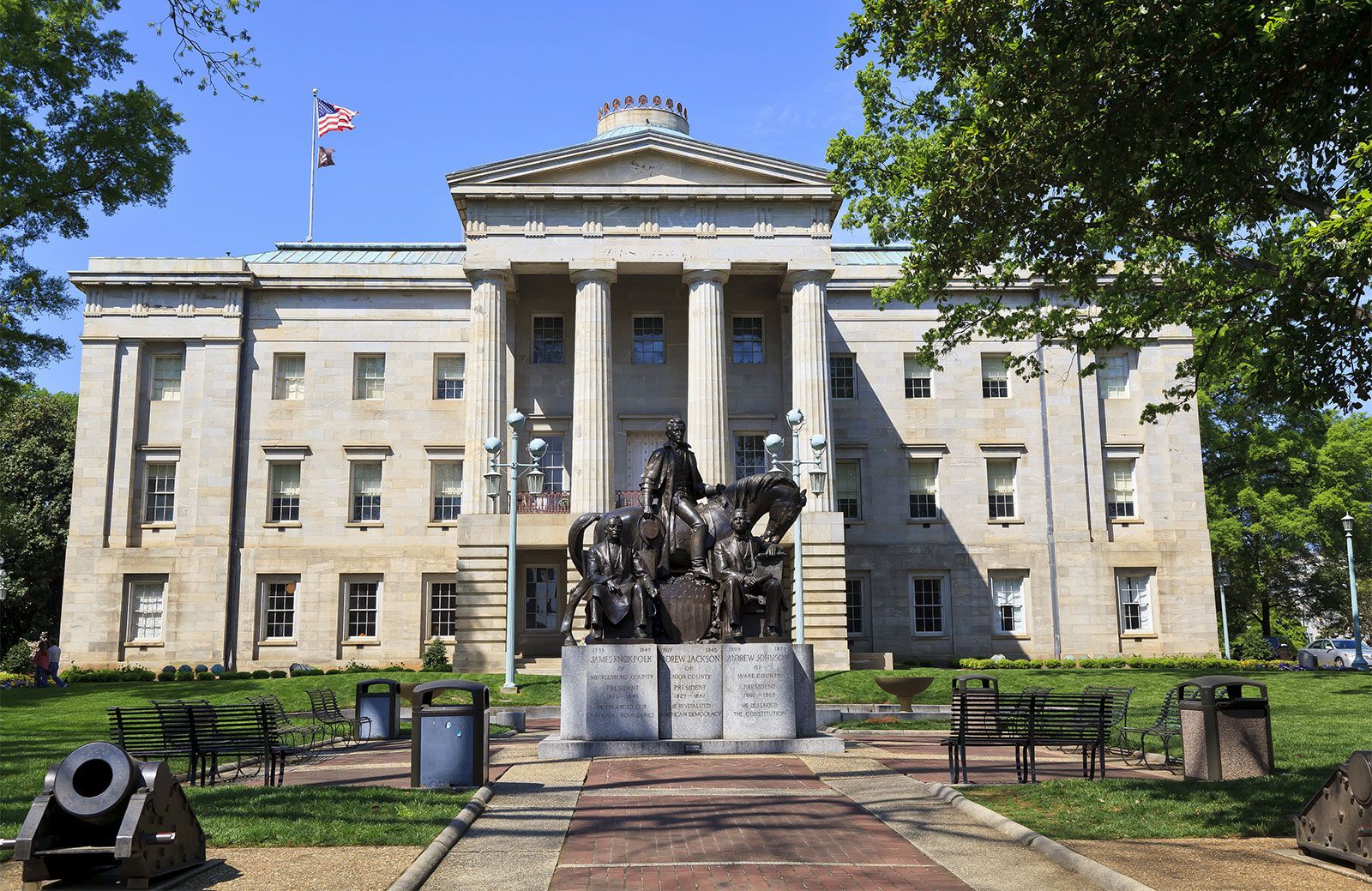
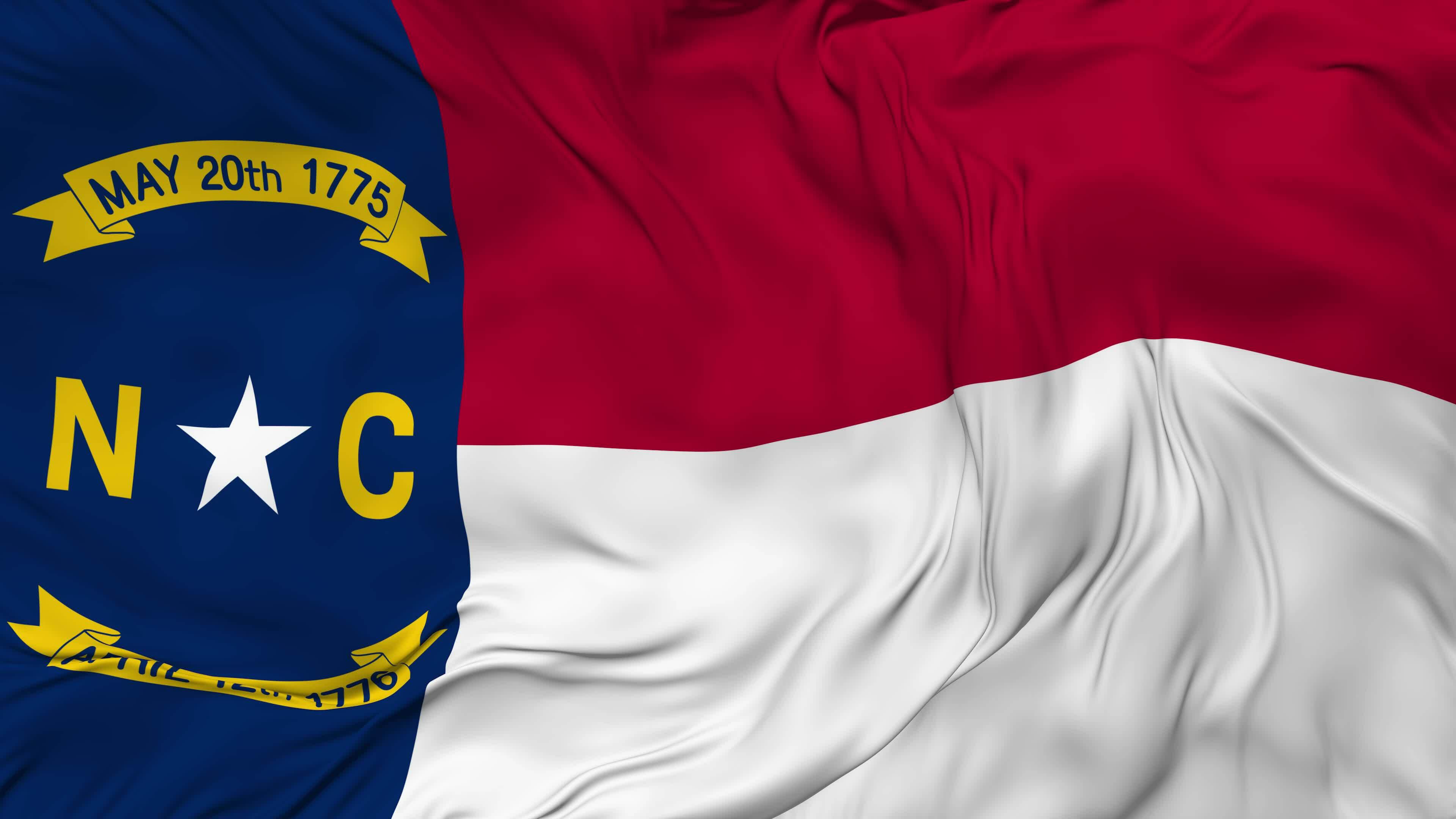
North Carolina
U.S. State12th State • November 21, 1789
North Carolina NC
"The Tar Heel State"
The birthplace of powered flight, home to America's second-largest banking center, the oldest public university in the nation, and the spark that lit the modern Civil Rights Movement, North Carolina has shaped America in ways far outsized to its size.
North Carolina state finances at a glance
State Debt - FY2024
$13.1 billion
Total state government debt outstanding at the close of fiscal 2024, including long-term bonds and short-term borrowing across state agencies and public universities.
Tax Revenue - FY2024
$39.2 billion
Total North Carolina state tax collections in fiscal 2024, led by the individual income tax ($17B) and the general sales tax ($12B).
Borrowing
North Carolina holds a AAA rating and issues voter-approved general obligation bonds plus 'special indebtedness' such as limited obligation bonds and certificates of participation that do not require a vote. All are sold to investors in the tax-exempt municipal market. The state reported about $765 million in interest on its debt in fiscal 2024.
Source: U.S. Census Bureau, 2024 Annual Survey of State Government Finances.
11.0M
Population
12th
State (1789)
#2
US Banking Center
1903
First in Flight
…
Last updated:
North Carolina's 2026 Midterm Election: Who and What Is on Your Ballot
Hey, North Carolina. On Tuesday, November 3, 2026, you're choosing a U.S. senator for an open seat, your member of the U.S. House, a state Supreme Court justice and other judges, your state legislators, and three constitutional amendments.
This is a midterm election, halfway through the president's term, and nationally it decides who controls Congress for the next two years. Sen. Thom Tillis isn't running again, and the Senate race is one of the most closely watched in the country.
Heads up: the amendments are often on the back of the ballot, so flip it over. And the U.S. House districts were redrawn in October 2025, so yours may have changed; your sample ballot shows which one you're in.
Key dates and how voting works are right below. Use the buttons above to open each race. Facts first; the decision is yours.
Checked against official sources on October 6, 2026
Key Dates
Key Dates
Voter registration deadline
Friday, October 9
In-person early voting, with same-day registration (ends at 3 p.m. on the last Saturday)
Thursday, October 15, to Saturday, October 31
Last day to request an absentee ballot (5 p.m.)
Tuesday, October 27
Election Day: polls open 6:30 a.m. to 7:30 p.m.; absentee ballots must arrive by 7:30 p.m.
Tuesday, November 3
How Voting Works in North Carolina
Register by October 9. Missed it? You can register and vote the same day at any early voting site in your county from October 15 to October 31, with proof of where you live.
Bring a photo ID to vote in person. Accepted IDs include a North Carolina driver's license or ID card, a passport, a military or veterans ID, a tribal ID, and many student and government employee IDs; if you can't show one, you can fill out an exception form.
Any voter can vote absentee by mail; no reason needed. Request your ballot by 5 p.m. on October 27, include a copy of your photo ID (or an exception form), and make sure it reaches your county board of elections by 7:30 p.m. on Election Day; ballots arriving later don't count.
Find your polling place and sample ballot with the State Board of Elections' Voter Search at ncsbe.gov.
Governor Race
No governor's race in North Carolina this year. Gov. Josh Stein was elected in 2024 to a four-year term, so the next race is in 2028.
North Carolina's next governor's election is in November 2028.
Ballot Measures
Three constitutional amendments are on every North Carolina ballot, all placed there by the General Assembly. Each needs a simple majority. The governor has no say over amendments; voters have the final word.
The summaries below quote the official explanations adopted by the General Assembly's nonpartisan Legislative Services Officer. Those explanations include no arguments, so each side's arguments come from the League of Women Voters of North Carolina's position-neutral voter guides.
Voters added a photo ID requirement for in-person voting to the North Carolina Constitution in 2018. State law already requires absentee-by-mail voters to include a copy of an acceptable photo ID or fill out an ID exception form.
The official summary says this amendment "would require presentation of photographic identification for voters in all instances in North Carolina elections." The ballot reads: "Constitutional amendment to require all voters, not just those presenting to vote in person, to present photo identification before voting."
It lets the General Assembly pass laws that may include exceptions, but doesn't write today's exceptions into the constitution. It came from Senate Bill 921 (Session Law 2024-58) and needs a simple majority.
A FOR vote means
The constitution would require photo ID for every voter, however they vote.
An AGAINST vote means
The constitution's photo ID requirement stays limited to in-person voting; state law on absentee ID stays as it is.
Reasons people vote for it
Supporters say one photo ID standard should apply to every voter, however they vote, as an added safeguard for confirming identity.
They say putting it in the constitution makes the rule harder to undo, while still letting lawmakers set exceptions.
Reasons people vote against it
Opponents say state law already requires ID for absentee voting, so the amendment isn't needed.
They say it doesn't protect today's exceptions, so a future legislature could narrow them, which could burden military, overseas, student, rural, and older voters.
💵 Taxes and money: No tax change
It sets a voting rule. The official summary lists no cost.
North Carolina has a flat state income tax. The constitution caps the rate at 7%; voters lowered that cap from 10% in 2018. State law sets the actual rate: 3.99% in 2026, scheduled to drop to 3.49% in 2027.
The official summary says the amendment "would lower the State income tax rate from a maximum of 7% to a maximum of 3.5% beginning January 1, 2027." The ballot reads: "Constitutional amendment to keep the State income tax rate from being raised higher than three and one-half percent (3.5%)."
It's a ceiling, not a rate cut: it limits how high future lawmakers could raise the rate. It came from Session Law 2026-4 and needs a simple majority.
A FOR vote means
The constitution would cap the state income tax rate at 3.5% starting in 2027.
An AGAINST vote means
The constitutional cap stays at 7%.
Reasons people vote for it
Supporters say a low flat rate is simpler, encourages investment, and helps keep people and businesses in North Carolina, competing with Florida and Tennessee, which have no income tax.
They say it wouldn't hurt the state's credit rating, given its strong financial controls and reserves.
Reasons people vote against it
Opponents say it's unnecessary, since the rate is already scheduled to fall below 3.5%.
They say a constitutional cap could limit future money for schools, public safety, disaster recovery, and health care, shift costs to local governments, and is viewed negatively by credit rating agencies.
💵 Taxes and money: No change to your current tax rate
The current rate (3.99% in 2026) and the scheduled 2027 rate (3.49%) are set by state law, not by this amendment. It only limits how high future lawmakers could raise the rate. No official revenue estimate accompanies it.
Counties and cities set their own property tax rates, and property tax is the main way they pay for schools, law enforcement, emergency services, libraries, parks, and elections.
The official summary says the amendment "would require the General Assembly to set limits on property tax increases by local governments." The ballot reads: "Constitutional amendment requiring limits on property tax increases by local governments."
It doesn't set the limit itself; the formula and any exceptions would come later in a separate law. It came from Session Law 2026-5 and needs a simple majority.
A FOR vote means
The General Assembly would have to pass a law limiting how much local governments can raise property taxes.
An AGAINST vote means
No constitutional requirement; local governments keep setting their own property taxes under current law.
Reasons people vote for it
Supporters say it could help limit rising property tax bills and make local tax growth more predictable.
They say it puts a check on local government spending and lets voters decide whether the limit belongs in the constitution.
Reasons people vote against it
Opponents say counties and towns would lose flexibility, and voters don't know the limits or exceptions before voting.
They say limits could affect schools, emergency services, roads, parks, and libraries, leave fewer options in disasters, and push local governments toward fees.
💵 Taxes and money: No tax change right away
It doesn't change any tax rate on its own. The effect on property tax bills would depend on the limits the General Assembly later writes into law; no official estimate accompanies the amendment.
Your county or town may have local questions, such as bonds or sales tax referendums. Check your sample ballot with the State Board of Elections' Voter Search.
Senate Races
Every state gets two U.S. senators. The Senate votes on federal laws, confirms judges and cabinet members, and approves treaties. Senators serve six-year terms.
This is an open seat: Thom Tillis, in the Senate since 2015, isn't running again. North Carolina's other senator, Ted Budd, isn't up until 2028.
Candidates come from the State Board of Elections' 2026 general election candidate list. Your sample ballot is the final word.
Positions are summarized from the candidates' own campaign websites, in neutral words and without attacks on opponents. Where a website listed no positions or wouldn't load, the card says so.
U.S. Senator
Statewide, six-year term, open seat
Democrat Roy Cooper, the former two-term governor, faces Republican Michael Whatley, the former Republican National Committee chairman, Libertarian Shannon W. Bray, and Green Party candidate Michael Dublin.
Roy Cooper
Democrat
Occupation:
Former governor; attorney
Government experience:
Governor of North Carolina (2017 to 2025); Attorney General (2001 to 2017); North Carolina General Assembly
What they say they stand for
Is running to "make stuff cost less," starting with food and groceries, and says tariffs are hurting farmers.
Points to expanding Medicaid as governor with bipartisan support, and wants to lower health care costs and crack down on surprise bills and denied claims.
Wants to lower energy bills and hold utility companies, including Duke Energy, accountable.
Wants lower child care and housing costs for families.
We summarize positions in depth for the Democratic and Republican nominees and incumbents. This candidate didn't answer the questionnaires we use, and North Carolina publishes no candidate pamphlet.
Michael Dublin
Green
Occupation:
Not available
Government experience:
None in elected office
What they say they stand for
We summarize positions in depth for the Democratic and Republican nominees and incumbents. This candidate didn't answer the questionnaires we use, and North Carolina publishes no candidate pamphlet.
North Carolina has 14 seats: 10 held by Republicans and 4 by Democrats. The General Assembly redrew the districts in October 2025, mainly changing District 1 and District 3; here's how redistricting works. District 11 has a new Republican nominee after Rep. Chuck Edwards ended his re-election campaign in August.
You vote only in the district where you live; your sample ballot shows which one.
North Carolina's 14 Districts and Who Holds Them Today
Democrat
Republican
Each district is colored by the party of the member of Congress who holds it right now, not by who will win in November. Select a district to jump to its race; the Raleigh (2) and Charlotte (12) districts are left unnumbered, so hover over or select one to see which it is. District lines: U.S. Census Bureau, 120th Congress (the map adopted in October 2025).
Candidates come from the State Board of Elections' 2026 general election candidate list. Your sample ballot is the final word.
Positions are summarized from the candidates' own campaign websites, in neutral words and without attacks on opponents. Where a website listed no positions or wouldn't load, the card says so.
District 1
Northeastern North Carolina
Democrat Don Davis, in office since 2023, faces Republican Laurie Buckhout, an Army veteran, and Libertarian Tom Bailey.
Don Davis
Incumbent
Democrat
Occupation:
U.S. Representative; Air Force veteran
Government experience:
U.S. Representative (2023 to present); North Carolina Senate
What they say they stand for
Wants to make life more affordable as gas, grocery, and health care costs rise.
Lists jobs and economic growth, education, and rural infrastructure as priorities.
Wants to support the military and veterans, and calls his approach practical.
We summarize positions in depth for the Democratic and Republican nominees and incumbents. This candidate didn't answer the questionnaires we use, and North Carolina publishes no candidate pamphlet.
District 2
Most of Wake County, including Raleigh
Democrat Deborah Ross, in office since 2021, faces Republican Eugene Douglass and Libertarian Matthew Laszacs. Brian McGinnis is a certified write-in candidate.
Deborah Ross
Incumbent
Democrat
Occupation:
U.S. Representative; attorney
Government experience:
U.S. Representative (2021 to present); North Carolina House
What they say they stand for
Says she's fighting to lower costs and taking on President Trump.
Supports affordable health care and housing for working people.
Supports public schools, smaller classes, higher teacher pay, and student debt relief.
Wants to protect retirement benefits, support unions, and address climate change.
We couldn't find a campaign website, and the candidate hasn't answered the questionnaires we use, so we have no positions to summarize.
Matthew Laszacs
Libertarian
Occupation:
Not available
Government experience:
None in elected office
What they say they stand for
We summarize positions in depth for the Democratic and Republican nominees and incumbents. This candidate didn't answer the questionnaires we use, and North Carolina publishes no candidate pamphlet.
District 3
Eastern North Carolina, including Greenville and Jacksonville
Republican Greg Murphy, in office since 2019, faces Democrat Raymond Smith Jr., a former state representative, and Libertarian Daniel Cavender.
Greg Murphy
Incumbent
Republican
Occupation:
U.S. Representative; surgeon
Government experience:
U.S. Representative (2019 to present); North Carolina House
What they say they stand for
Says making life more affordable is his top priority, and points to helping write the 2025 tax law with no tax on tips or overtime and relief for seniors.
Wants a secure border.
Wants affordable health care and says insurance giants are crushing patients.
Lists veterans, farmers, and the troops among his priorities.
We summarize positions in depth for the Democratic and Republican nominees and incumbents. This candidate didn't answer the questionnaires we use, and North Carolina publishes no candidate pamphlet.
District 4
The Triangle: Durham, Chapel Hill, and nearby counties
Democrat Valerie Foushee, in office since 2023, faces Republican Max Ganorkar and Libertarian Guy Meilleur.
Valerie Foushee
Incumbent
Democrat
Occupation:
U.S. Representative
Government experience:
U.S. Representative (2023 to present); North Carolina Senate
What they say they stand for
Says she is working to hold President Trump accountable, including supporting impeachment legislation.
Wants limits on ICE, including banning masks and requiring body cameras.
Calls health care a universal right and points to expanding Medicaid as a state senator.
Lists reproductive freedom, affordability, and education among her priorities.
We summarize positions in depth for the Democratic and Republican nominees and incumbents. This candidate didn't answer the questionnaires we use, and North Carolina publishes no candidate pamphlet.
District 5
Northwestern North Carolina, including Boone and Wilkesboro
Republican Virginia Foxx, in office since 2005, faces Democrat Chuck Hubbard and Libertarian Robert Luffman.
Virginia Foxx
Incumbent
Republican
Occupation:
U.S. Representative
Government experience:
U.S. Representative (2005 to present); North Carolina Senate
What they say they stand for
Opposes abortion, including banning elective abortion once an unborn child can feel pain and ending federal funding for abortion providers.
Supports religious liberty and the Second Amendment.
Wants to reduce the size of government, taxes, and spending.
Lists immigration, national defense, and workforce development among her priorities.
We summarize positions in depth for the Democratic and Republican nominees and incumbents. This candidate didn't answer the questionnaires we use, and North Carolina publishes no candidate pamphlet.
District 6
The central Piedmont, including High Point and parts of the Triad
Republican Addison McDowell, in office since 2025, faces Democrat Cyril Jefferson, the mayor of High Point.
Addison McDowell
Incumbent
Republican
Occupation:
U.S. Representative
Government experience:
U.S. Representative (2025 to present)
What they say they stand for
Wants the southern border secured and the flow of fentanyl stopped.
Supports President Trump's America First trade agenda.
Supports the Second Amendment and opposes abortion.
We summarize positions in depth for the Democratic and Republican nominees and incumbents. This candidate didn't answer the questionnaires we use, and North Carolina publishes no candidate pamphlet.
District 8
South-central North Carolina, including Union County
Republican Mark Harris, in office since 2025, faces Democrat Colby Watson and Green Party candidate Bo Whitehead.
Mark Harris
Incumbent
Republican
Occupation:
U.S. Representative; pastor
Government experience:
U.S. Representative (2025 to present)
What they say they stand for
Opposes abortion and supports traditional family values.
Wants strong border security and enforcement of immigration law.
Supports a strong military.
Supports school choice, and points to bills he introduced against child predators and SNAP fraud.
We summarize positions in depth for the Democratic and Republican nominees and incumbents. This candidate didn't answer the questionnaires we use, and North Carolina publishes no candidate pamphlet.
District 9
The Sandhills and central North Carolina, including Moore and Randolph counties
Republican Richard Hudson, in office since 2013, faces Democrat Richard Ojeda, a retired Army major and former West Virginia state senator.
Richard Hudson
Incumbent
Republican
Occupation:
U.S. Representative
Government experience:
U.S. Representative (2013 to present)
What they say they stand for
Wants to finish securing the border with a wall and technology, and bring back policies like Remain in Mexico.
Supports police and wants to keep fighting the opioid epidemic.
Lists the military, veterans, the Second Amendment, and cutting spending among his priorities.
We summarize positions in depth for the Democratic and Republican nominees and incumbents. This candidate didn't answer the questionnaires we use, and North Carolina publishes no candidate pamphlet.
District 11
Western North Carolina, including Asheville
An open seat: Rep. Chuck Edwards ended his re-election campaign in August, and the state Republican Party chose state Rep. Jennifer Balkcom as its nominee. She faces Democrat Jamie Ager, a farmer, and Libertarian Travis Groo.
Jennifer Balkcom
Republican
Occupation:
Mortgage loan officer; small business owner
Government experience:
North Carolina House (2023 to present)
What they say they stand for
The campaign website lists no issue positions we could read, and the candidate hasn't answered the questionnaires we use. See the website for where they stand.
We summarize positions in depth for the Democratic and Republican nominees and incumbents. This candidate didn't answer the questionnaires we use, and North Carolina publishes no candidate pamphlet.
District 12
Charlotte and inner Mecklenburg County
Democrat Alma Adams, in office since 2014, faces Republican Jack Codiga.
Alma Adams
Incumbent
Democrat
Occupation:
U.S. Representative; retired art professor
Government experience:
U.S. Representative (2014 to present); North Carolina House
What they say they stand for
Supports abortion rights and equal pay, leading on the Paycheck Fairness Act.
Lists public and higher education and better health care among her priorities.
Wants to strengthen the middle class, protect seniors and workers, and end hunger.
East-central North Carolina, including Johnston County and part of Wake
Republican Brad Knott, in office since 2025, faces Democrat Paul Barringer and Libertarian Steven Swinton.
Brad Knott
Incumbent
Republican
Occupation:
U.S. Representative; former federal prosecutor
Government experience:
U.S. Representative (2025 to present)
What they say they stand for
Wants to secure the border and finish the wall, with a five-year minimum sentence before deportation for immigrants here illegally who commit felonies.
Supports school choice and parents' voice in curriculum.
Wants spending cuts and a balanced budget amendment.
Wants to protect free speech and religious liberty.
We summarize positions in depth for the Democratic and Republican nominees and incumbents. This candidate didn't answer the questionnaires we use, and North Carolina publishes no candidate pamphlet.
District 14
Southwestern Piedmont and foothills, including Gaston and Cleveland counties
Republican Tim Moore, in office since 2025, faces Democrat LaKesha Womack.
Tim Moore
Incumbent
Republican
Occupation:
U.S. Representative; attorney
Government experience:
U.S. Representative (2025 to present); North Carolina House, including Speaker (2015 to 2025)
What they say they stand for
Says he stands for fiscal responsibility and smarter regulation on the Financial Services and Budget committees.
Points to his record as Speaker: voter ID, banning sanctuary cities, balanced budgets, and the largest state income tax cut in history.