Because democracy only works when we understand it
Searches are processed by Cloudflare Workers AI and are not stored.
Searches are processed by Cloudflare Workers AI and are not stored.
Florida
State Guide27th StateEst. 1845
Florida FL
"The Sunshine State"
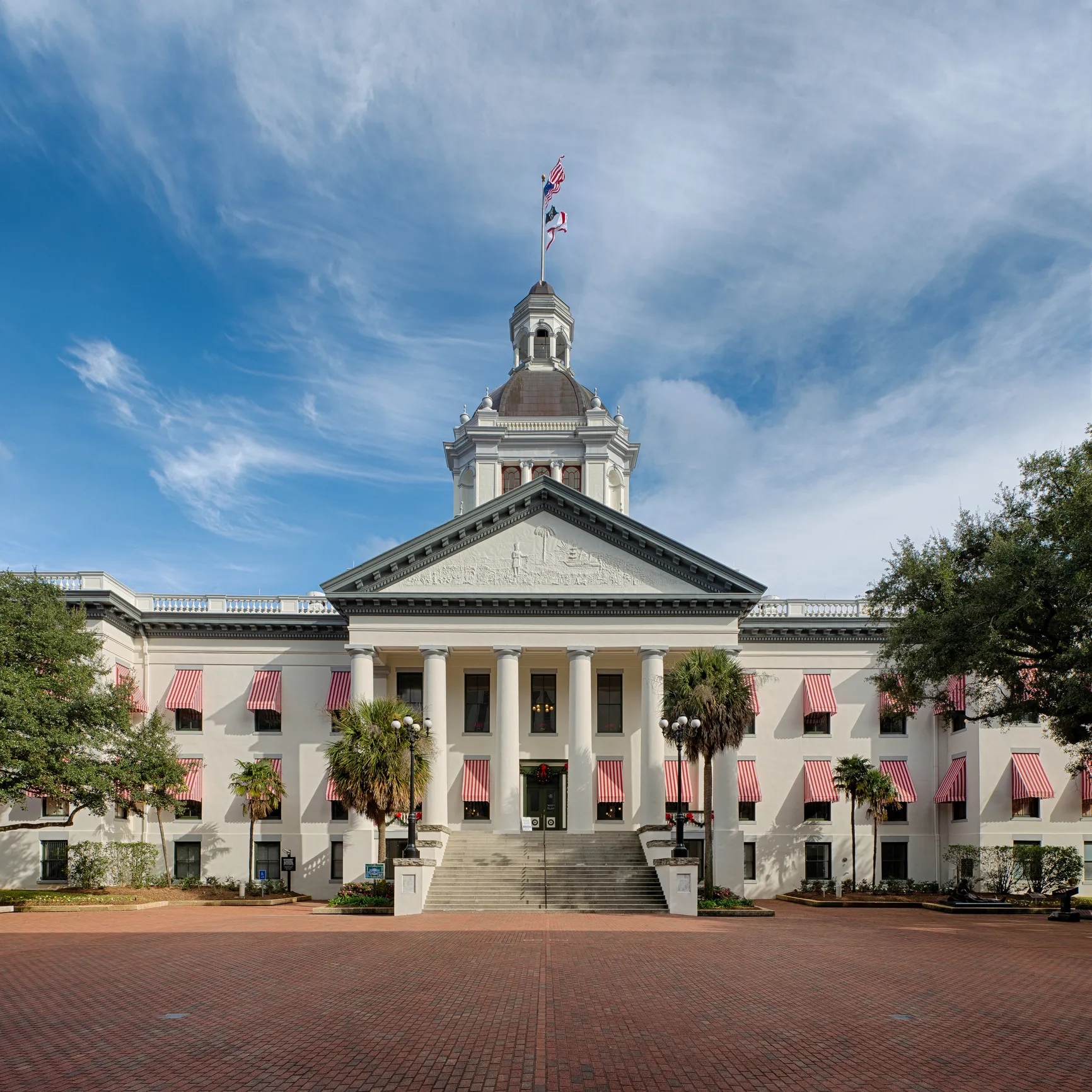
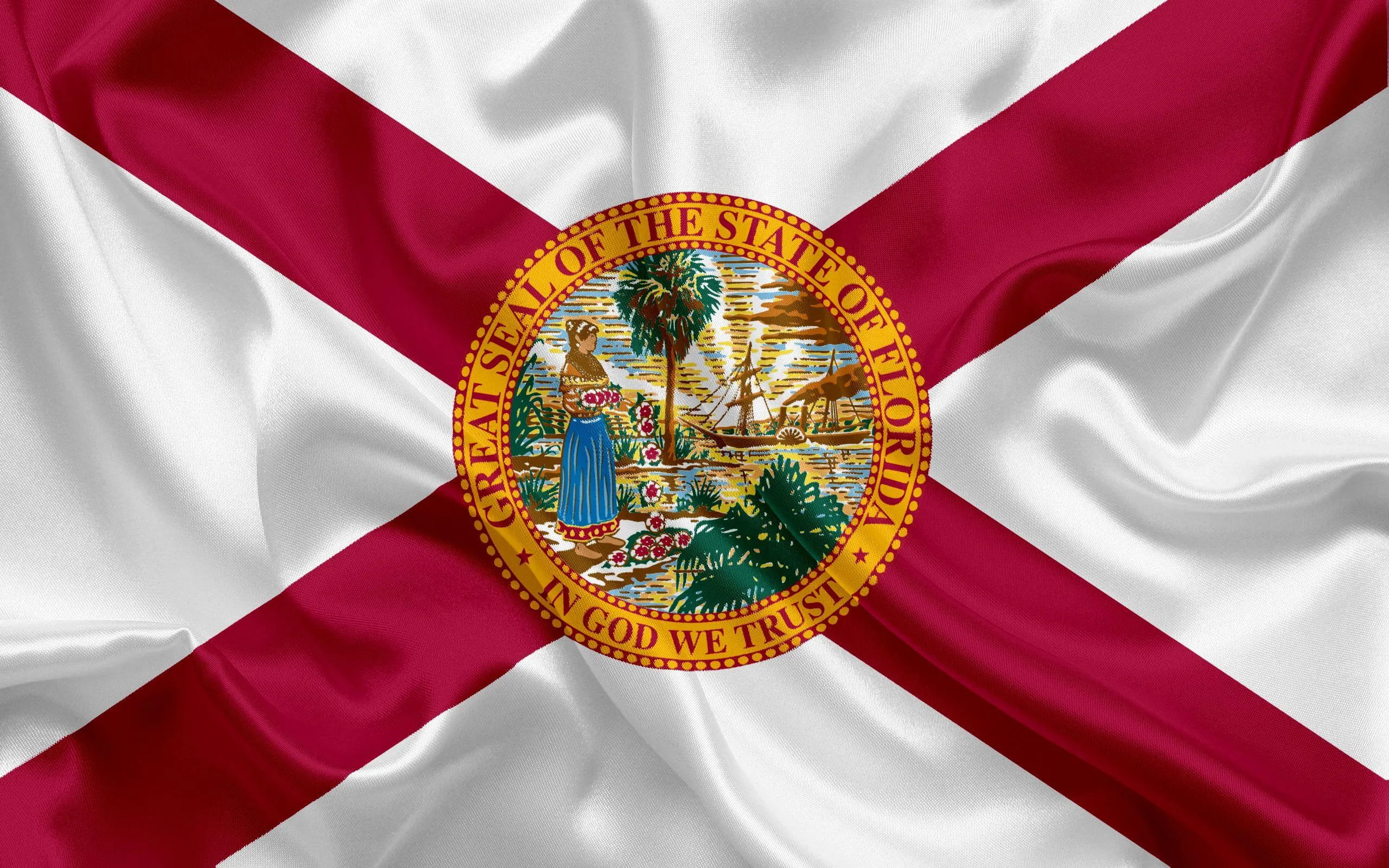
America's third most populous state and its most visited, a land of space launches and sunsets, orange groves and alligators, art deco hotels and ancient cypress swamps. From the moment Spain claimed it in 1513 to the moment Florida's recount decided a presidency, no state has shaped American history quite like the one at the end of the peninsula.
Florida state finances at a glance
State Debt - FY2024
$20.1 billion
Total state government debt outstanding at the close of fiscal 2024, including long-term bonds and short-term borrowing across state agencies and public universities.
Tax Revenue - FY2024
$63.1 billion
Total Florida state tax collections in fiscal 2024. Florida has no individual income tax, so collections are led by the state sales and use tax ($40B), with the corporate income tax ($6.1B) next.
Borrowing
Florida issues voter-approved general obligation bonds and revenue bonds, backed by dedicated revenues such as documentary stamp and gross receipts taxes, sold to investors in the municipal market. State policy targets a falling debt-to-revenue ratio, and Florida's tax-supported debt is low for its size. The state reported about $575 million in interest on its debt in fiscal 2024.
Source: U.S. Census Bureau, 2024 Annual Survey of State Government Finances.
27th
State admitted to the Union
23.4M
Population, 3rd largest state
1,350
Miles of coastline
#1
Most visited state in America
…
Last updated:
Florida's 2026 Midterm Election: Who and What Is on Your Ballot
Alright, Florida, let's do this. On Tuesday, November 3, 2026, you're choosing a new governor (Ron DeSantis is term-limited), a U.S. senator in a special election, your member of the U.S. House, the Cabinet offices, and three amendments to the state constitution.
This is a midterm election, halfway through the president's term, and nationally it decides who controls Congress for the next two years. Florida's House districts are new this year: the Legislature redrew them and the governor signed the map on May 4, so many of you are in a different district than in 2024.
Amendments in Florida need 60 percent of the vote to pass, not a simple majority. Two of the three this year are about property taxes, so they're worth a careful read.
The key dates and how voting works are right below. Use the buttons above to open each part of the ballot. Facts first; the decision is yours.
Checked against official sources on October 4, 2026
Key Dates
Key Dates
Last day to register to vote
Monday, October 5
Some counties start early voting (check yours)
Monday, October 19
Last day to request a vote-by-mail ballot (5 p.m.)
Thursday, October 22
Early voting required in every county, through October 31
Saturday, October 24
Election Day: polls open 7 a.m. to 7 p.m.; mail ballots due by 7 p.m.
Tuesday, November 3
How Voting Works in Florida
Register by Monday, October 5. Check your registration, district, and sample ballot with your county Supervisor of Elections.
Early voting runs at least October 24 through 31 in every county, and many counties also open October 19 through November 1; hours and sites are set by your county. On Election Day, vote at your assigned polling place from 7 a.m. to 7 p.m.
Anyone can vote by mail. Request a ballot from your Supervisor of Elections by 5 p.m. on October 22 (requests from before the last general election have expired, so you may need to ask again). It must reach the Supervisor of Elections by 7 p.m. on Election Day; a postmark doesn't count, so mail it early or drop it off.
At the polls, bring a photo ID with your signature, like a Florida driver's license or ID card, passport, or military ID. If you don't have one, you can vote a provisional ballot.
Governor Race
The governor runs Florida's executive branch, proposes the budget, signs or vetoes bills, and appoints judges. Governors serve four-year terms and can serve two in a row. Ron DeSantis has served two, so this is an open seat.
In Florida, each party's nominee picks a lieutenant governor, and they run together as one ticket.
Candidates and current seat holders are from Ballotpedia's lists of candidates on the November ballot under the new map; your county's sample ballot is the final word. Florida has no official candidate pamphlet.
Positions are summarized from the candidates' own campaign websites, in neutral words and without attacks on opponents. Where a website didn't load or listed no positions, the card says so.
Governor and Lieutenant Governor of Florida
Statewide, four-year term, open seat
Republican Byron Donalds faces Democrat David Jolly, a former Republican congressman, along with a Libertarian ticket and five candidates with no party affiliation. Kathy Anderson and Erik Morris are certified write-in candidates.
Byron Donalds
Republican
Lieutenant governor:
Bryan Avila
Occupation:
U.S. Representative
Government experience:
U.S. Representative (2021 to present); Florida House (2016 to 2020)
What they say they stand for
Wants to bring down costs for working families and seniors on fixed incomes.
Proposes "Your Doctor, Your Price" so patients know health care costs before treatment.
Wants to cut regulations that slow people from opening businesses.
Wants every child reading by third grade and debt-free paths to good jobs.
Wants to secure the border, end taxpayer benefits for illegal immigration, and bring NASA's headquarters to Florida.
We summarize positions in depth for the Democratic and Republican nominees and incumbents. This candidate didn't answer the questionnaires we use.
Dean Abrams
No Party Affiliation
Occupation:
Not available
Government experience:
None in elected office
What they say they stand for
We summarize positions in depth for the Democratic and Republican nominees and incumbents. This candidate didn't answer the questionnaires we use.
Charles Burkett
No Party Affiliation
Occupation:
Not available
Government experience:
None in elected office
What they say they stand for
We summarize positions in depth for the Democratic and Republican nominees and incumbents. This candidate didn't answer the questionnaires we use.
Jeffrey Datto
No Party Affiliation
Occupation:
Not available
Government experience:
None in elected office
What they say they stand for
We summarize positions in depth for the Democratic and Republican nominees and incumbents. This candidate didn't answer the questionnaires we use.
Moliere Dimanche
No Party Affiliation
Occupation:
Not available
Government experience:
None in elected office
What they say they stand for
We summarize positions in depth for the Democratic and Republican nominees and incumbents. This candidate didn't answer the questionnaires we use.
Frank Russo
No Party Affiliation
Occupation:
Not available
Government experience:
None in elected office
What they say they stand for
We summarize positions in depth for the Democratic and Republican nominees and incumbents. This candidate didn't answer the questionnaires we use.
Ballot Measures
Three amendments this year, all from the Legislature. Twenty-two citizen petitions tried to make the ballot, and none met the state's requirements. Remember the rule: each amendment needs 60 percent yes to pass.
Money check: Amendment 1 changes no taxes, it saves more state money for emergencies. Amendments 2 and 3 cut property taxes, for farm equipment and for homesteaded homes, which means less money for counties and cities.
Florida doesn't print an official voter pamphlet. The explanations here come from the ballot summaries and the state's official revenue estimates, and the arguments for and against are summarized from Florida TaxWatch's nonpartisan amendment guide, which collects what supporters and opponents have said.
Florida created its Budget Stabilization Fund in 1992 to cover budget shortfalls and emergencies. The constitution caps it at 10 percent of the prior year's general revenue; today it holds about $5.1 billion, roughly 9.75 percent, the most ever. The state has only made a net withdrawal once, during the Great Recession.
Amendment 1 raises the cap to 25 percent and requires the Legislature to deposit the lesser of $750 million or whatever it takes to reach the cap, every year.
Lawmakers could skip a year's deposit if they pull money out for a shortfall or emergency, or, once every five years with a two-thirds vote, for a "critical state need" (a term the amendment doesn't define). Once the fund passes 15 percent, a two-thirds vote could also withdraw money for a critical need, as long as it stays above 10 percent.
A YES vote means
The rainy day fund could grow to 25 percent of general revenue, and the Legislature would have to put in up to $750 million a year, with limited exceptions.
A NO vote means
The fund stays capped at 10 percent, with no required yearly deposit beyond keeping it at 5 percent.
Reasons people vote yes
Bigger reserves show fiscal discipline and better protect Florida from hurricanes, recessions, and other emergencies, avoiding drastic cuts or tax hikes.
Credit rating agencies like large reserves, and a better rating lowers the state's borrowing costs. It passed the Legislature 100 to 1 in the House and 29 to 4 in the Senate.
Reasons people vote no
Locking in $750 million a year ties future lawmakers' hands and limits flexibility for unforeseen needs.
Florida already has large cash reserves, and that money could go to unmet needs like health care, education, and teacher pay.
💵 Taxes and money: No tax change; more of the state's money set aside in savings
It doesn't raise or cut any tax. It moves up to $750 million a year of existing state revenue into savings instead of spending, until the fund reaches 25 percent of general revenue.
Florida's local governments tax "tangible personal property," meaning movable things businesses own, like machinery, tools, and computers. The first $25,000 is already exempt for every taxpayer. Agricultural land itself already gets a lower assessment based on its farm use.
Amendment 2 would exempt tangible personal property that's usually kept on agricultural land, used to produce farm products or for agritourism, and owned by the landowner or leaseholder. The Legislature could define and limit the exemption in law. It would start with the 2027 tax year.
A YES vote means
Farm equipment and similar property used on agricultural land would be exempt from local property taxes.
A NO vote means
Farms keep paying property tax on that equipment like other businesses, with the existing $25,000 exemption.
Reasons people vote yes
It ends taxing farmers twice, on their land and their equipment, and lets them reinvest in their operations.
Agriculture Commissioner Wilton Simpson calls food security a national security issue; it passed the House 110 to 1 and the Senate unanimously.
Reasons people vote no
It would cost local governments about $30 million a year with no guardrails against windfalls.
Opponents say it would mostly benefit a handful of large agribusinesses, and rural counties would feel the loss most.
💵 Taxes and money: A tax cut for farm property owners; local governments lose about $31 million a year
The state's estimate: farm property owners would save, and local governments and schools would lose, about $31 million in the 2027-28 budget year, rising to about $33.6 million by the third year. The effect would be small in big counties and larger in small rural ones.
If you own and live in your Florida home, you get a homestead exemption: today about $51,000 of your home's assessed value is exempt from county, city, and special district taxes (and $25,000 from school taxes). Amendment 3 would raise the non-school exemption to $150,000 in 2027 and $250,000 in 2028, then adjust it for inflation. School taxes wouldn't change.
People who weren't Florida residents by December 31, 2026 would get the current exemption at first and the bigger one starting in their fifth year, to the extent the U.S. Constitution allows. Counties and cities could raise the exemption further, and special districts could by referendum.
For rentals, businesses, and second homes, the cap on yearly assessment increases would drop from 10 percent to 5 percent. And counties and cities could spend property taxes only on public safety, schools, infrastructure, natural resources, debt payments, employee retirement, and operations, unless their own officials approve other uses. It takes effect January 1, 2027.
A YES vote means
The non-school homestead exemption rises to $150,000 in 2027 and $250,000 in 2028, the cap on non-homestead assessment increases drops to 5 percent, and local property tax spending is limited to listed purposes.
A NO vote means
The homestead exemption for non-school taxes stays at about $51,000 (adjusted for inflation), and the non-homestead cap stays at 10 percent.
Reasons people vote yes
Property taxes have risen fast, and Florida families need relief; homeowners shouldn't have to pay "rent" to the government for a home they own.
Supporters, including Gov. DeSantis and Florida Realtors, say local governments must cut non-essential spending and that it strengthens homeownership.
Reasons people vote no
The revenue loss would force deep cuts to services like police and fire protection, with no help for local governments; sheriffs, police, firefighters, counties, and cities have raised concerns.
Opponents say it shifts the tax burden to renters, businesses, and other property owners and will lead to new taxes and fees, and that it was rushed onto the ballot.
💵 Taxes and money: A tax cut for homesteaded homeowners; local governments lose billions a year
The state's Revenue Estimating Conference expects local property tax revenue to drop by about $4.9 billion in 2027 and $8.7 billion in 2028, growing to about $11.8 billion by 2031, assuming tax rates don't change. School taxes aren't affected.
Your savings depend on your local tax rate, which ranges from about 4.9 to 15.3 mills across counties. A home with an assessed value of $250,000 or less would owe no county, city, or special district property tax in 2028, only school taxes.
What it could mean for you
What it could mean for you
Average homestead owner, 2027
About $1,035 saved
Average homestead owner, 2028
About $2,085 saved
Renters, businesses, and second-home owners
No exemption; a lower cap on assessment increases
Florida TaxWatch's estimate, not an official one: it assumes the average statewide non-school tax rate of 10.5 mills. Local governments may change tax rates, fees, or services in response.
Your ballot may also have county, city, school board, and special district questions, like local sales taxes or charter changes. Check your county Supervisor of Elections' sample ballot.
Senate Races
Every state gets two U.S. senators. The Senate votes on every federal law, confirms Supreme Court justices and cabinet members, and approves treaties. Senators serve six-year terms.
This is a special election for the seat Marco Rubio left in 2025 to become secretary of state. Gov. DeSantis appointed Ashley Moody, then the state's attorney general, and the winner serves the rest of the term, through January 2029. Florida's other senator, Rick Scott, isn't up until 2030.
Candidates and current seat holders are from Ballotpedia's lists of candidates on the November ballot under the new map; your county's sample ballot is the final word. Florida has no official candidate pamphlet.
Positions are summarized from the candidates' own campaign websites, in neutral words and without attacks on opponents. Where a website didn't load or listed no positions, the card says so.
U.S. Senator (special election)
Statewide, term ends January 2029
Republican Sen. Ashley Moody faces Democrat Angie Nixon, a state representative who won an upset primary, and Neil Gillespie (no party affiliation).
Ashley Moody
Incumbent
Republican
Occupation:
U.S. Senator
Government experience:
U.S. Senator (2025 to present, appointed); Florida Attorney General (2019 to 2025); circuit judge
What they say they stand for
Supports President Trump's America First agenda and points to his endorsement.
Florida redrew its districts in the middle of the decade: the governor signed the new map on May 4, 2026. Here's how redistricting works. Several members are running in a different-numbered district than the one they represent now, so the map shows who holds each seat today.
Right now Republicans hold 20 seats, Democrats 7, and one (District 20) is vacant. Seven races have no incumbent running, and District 10 won't appear on the ballot at all because its member has no opponent.
You vote only in the district where you live; your sample ballot shows which one under the new map.
Florida's 28 Districts and Who Holds Them Today
Republican
Democrat
Vacant
Each district on the new 2026 map is colored by the party of the member of Congress who holds that numbered seat right now, not by who will win in November; District 20 is vacant. The smallest South Florida and Tampa Bay districts are left unnumbered, so hover over or select one to see which it is. District lines: U.S. Census Bureau, 120th Congress.
Candidates and current seat holders are from Ballotpedia's lists of candidates on the November ballot under the new map; your county's sample ballot is the final word. Florida has no official candidate pamphlet.
Positions are summarized from the candidates' own campaign websites, in neutral words and without attacks on opponents. Where a website didn't load or listed no positions, the card says so.
District 1
Republican Jimmy Patronis, the former state chief financial officer who won a 2025 special election, faces Democrat Gay Valimont and Tyler Davis (no party affiliation).
Jimmy Patronis
Incumbent
Republican
Occupation:
U.S. Representative; restaurant owner
Government experience:
U.S. Representative (2025 to present); Florida Chief Financial Officer (2017 to 2025); Florida House
What they say they stand for
Runs on an "America First" platform and points to President Trump's endorsement.
Points to his small business background in his family's Panama City Beach restaurant.
We summarize positions in depth for the Democratic and Republican nominees and incumbents. This candidate didn't answer the questionnaires we use.
District 2
An open seat: Republican Rep. Neal Dunn isn't on the ballot. Republican Austin Rogers, a former general counsel to Sen. Rick Scott, faces Democrat Amanda Green.
Amanda Green
Democrat
Occupation:
Not available
Government experience:
None in elected office
What they say they stand for
Will vote to ban stock trading by members of Congress and supports term limits.
Promises regular in-person and virtual town halls.
Takes no billionaire donations and wants to get big money out of politics.
We summarize positions in depth for the Democratic and Republican nominees and incumbents. This candidate didn't answer the questionnaires we use.
District 4
Republican Aaron Bean, in office since 2023, faces Democrat LaShonda Holloway, an attorney, Mike Sell of the Forward Party, and Todd Schaefer (no party affiliation).
Aaron Bean
Incumbent
Republican
Occupation:
U.S. Representative; businessman
Government experience:
U.S. Representative (2023 to present); Florida Senate and House
What they say they stand for
Describes himself as a conservative businessman focused on Northeast Florida.
Says he got into public service to work hard for what he believes in.
We summarize positions in depth for the Democratic and Republican nominees and incumbents. This candidate didn't answer the questionnaires we use.
Todd Schaefer
No Party Affiliation
Occupation:
Not available
Government experience:
None in elected office
What they say they stand for
We summarize positions in depth for the Democratic and Republican nominees and incumbents. This candidate didn't answer the questionnaires we use.
District 5
Republican John Rutherford, Jacksonville's former sheriff, in Congress since 2017, faces Democrat Rachel Grage, an engineer. William Upham is a certified write-in candidate.
John Rutherford
Incumbent
Republican
Occupation:
U.S. Representative
Government experience:
U.S. Representative (2017 to present); Jacksonville Sheriff (2003 to 2015)
What they say they stand for
Wants to fight inflation by blocking new taxes, cutting taxes, and removing red tape.
Points to his STOP School Violence Act, signed into law.
Supports VA reform, higher troop pay, and veterans' mental health programs.
Opposes oil drilling off Florida's coast and supports border wall funding.
Republican Randy Fine, who won a 2025 special election, faces Democrat Eric Yonce, Libertarian Andrew Parrott, and Michael Gist (no party affiliation). Alec Pavlik is a certified write-in candidate.
Randy Fine
Incumbent
Republican
Occupation:
U.S. Representative
Government experience:
U.S. Representative (2025 to present); Florida Senate and House
What they say they stand for
Wants to lower insurance rates and hold insurance companies accountable.
Wants to protect Social Security and Medicare.
Wants to secure the border and fight inflation.
Opposes abortion, supports the Second Amendment, and backs police.
We summarize positions in depth for the Democratic and Republican nominees and incumbents. This candidate didn't answer the questionnaires we use.
Michael Gist
No Party Affiliation
Occupation:
Not available
Government experience:
None in elected office
What they say they stand for
We summarize positions in depth for the Democratic and Republican nominees and incumbents. This candidate didn't answer the questionnaires we use.
District 7
An open seat: Rep. Cory Mills isn't on the ballot. Democrat Bale Dalton, a Navy veteran, faces Republican Ryan Elijah, a former news anchor, and Libertarian Christopher Dennison.
Bale Dalton
Democrat
Occupation:
Navy officer (24 years); helicopter pilot
Government experience:
None in elected office
What they say they stand for
Wants to reverse health insurance premium increases and end what he calls illegal tariffs.
Wants to crack down on power companies and property insurers with more competition.
We summarize positions in depth for the Democratic and Republican nominees and incumbents. This candidate didn't answer the questionnaires we use.
District 8
Republican Mike Haridopolos, a former Florida Senate president in Congress since 2025, faces Democrat Jennifer Jenkins, a former Brevard County school board member.
Mike Haridopolos
Incumbent
Republican
Occupation:
U.S. Representative; educator and author
Government experience:
U.S. Representative (2025 to present); Florida Senate President (2010 to 2012)
What they say they stand for
Supports banning stock trading by members of Congress; says he has never traded stocks in office.
Supports the SAVE America Act requiring proof of citizenship to vote.
Points to the 2025 tax law and wants fewer regulations on small businesses.
Wants to protect the Indian River Lagoon and support the space industry.
Democrat Darren Soto, in office since 2017, faces Republican Dan Green, a Navy reservist and former Pentagon official. The new map made this district more competitive.
Darren Soto
Incumbent
Democrat
Occupation:
U.S. Representative; attorney
Government experience:
U.S. Representative (2017 to present); Florida Senate and House
What they say they stand for
Wants to stop tariffs he says raise grocery, fuel, and housing costs and hurt agriculture.
Democrat Maxwell Frost, in office since 2023, has no opponent. Under Florida law an unopposed candidate is elected automatically, so this race won't appear on your ballot.
District 11
An open seat: Republican Rep. Daniel Webster isn't on the ballot. Democrat James Pericola, a lawyer, faces Republican Joe Strada, a businessman, and Libertarian Ralph Groves.
James Pericola
Democrat
Occupation:
Lawyer
Government experience:
None in elected office
What they say they stand for
His campaign website didn't load for our check, and he hasn't answered the questionnaires we use. See his website for where he stands.
We summarize positions in depth for the Democratic and Republican nominees and incumbents. This candidate didn't answer the questionnaires we use.
District 12
Republican Gus Bilirakis, in office since 2007, faces Democrat Kimberly Overman, a former Hillsborough County commissioner, and Branden Scrivener (no party affiliation).
Gus M. Bilirakis
Incumbent
Republican
Occupation:
U.S. Representative; attorney
Government experience:
U.S. Representative (2007 to present); Florida House
What they say they stand for
Proposes a tax deduction of up to $10,000 for homeowners insurance premiums.
Points to federal money for cancer research and mental health centers in Tampa Bay.
Extended telehealth access for seniors and supports benefits for combat-injured veterans.
Wants affordable housing and a lower cost of living.
We summarize positions in depth for the Democratic and Republican nominees and incumbents. This candidate didn't answer the questionnaires we use.
District 13
Republican Anna Paulina Luna, an Air Force veteran in office since 2023, faces Democrat Leela Gray, a retired Army officer, and Tony D'Arrigo (no party affiliation).
Anna Paulina Luna
Incumbent
Republican
Occupation:
U.S. Representative; Air Force veteran
Government experience:
U.S. Representative (2023 to present)
What they say they stand for
Wants to finish the border wall, restore the Remain in Mexico policy, and end DACA.
Opposes amnesty and wants to crack down on drug and human trafficking.
Pushes for accountability for members of Congress, including expelling those accused of misconduct.
We summarize positions in depth for the Democratic and Republican nominees and incumbents. This candidate didn't answer the questionnaires we use.
District 14
Democrat Kathy Castor, in office since 2007, faces Republican Mike Beltran, a former state representative, and Libertarian Brian Lambert. Salomon Hernandez and Keith Varian are certified write-in candidates.
Kathy Castor
Incumbent
Democrat
Occupation:
U.S. Representative; attorney
Government experience:
U.S. Representative (2007 to present); Hillsborough County Commission
What they say they stand for
Wants to lower family costs and create good-paying jobs.
Points to federal investments in the Tampa area and saving 700 jobs at Tampa International Airport.
Champions environmental protections; a senior member of the Energy and Commerce Committee.
We summarize positions in depth for the Democratic and Republican nominees and incumbents. This candidate didn't answer the questionnaires we use.
District 15
Republican Laurel Lee, a former Florida secretary of state in Congress since 2023, faces Democrat Robert People, an Army veteran. Angie Boone is a certified write-in candidate.
Laurel Lee
Incumbent
Republican
Occupation:
U.S. Representative; attorney
Government experience:
U.S. Representative (2023 to present); Florida Secretary of State (2019 to 2022); circuit judge
What they say they stand for
Supports border security and voted for $46 billion to finish the border wall and add Border Patrol agents.
Wants to grow the economy, cut taxes and regulations, and promote American energy.
Supports the military, veterans, and the Second Amendment.
An open seat: Republican Rep. Vern Buchanan isn't on the ballot. Democrat Kelly Kirschner, a former Sarasota mayor, faces Republican Sydney Gruters and Mark Davis (no party affiliation).
Kelly Kirschner
Democrat
Occupation:
Former Mayor of Sarasota
Government experience:
Sarasota City Commission, Mayor
What they say they stand for
Wants to lower costs and defend health care.
Wants to get big money out of politics and stop lobbyists from buying access.
Points to taking on Florida Power & Light and developers as a local official.
We summarize positions in depth for the Democratic and Republican nominees and incumbents. This candidate didn't answer the questionnaires we use.
District 18
Republican Scott Franklin, a Navy veteran in office since 2021, faces Democrat Curtis Gibson, a former Lake Wales city commissioner, and Deva Simmons (no party affiliation).
Scott Franklin
Incumbent
Republican
Occupation:
U.S. Representative; Navy veteran
Government experience:
U.S. Representative (2021 to present); Lakeland City Commission
What they say they stand for
Lists fueling economic growth and a conservative agenda for prosperity among his priorities.
Wants to protect constitutional rights and stand up for Christian values.
We summarize positions in depth for the Democratic and Republican nominees and incumbents. This candidate didn't answer the questionnaires we use.
District 19
An open seat: Rep. Byron Donalds is running for governor. Democrat Victor Arias, an attorney, faces Republican Jim Schwartzel, a businessman, and Seth Haskin (no party affiliation). Alexandra Zakhvatayev is a certified write-in candidate.
Victor Arias
Democrat
Occupation:
Attorney; business owner
Government experience:
None in elected office
What they say they stand for
His campaign website didn't load for our check, and he hasn't answered the questionnaires we use. See his website for where he stands.
We summarize positions in depth for the Democratic and Republican nominees and incumbents. This candidate didn't answer the questionnaires we use.
District 20
This seat is currently vacant. Under the new map, Democratic Rep. Debbie Wasserman Schultz, who represents District 25, is running here against Republican Brent Andersen and Kedner Maxime of the Independent Party of Florida.
Debbie Wasserman Schultz
Incumbent
Democrat
Occupation:
U.S. Representative
Government experience:
U.S. Representative (2005 to present); Florida Senate and House
What they say they stand for
Wants to protect Social Security and Medicare and lower health care costs.
Supports reproductive freedom, public schools, and gun violence prevention.
Points to cancer screening laws she wrote as a breast cancer survivor.
Points to federal money she secured as an appropriator, including for Everglades restoration.
We summarize positions in depth for the Democratic and Republican nominees and incumbents. This candidate didn't answer the questionnaires we use.
District 21
Republican Brian Mast, an Army veteran in office since 2017, faces Democrat James Martin, a Coast Guard veteran, and Alexander Cooke (no party affiliation). David Fabrikant is a certified write-in candidate.
Brian Mast
Incumbent
Republican
Occupation:
U.S. Representative; Army veteran
Government experience:
U.S. Representative (2017 to present)
What they say they stand for
Calls stopping harmful Lake Okeechobee discharges and protecting clean water his top local issue.
Opposes tax increases and supports term limits for members of Congress.
Opposes abortion and supports the Second Amendment.
We summarize positions in depth for the Democratic and Republican nominees and incumbents. This candidate didn't answer the questionnaires we use.
District 22
An open seat under the new map: Rep. Lois Frankel is running in District 23. Democrat Pia Dandiya faces Republican Casey Askar, a business executive and Marine veteran.
Pia Dandiya
Democrat
Occupation:
Not available
Government experience:
None in elected office
What they say they stand for
Her campaign website didn't load for our check, and she hasn't answered the questionnaires we use. See her website for where she stands.
Under the new map, Democratic Rep. Lois Frankel, who represents District 22, is running here; this seat's holder, Jared Moskowitz, is running in District 25. Frankel faces Republican Deborah Adeimy, a financial adviser.
Lois Frankel
Incumbent
Democrat
Occupation:
U.S. Representative
Government experience:
U.S. Representative (2013 to present); Mayor of West Palm Beach; Florida House
What they say they stand for
Her campaign website didn't load for our check, and she hasn't answered the questionnaires we use. See her website for where she stands.
An open seat: Democratic Rep. Frederica Wilson isn't on the ballot. Democrat Oliver Gilbert, a Miami-Dade County commissioner, faces Republican Tedora Brown, a real estate developer. Patricia Gonzalez is a certified write-in candidate.
Oliver Gilbert
Democrat
Occupation:
Miami-Dade County Commissioner
Government experience:
Miami-Dade County Commission; Mayor of Miami Gardens
What they say they stand for
Wants a pathway to health care as a right for every American.
Wants to cut income taxes for working families and have the IRS focus on the ultra-wealthy.
Wants to stop ICE raids and end funding for mass deportations.
Under the new map, Democratic Rep. Jared Moskowitz, who represents District 23, is running here; this seat's holder, Debbie Wasserman Schultz, is running in District 20. Moskowitz faces Republican Scott Singer, the mayor of Boca Raton, and Libertarian Peter Jassenoff. Michaelangelo Hamilton is a certified write-in candidate.
Jared Moskowitz
Incumbent
Democrat
Occupation:
U.S. Representative
Government experience:
U.S. Representative (2023 to present); Florida Division of Emergency Management director; Florida House
What they say they stand for
Wrote legislation to cut homeowners' property insurance premiums.
Wants to lower prescription drug prices and child care costs and restore the expanded Child Tax Credit.
Wants to protect Social Security and Medicare.
Says he works with both parties and stands up to both when they're wrong.
We summarize positions in depth for the Democratic and Republican nominees and incumbents. This candidate didn't answer the questionnaires we use.
District 26
Republican Mario Diaz-Balart, the dean of Florida's delegation and vice chair of the Appropriations Committee, faces Democrat Nicole Locklin, an attorney, and Deborah Meidinger Hosey (no party affiliation).
Mario Diaz-Balart
Incumbent
Republican
Occupation:
U.S. Representative
Government experience:
U.S. Representative (2003 to present); Florida Senate and House
What they say they stand for
Runs on lower costs, fiscal discipline, and a strong defense.
Points to his seniority on the Appropriations Committee and federal money for local needs.
Wants to defend freedom, including standing against authoritarian regimes in Latin America.
We summarize positions in depth for the Democratic and Republican nominees and incumbents. This candidate didn't answer the questionnaires we use.
District 27
Republican Maria Elvira Salazar, a former journalist in office since 2021, faces Democrat Eliott Rodriguez, a longtime South Florida television journalist.
Maria Elvira Salazar
Incumbent
Republican
Occupation:
U.S. Representative; former journalist
Government experience:
U.S. Representative (2021 to present)
What they say they stand for
Points to federal money for flood control, water systems, roads, and the Port of Miami.
Opposes socialism and authoritarian regimes, pushing sanctions on the Cuban, Venezuelan, and Nicaraguan governments.
Wants better health care, jobs, and housing for veterans.
Republican Carlos Gimenez, a former Miami-Dade mayor in office since 2021, faces Democrat Phil Ehr, a retired Navy officer, and Eddy Rojas (no party affiliation).
Carlos Gimenez
Incumbent
Republican
Occupation:
U.S. Representative; former firefighter
Government experience:
U.S. Representative (2021 to present); Mayor of Miami-Dade County (2011 to 2020)
What they say they stand for
Points to balancing the county budget without raising taxes and the largest property tax cut in county history.