Because democracy only works when we understand it
Searches are processed by Cloudflare Workers AI and are not stored.
Searches are processed by Cloudflare Workers AI and are not stored.
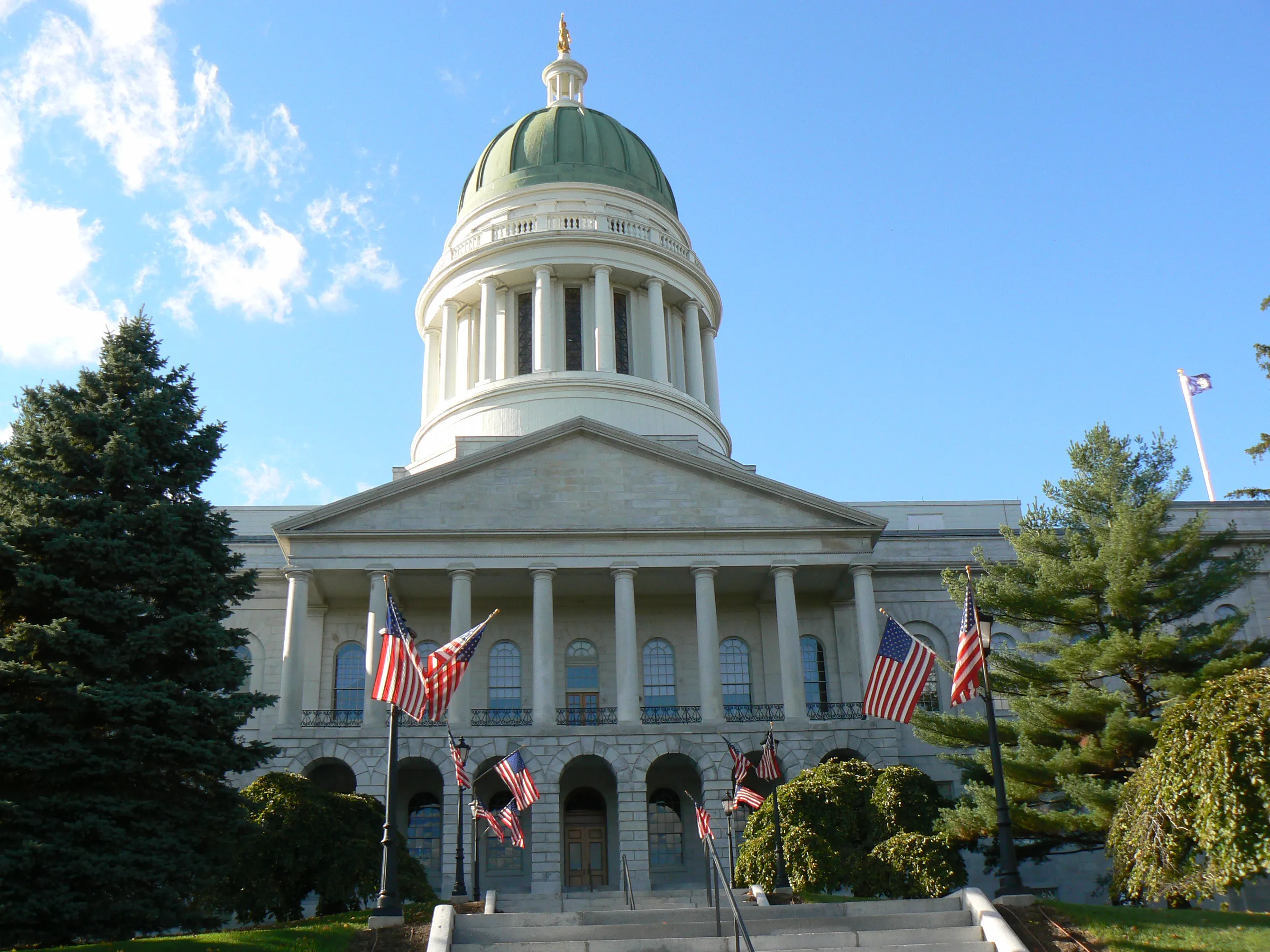
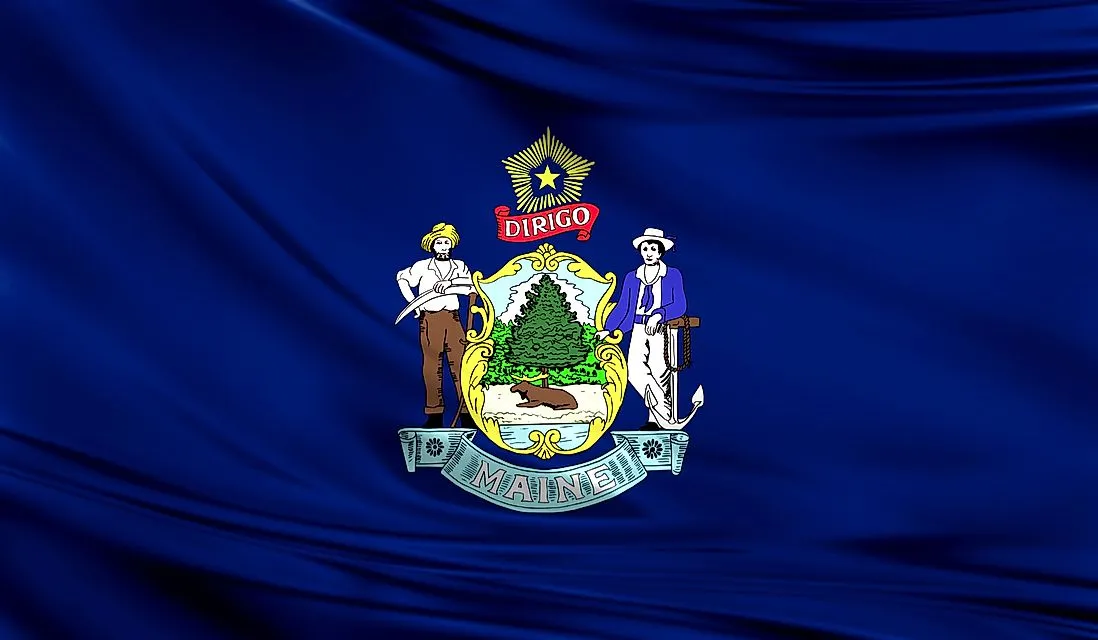
Maine
U.S. State23rd State • March 15, 1820
Maine ME
"The Pine Tree State"
Rocky coastlines, endless forest, world-famous lobster, and the first sunrises in America, Maine is the northeast corner of the country and unlike anywhere else in the United States.
Maine state finances at a glance
State Debt - FY2024
$5.3 billion
Total state government debt outstanding at the close of fiscal 2024, including long-term bonds and short-term borrowing across state agencies and public universities.
Tax Revenue - FY2024
$6.5 billion
Total Maine state tax collections in fiscal 2024, led by the individual income tax ($2.4B) and the general sales tax ($2.4B).
Borrowing
Maine borrows only through general obligation bonds that voters approve at referendum, backed by the state's full faith and credit and sold to investors in the municipal market. Maine's tax-supported debt is among the lowest in the country. The state reported about $215 million in interest on its debt in fiscal 2024.
Source: U.S. Census Bureau, 2024 Annual Survey of State Government Finances.
1.4M
Population
23rd
State (1820)
~80%
U.S. Lobster Supply
89%
Forested Land
…
Last updated:
Maine's 2026 Midterm Election: Who and What Is on Your Ballot
Hello, Maine. On Tuesday, November 3, 2026, you're choosing a governor, one of your U.S. senators, your member of the U.S. House, your state legislators, and county and local offices. There are no statewide referendum questions this year.
This is a midterm election, halfway through the president's term, and nationally it decides who controls Congress for the next two years. Gov. Janet Mills is term-limited, so the Blaine House is open.
Heads up on the ballot itself: your U.S. Senate and U.S. House races use ranked-choice voting, but the governor's race doesn't. And the Democratic Senate nominee changed over the summer: primary winner Graham Platner withdrew in July, and the party picked Troy Jackson to replace him.
Key dates and how voting works are right below. Use the buttons above to open each race. Facts first; the decision is yours.
Checked against official sources on October 5, 2026
Key Dates
Key Dates
Absentee ballots began going out, 30 days before the election; in-person absentee voting open at town and city halls
Early October
Last day to request an absentee ballot or vote absentee in person (close of business)
Thursday, October 29
Election Day: polls close at 8 p.m. (opening times vary by town, 6 to 10 a.m.); absentee ballots must arrive by 8 p.m.
Tuesday, November 3
How Voting Works in Maine
Maine has same-day registration: you can register and vote on Election Day at your town or city clerk's office or polling place, or register ahead of time. Bring proof of identity and where you live when you register.
Any voter can vote absentee; no reason needed. Request a ballot online, by mail, or in person by close of business on October 29, or vote absentee in person at your town or city hall until then. Your ballot must reach your town or city clerk, by mail or a drop box, by 8 p.m. on Election Day.
On Election Day, polls close at 8 p.m.; your town sets an opening time between 6 and 10 a.m. Maine doesn't require photo ID to vote at the polls; in 2025, voters rejected a voter ID question 64 percent to 36 percent.
For U.S. Senate and U.S. House, you can rank the candidates. For governor and state races, you pick one. Find your polling place and your town's hours through the Secretary of State.
Governor Race
The governor runs Maine's executive branch, proposes the budget, and can veto bills. Governors serve four-year terms and are limited to two in a row. Maine has no lieutenant governor.
Gov. Janet Mills, a Democrat, can't run again after two terms. The governor's race is decided by plurality: whoever gets the most votes wins, even under 50 percent, because the Maine Constitution requires it for state general elections.
Candidates and parties are from the Maine Secretary of State's 2026 General Election Candidate List and its list of post-primary replacement nominations. Maine has no official candidate pamphlet.
Positions are summarized from the candidates' own campaign websites, in neutral words and without attacks on opponents.
Governor of Maine
Statewide, four-year term, open seat
Democrat Hannah Pingree, a former Speaker of the Maine House, faces Republican Bobby Charles, a former State Department official, and independent Rick Bennett, a former Maine Senate president. Two write-in candidates have also declared.
Hannah Pingree
Democrat
Occupation:
Former director, Governor's Office of Policy Innovation and the Future; small business owner
Government experience:
Maine House (Speaker, 2008 to 2010); local school board chair
What they say they stand for
Wants to invest $100 million a year in affordable housing and first-time homebuyer programs, and speed up permits.
Wants to stop out-of-state corporations and private equity from buying up mobile home parks and apartments.
Wants to tie utility profits to lower bills and better service, and have regulators reject unjustified rate hikes.
Wants to restructure Maine's taxes so the wealthiest pay more and families can afford their property taxes.
Wants accessible health care and child care, and strong rural public schools.
No statewide referendum questions are on the November ballot. One citizen initiative, on school sports and facilities by sex, was removed after the Secretary of State found it didn't have enough valid signatures.
Maine voters can put laws on the ballot by citizen initiative or veto a new law by people's veto, and the Legislature can send bonds and constitutional amendments, but none qualified for this November.
Local Questions
Your town or city may have local questions, like school budgets or ordinances. Check your sample ballot with your municipal clerk.
Senate Races
Every state gets two U.S. senators. The Senate votes on federal laws, confirms judges and cabinet members, and approves treaties. Senators serve six-year terms.
Susan Collins's seat is up this year. Maine's other senator, independent Angus King, isn't up until 2030.
Candidates and parties are from the Maine Secretary of State's 2026 General Election Candidate List and its list of post-primary replacement nominations. Maine has no official candidate pamphlet.
Positions are summarized from the candidates' own campaign websites, in neutral words and without attacks on opponents.
U.S. Senator
Statewide, six-year term
Republican Susan Collins, in the Senate since 1997, faces Democrat Troy Jackson, a logger and former Maine Senate president. Jackson was nominated in July after primary winner Graham Platner withdrew. Several write-in candidates have also declared.
Maine uses ranked-choice voting in this race: you can rank the candidates in order. If no one wins more than half of the first choices, the last-place candidate is dropped and those ballots move to their next choice, until someone has a majority.
Susan Collins
Incumbent
Republican
Occupation:
U.S. Senator
Government experience:
U.S. Senator (1997 to present); chair, Senate Appropriations Committee
What they say they stand for
Points to federal workforce training money she secured as chair of the Appropriations Committee.
Points to authoring the Paycheck Protection Program, which she says protected more than 250,000 Maine jobs.
Wants to make telehealth flexibilities in Medicare permanent and make care more affordable in rural Maine.
Points to large increases in federal Alzheimer's and diabetes research funding.
Maine has two seats, both held by Democrats. Here's how redistricting works. District 2 is open: Rep. Jared Golden isn't running again.
You vote only in the district where you live; your sample ballot shows which one. Both races use ranked-choice voting.
Maine's 2 Districts and Who Holds Them Today
Democrat
Each district is colored by the party of the member of Congress who holds it right now, not by who will win in November. Select a district to jump to its race. District lines: U.S. Census Bureau, 120th Congress.
Candidates and parties are from the Maine Secretary of State's 2026 General Election Candidate List and its list of post-primary replacement nominations. Maine has no official candidate pamphlet.
Positions are summarized from the candidates' own campaign websites, in neutral words and without attacks on opponents.
District 1
Southern and coastal Maine: Portland, York County, and the midcoast
Democrat Chellie Pingree, in office since 2009, faces Republican Ronald Russell, a retired Army officer, in a rematch of 2024.
Chellie Pingree
Incumbent
Democrat
Occupation:
U.S. Representative; organic farmer; small business owner
Government experience:
U.S. Representative (2009 to present); Maine Senate (1992 to 2000; majority leader)
What they say they stand for
Wants to lower prescription drug costs and strengthen Social Security and Medicare.
Supports reproductive freedom.
Wants to tackle climate change with clean energy jobs.
Northern, western, and Down East Maine: Lewiston, Bangor, and Aroostook County
An open seat: Democrat Jared Golden isn't running again. Democrat Matt Dunlap, a former Maine secretary of state, faces Republican Paul LePage, a former two-term governor. One write-in candidate has also declared.
Matt Dunlap
Democrat
Occupation:
Former Maine secretary of state and state auditor; writer
Government experience:
Maine Secretary of State (2005 to 2011, 2013 to 2021); Maine State Auditor; Maine House
What they say they stand for
Wants the blanket tariffs lifted to bring down prices.
Supports universal child care, more affordable housing, and good-paying jobs.