Because democracy only works when we understand it
Searches are processed by Cloudflare Workers AI and are not stored.
Searches are processed by Cloudflare Workers AI and are not stored.
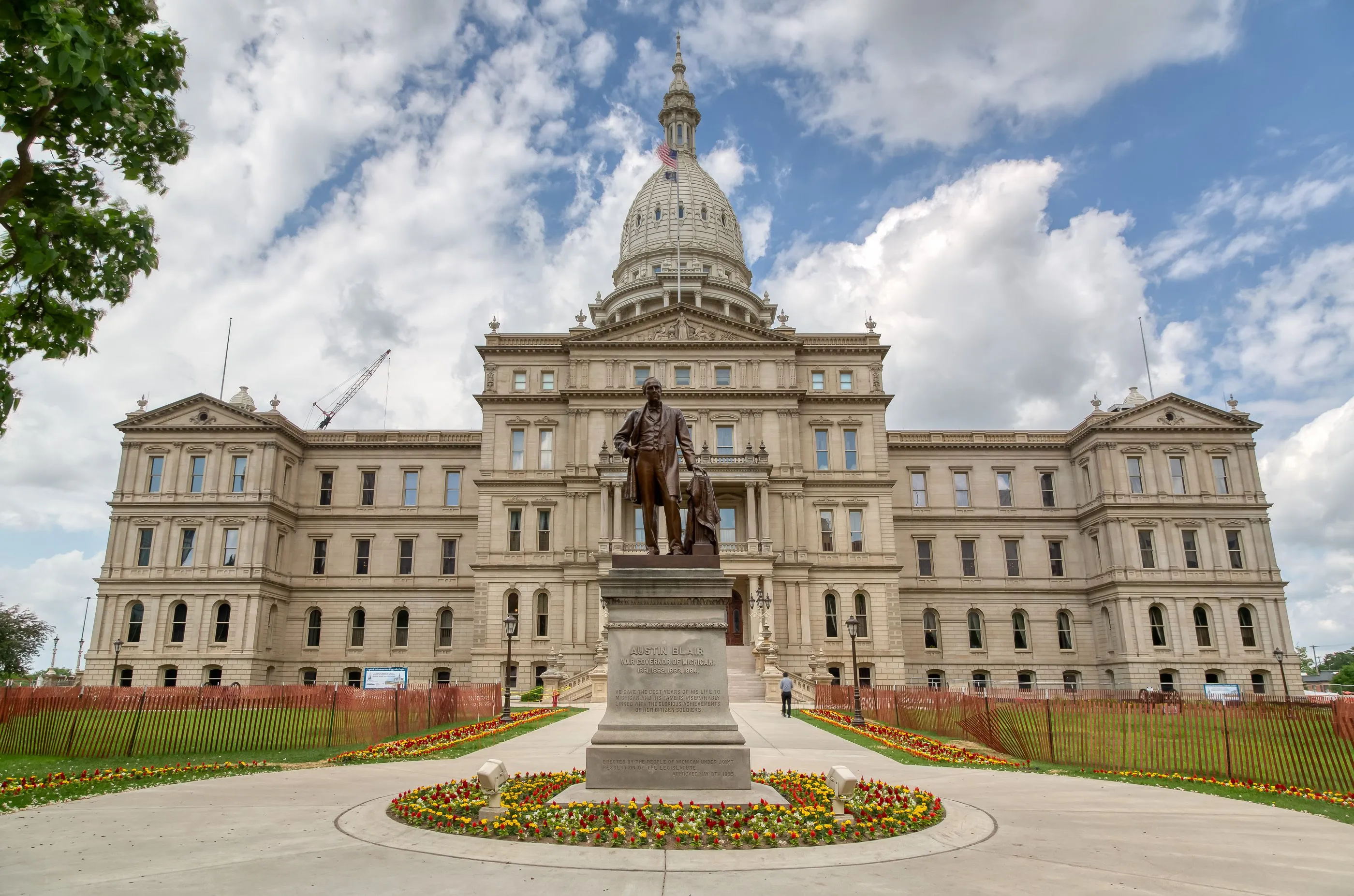
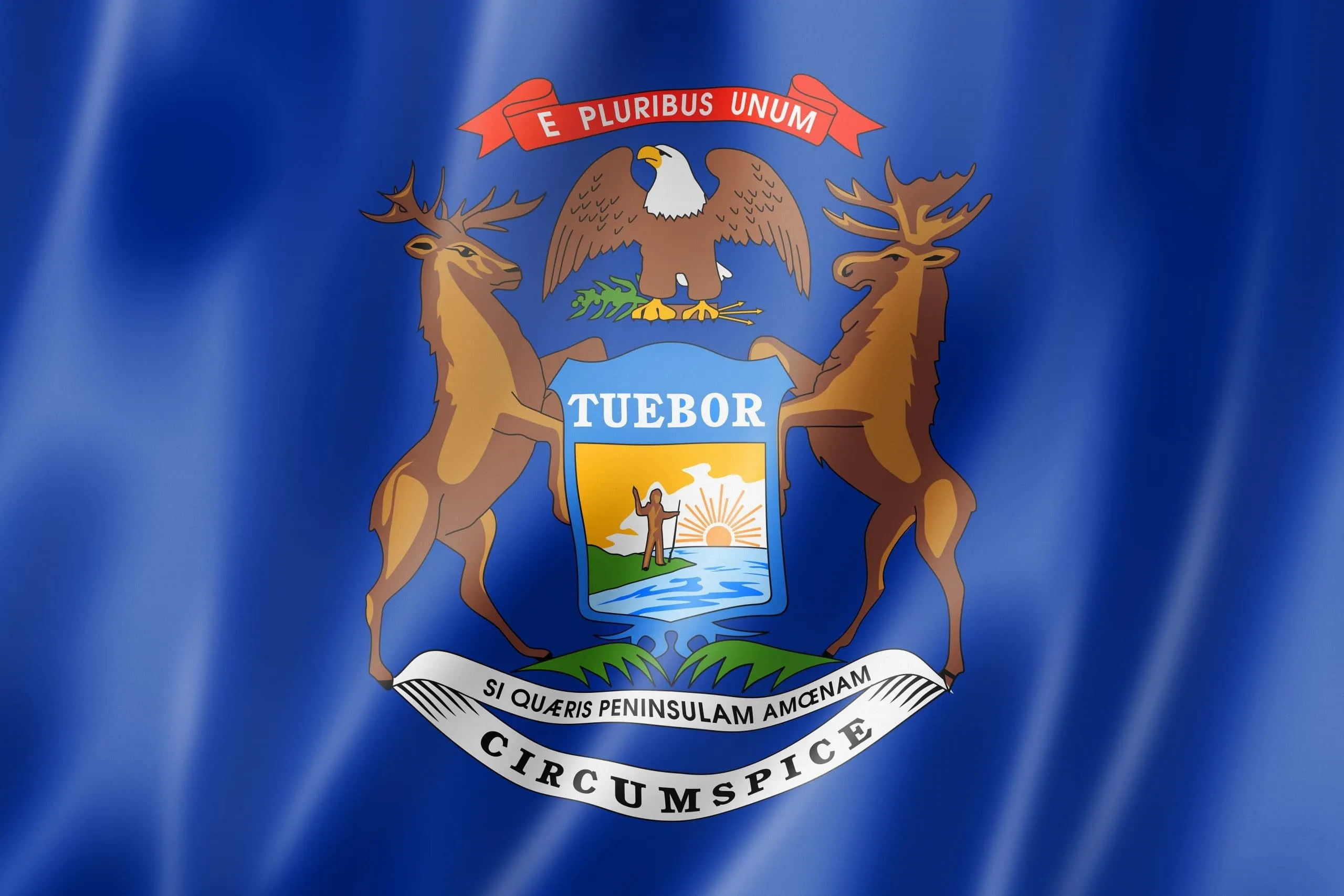
Michigan
U.S. State26th State • January 26, 1837
Michigan MI
"The Great Lakes State"
The birthplace of the American automobile, the home of Motown, and a state shaped, and surrounded, by the greatest freshwater system on Earth.
Michigan state finances at a glance
State Debt - FY2024
$25.0 billion
Total state government debt outstanding at the close of fiscal 2024, including long-term bonds and short-term borrowing across state agencies and public universities.
Tax Revenue - FY2024
$38.6 billion
Total Michigan state tax collections in fiscal 2024, led by the general sales tax ($13B) and the individual income tax ($12B).
Borrowing
Michigan issues voter-approved general obligation bonds and, more often, appropriation-backed bonds through the State Building Authority, which builds and leases facilities to the state. These are sold to investors in the municipal market; Michigan also uses GARVEE bonds backed by future federal highway aid. The state reported about $984 million in interest on its debt in fiscal 2024.
Source: U.S. Census Bureau, 2024 Annual Survey of State Government Finances.
10.1M
Population
26th
State (1837)
3,200+
Miles Great Lakes Shore
11,000+
Inland Lakes
…
Last updated:
Michigan's 2026 Midterm Election: Who and What Is on Your Ballot
Hey there, Michigan. On Tuesday, November 3, 2026, you're choosing a governor and lieutenant governor, a U.S. senator for an open seat, your member of the U.S. House, the attorney general and secretary of state, your state legislators, and two statewide proposals.
This is a midterm election, halfway through the president's term, and nationally it decides who controls Congress for the next two years. It's a year of open seats in Michigan: Gov. Gretchen Whitmer is term-limited, and Sen. Gary Peters is retiring.
Proposal 1 is the once-every-16-years question about rewriting the state constitution. Proposal 2 is about political money from utilities and government contractors.
Key dates and how voting works are right below. Use the buttons above to open each race. Facts first; the decision is yours.
Checked against published sources on October 5, 2026
Key Dates
Key Dates
Absentee ballots began going out
Thursday, September 24
Last day to register online or by mail (you can still register in person at your clerk's office through Election Day)
Monday, October 19
Early in-person voting, at least 9 days
October 24 to November 1
Last day to request an absentee ballot in person at your clerk's office
Monday, November 2
Election Day: polls open 7 a.m. to 8 p.m.; absentee ballots must reach your clerk by 8 p.m.
Tuesday, November 3
How Voting Works in Michigan
Register online or by mail through October 19. After that, you can register in person at your city or township clerk's office, right up through 8 p.m. on Election Day, with proof of residency.
Every Michigan voter can vote early in person, for at least nine days from October 24 to November 1, or by absentee ballot with no reason needed. Request it in time for the mail, or in person at your clerk's office through November 2, and return it to your clerk or a drop box by 8 p.m. on Election Day.
On Election Day, polls are open 7 a.m. to 8 p.m. You'll be asked for a photo ID; if you don't have one, you can sign an affidavit and vote a regular ballot.
Look up your polling place, sample ballot, and absentee ballot status at Michigan.gov/Vote.
Governor Race
The governor runs Michigan's executive branch, proposes the budget, and can veto bills. Governors serve four-year terms, limited to two.
Gov. Gretchen Whitmer, a Democrat, can't run again. The governor and lieutenant governor run together as one ticket. Former Detroit Mayor Mike Duggan, who had been running as an independent, withdrew.
Candidates and parties are from the November ballot fields as published from the Michigan Department of State's certified list. Your sample ballot is the final word.
Positions are summarized from the candidates' own campaign websites, in neutral words and without attacks on opponents. Where a website listed no positions, or we found no campaign website, the card says so.
Governor and Lieutenant Governor of Michigan
Statewide, four-year term, open seat
Democrat Jocelyn Benson, the secretary of state, faces Republican U.S. Rep. John James, Libertarian Anthony Hudson, Green Douglas Campbell, and Donna Brandenburg of the U.S. Taxpayers Party.
Jocelyn Benson
Democrat
Lieutenant governor:
Winnie Brinks
Occupation:
Secretary of State; former law school dean
Government experience:
Michigan Secretary of State (2019 to present)
What they say they stand for
Wants to make Michigan more affordable, from housing to health care to child care.
Wants to speed up housing construction by streamlining regulations and encouraging starter homes and affordable units.
Wants Michigan's public schools in the national top 10.
Points to fixing broken government systems to save people time and money, and wants to root out corruption.
We summarize positions in depth for the Democratic and Republican nominees and incumbents. This candidate didn't answer the questionnaires we use.
Douglas Campbell
Green
Lieutenant governor:
Bobbie Clay
Occupation:
Not available
Government experience:
None in elected office
What they say they stand for
We summarize positions in depth for the Democratic and Republican nominees and incumbents. This candidate didn't answer the questionnaires we use.
Donna Brandenburg
U.S. Taxpayers
Lieutenant governor:
Robert Donald Cowper II
Occupation:
Not available
Government experience:
None in elected office
What they say they stand for
We summarize positions in depth for the Democratic and Republican nominees and incumbents. This candidate didn't answer the questionnaires we use.
Ballot Measures
Two statewide proposals are on every Michigan ballot. Proposal 1 is the constitutional convention question the state constitution requires every 16 years. Proposal 2 is a citizen initiative the Legislature chose not to adopt itself. Each needs a simple majority.
Michigan publishes no official arguments. The explanations below draw on the nonpartisan Citizens Research Council of Michigan; the reasons for and against are what supporters, opponents, and the Council have said publicly.
The Michigan Constitution puts this question on the ballot automatically every 16 years. Voters said no in 1978 (77 percent against), 1994 (72 percent), and 2010 (67 percent).
If it passes, voters would elect one delegate from each of the 110 state House districts and 38 state Senate districts, 148 in all, in a partisan primary in February 2027 and a general election in June 2027. The convention would meet in Lansing starting October 5, 2027, with no set agenda and no time limit, and could propose changes to any part of the constitution.
Nothing the convention writes takes effect unless voters approve it at a later election. If Proposal 1 fails, the 1963 Constitution stays as it is, it can still be amended one change at a time, and the question returns in 2042.
A YES vote means
Michigan would elect 148 delegates in 2027 to a convention that could propose a revised state constitution for voters to approve or reject.
A NO vote means
No convention; the 1963 Constitution stays in effect and can still be amended one proposal at a time.
Reasons people vote yes
Some Republican leaders back it, saying the 1963 Constitution is outdated.
A convention can deal with problems in a holistic way rather than through piecemeal amendments, and its final product still needs voter approval (Citizens Research Council).
Reasons people vote no
The Michigan Democratic Party, the Michigan Chamber of Commerce, the AFL-CIO, the Michigan Education Association, and the League of Women Voters oppose it.
Opponents warn a convention would have no set agenda, guardrails, or timeline, and could revisit protections voters recently added, such as reproductive rights.
💵 Taxes and money: No tax change; a convention would have costs
If it passes, the state would pay for two delegate elections in 2027 and for the convention itself: delegate pay, staff, printing, and voter information. No official estimate exists, and how long delegates would meet and what they'd be paid aren't set.
Michigan already bars corporations from giving to candidates from their treasuries, though they can give through employee-funded political action committees, and it caps how much individuals and committees can give.
Proposal 2 would amend the Michigan Campaign Finance Act to bar regulated utilities, like DTE and Consumers Energy, and companies holding state or local government contracts worth more than $250,000, along with their principals, from contributing to candidates, campaigns, and political committees. It would require "paid for by" lines on certain online political ads and more disclosure of donors and spending behind ads meant to influence elections, even when they avoid words like "vote for."
Supporters gathered about 562,000 signatures. The Republican-led House voted 77 to 26 to adopt it as law, but the Democratic-led Senate didn't act, so it goes to voters. It includes a severability clause, so if courts strike one part, the rest stays.
A YES vote means
Regulated utilities and large government contractors couldn't contribute to political campaigns, and new disclosure rules would apply to political ads.
A NO vote means
No change to current disclosure rules or to what utilities and government contractors can contribute.
Reasons people vote yes
Supporters, Michiganders for Money Out of Politics, say utility and contractor donations lead officials to make favorable regulatory and contracting decisions, and that the measure lets citizens take back their power.
They say voters deserve to know who is paying for ads that are clearly meant to sway elections.
Reasons people vote no
Opponents say it violates First Amendment free-speech rights.
The Citizens Research Council notes the contribution limits would likely face court challenges under U.S. Supreme Court precedent, and it's unclear how much they'd change, given other ways money influences politics.
💵 Taxes and money: No tax change
It changes campaign finance rules; no tax is attached. Any enforcement costs would fall on the Department of State's campaign finance office.
Your ballot may also have local millages and other questions. Check your sample ballot at Michigan.gov/Vote.
Senate Races
Every state gets two U.S. senators. The Senate votes on federal laws, confirms judges and cabinet members, and approves treaties. Senators serve six-year terms.
This is an open seat: Gary Peters is retiring after two terms. Michigan's other senator, Elissa Slotkin, isn't up until 2030.
Candidates and parties are from the November ballot fields as published from the Michigan Department of State's certified list. Your sample ballot is the final word.
Positions are summarized from the candidates' own campaign websites, in neutral words and without attacks on opponents. Where a website listed no positions, or we found no campaign website, the card says so.
U.S. Senator
Statewide, six-year term, open seat
Democrat Abdul El-Sayed, a physician and former Wayne County health director, faces Republican Mike Rogers, a former U.S. representative, plus four third-party candidates.
Abdul El-Sayed
Democrat
Occupation:
Physician; epidemiologist
Government experience:
Wayne County Health Director (2023 to 2025); Detroit Health Director
What they say they stand for
Supports Medicare for All and wants to break up big health care companies.
Wants to ban corporate money in politics, end gerrymandering, reform the Supreme Court, and abolish the filibuster.
Wants to tax billionaire wealth.
Wants affordable housing for all and clean air and water.
Michigan has 13 seats. Republicans hold seven and Democrats hold six, under the map drawn by the state's independent citizens redistricting commission. Here's how redistricting works. Three seats have no incumbent on the ballot: District 10 (John James is running for governor), District 11 (Haley Stevens ran for Senate), and District 13 (Shri Thanedar lost his primary).
You vote only in the district where you live; your sample ballot shows which one.
Michigan's 13 Districts and Who Holds Them Today
Republican
Democrat
Each district is colored by the party of the member of Congress who holds it right now, not by who will win in November. Select a district to jump to its race; the smallest Detroit-area districts are unnumbered, so hover over or select one to see which it is. District lines: U.S. Census Bureau, 120th Congress.
Candidates and parties are from the November ballot fields as published from the Michigan Department of State's certified list. Your sample ballot is the final word.
Positions are summarized from the candidates' own campaign websites, in neutral words and without attacks on opponents. Where a website listed no positions, or we found no campaign website, the card says so.
District 1
Northern Michigan and the Upper Peninsula
Republican Jack Bergman, in office since 2017, faces Democrat Callie Barr, an attorney, plus five third-party and independent candidates.
Jack Bergman
Incumbent
Republican
Occupation:
U.S. Representative; retired Marine lieutenant general
Government experience:
U.S. Representative (2017 to present)
What they say they stand for
Points to federal broadband investments for Northern Michigan and the U.P., and his bill to speed broadband approvals in short building seasons.
Wants Big Tech companies to pay into the fund that supports rural broadband.
Supports border security, national defense, veterans, and gun rights, and wants to cut wasteful spending.
The campaign website lists no issue positions we could read, and the candidate hasn't answered the questionnaires we use. See the website for where they stand.
We summarize positions in depth for the Democratic and Republican nominees and incumbents. This candidate didn't answer the questionnaires we use.
District 5
South-central Michigan: Jackson, Hillsdale, and Monroe
Republican Tim Walberg, in office since 2011 (and from 2007 to 2009), faces Democrat Christian Vukasovich, a former professor, plus three third-party candidates.
Tim Walberg
Incumbent
Republican
Occupation:
U.S. Representative
Government experience:
U.S. Representative (2007 to 2009, 2011 to present)
What they say they stand for
Wants a strong national security posture.
Wants the federal government to live within its means.
Wants to lower prescription drug costs and protect people with pre-existing conditions.
Wants to expand economic opportunity and raise incomes.
We couldn't find a campaign website with issue positions, and the candidate hasn't answered the questionnaires we use.
Timothy Teagan
Libertarian
Occupation:
Not available
Government experience:
None in elected office
What they say they stand for
We summarize positions in depth for the Democratic and Republican nominees and incumbents. This candidate didn't answer the questionnaires we use.
Mike Mickevicius
U.S. Taxpayers
Occupation:
Not available
Government experience:
None in elected office
What they say they stand for
We summarize positions in depth for the Democratic and Republican nominees and incumbents. This candidate didn't answer the questionnaires we use.
Clyde Shabazz
Green
Occupation:
Not available
Government experience:
None in elected office
What they say they stand for
We summarize positions in depth for the Democratic and Republican nominees and incumbents. This candidate didn't answer the questionnaires we use.
Linda Rayburn
Working Class Party
Occupation:
Not available
Government experience:
None in elected office
What they say they stand for
We summarize positions in depth for the Democratic and Republican nominees and incumbents. This candidate didn't answer the questionnaires we use.
District 7
The Lansing area and mid-Michigan
Republican Tom Barrett, in office since 2025, faces Democrat William Lawrence, a co-founder of the Sunrise Movement, and Green Party candidate Shane Dedrick.
Tom Barrett
Incumbent
Republican
Occupation:
U.S. Representative; Army veteran (22 years)
Government experience:
U.S. Representative (2025 to present); Michigan Senate; Michigan House
What they say they stand for
The campaign website lists no issue positions we could read, and the candidate hasn't answered the questionnaires we use. See the website for where they stand.
We couldn't find a campaign website with issue positions, and the candidate hasn't answered the questionnaires we use.
Shane Dedrick
Green
Occupation:
Not available
Government experience:
None in elected office
What they say they stand for
We summarize positions in depth for the Democratic and Republican nominees and incumbents. This candidate didn't answer the questionnaires we use.
District 8
Flint, Saginaw, and Bay City
Democrat Kristen McDonald Rivet, in office since 2025, faces Republican Thomas J. Smith, who suspended his campaign during the primary but remains on the ballot, plus three third-party candidates.
Kristen McDonald Rivet
Incumbent
Democrat
Occupation:
U.S. Representative
Government experience:
U.S. Representative (2025 to present); Michigan Senate
What they say they stand for
Says she's taking on a broken system so people keep more of their money.
Wants to lower costs for groceries, prescriptions, gas, and housing.
Wants affordable health care and support for public safety.
Says she works with both parties to get things done.
We couldn't find a campaign website with issue positions, and the candidate hasn't answered the questionnaires we use.
C. Mia Pettus
Libertarian
Occupation:
Not available
Government experience:
None in elected office
What they say they stand for
We summarize positions in depth for the Democratic and Republican nominees and incumbents. This candidate didn't answer the questionnaires we use.
Jim Casha
Green
Occupation:
Not available
Government experience:
None in elected office
What they say they stand for
We summarize positions in depth for the Democratic and Republican nominees and incumbents. This candidate didn't answer the questionnaires we use.
Kathy Goodwin
Working Class Party
Occupation:
Not available
Government experience:
None in elected office
What they say they stand for
We summarize positions in depth for the Democratic and Republican nominees and incumbents. This candidate didn't answer the questionnaires we use.
District 9
The Thumb and northern Macomb, Oakland, and Lapeer counties
Republican Lisa McClain, in office since 2021, faces Democrat Ray Pooley, a machinist, plus four third-party candidates.
Lisa McClain
Incumbent
Republican
Occupation:
U.S. Representative; businesswoman
Government experience:
U.S. Representative (2021 to present)
What they say they stand for
The campaign website lists no issue positions we could read, and the candidate hasn't answered the questionnaires we use. See the website for where they stand.
We couldn't find a campaign website with issue positions, and the candidate hasn't answered the questionnaires we use.
Kevin Vayko
Libertarian
Occupation:
Not available
Government experience:
None in elected office
What they say they stand for
We summarize positions in depth for the Democratic and Republican nominees and incumbents. This candidate didn't answer the questionnaires we use.
John Vlahos
U.S. Taxpayers
Occupation:
Not available
Government experience:
None in elected office
What they say they stand for
We summarize positions in depth for the Democratic and Republican nominees and incumbents. This candidate didn't answer the questionnaires we use.
Destiny Clayton
Green
Occupation:
Not available
Government experience:
None in elected office
What they say they stand for
We summarize positions in depth for the Democratic and Republican nominees and incumbents. This candidate didn't answer the questionnaires we use.
Jim Walkowicz
Working Class Party
Occupation:
Not available
Government experience:
None in elected office
What they say they stand for
We summarize positions in depth for the Democratic and Republican nominees and incumbents. This candidate didn't answer the questionnaires we use.
District 10
Macomb County: Warren, Sterling Heights, and Rochester Hills
An open seat: John James is running for governor. Republican Michael Bouchard Jr., an Army National Guard captain, faces Democrat Christina Hines, a prosecutor, plus three third-party candidates.
Michael Bouchard Jr.
Republican
Occupation:
Army National Guard captain
Government experience:
None in elected office
What they say they stand for
The campaign website lists no issue positions we could read, and the candidate hasn't answered the questionnaires we use. See the website for where they stand.
We summarize positions in depth for the Democratic and Republican nominees and incumbents. This candidate didn't answer the questionnaires we use.
Kwabena Nkromo
Green
Occupation:
Not available
Government experience:
None in elected office
What they say they stand for
We summarize positions in depth for the Democratic and Republican nominees and incumbents. This candidate didn't answer the questionnaires we use.
Andrea L. Kirby
Working Class Party
Occupation:
Not available
Government experience:
None in elected office
What they say they stand for
We summarize positions in depth for the Democratic and Republican nominees and incumbents. This candidate didn't answer the questionnaires we use.
District 11
Oakland County: Troy, Southfield, and Pontiac
An open seat: Haley Stevens ran for the U.S. Senate. Democrat Jeremy Moss, president pro tem of the Michigan Senate, faces Republican Ethan Baker, the mayor of Troy, plus three third-party and independent candidates.
Jeremy Moss
Democrat
Occupation:
State senator
Government experience:
Michigan Senate (2019 to present; president pro tem since 2023); Michigan House
What they say they stand for
Points to state gun safety laws he helped pass.
Points to protecting and expanding reproductive freedom in Michigan.
Says he's reformed government institutions to better serve Michiganders.
We couldn't find a campaign website with issue positions, and the candidate hasn't answered the questionnaires we use.
Marc Sosnowski
U.S. Taxpayers
Occupation:
Not available
Government experience:
None in elected office
What they say they stand for
We summarize positions in depth for the Democratic and Republican nominees and incumbents. This candidate didn't answer the questionnaires we use.
Brenda K. Sanders
Green
Occupation:
Not available
Government experience:
None in elected office
What they say they stand for
We summarize positions in depth for the Democratic and Republican nominees and incumbents. This candidate didn't answer the questionnaires we use.
Gary Walkowicz
Working Class Party
Occupation:
Not available
Government experience:
None in elected office
What they say they stand for
We summarize positions in depth for the Democratic and Republican nominees and incumbents. This candidate didn't answer the questionnaires we use.
District 13
Detroit and the Downriver suburbs
An open seat: Rep. Shri Thanedar lost the August Democratic primary. Democratic State Rep. Donavan McKinney faces Republican T.P. Nykoriak, plus three third-party candidates.
Donavan McKinney
Democrat
Occupation:
State representative; former SEIU Healthcare Michigan leader
Government experience:
Michigan House of Representatives (2023 to present)
What they say they stand for
Wants every worker to have the right to form a union and earn a living wage.
Wants the ultra-wealthy to pay their fair share in taxes.
Wants a Democratic Party that fights back against the administration and billionaires.