Because democracy only works when we understand it
Searches are processed by Cloudflare Workers AI and are not stored.
Searches are processed by Cloudflare Workers AI and are not stored.
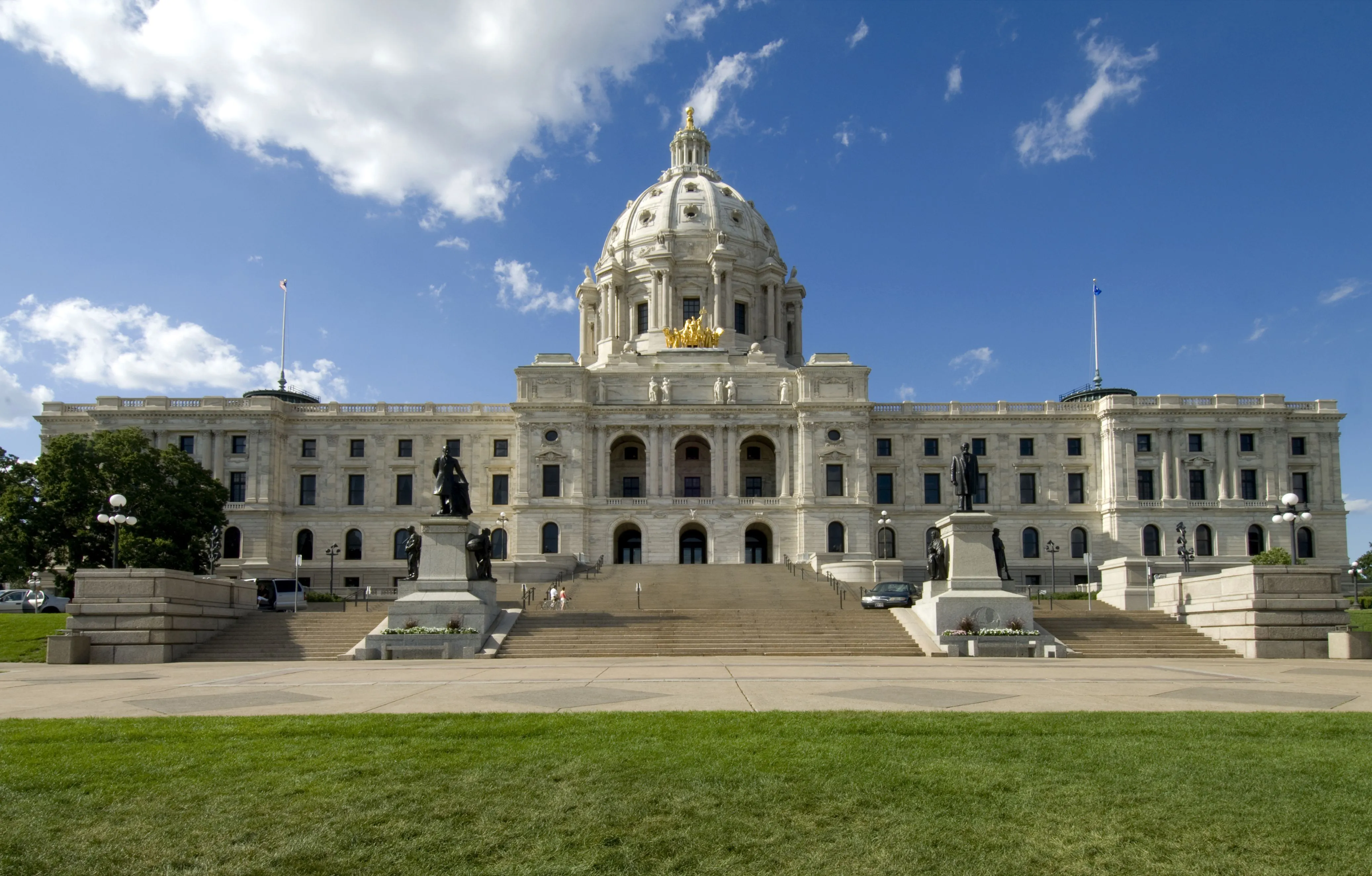
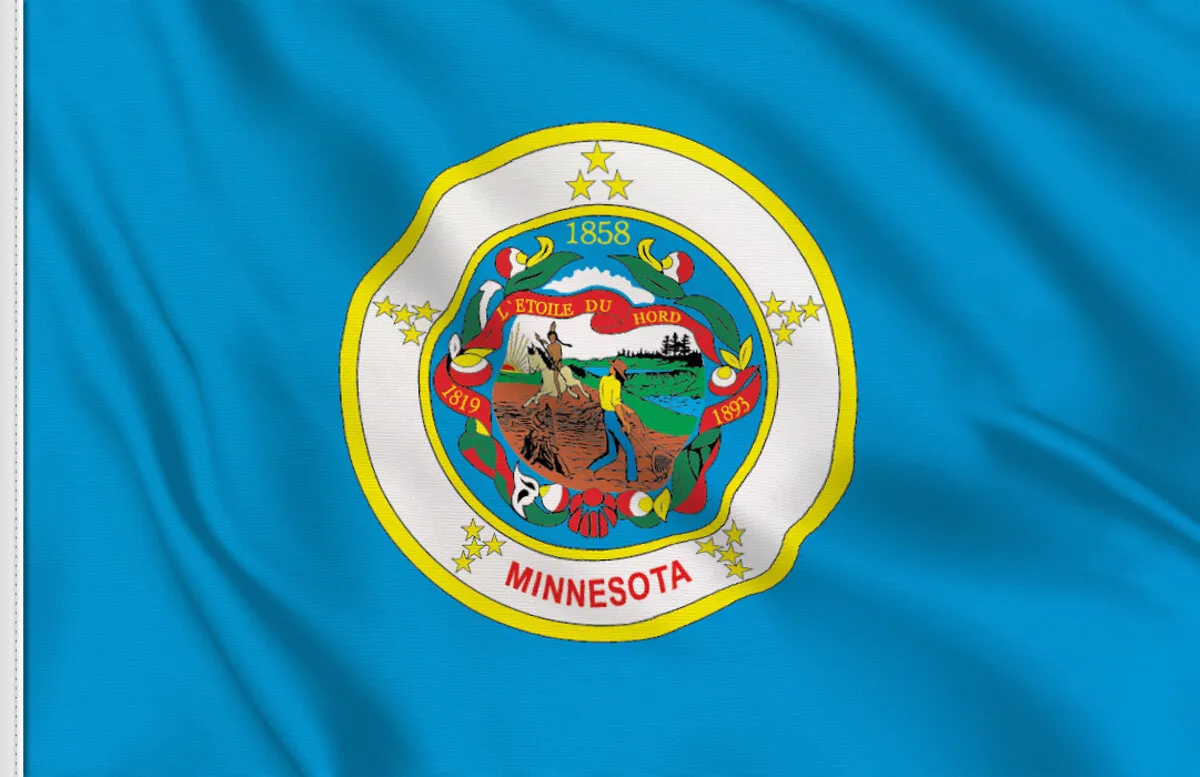
Minnesota
U.S. State32nd State • May 11, 1858
Minnesota MN
"The North Star State"
The land where the Mississippi begins as a trickle, where iron ore built American industry, and where Bob Dylan and Prince proved that the cold north can produce the world's most transcendent art.
Minnesota state finances at a glance
State Debt - FY2024
$17.0 billion
Total state government debt outstanding at the close of fiscal 2024, including long-term bonds and short-term borrowing across state agencies and public universities.
Tax Revenue - FY2024
$35.7 billion
Total Minnesota state tax collections in fiscal 2024, led by the individual income tax ($13B) and the general sales tax ($8.5B).
Borrowing
Minnesota holds a AAA rating and issues general obligation bonds backed by its full faith and credit, sold to investors in the tax-exempt municipal market. A share of every biennial bonding bill is constitutionally dedicated to trunk highways. The state reported about $497 million in interest on its debt in fiscal 2024.
Source: U.S. Census Bureau, 2024 Annual Survey of State Government Finances.
5.7M
Population
32nd
State (1858)
11,000+
Lakes
15+
Fortune 500 HQs
…
Last updated:
Minnesota's 2026 Midterm Election: Who and What Is on Your Ballot
Hi there, Minnesota. On Tuesday, November 3, 2026, you're choosing a governor and lieutenant governor, a U.S. senator for an open seat, your member of the U.S. House, the attorney general, secretary of state, and auditor, all 201 state legislators, judges, and one constitutional amendment about school funding.
This is a midterm election, halfway through the president's term, and nationally it decides who controls Congress for the next two years. Gov. Tim Walz withdrew from his re-election race in January, and Sen. Amy Klobuchar is now running for governor. Sen. Tina Smith is retiring.
A Minnesota quirk worth knowing: for the amendment to pass, it needs a yes from a majority of everyone who votes in the election, so skipping the question counts the same as a no.
Key dates and how voting works are right below. Use the buttons above to open each race. Facts first; the decision is yours.
Checked against published sources on October 5, 2026
Key Dates
Key Dates
Early voting began (in person and by mail)
Friday, September 18
Last day to pre-register (you can still register at your polling place on Election Day)
Tuesday, October 13
Last day of early in-person voting
Monday, November 2
Election Day: polls open 7 a.m. to 8 p.m. in most places; absentee ballots must arrive by Election Day
Tuesday, November 3
How Voting Works in Minnesota
Pre-register by October 13 online or on paper. Missed it? Minnesota has Election Day registration: register at your polling place with proof of residence, such as a Minnesota driver's license or ID with your current address, or another approved document.
Any voter can vote early, in person at your county or city election office or by mail, from September 18 through November 2; no reason needed. A mailed ballot must reach your election office by Election Day.
On Election Day, polls are open 7 a.m. to 8 p.m. in most places (some small towns open as late as 10 a.m.). If you're already registered, you don't need to show ID.
Find your polling place and sample ballot at mnvotes.gov.
Governor Race
The governor runs Minnesota's executive branch, proposes the budget, and can veto bills or line items in spending bills. Governors serve four-year terms with no term limit. The governor and lieutenant governor run together as one ticket.
Gov. Tim Walz, a DFLer, ran for a third term but withdrew in January amid a scandal over fraud in state-funded social services programs. If Amy Klobuchar wins, her U.S. Senate seat, next up in 2030, would be filled under state law.
The Secretary of State's candidate site blocks automated access, so candidates come from published primary results and race pages. Your sample ballot at mnvotes.gov is the final word.
Positions are summarized from the candidates' own campaign websites, in neutral words and without attacks on opponents. Where a website listed no positions, blocked reading, or we found none, the card says so.
Governor and Lieutenant Governor of Minnesota
Statewide, four-year term, open seat
DFL U.S. Sen. Amy Klobuchar faces Republican Lisa Demuth, speaker of the Minnesota House, and Green Party candidate Steve Young.
Amy Klobuchar
Democratic-Farmer-Labor
Lieutenant governor:
Ben Schierer
Occupation:
U.S. Senator; attorney
Government experience:
U.S. Senator (2007 to present); Hennepin County Attorney (1999 to 2007)
What they say they stand for
Wants to lower costs for health care, housing, child care, and utility bills.
Wants to make government accountable and root out fraud.
Wants to prepare Minnesota's workforce for the future.
Wants to expand the rural and agricultural economy and support conservation and outdoor recreation.
We summarize positions in depth for the Democratic-Farmer-Labor and Republican nominees and incumbents. This candidate didn't answer the questionnaires we use.
Ballot Measures
One constitutional amendment is on every Minnesota ballot. The Legislature proposes amendments in Minnesota; citizens can't put them on the ballot by petition. To pass, an amendment needs yes votes from a majority of all voters who cast a ballot in the election, not just those who answer the question.
The Secretary of State's website blocks automated access, so the details below come from the ballot question as the Legislature passed it and from news coverage, named in the sources.
Minnesota's permanent school fund, created in 1858, holds money earned from about 2.5 million acres of state school trust land through timber, mining, and leases. It's worth about $2.4 billion. Today it can only pay out its interest and dividends, up to 2.5 percent a year, which came to about $64 million, or roughly $75 per student.
The ballot asks: "Shall the Minnesota Constitution be amended to increase the funding going to all school districts from the permanent school fund, which is a fund that supports school districts without raising individual income or property taxes, effective July 1, 2027?"
If it passes, the fund could pay out 4.5 percent of its average value over the past three years, including part of its growth from investments, and the constitution would say the fund must be managed as a perpetual resource. It starts July 1, 2027.
The House passed it 133 to 0; the Senate passed it 43 to 24. In Minnesota, an amendment needs a yes from a majority of everyone who votes in the election, so leaving the question blank counts as a no.
A YES vote means
The permanent school fund could distribute up to 4.5 percent of its three-year average value to school districts each year, starting July 1, 2027.
A NO vote (or a blank) means
No change; the fund keeps paying out only its interest and dividends, up to 2.5 percent a year.
Reasons people vote yes
The Minnesota School Boards Association, the Minnesota Association of School Administrators, and a legislative task force support it, saying current rules leave out the fund's capital gains, its biggest source of earnings.
Supporters say a three-year average smooths out market swings, the fund wouldn't automatically shrink, and the new wording strengthens its protection as a permanent fund. The DFL Party and the Minnesota Catholic Conference also back it.
Reasons people vote no
Republican Sen. Zach Duckworth said he wanted more safeguards and believes the higher payout is financially unhealthy for the fund over the long run.
Some critics worry that because the fund earns money from mining and logging, larger payouts could add pressure to expand those industries; supporters say no land use changes are expected.
💵 Taxes and money: No tax change; more money from an existing fund goes to schools
No new tax. The fund's payout to schools would rise from about $64 million a year to roughly $108 million under the new formula, about a 70 percent increase, according to figures reported by the Post Bulletin. A Minnesota House estimate put the gain at about $27 more per pupil a year.
Your ballot may also have school district levy questions or other local measures. Check your sample ballot at mnvotes.gov.
Senate Races
Every state gets two U.S. senators. The Senate votes on federal laws, confirms judges and cabinet members, and approves treaties. Senators serve six-year terms.
This is an open seat: Tina Smith, in the Senate since 2018, isn't running again. Minnesota's other senator, Amy Klobuchar, is running for governor; her seat isn't up until 2030.
The Secretary of State's candidate site blocks automated access, so candidates come from published primary results and race pages. Your sample ballot at mnvotes.gov is the final word.
Positions are summarized from the candidates' own campaign websites, in neutral words and without attacks on opponents. Where a website listed no positions, blocked reading, or we found none, the card says so.
U.S. Senator
Statewide, six-year term, open seat
DFL Lt. Gov. Peggy Flanagan, who beat U.S. Rep. Angie Craig in the August primary, faces Republican Michele Tafoya, a former sports broadcaster, Libertarian Rebecca Whiting, and independent Marisa Simonetti.
Peggy Flanagan
Democratic-Farmer-Labor
Occupation:
Lieutenant Governor
Government experience:
Lieutenant Governor (2019 to present); Minnesota House (2015 to 2019)
What they say they stand for
Wants to ban corporate money in elections, reverse Citizens United, and require disclosure of all donors.
Supports banning stock trading by federal elected officials.
Wants to end tax loopholes and special treatment for corporations and the wealthiest.
Wants a fair economy that lets families afford the lives they want; takes no corporate PAC money.
We summarize positions in depth for the Democratic-Farmer-Labor and Republican nominees and incumbents. This candidate didn't answer the questionnaires we use.
Marisa Simonetti
Independent
Occupation:
Not available
Government experience:
None in elected office
What they say they stand for
We summarize positions in depth for the Democratic-Farmer-Labor and Republican nominees and incumbents. This candidate didn't answer the questionnaires we use.
Minnesota has eight seats, split four and four between the DFL and Republicans. The map was drawn by a court-appointed panel in 2022 after the Legislature didn't agree on one. Here's how redistricting works. District 2 is open: Angie Craig ran for the Senate.
You vote only in the district where you live; your sample ballot shows which one.
Minnesota's 8 Districts and Who Holds Them Today
Republican
Democrat
Each district is colored by the party of the member of Congress who holds it right now, not by who will win in November. Select a district to jump to its race; the smallest Twin Cities districts are unnumbered, so hover over or select one to see which it is. District lines: U.S. Census Bureau, 120th Congress.
The Secretary of State's candidate site blocks automated access, so candidates come from published primary results and race pages. Your sample ballot at mnvotes.gov is the final word.
Positions are summarized from the candidates' own campaign websites, in neutral words and without attacks on opponents. Where a website listed no positions, blocked reading, or we found none, the card says so.
District 1
Southern Minnesota: Rochester, Mankato, and Winona
Republican Brad Finstad, in office since 2022, faces DFLer Jake Johnson, a high school math teacher.
Brad Finstad
Incumbent
Republican
Occupation:
U.S. Representative; farmer
Government experience:
U.S. Representative (2022 to present); Minnesota House
What they say they stand for
Wants farm policy written by farmers; points to his bills on USDA loans and crop insurance, and opposes California's Proposition 12.
Supports keeping the small business tax deduction and cutting spending.
Wants to keep the border secure and restore the rule of law.
The southern Twin Cities suburbs: Dakota and Scott counties
An open seat: Angie Craig ran for the U.S. Senate. DFLer Matt Little, a former state senator and Lakeville mayor, faces Republican State Sen. Eric Pratt.
Matt Little
Democratic-Farmer-Labor
Occupation:
Attorney
Government experience:
Minnesota Senate (2017 to 2021); Mayor of Lakeville; Lakeville City Council
The campaign website blocks automated reading, so we couldn't summarize positions from it, and the candidate hasn't answered the questionnaires we use. See the website for where they stand.
DFLer Ilhan Omar, in office since 2019, faces Republican John Nagel, a retired State Patrol officer, and independent DeVelle Jackson.
Ilhan Omar
Incumbent
Democratic-Farmer-Labor
Occupation:
U.S. Representative
Government experience:
U.S. Representative (2019 to present); Minnesota House
What they say they stand for
The campaign website lists no issue positions we could read, and the candidate hasn't answered the questionnaires we use. See the website for where they stand.
Construction worker (union carpenter and roofer, field engineering)
Government experience:
None in elected office
What they say they stand for
Wants a federal privacy law that limits how companies collect, sell, and keep personal data, and warrants for government searches of location data.
Wants term limits for Congress (nine House terms or three Senate terms), 18-year terms for Supreme Court justices, and a ban on insider trading by members of Congress.
Wants higher taxes on billionaires and a steeper top income-tax rate, with the money going to housing, health care, and student debt relief.
Wants a universal health care guarantee built on a national public option, with automatic coverage for everyone under 18.
Opposes cutting or privatizing Social Security or raising the retirement age, and wants national paid family and medical leave.
Republican Michelle Fischbach, in office since 2021, faces DFLer Erik Osberg, a marketing firm owner.
Michelle Fischbach
Incumbent
Republican
Occupation:
U.S. Representative
Government experience:
U.S. Representative (2021 to present); Lieutenant Governor of Minnesota; Minnesota Senate
What they say they stand for
The campaign website blocks automated reading, so we couldn't summarize positions from it, and the candidate hasn't answered the questionnaires we use. See the website for where they stand.