Because democracy only works when we understand it
Searches are processed by Cloudflare Workers AI and are not stored.
Searches are processed by Cloudflare Workers AI and are not stored.
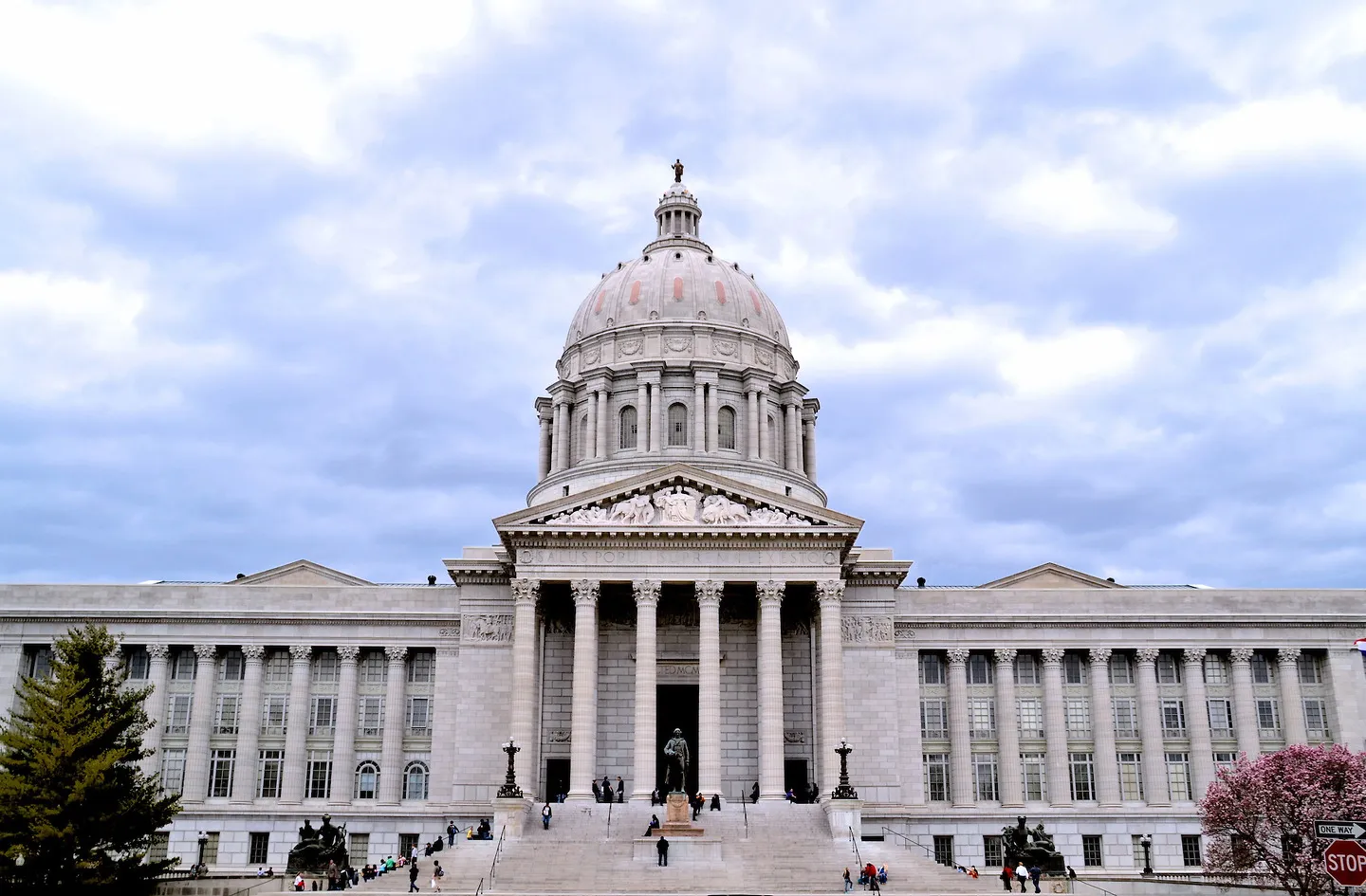
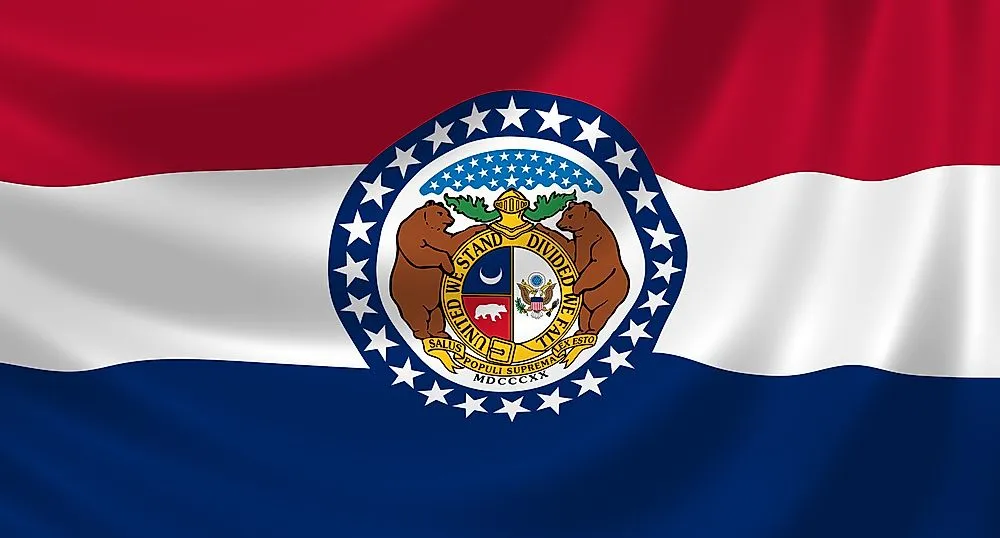
Missouri
U.S. State24th State • August 10, 1821
Missouri MO
"The Show-Me State"
The Gateway to the West, where Lewis and Clark departed, where the Oregon Trail began, where Harry Truman made the decisions that ended World War II, and where the blues, jazz, and rock and roll found some of their greatest voices.
Missouri state finances at a glance
State Debt - FY2024
$7.0 billion
Total state government debt outstanding at the close of fiscal 2024, including long-term bonds and short-term borrowing across state agencies and public universities.
Tax Revenue - FY2024
$17.8 billion
Total Missouri state tax collections in fiscal 2024, led by the individual income tax ($7.8B) and the general sales tax ($5.3B).
Borrowing
Missouri's constitution requires a statewide vote for general obligation debt, so most borrowing is done through appropriation-backed bonds issued by the Board of Public Buildings and other state authorities. These are sold to investors in the tax-exempt municipal market and repaid from annual appropriations. The state reported about $300 million in interest on its debt in fiscal 2024.
Source: U.S. Census Bureau, 2024 Annual Survey of State Government Finances.
6.2M
Population
24th
State (1821)
8
Bordering States
630 ft
Arch Height
…
Last updated:
Missouri's 2026 Midterm Election: Who and What Is on Your Ballot
Hey there, Missouri. On Tuesday, November 3, 2026, you're choosing your member of the U.S. House, the state auditor, your state legislators, judges, and local offices, plus four constitutional amendments and a referendum on the state's congressional map.
This is a midterm election, halfway through the president's term, and nationally it decides who controls Congress for the next two years. Missouri has no governor's or U.S. Senate race this year.
The measures are big ones: Amendment 3 would repeal the abortion-rights amendment voters approved in 2024, and Proposition A decides whether a new congressional map takes effect. The statewide race is for state auditor: Republican Scott Fitzpatrick, Democrat Quentin Wilson, and Libertarian Dustin Coffell.
Key dates and how voting works are right below. Use the buttons above to open each race. Facts first; the decision is yours.
Checked against official sources on October 5, 2026
Key Dates
Key Dates
Last day to register to vote
Wednesday, October 7
No-excuse absentee voting in person begins
Tuesday, October 20
Last day for your election authority to receive a mail absentee ballot request (5 p.m.)
Wednesday, October 21
Last day of no-excuse in-person absentee voting
Monday, November 2
Election Day: polls open 6 a.m. to 7 p.m.; mail absentee ballots must arrive by 7 p.m.
Tuesday, November 3
How Voting Works in Missouri
Register by October 7 online, by mail, or at your local election authority (county clerk or election board). Missouri has no same-day registration.
From October 20 through November 2, any registered voter can vote absentee in person at their local election authority, no reason needed. Voting absentee by mail requires a qualifying reason; request it by October 21, and it must arrive by 7 p.m. on Election Day.
On Election Day, polls are open 6 a.m. to 7 p.m. Bring a current, unexpired photo ID, such as a Missouri driver's license or non-driver ID, a U.S. passport, or a military ID. Without one, you can vote a provisional ballot.
Find your polling place and sample ballot through the Secretary of State or your local election authority.
Governor Race
No governor's race in Missouri this year. Gov. Mike Kehoe was elected in 2024, and Missouri governors serve four-year terms, so the next race is in 2028.
Missouri's next governor's election is in November 2028.
Ballot Measures
Five statewide measures are on the November ballot. Amendments 3, 7, and 8 came from the General Assembly; Amendment 6 is a citizen initiative; Proposition A is a referendum on a law lawmakers passed. Each needs a simple majority.
The official ballot titles, fair ballot language, and cost estimates come from the Secretary of State. Missouri publishes no official arguments, so the reasons below are what named supporters and opponents have said.
Already decided in August: voters renewed the parks and soil conservation sales tax (Amendment 1, 82 percent yes) and required Jackson County to elect its assessor (Amendment 2, 77 percent yes), and rejected requiring amendments to win every congressional district (Amendment 4, 80 percent no) and phasing out the state income tax for higher sales taxes (Amendment 5, 83 percent no).
In 2024, Missouri voters added a right to reproductive health care, including abortion until fetal viability, to the state constitution (Article I, Section 36).
Amendment 3 would repeal that right. It would allow the state to limit abortion to medical emergencies, fetal anomalies, and rape or incest before 12 weeks; allow laws regulating abortion providers and facilities; require informed consent, including parental or judicial consent for minors; and generally bar public funding for abortion. It keeps care available for medical emergencies, ectopic pregnancies, and miscarriages.
It would also ban gender transition procedures for minors, including surgery, cross-sex hormones, and puberty blockers, with exceptions for specific medical conditions. Both changes are decided in one vote.
A YES vote means
The 2024 reproductive-rights amendment would be repealed; abortion could be restricted to medical emergencies, fetal anomalies, and rape or incest under 12 weeks; and gender transition procedures for minors would be banned.
A NO vote means
The 2024 amendment stays in place, leaving abortion available through fetal viability, and the constitution wouldn't ban gender transition procedures for minors.
Reasons people vote yes
Gov. Mike Kehoe and the Missouri Catholic Conference support it, saying it protects women and unborn children while keeping exceptions for emergencies, rape, incest, and fetal anomalies.
Supporters say it protects children by ensuring minors can't receive gender transition procedures and by requiring parental consent for abortions.
Reasons people vote no
Abortion-rights groups and the League of Women Voters of Missouri say it would overturn a right voters approved just two years ago and impose a near-total ban.
Opponents say it bundles two separate issues so voters can't decide them separately, and that the gender transition provision affects far fewer people than the abortion repeal.
💵 Taxes and money: No tax change
State agencies estimate no costs or savings. Greene County estimates an unknown increase in tax revenue; other local governments estimate no costs or savings.
Missourians can already propose laws and constitutional amendments by petition, and the General Assembly can amend or repeal a voter-approved law by simple majority, as it has done with past initiatives.
Amendment 6 would make the initiative and referendum a fundamental right; bar the legislature from directly changing a law enacted by initiative, or passing laws similar to ones rejected by referendum, unless at least 80 percent of each chamber votes to send the change back to voters; bar laws that limit the ability to use initiatives and referendums; and let courts revise ballot summaries through lawsuits. Current signature requirements and the simple-majority rule to pass a measure stay the same.
In August, voters rejected Amendment 4, which would have required constitutional amendments to win a majority in every congressional district, 80 percent to 20 percent.
A YES vote means
The legislature couldn't directly change laws passed by initiative; changes would need 80 percent of each chamber and a vote of the people, and lawmakers couldn't pass laws limiting the petition process.
A NO vote means
No change; the constitution keeps the existing initiative and referendum rights, and the legislature can still amend initiative-passed laws by majority vote.
Reasons people vote yes
Respect Missouri Voters, the campaign behind it, says the legislature has repeatedly undone or ignored measures voters passed, such as Medicaid expansion, and this protects the people's decisions.
Supporters say it keeps the current signature and majority requirements, so it protects the process without making it easier to change the constitution.
Reasons people vote no
Opponents, including Republican legislators such as Joe Nicola, say it's dangerous to a constitutional republic and would make it nearly impossible to fix unintended consequences of voter-passed laws.
They say even an 80 percent vote of lawmakers would still have to go back to voters, tying the legislature's hands.
💵 Taxes and money: No tax change
State and local governments estimate no costs or savings.
Amendment 7 would create the Show-Me Prosperity Fund, a permanent investment fund to support state government. Lawmakers couldn't spend or divert it until the state treasurer certifies that its earnings are enough to eliminate state-imposed taxes.
After that, spending from the fund would be capped at 3 percent of its average value over the previous five years, and the eliminated state taxes couldn't be brought back, unless the fund can't meet its obligations, in which case the legislature keeps full power to raise revenue. The measure doesn't say where the fund's money would come from.
The nonpartisan Missouri Budget Project estimates the fund would need to exceed $600 billion before state taxes could be eliminated, a goal supporters acknowledge could take generations.
A YES vote means
The Show-Me Prosperity Fund would be created, with the goal of eliminating state-imposed taxes once its investment earnings are large enough.
A NO vote means
No endowment fund would be created in the constitution.
Reasons people vote yes
Sponsors Sen. Adam Schnelting and Rep. Colin Wellenkamp say it sets Missouri up for a future without state taxes, even if reaching that goal takes many years.
Supporters say protecting the fund from lawmakers until it's large enough keeps it from being spent early.
Reasons people vote no
Sen. Doug Beck and other Democrats, who voted against it, say it could raise the cost of living in the short term and divert money from state services.
The Missouri Budget Project says it raises too many unanswered questions, including where the money would come from, and the Cato Institute also opposes it.
💵 Taxes and money: No immediate tax change
State and local governments estimate no costs or savings. The official summary says it has no immediate impact on taxes but could lead to eliminating state-imposed taxes if the fund's earnings ever become large enough.
State law already requires counties to elect a sheriff every four years and sets sheriffs' duties. Today, a local prosecutor or circuit attorney, as well as the attorney general, can start a court case (a writ of quo warranto) to remove a sheriff from office.
Amendment 8 would move the four-year elected sheriff and sheriffs' duties into the constitution, recognize the office as part of the administration of justice, and allow removal only through a quo warranto case started by the attorney general.
A YES vote means
Counties would be constitutionally required to elect sheriffs, sheriffs' duties would be in the constitution, and only the attorney general could start a case to remove a sheriff.
A NO vote means
No change; current state laws on electing, governing, and removing sheriffs stay in effect.
Reasons people vote yes
The Missouri Sheriffs' Association says it keeps local control of law enforcement and ensures the state can't replace elected sheriffs with a state police force.
Supporters say voters, not appointed officials, should choose and hold sheriffs accountable.
Reasons people vote no
Democratic Rep. Mark Boyko and most Democratic lawmakers, who voted no, say it gives sheriffs too much power.
Critics say taking away local prosecutors' ability to start removal cases bypasses local control. There's little organized opposition.
💵 Taxes and money: No tax change
State and local governments estimate no costs or savings.
In a 2025 special session, the General Assembly redrew Missouri's congressional districts in the middle of the decade. The new map divides Kansas City among three districts and stretches the 5th District, now held by Democrat Emanuel Cleaver, about 200 miles east into rural counties, making it Republican-leaning. Here's how redistricting works.
The group People Not Politicians gathered more than 300,000 signatures to put the law to a referendum. After court fights, the Missouri Supreme Court ruled the referendum valid, which means this November's House races use the 2022 map while the vote is pending, and the U.S. Supreme Court declined to pause that ruling.
If YES wins, the 2025 map would take effect for future elections. If NO wins, the 2022 map stays.
A YES vote means
The 2025 law redrawing Missouri's congressional districts would be approved.
A NO vote means
The 2025 law is rejected, and the congressional districts enacted in 2022 stay in place.
Reasons people vote yes
Republican legislative leaders who passed it say the new map keeps more counties intact, as the official ballot title states.
Supporters say the legislature has the authority to draw districts and the map reflects Missouri's voters.
Reasons people vote no
People Not Politicians and Rep. Emanuel Cleaver say it's a partisan gerrymander designed to eliminate a Democratic seat by splitting Kansas City's voters.
Opponents say redrawing maps mid-decade, outside the normal post-census process, undermines fair representation.
💵 Taxes and money: No tax change
State and local governments estimate no costs or savings.
Your ballot may also have local tax or bond questions and judges up for retention. Check your sample ballot with your local election authority.
Senate Races
Every state gets two U.S. senators. The Senate votes on federal laws, confirms judges and cabinet members, and approves treaties. Senators serve six-year terms, and only a third of seats are up in any election.
Missouri has no U.S. Senate race this year. Eric Schmitt's seat is next up in 2028, and Josh Hawley's in 2030.
Missouri has eight seats. Republicans hold six and Democrats hold two. This year's races use the 2022 map: the Missouri Supreme Court's ruling requires that while voters decide Proposition A on the 2025 map. District 6 is open because Rep. Sam Graves withdrew.
You vote only in the district where you live; your sample ballot shows which one.
Missouri's 8 Districts (2022 Map) and Who Holds Them Today
Democrat
Republican
These are the 2022 district lines used for this November's races, not the 2025 map voters decide on in Proposition A. Each district is colored by the party of the member of Congress who holds it right now, not by who will win in November. Select a district to jump to its race; the smallest St. Louis and Kansas City districts are unnumbered, so hover over or select one to see which it is. District lines: U.S. Census Bureau, 119th Congress.
Candidates and parties are from the Missouri Secretary of State's certified list for the November 3, 2026 general election.
Positions are summarized from the candidates' own campaign websites, in neutral words and without attacks on opponents. Where a website listed no positions, the card says so.
District 1
St. Louis and northern St. Louis County
Democrat Wesley Bell, in office since 2025, faces Republican Paul Berry III and Libertarian Tom Schmitz.
Wesley Bell
Incumbent
Democrat
Occupation:
U.S. Representative; former prosecutor
Government experience:
U.S. Representative (2025 to present); St. Louis County Prosecuting Attorney; Ferguson City Council
What they say they stand for
Points to more than $12.3 million in federal funding he secured for infrastructure, public safety, and neighborhoods.
Points to nearly $7 million in federal housing grants to increase housing supply and lower costs.
The campaign website lists no issue positions we could read, and the candidate hasn't answered the questionnaires we use. See the website for where they stand.
We summarize positions in depth for the Democratic and Republican nominees and incumbents. This candidate didn't answer the questionnaires we use.
District 2
St. Louis County's southern and western suburbs
Republican Ann Wagner, in office since 2013, faces Democrat Fred Wellman, an Army veteran and business owner, and Libertarian Brandon Daugherty.
Ann Wagner
Incumbent
Republican
Occupation:
U.S. Representative
Government experience:
U.S. Representative (2013 to present); former U.S. Ambassador to Luxembourg
What they say they stand for
The campaign website lists no issue positions we could read, and the candidate hasn't answered the questionnaires we use. See the website for where they stand.
We summarize positions in depth for the Democratic and Republican nominees and incumbents. This candidate didn't answer the questionnaires we use.
District 5
Kansas City and eastern Jackson County (2022 lines)
Democrat Emanuel Cleaver, in office since 2005, faces Republican State Sen. Rick Brattin and Libertarian Randy Langkraehr. This is the district the 2025 map would reshape.
Emanuel Cleaver
Incumbent
Democrat
Occupation:
U.S. Representative; pastor
Government experience:
U.S. Representative (2005 to present); Mayor of Kansas City
What they say they stand for
Points to the housing reform law he helped pass and wants affordable housing for all.
Wants to protect Social Security and Medicare and expand Medicaid.
Wants to strengthen the Affordable Care Act and lower prescription drug costs.
Supports reproductive rights and common-sense gun safety laws.
We summarize positions in depth for the Democratic and Republican nominees and incumbents. This candidate didn't answer the questionnaires we use.
District 6
Northern Missouri, St. Joseph, and Clay and Platte counties
An open seat: Rep. Sam Graves withdrew. Republican Chris Stigall, a radio host, faces Democrat Josh Smead, an architect, and Libertarian Andy Maidment.
Chris Stigall
Republican
Occupation:
Radio host
Government experience:
None in elected office
What they say they stand for
Supports gun rights.
Wants to strengthen rural hospitals and cut federal red tape on health care.
Opposes abortion and taxpayer funding for it.
Wants President Trump's tax cuts made permanent and supports farmers.
We summarize positions in depth for the Democratic and Republican nominees and incumbents. This candidate didn't answer the questionnaires we use.
District 8
Southeast Missouri and the Bootheel
Republican Jason Smith, chairman of the House Ways and Means Committee and in office since 2013, faces Democrat Chris Reichard, an Iraq War veteran and electrician, and Libertarian Rebecca Sharpe Lombard.
Jason Smith
Incumbent
Republican
Occupation:
U.S. Representative (chair, House Ways and Means Committee)
Government experience:
U.S. Representative (2013 to present); Missouri House
What they say they stand for
The campaign website lists no issue positions we could read, and the candidate hasn't answered the questionnaires we use. See the website for where they stand.